GrammarA1TOPIK I
Korean Particles Quick Reference
Compare essential Korean particles 은/는, 이/가, 을/를, 에, and 에서 with visual rules, natural examples, common mistakes, and quick review.
5 minutes read · 10-15 minutes study
Open cheat sheetKorean Education Resource Hub
Compact Korean reference guides for particles, grammar patterns, and verb forms.
Five-minute Korean reference library
Each reference explains one high-value topic online before offering a printable version. Use it to remove confusion, then continue to the full lesson and practice.
Compare essential particles and connect each rule to a complete grammar lesson.
Open referenceChoose native or Sino-Korean numbers for counting, time, dates, and prices.
Open referenceUse a complete cafe order with natural requests and expected responses.
Open referenceCompare essential Korean particles 은/는, 이/가, 을/를, 에, and 에서 with visual rules, natural examples, common mistakes, and quick review.
5 minutes read · 10-15 minutes study
Open cheat sheetCompare native and Sino-Korean numbers for counting, age, time, dates, prices, and phone numbers with forms, examples, and common exceptions.
5 minutes read · 15 minutes study
Open cheat sheetUse practical Korean cafe phrases for ordering, choosing hot or iced drinks, asking prices, and responding politely with a mini dialogue and culture notes.
5 minutes read · 10-15 minutes study
Open cheat sheetChoose a reference for one specific confusion or real-life situation.
Understand the core rule before scanning the table.
Connect the visual reference to real Korean sound and rhythm.
Use the 30-second, 1-minute, and 5-minute reviews.
Continue through the related grammar, vocabulary, or reading page.
Keep the offline copy as a review tool, not as a replacement for instruction.
Saved on this device.
0% complete
This section organizes Korean learning materials by practical use. Instead of sending learners straight to a file, each resource points to a lesson page with an introduction, objectives, vocabulary, usage notes, a worksheet preview, and a printable PDF.
Independent learners can follow the explanations before practicing, and teachers can turn each resource into a short review task. The structure supports long-term learning and gives new learners enough context before they use a printable.
Open the explanation first, then print the worksheet after the learner understands the focus.
Return to the same topic after one or two days and repeat only the hardest section.
Turn the key vocabulary table into a quick warmup or pair activity.
Read aloud, complete the worksheet, then review the answer support section.
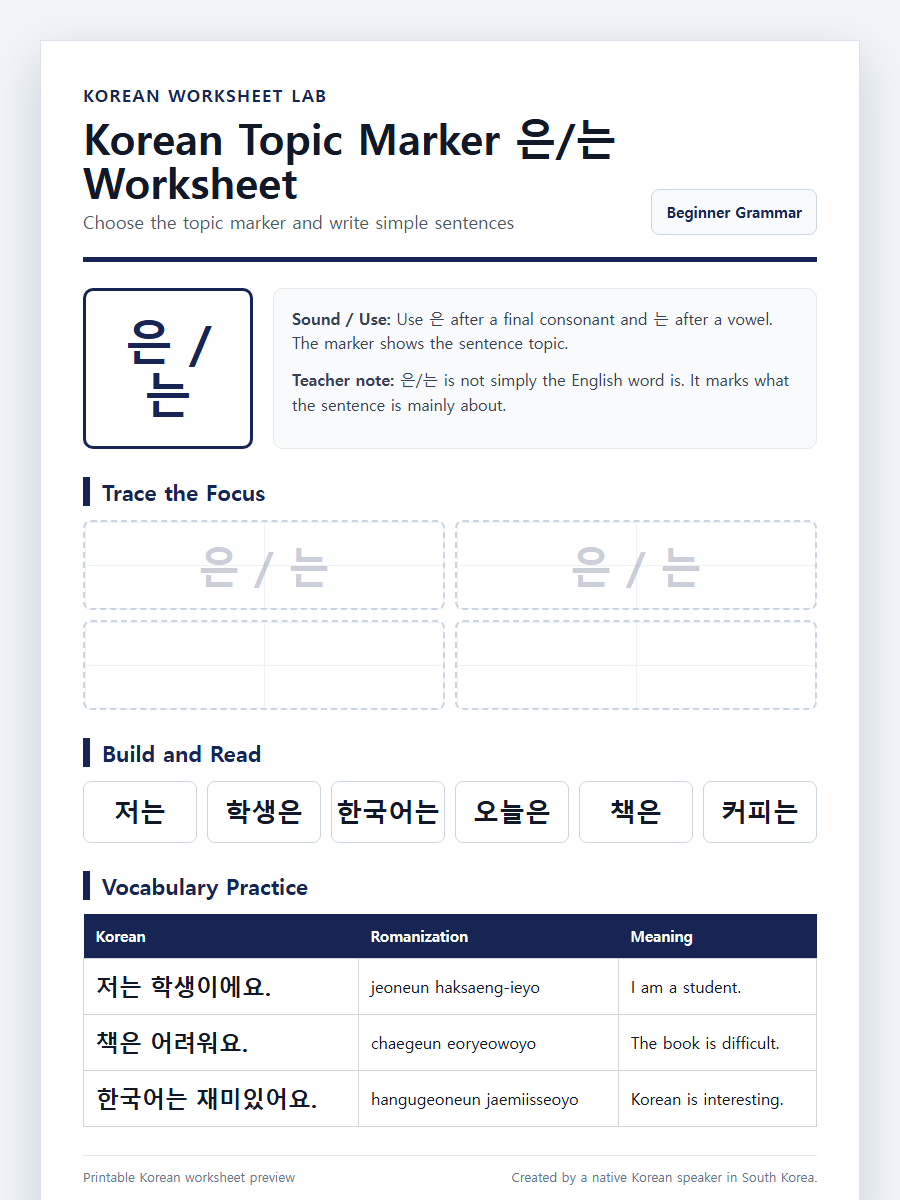
Use 은/는 to introduce, continue, or contrast the topic of a Korean sentence.
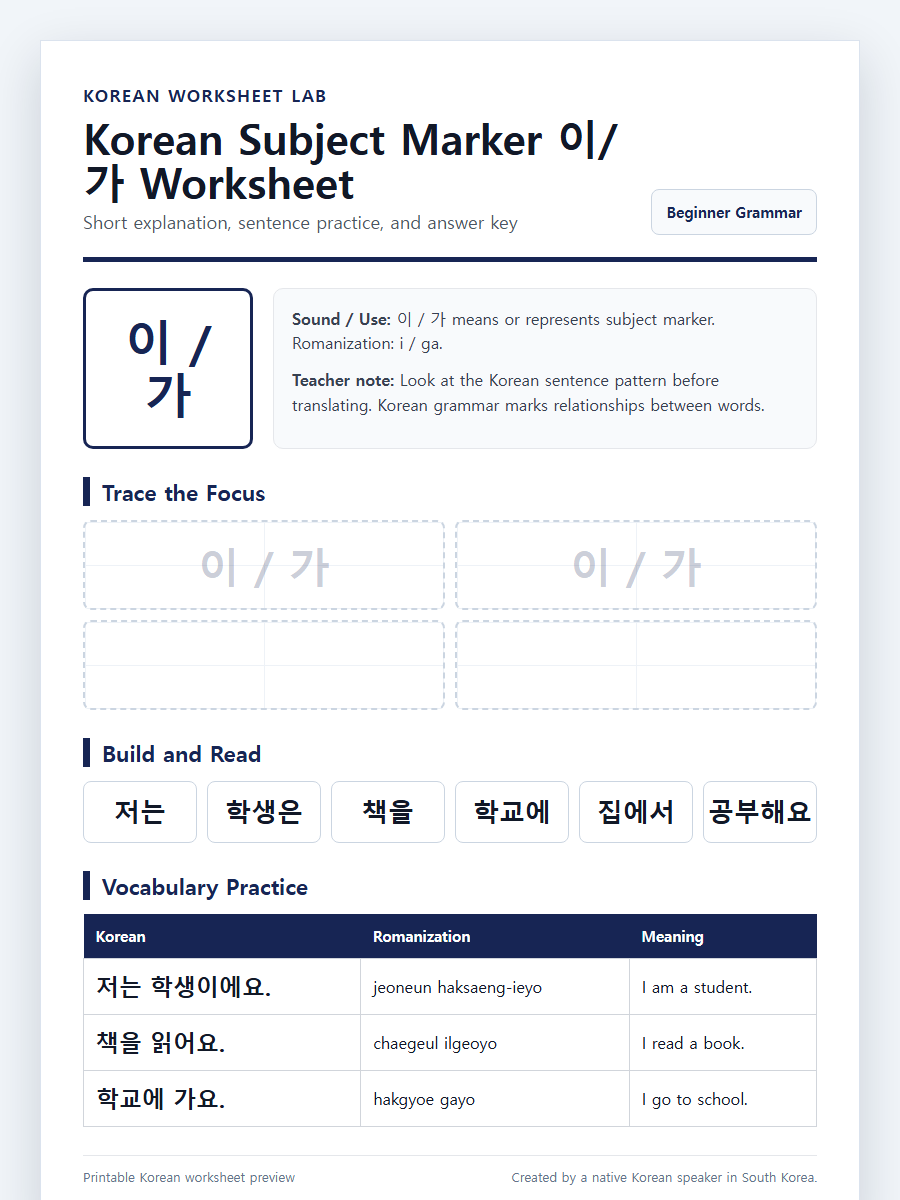
Use 이/가 when the subject is new, emphasized, identified, or directly described.
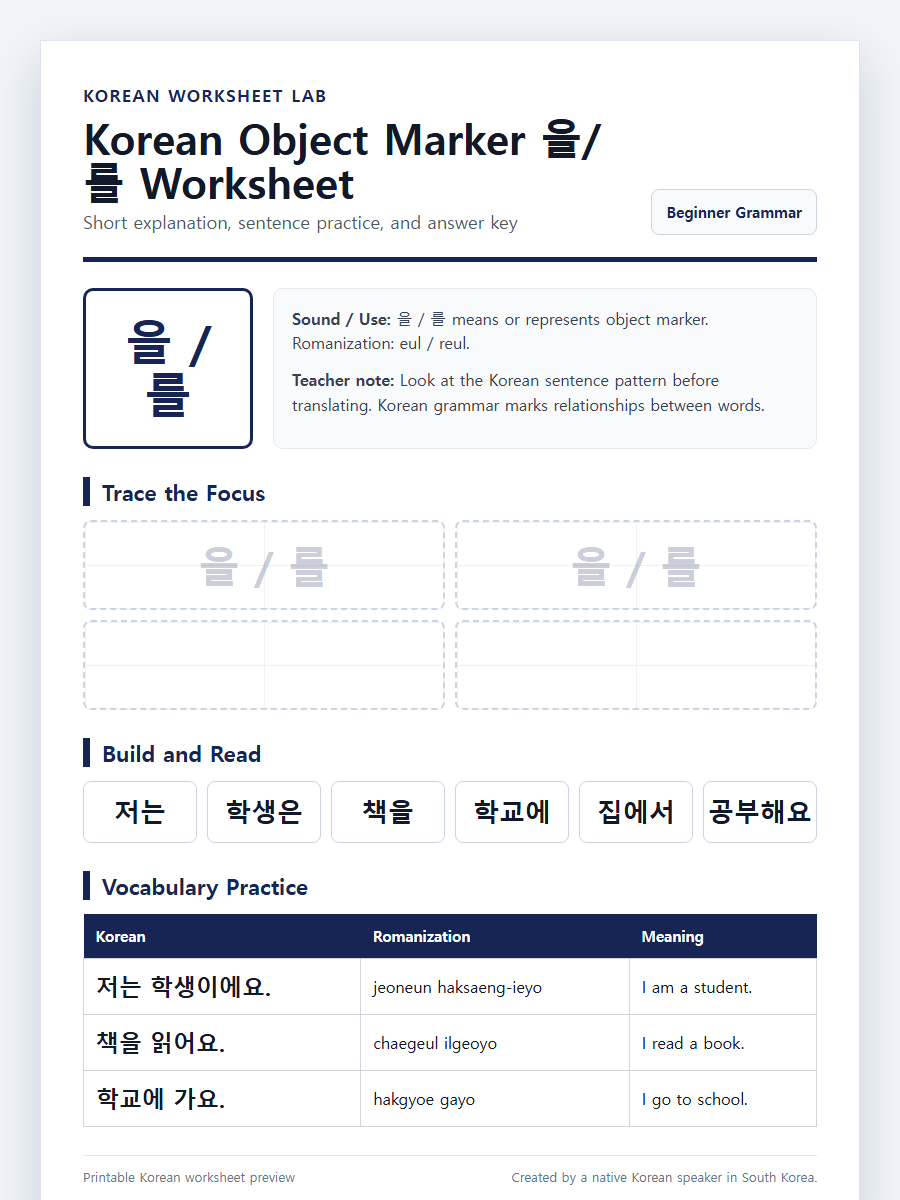
Use 을/를 after the noun that receives the action of a Korean verb.
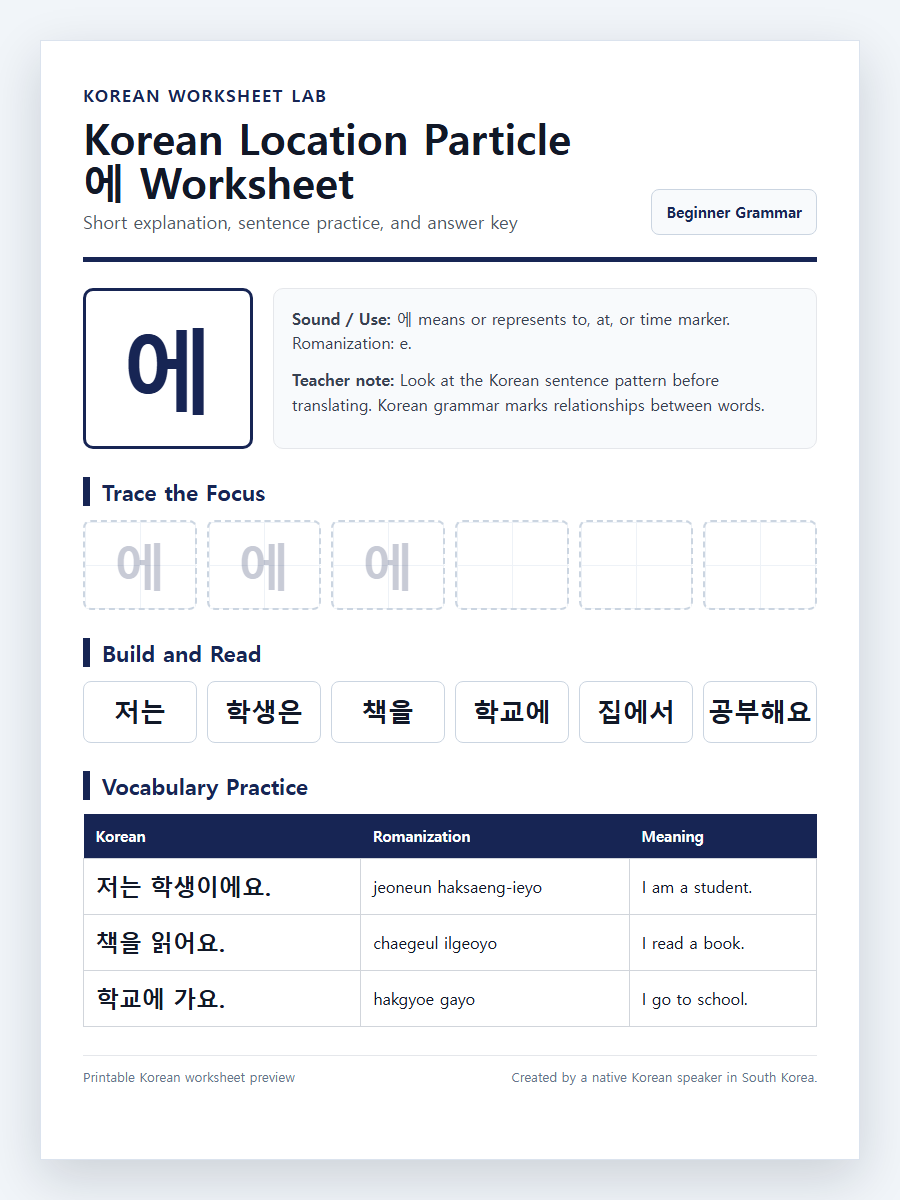
Use 에 for destinations, time, and static location in beginner Korean sentences.
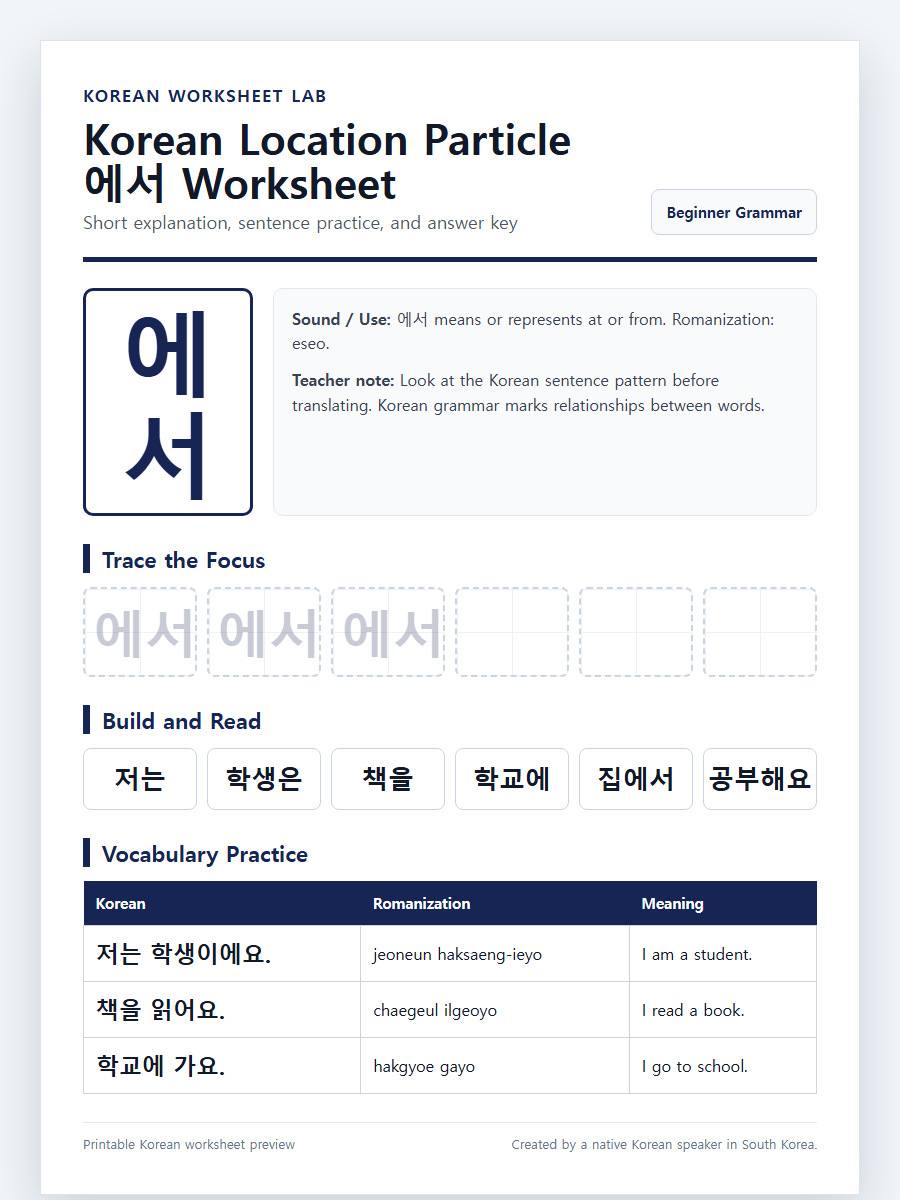
Use 에서 for actions happening in a place or movement starting from a place.
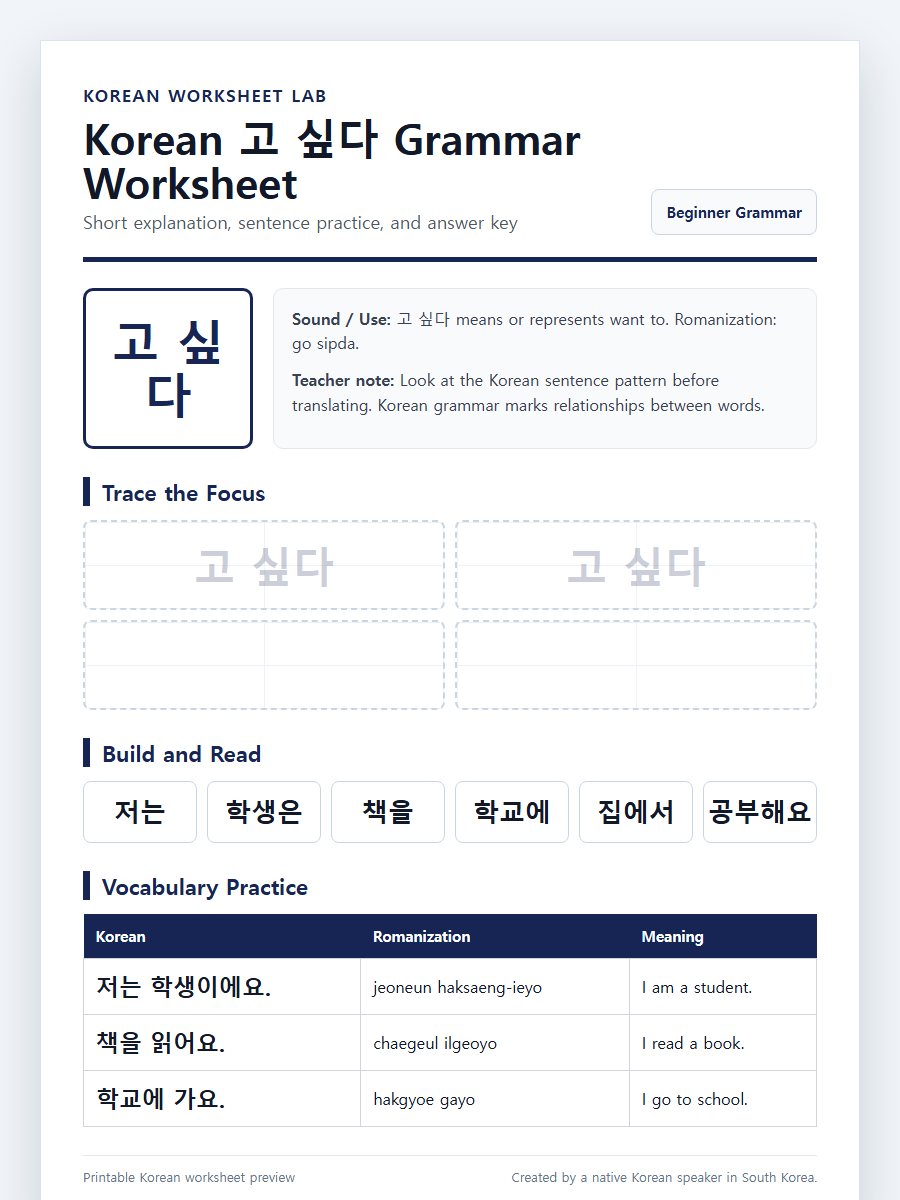
Attach 고 싶다 to a verb stem to express what someone wants to do.
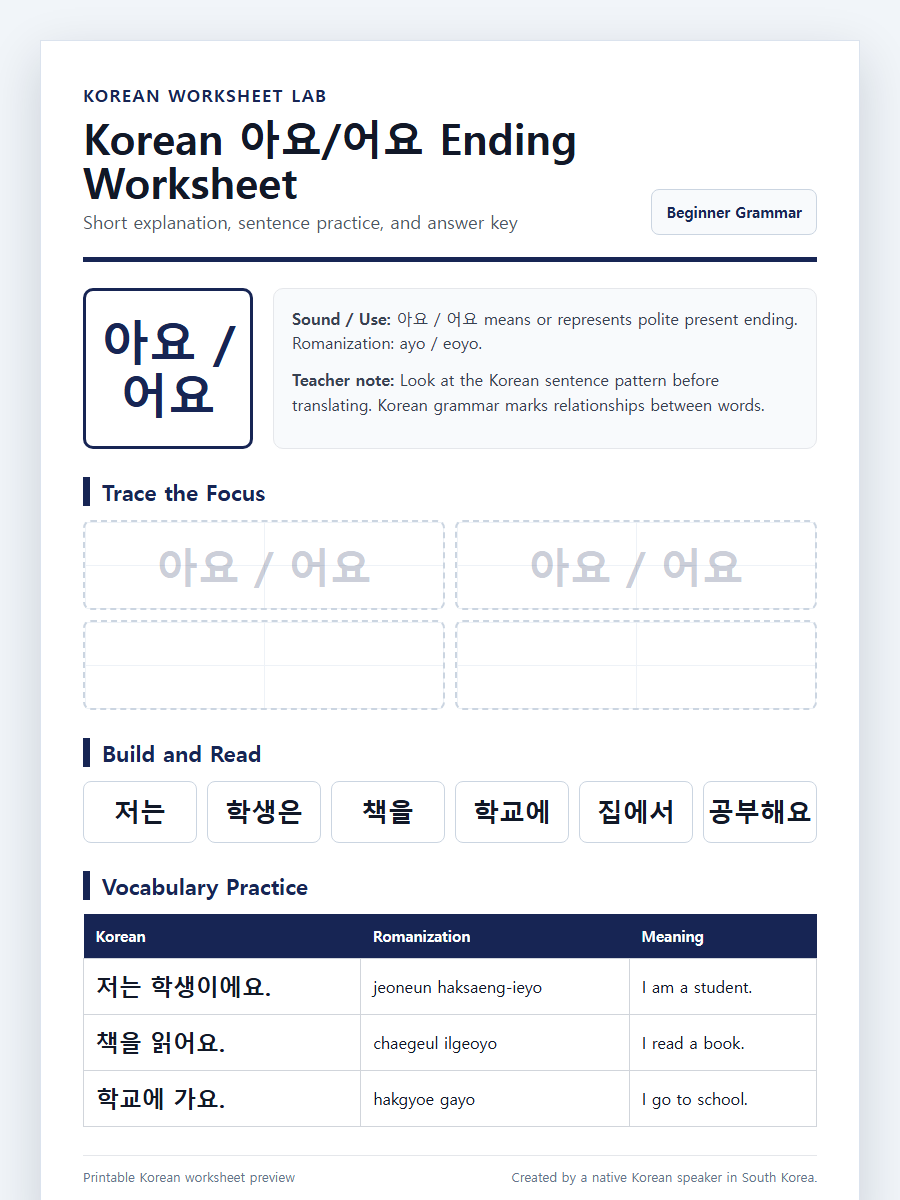
Use 아요/어요 to make polite everyday present-tense Korean sentences.
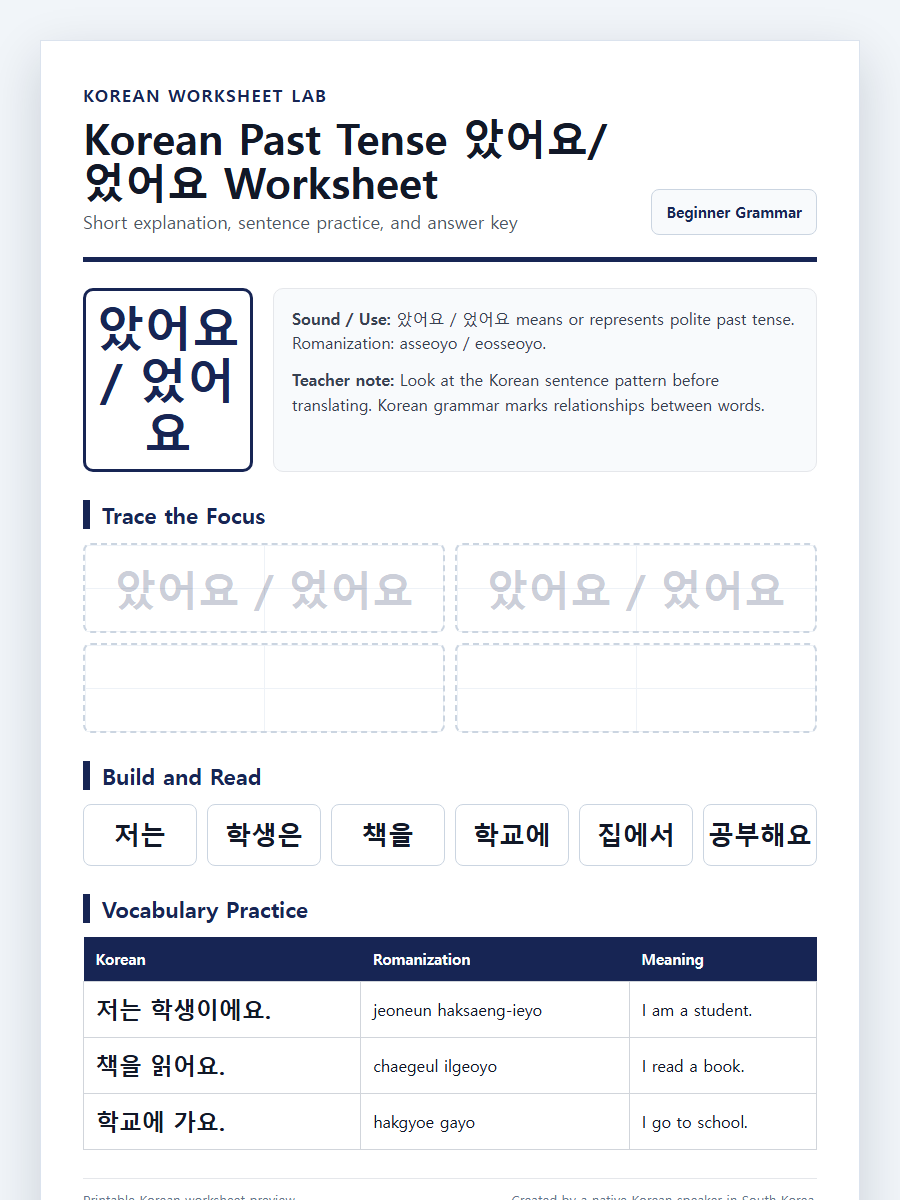
Make polite past tense forms from common Korean verb stems.
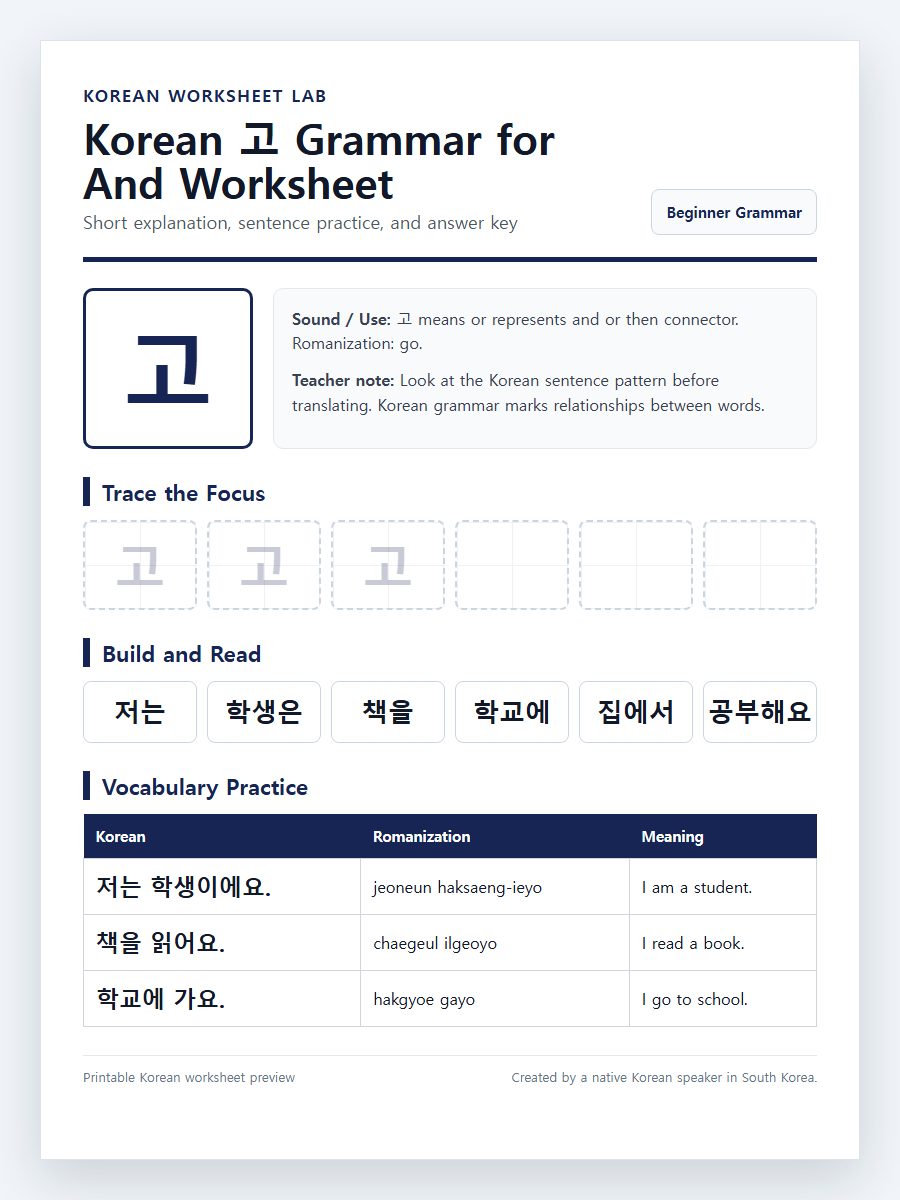
Connect actions or descriptions with 고 to show and, then, or a natural sequence.
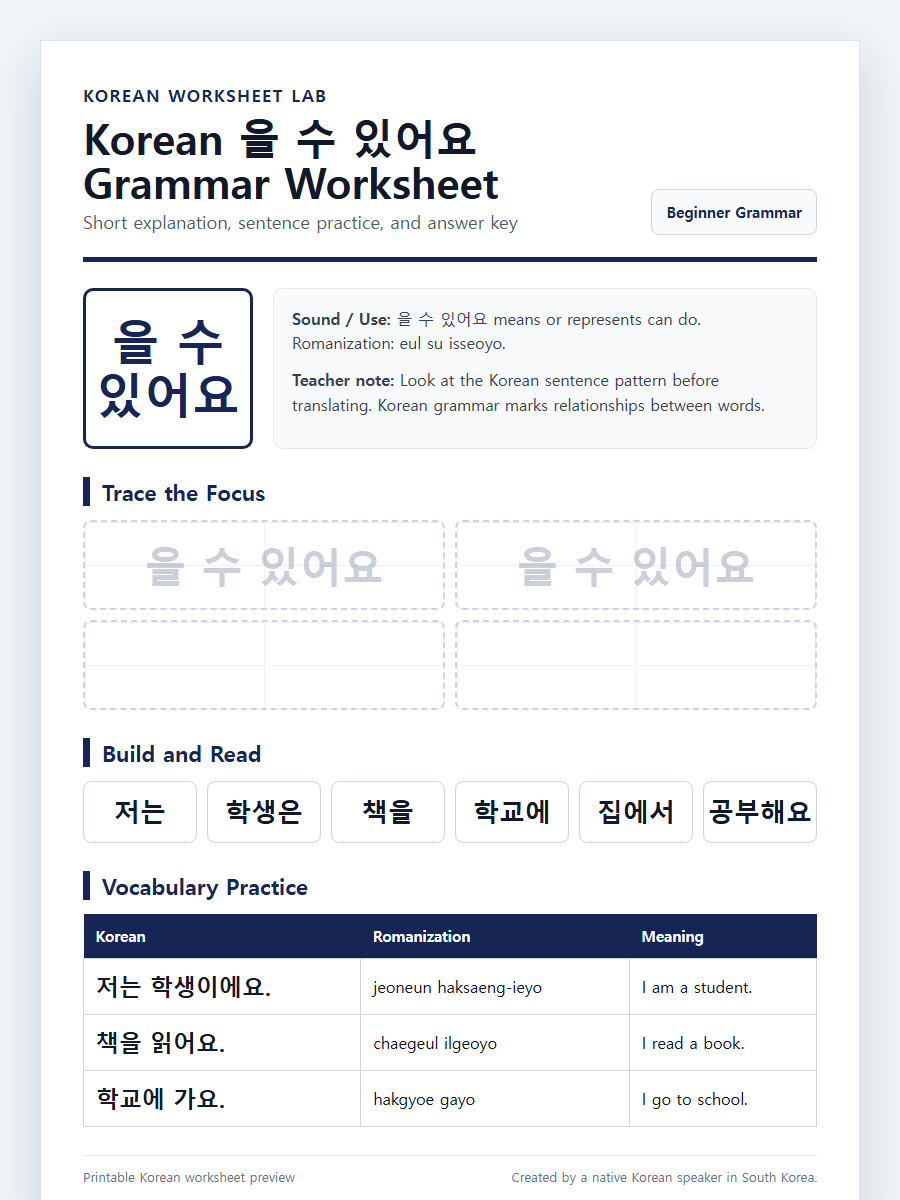
Use 을 수 있어요 to talk about ability or possibility in polite Korean.
Yes. The current lesson pages and printable worksheets are free to access.
Yes. They are suitable for beginner warmups, homework, tutoring, stations, and review tasks.
No. Each recommended item connects to a full educational page with context and study guidance.