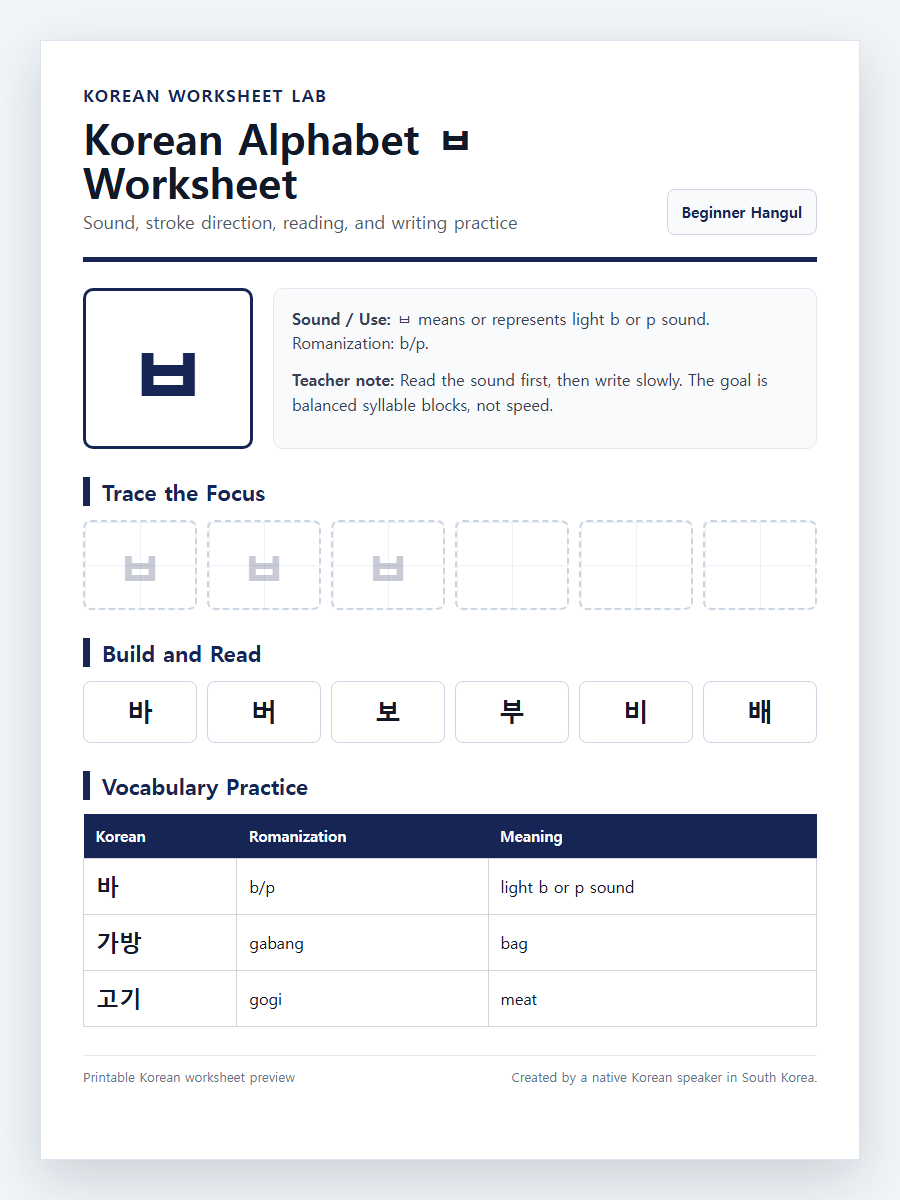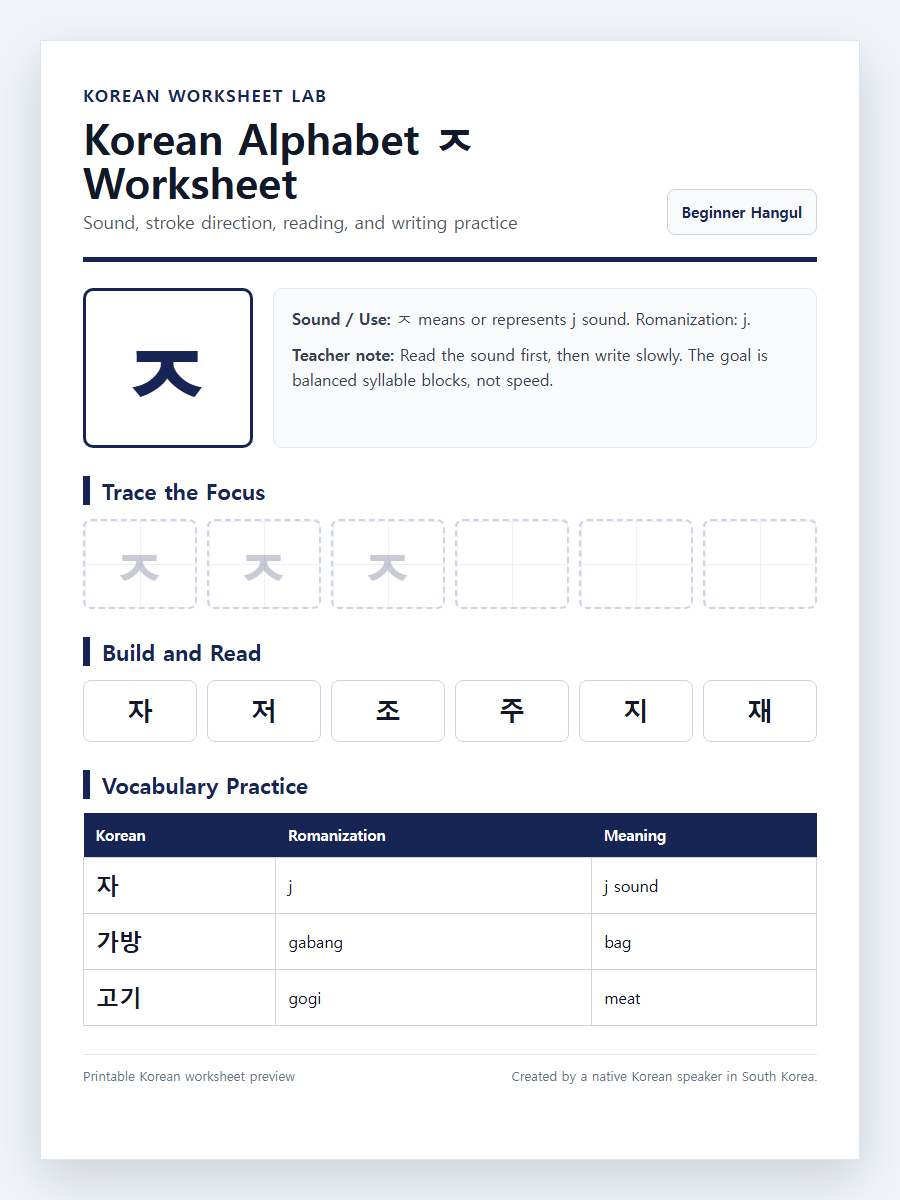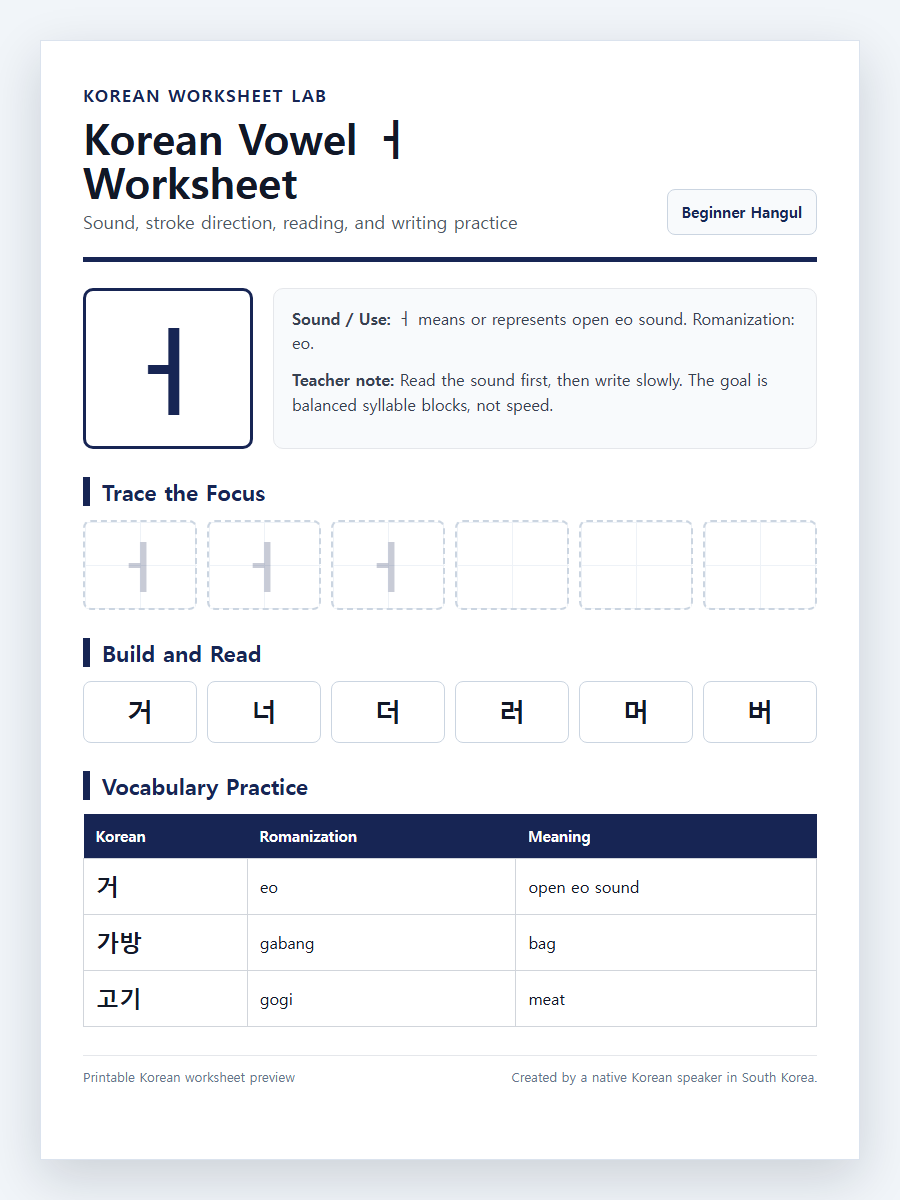
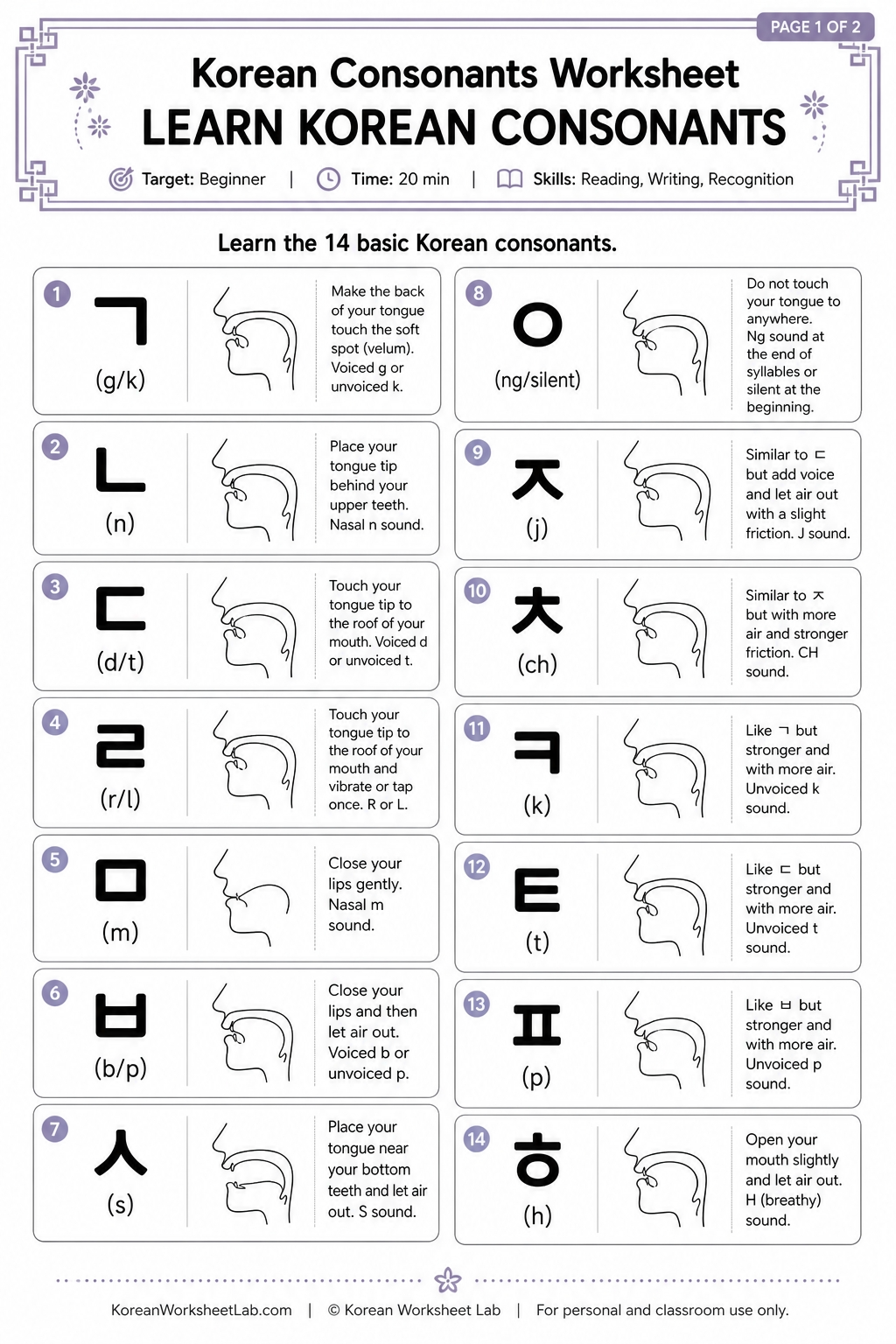
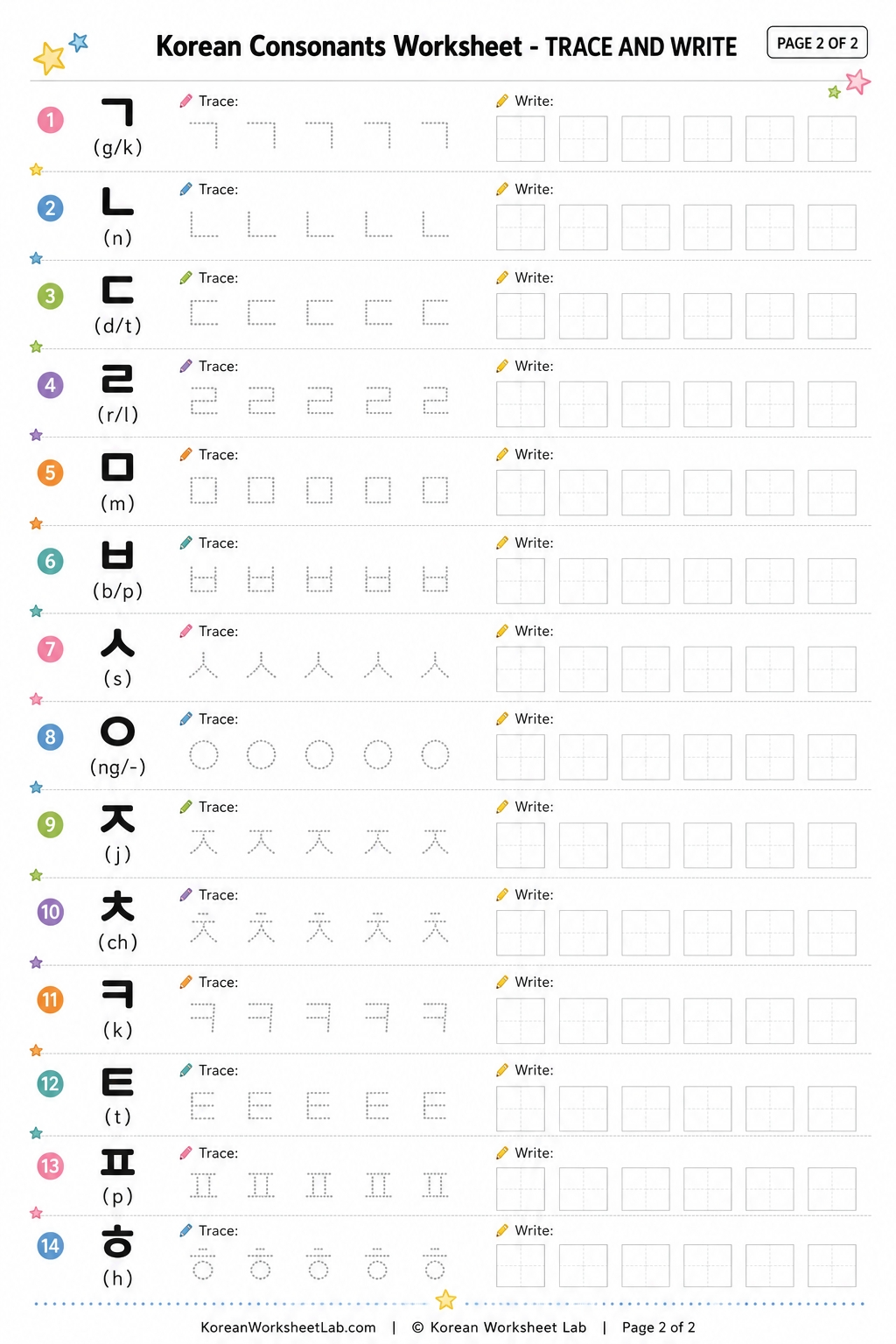
Korean Alphabet ㄱ Worksheet
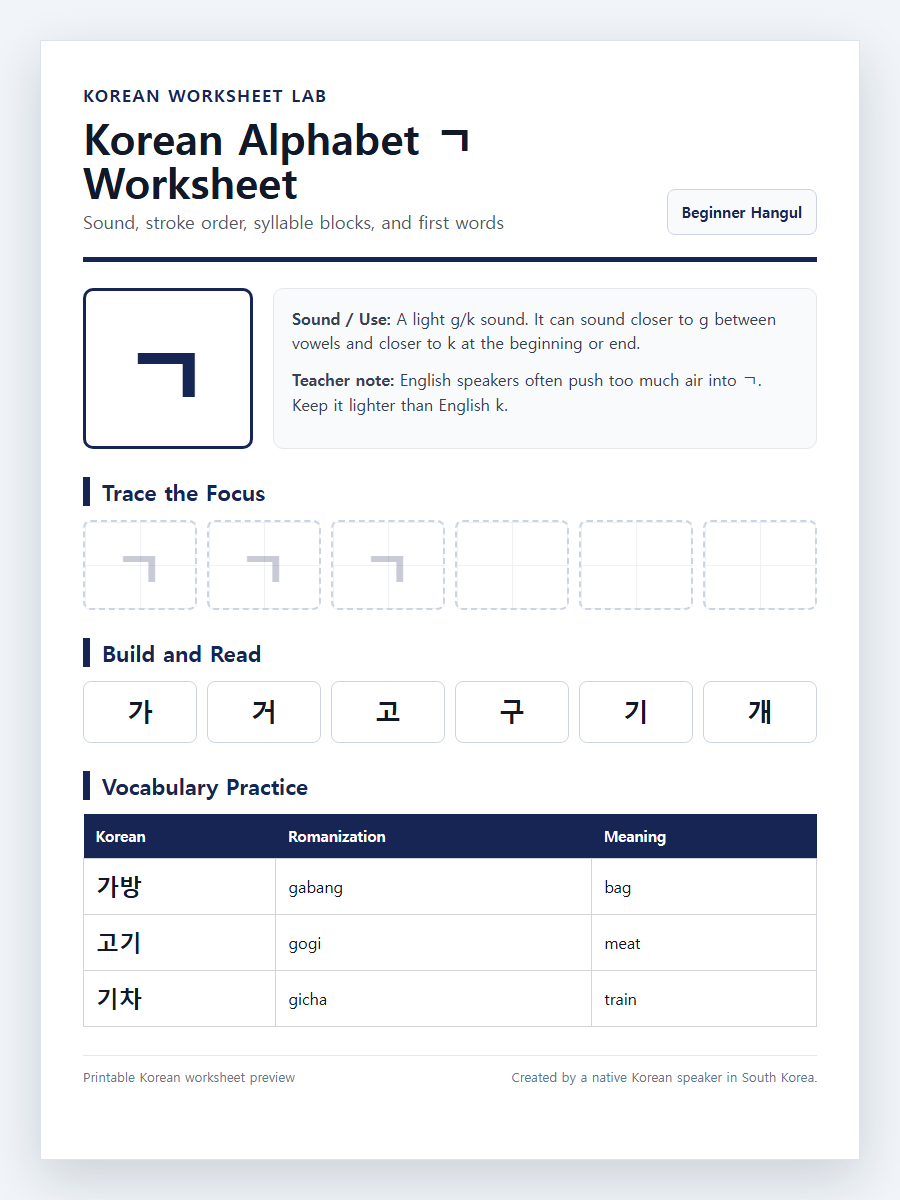
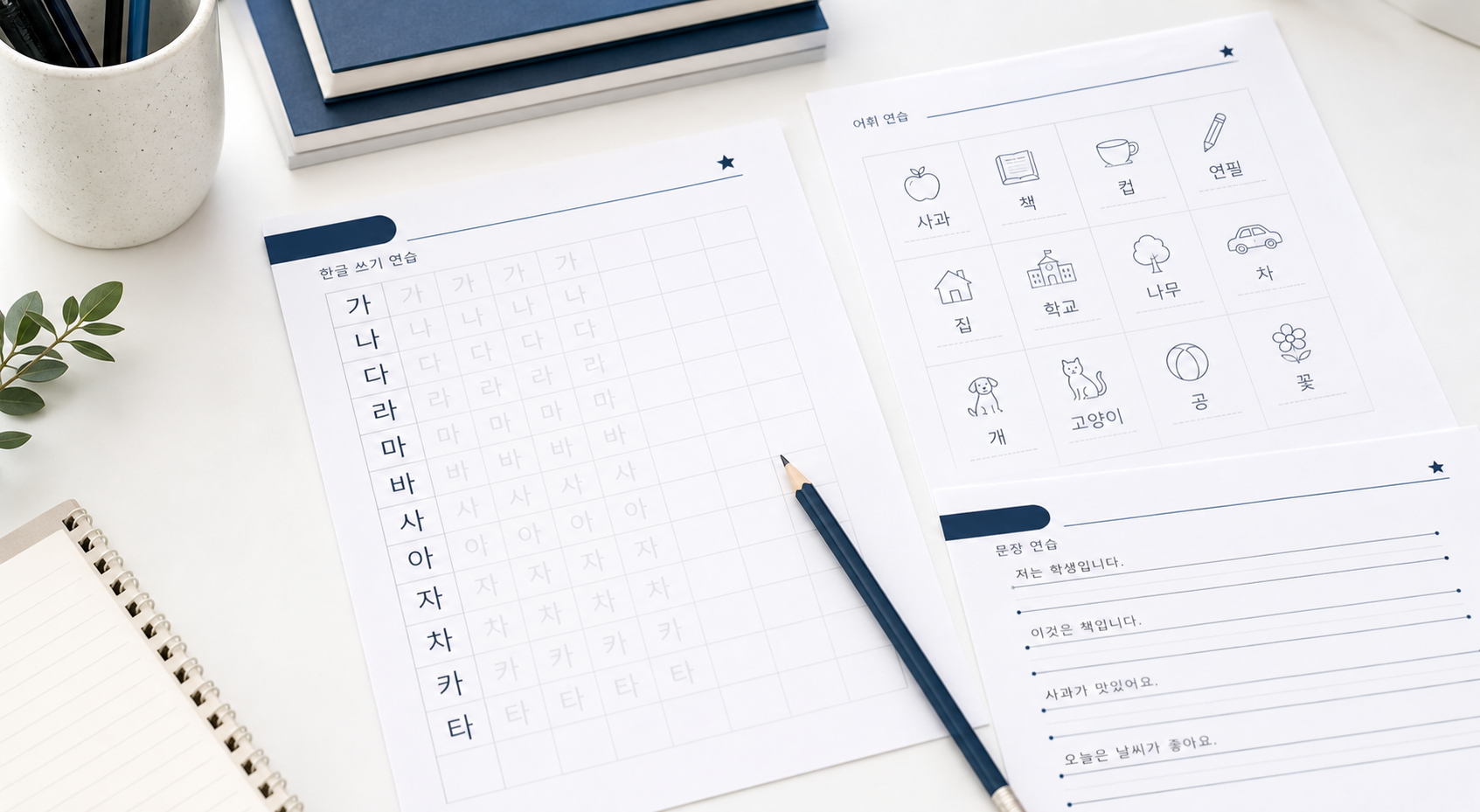
가방 means bag, 기차 means train, and 고기 means meat. This lesson includes examples, common learner notes, and a printable worksheet for practice.
Created by a native Korean speaker in South Korea
Master Korean with printable worksheets, vocabulary lessons, grammar practice, and cultural guides written for English-speaking learners.
50
Lessons
4
Categories
Practice

가방 means bag, 기차 means train, and 고기 means meat. This lesson includes examples, common learner notes, and a printable worksheet for practice.
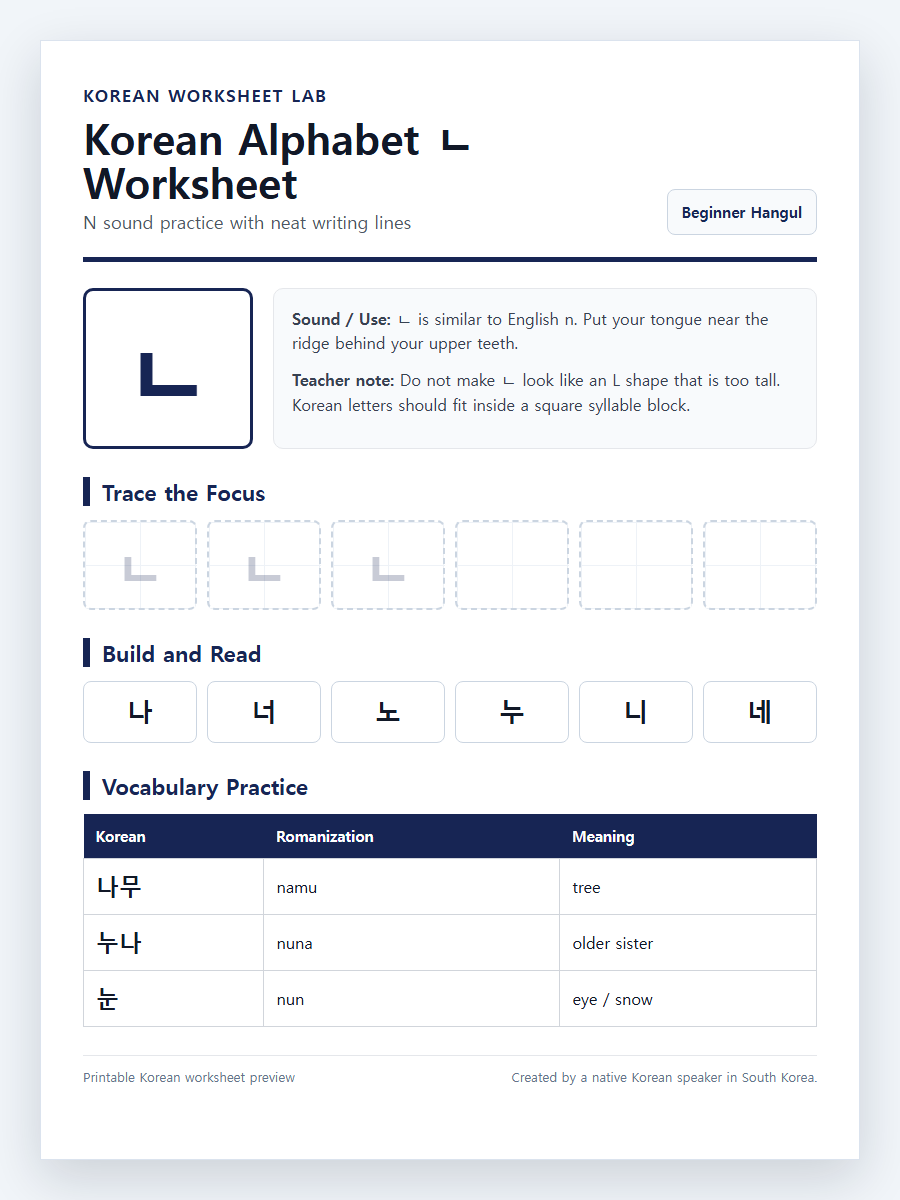
나무 means tree, 누나 means older sister for a male speaker, and 눈 means snow or eye. This lesson includes examples, common learner notes, and a printable worksheet for practice.
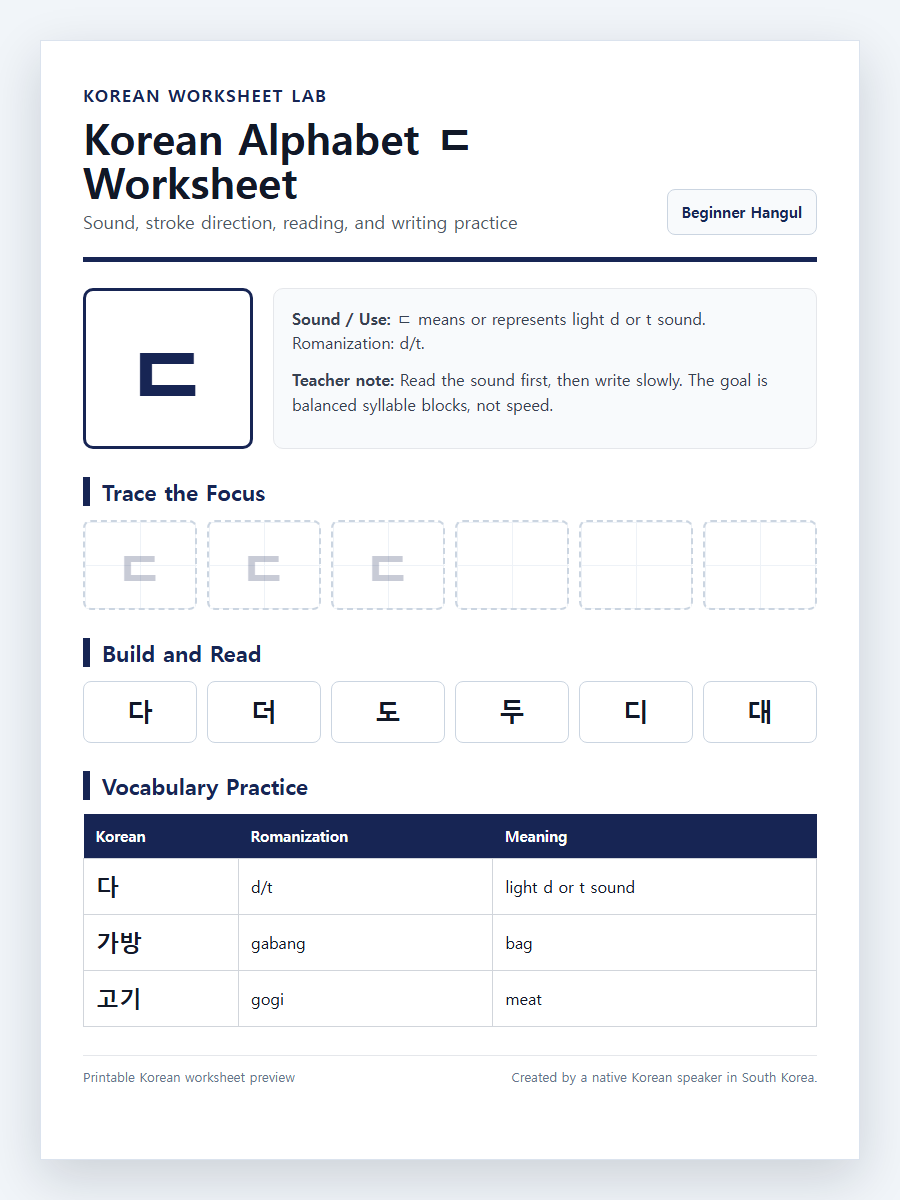
다리 means leg or bridge, 두부 means tofu, and 달 means moon. This lesson includes examples, common learner notes, and a printable worksheet for practice.
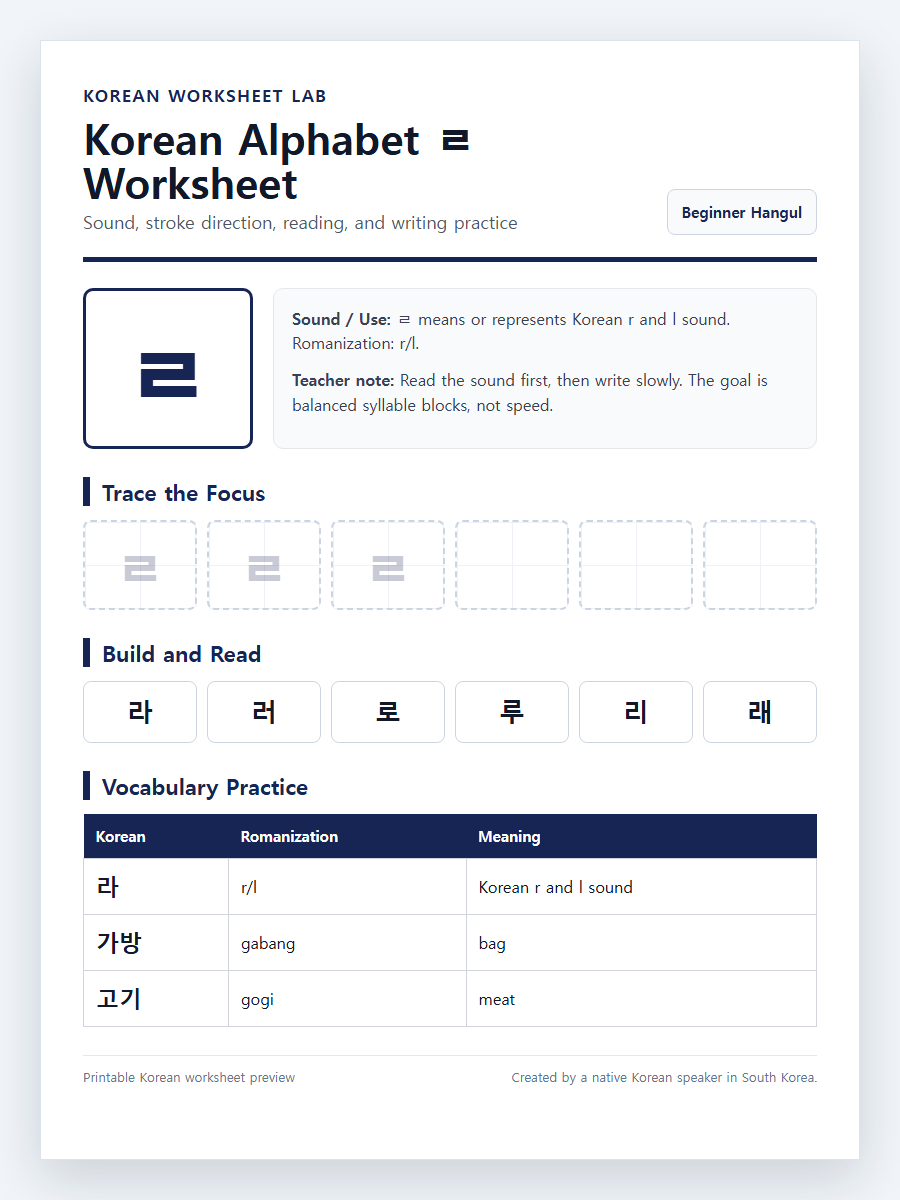
라면 means ramyeon, 리본 means ribbon, and 길 means road. This lesson includes examples, common learner notes, and a printable worksheet for practice.
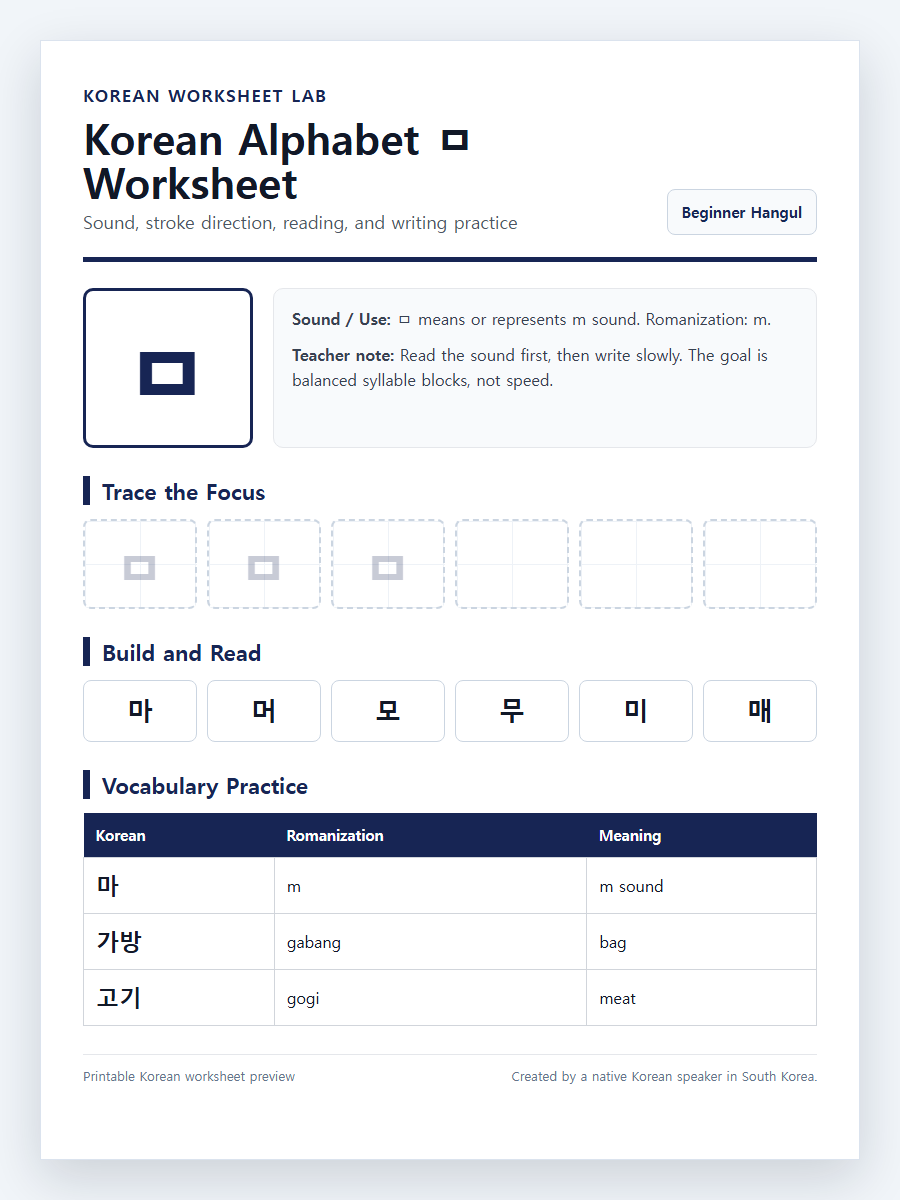
모자 means hat, 마음 means heart or mind, and 문 means door. This lesson includes examples, common learner notes, and a printable worksheet for practice.
바다 means sea, 비 means rain, and 밥 means rice or meal. This lesson includes examples, common learner notes, and a printable worksheet for practice.
Hangul
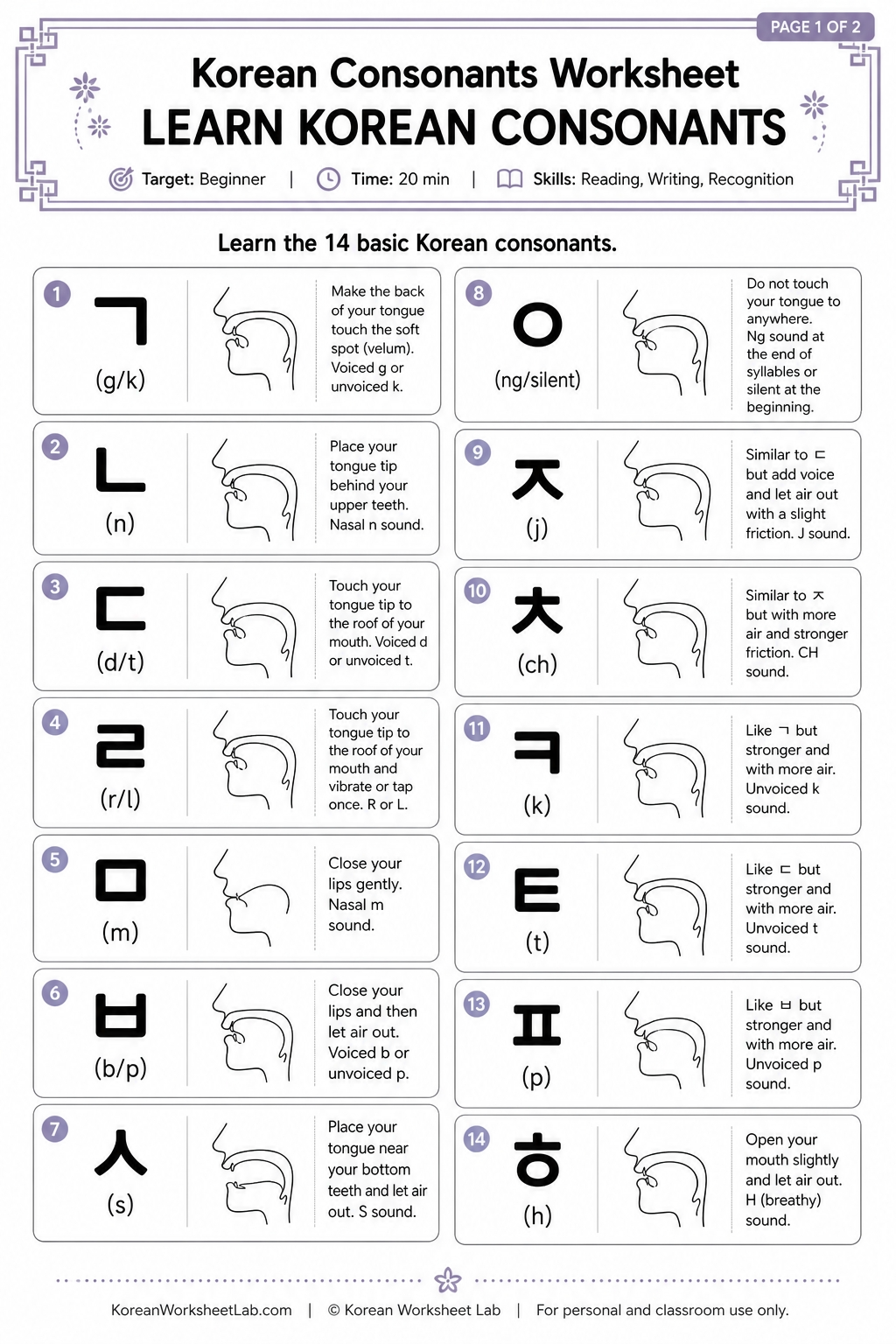
Start with Korean alphabet sounds, stroke order, syllable blocks, and batchim practice.
Vocabulary
Build practical Korean vocabulary for greetings, food, school, family, travel, and daily life.
Grammar
Learn beginner Korean particles, verb endings, sentence patterns, and common mistakes.
Korean Culture
Understand Korean words and social context from a native Korean point of view.
Search worksheets, grammar guides, vocabulary lessons, and Korean culture articles.
가방 means bag, 기차 means train, and 고기 means meat. This lesson includes examples, common learner notes, and a printable worksheet for practice.
나무 means tree, 누나 means older sister for a male speaker, and 눈 means snow or eye. This lesson includes examples, common learner notes, and a printable worksheet for practice.
다리 means leg or bridge, 두부 means tofu, and 달 means moon. This lesson includes examples, common learner notes, and a printable worksheet for practice.
라면 means ramyeon, 리본 means ribbon, and 길 means road. This lesson includes examples, common learner notes, and a printable worksheet for practice.
모자 means hat, 마음 means heart or mind, and 문 means door. This lesson includes examples, common learner notes, and a printable worksheet for practice.
바다 means sea, 비 means rain, and 밥 means rice or meal. This lesson includes examples, common learner notes, and a printable worksheet for practice.
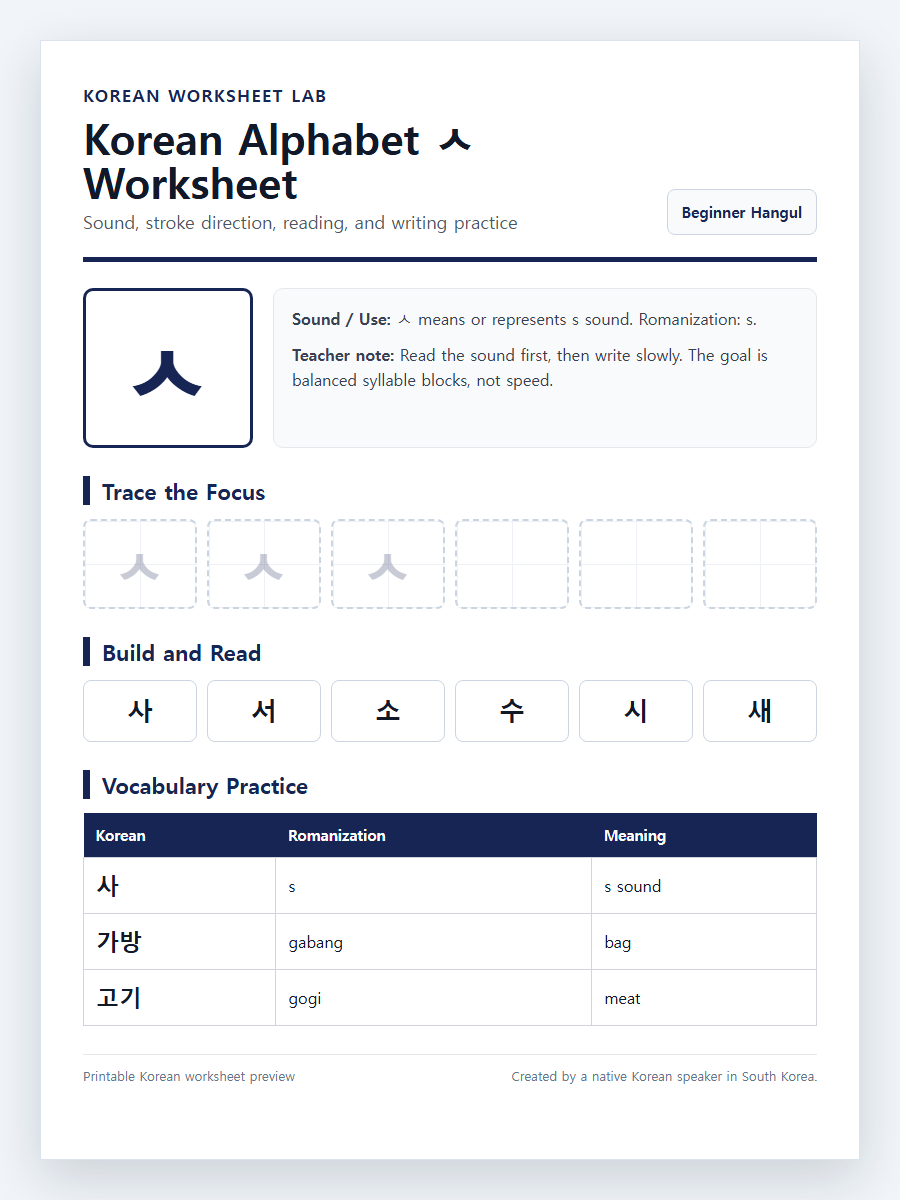
사과 means apple, 소금 means salt, and 산 means mountain. This lesson includes examples, common learner notes, and a printable worksheet for practice.
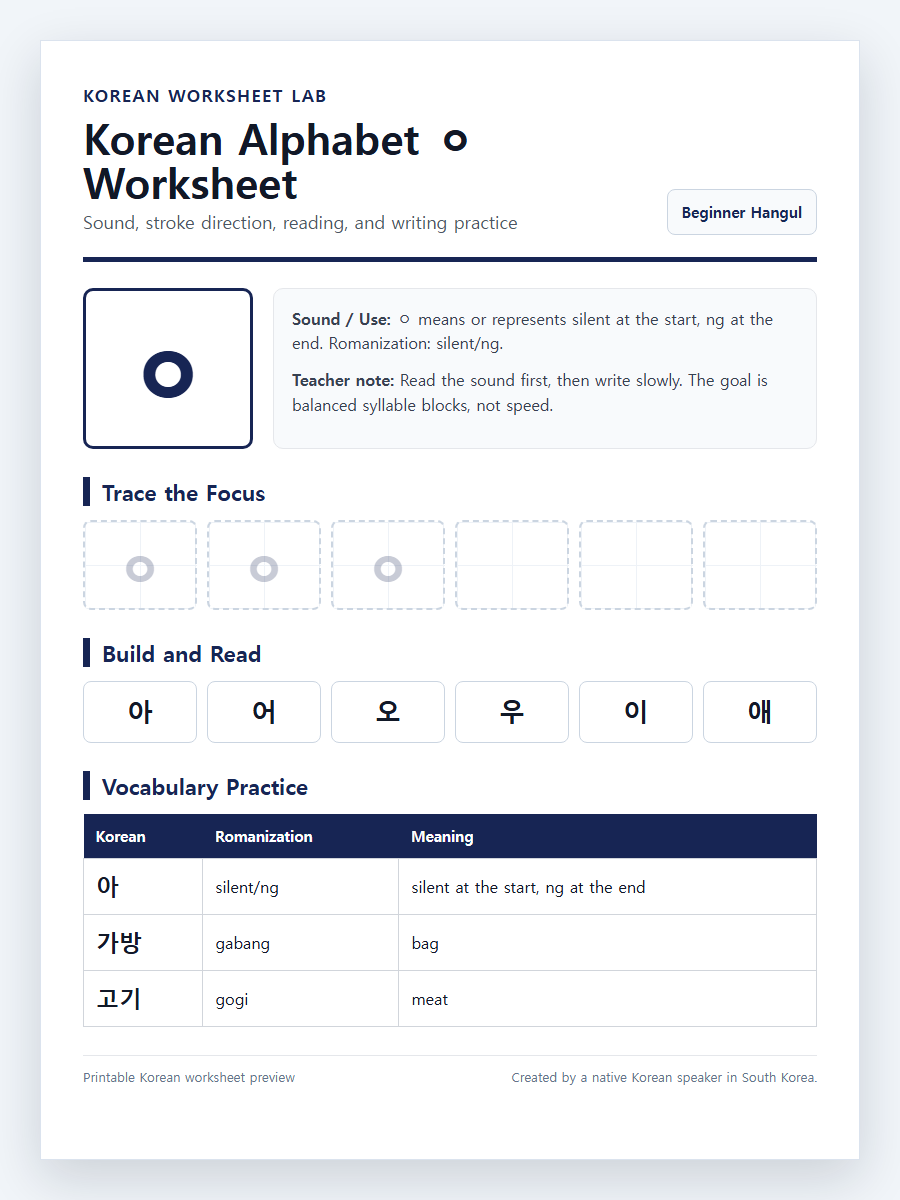
아이 means child, 우유 means milk, and 강 ends with an ng sound. This lesson includes examples, common learner notes, and a printable worksheet for practice.
자동차 means car, 지도 means map, and 집 means house. This lesson includes examples, common learner notes, and a printable worksheet for practice.
치마 means skirt, 친구 means friend, and 책 means book. This lesson includes examples, common learner notes, and a printable worksheet for practice.
아기 means baby, 사과 includes the ㅏ sound, and 가 is a simple syllable. This lesson includes examples, common learner notes, and a printable worksheet for practice.
야구 means baseball, 이야기 has a related ya sound, and 야 is used in casual speech. This lesson includes examples, common learner notes, and a printable worksheet for practice.
Understand 대박 as a reaction word for surprise, success, or excitement. This lesson includes examples, common learner notes, and a printable worksheet for practice.
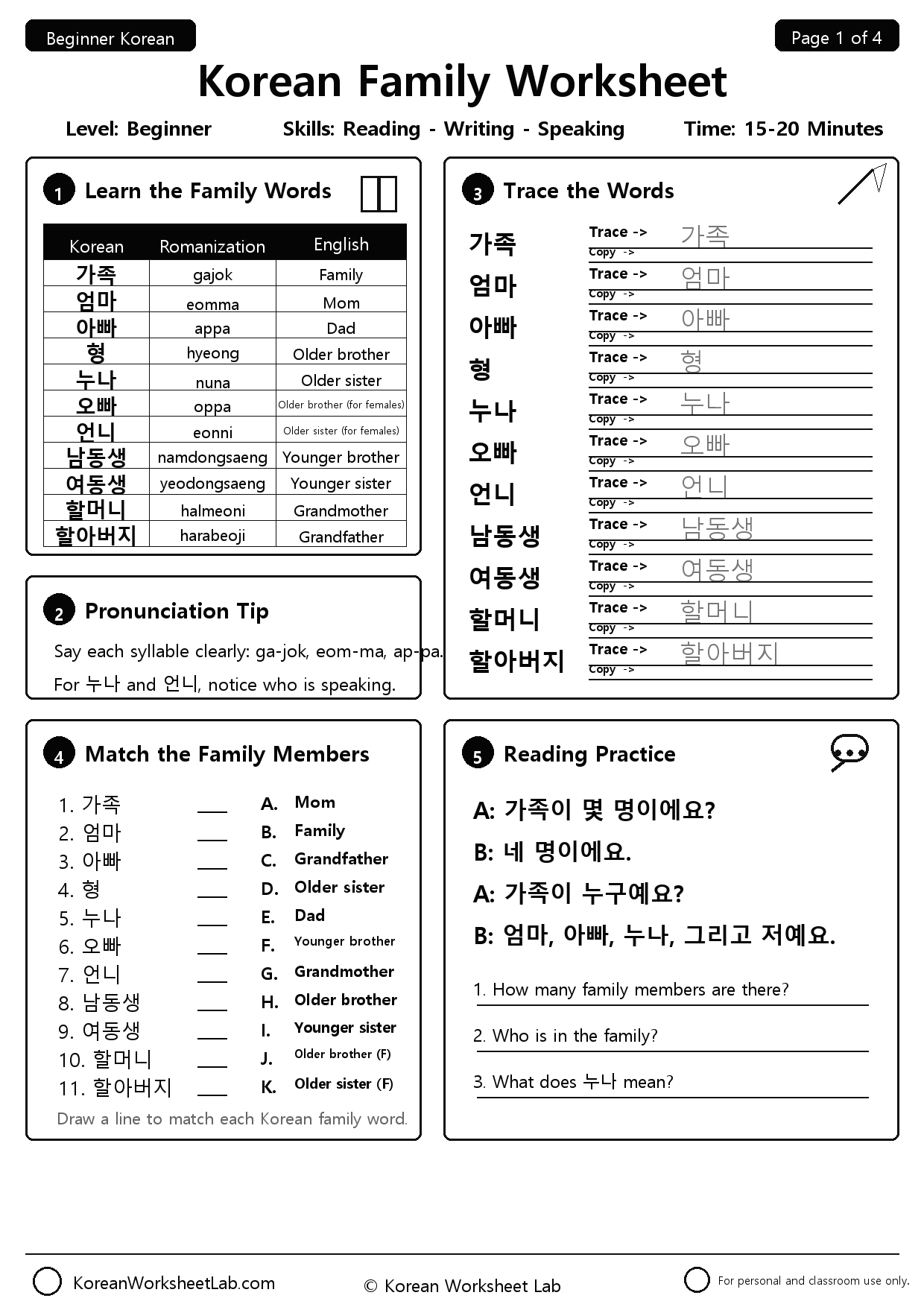
Learn how women use 언니 for older sisters and close older female friends. This lesson includes examples, common learner notes, and a printable worksheet for practice.
Learn when 오빠 is used, who can say it, and why context matters. This lesson includes examples, common learner notes, and a printable worksheet for practice.
Learn how Korean family names, given names, and name order work. This lesson includes examples, common learner notes, and a printable worksheet for practice.
Study polite behavior for greetings, gifts, meals, and public spaces. This lesson includes examples, common learner notes, and a printable worksheet for practice.
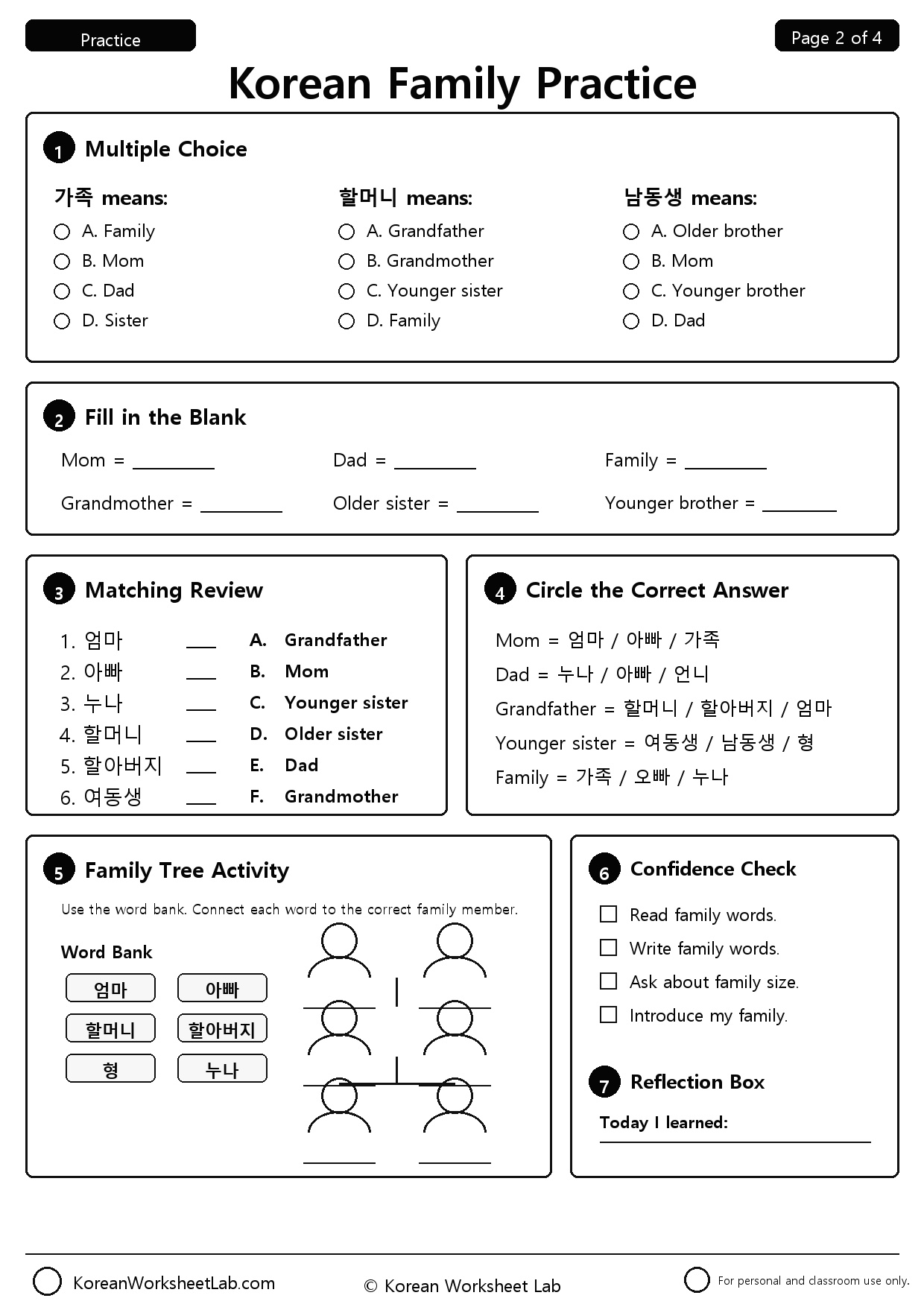
Understand family language, respect, and relationship terms in Korea. This lesson includes examples, common learner notes, and a printable worksheet for practice.
가방 means bag, 기차 means train, and 고기 means meat. This lesson includes examples, common learner notes, and a printable worksheet for practice.
바다 means sea, 비 means rain, and 밥 means rice or meal. This lesson includes examples, common learner notes, and a printable worksheet for practice.
아기 means baby, 사과 includes the ㅏ sound, and 가 is a simple syllable. This lesson includes examples, common learner notes, and a printable worksheet for practice.
Learn polite greetings for meeting, thanking, and saying goodbye. This lesson includes examples, common learner notes, and a printable worksheet for practice.
Understand family words, including age-based terms used in Korea. This lesson includes examples, common learner notes, and a printable worksheet for practice.
Study bus, subway, taxi, and walking vocabulary for travel. This lesson includes examples, common learner notes, and a printable worksheet for practice.