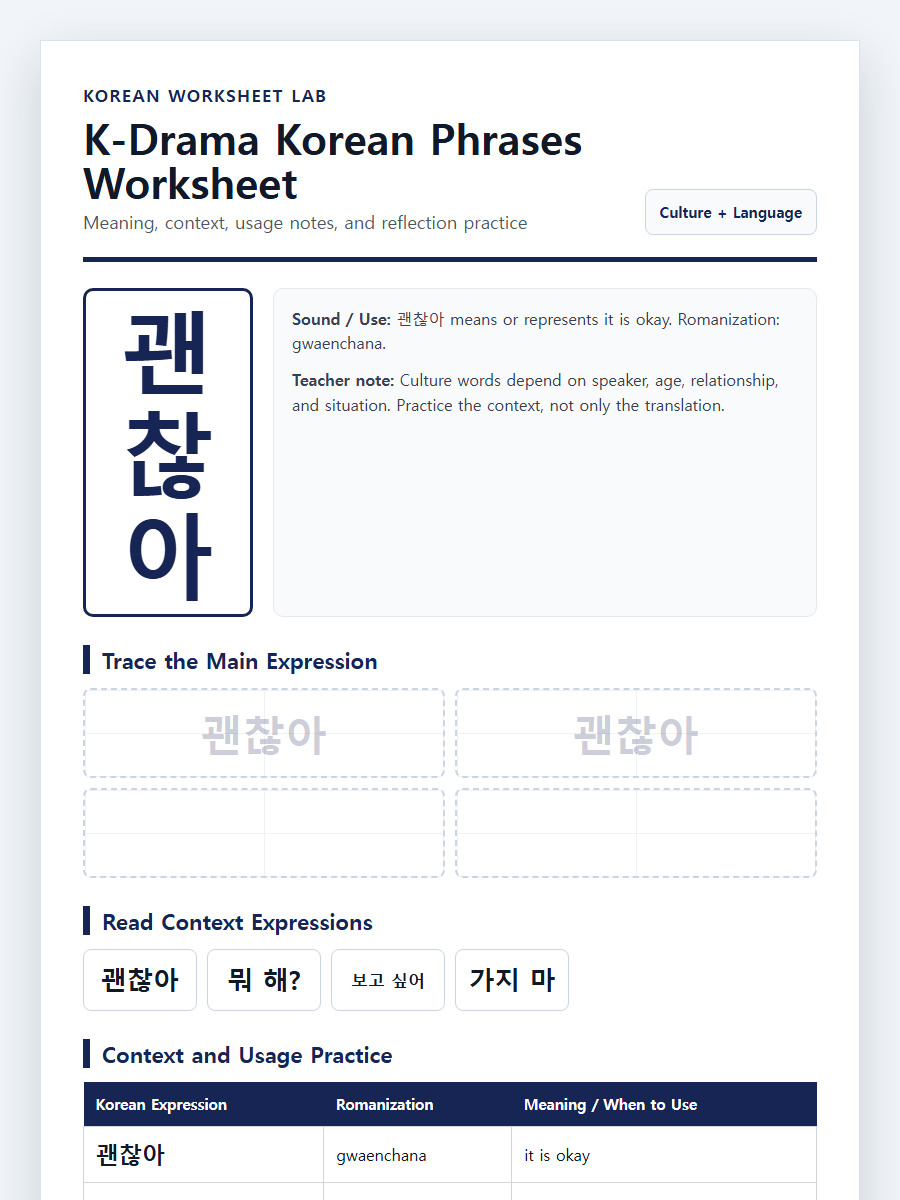
Korean Pop CultureBeginner
K-Drama Korean Phrases for Beginners
Learn common Korean phrases you often hear in K-dramas and how to understand their tone and politeness.
Worksheet preview and printable PDF included
Learn Korean pop culture expressions with clear explanations, learning objectives, key vocabulary, worksheet previews, and printable Korean PDFs.
Korean pop-culture words often reach learners through subtitles, fan conversations, short videos, and social media. A one-line translation can miss whether an expression is playful, intimate, old-fashioned, exaggerated, or inappropriate with a stranger. These lessons focus on that missing context.
Before repeating a word from a drama or song, identify who said it, their relationship, and the tone of the scene. Compare the dictionary meaning with the natural use explained on the lesson page. This approach helps learners understand familiar expressions without treating entertainment dialogue as a universal model for everyday speech.
A useful review question is not only “What does this mean?” but also “Who could I naturally say this to?” Write down a neutral alternative beside highly casual expressions, and treat subtitles as interpretations rather than exact word-for-word records of Korean speech. Revisit the original scene after studying the explanation and listen for the expression without reading the subtitle.
Learn the basic definition before adding emotional or social nuance.
Check age, closeness, status, and whether the setting is public or private.
Decide whether the expression is polite, casual, teasing, dramatic, or mainly used online.
When a trend word is too informal, learn the neutral Korean expression that works in wider situations.
Language-focused K-drama, K-pop, slang, and trend-word explanations for learners, not entertainment news.
Each page is built as a learning resource, not just a PDF link. Read the lesson first, preview the worksheet, and then print the PDF for active practice.
A short explanation of the topic and why it matters.
Clear goals for learners, parents, and teachers.
Korean, romanization, and English meaning in one table.
Nearby lessons to continue studying without guessing.
Learn common Korean phrases you often hear in K-dramas and how to understand their tone and politeness.
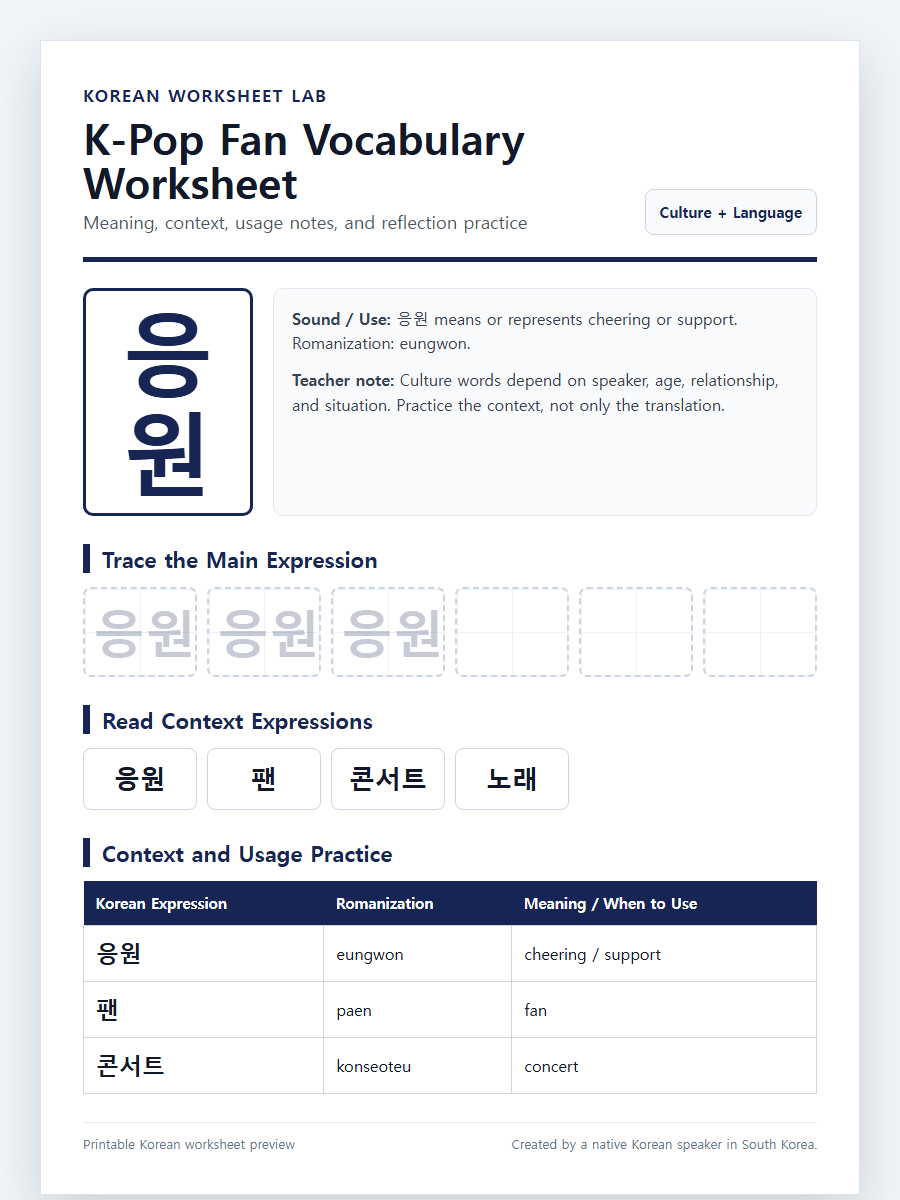
Study useful Korean words for cheering, fan culture, concerts, and online K-pop content.
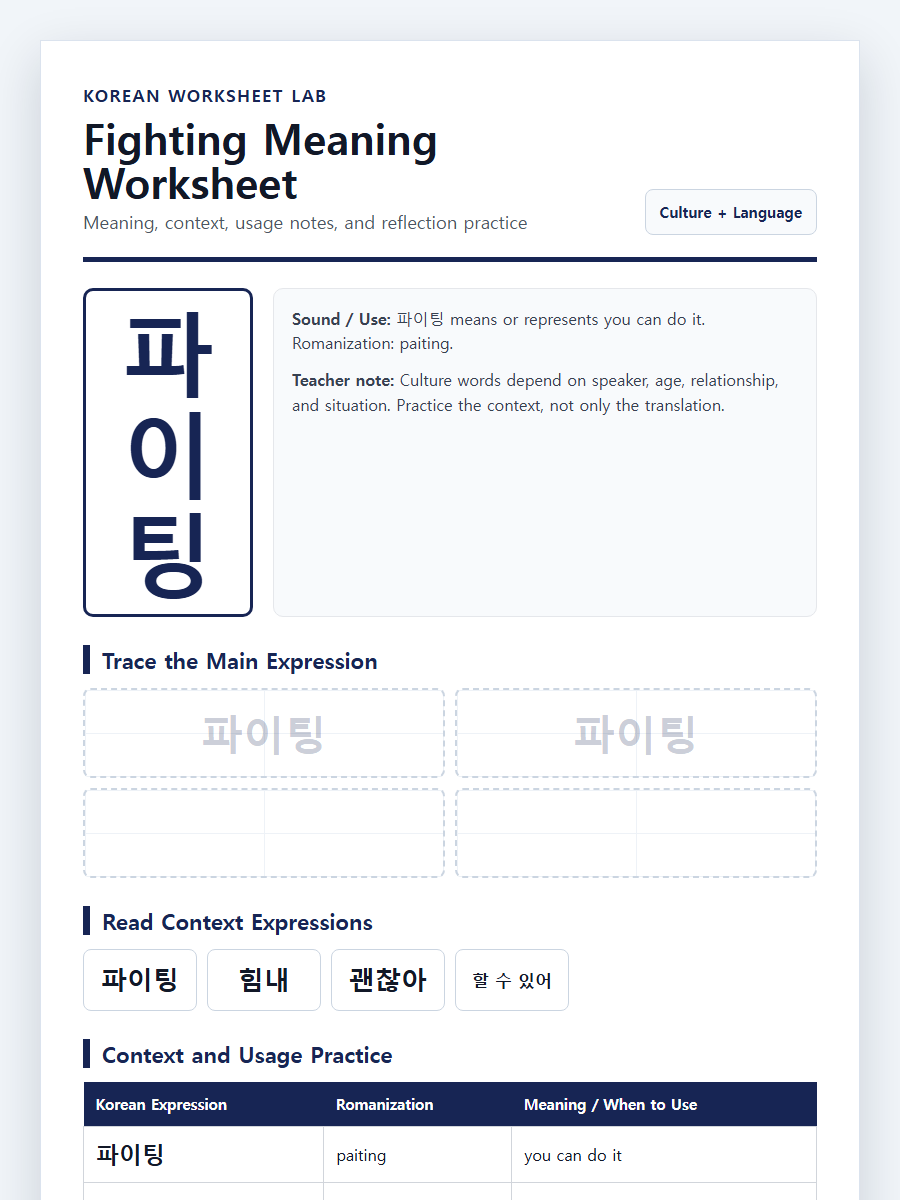
Understand why Koreans say 파이팅 to encourage someone before a challenge.
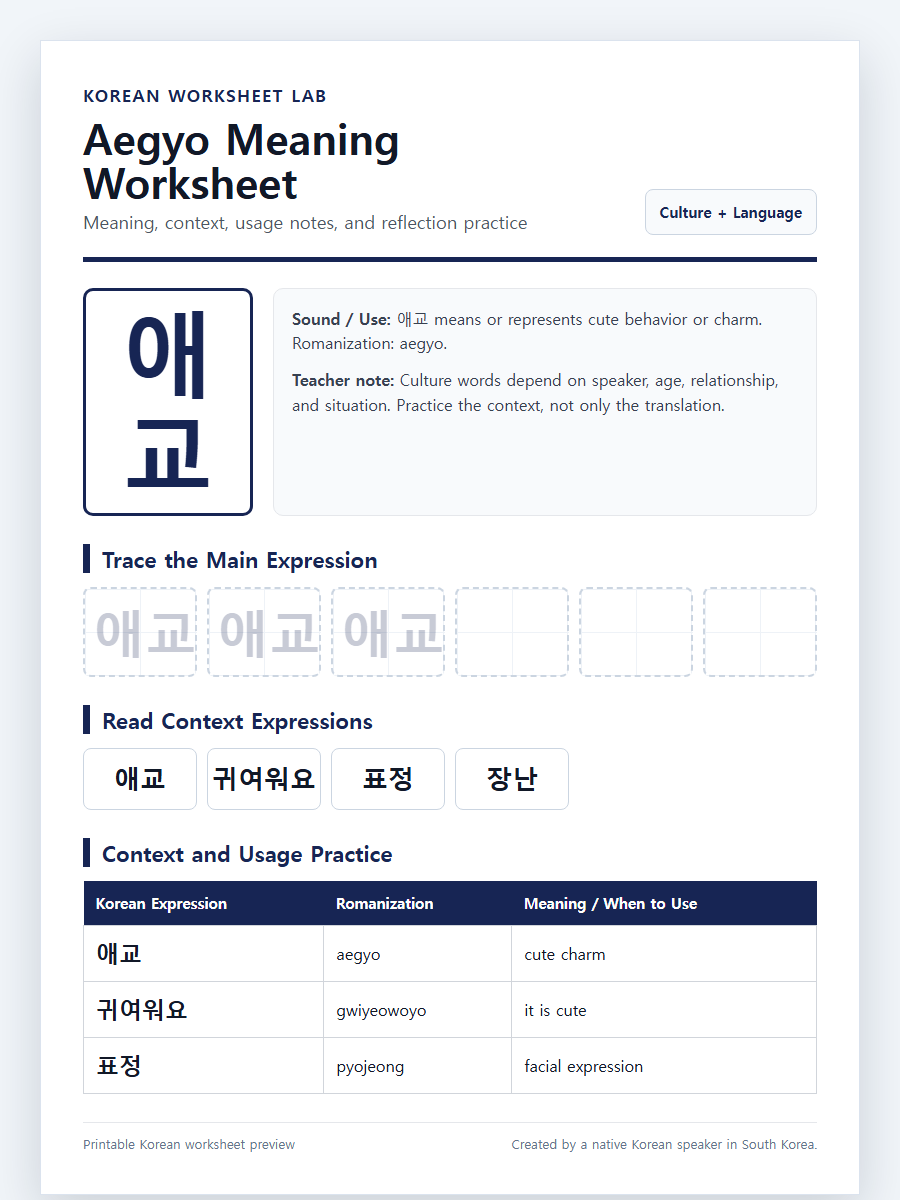
Learn what 애교 means, when people talk about it, and why context matters.
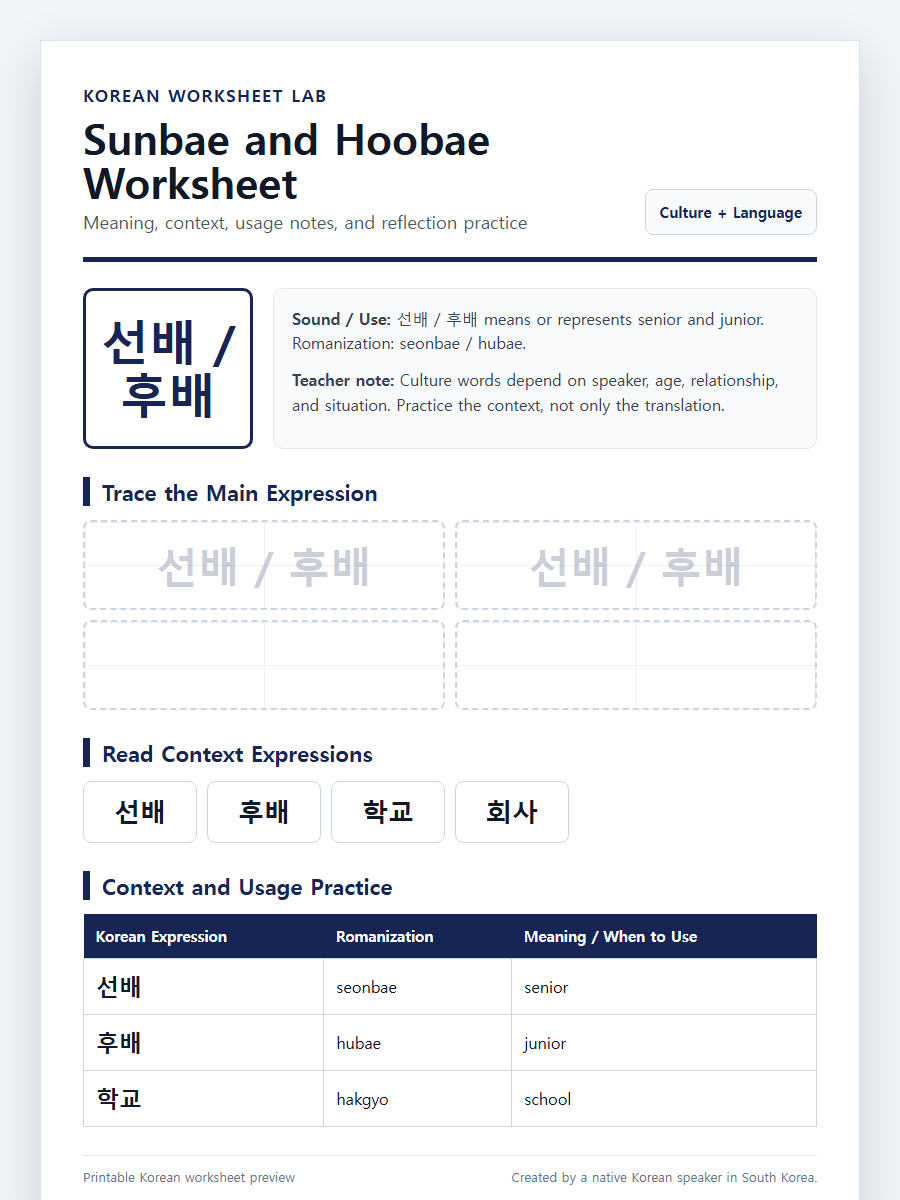
Learn the Korean social words 선배 and 후배 that often appear in dramas, schools, workplaces, and fan culture.