Preschool · Ages 3-5
Pointing, stamping, coloring, movement, and one repeated Korean sound.
Suggested session: 5-10 minutes
Child-friendly Korean learning
These Korean kids worksheets help children color, trace, match, stamp, and read basic Korean words with simple visual support.
Dot marker circles help young learners follow the Hangul shape with stamps, stickers, or crayons.
Children color the big Korean consonant, then read simple syllables and words with adult support.
Stamping and tracing make early Hangul practice feel hands-on instead of test-like.
Color, trace, and write ㄱ through ㅎ.
Hanbok, bibimbap, hanok, mugunghwa, Taegukgi, and buk.
Trace consonants and vowels with large practice pages.
Days, colors, seasons, fruit, and animals.
Stamp, color, and read one Korean consonant at a time.

New two-page worksheet
Learn Monday through Sunday with colorful calendar clues, romanization, stroke-order tracing, and large writing boxes.
Child-centered curriculum
Follow the steps in order for a complete beginner, or choose one familiar topic for review. Children do not need to finish every worksheet in one sitting.
Stamp, trace, color, and recognize one letter at a time.
Open activity 2Connect Korean color words to strong visual clues.
Open activity 3Count real objects and say a short number sequence.
Open activity 4Use friendly pictures for naming, matching, and writing.
Open activity 5Learn family words with drawings and supported speaking.
Open activity 6Name familiar foods and state simple preferences.
Open activity 7Practice hello, thank you, and short role-play turns.
Open activity 8Move from letters to syllables and short words.
Open activity 9Trace, copy, then write independently in large boxes.
Open activity 10Use learned words in questions, answers, and partner games.
Open activityAge ranges are guides. Choose by attention span, fine-motor readiness, Hangul experience, and interest.
Pointing, stamping, coloring, movement, and one repeated Korean sound.
Suggested session: 5-10 minutes
Tracing, matching, syllable reading, and one-word answers.
Suggested session: 10-15 minutes
Independent copying, vocabulary recall, short sentences, and role play.
Suggested session: 15-25 minutes
Notice the letter or picture, then add color without making neatness the main goal.
An adult models one natural word or phrase and the child repeats or answers.
Use large movement first, then tracing, copying, and one independent attempt.
Point to Hangul, match it with a picture, and read supported syllables or words.
Build letters with arms, cards, blocks, stickers, or a short classroom hunt.
Return to one target rather than introducing a completely new set every day.
Saved on this device. Stars reward participation and review, not perfect handwriting.
0 / 5 stars
Hangul letter coloring and writing
This 14-page kids Hangul pack gives each Korean consonant its own page with a large colorable letter, stroke-order guide, picture word, light tracing boxes, and independent writing boxes.
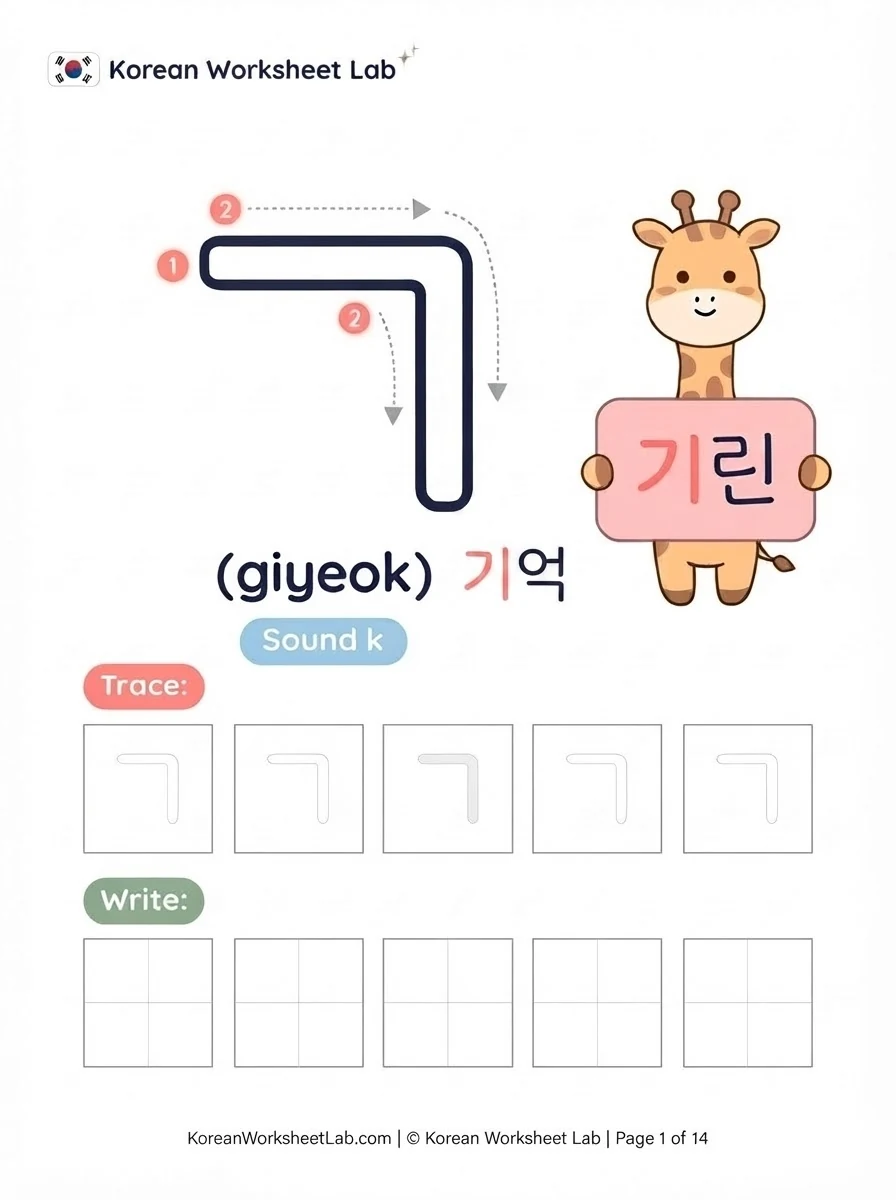
ㄱ Giyeok
기역 with 기린 example
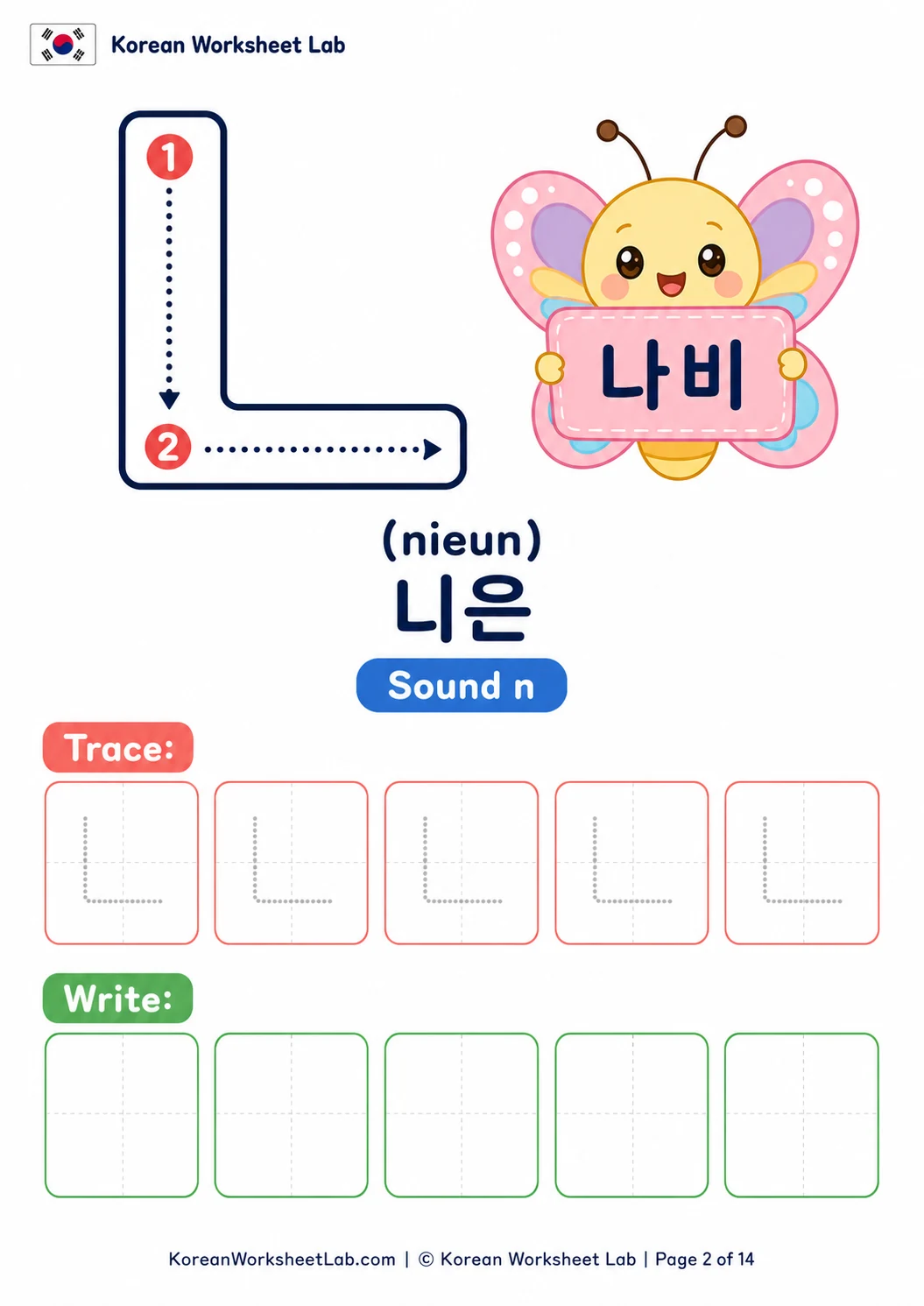
ㄴ Nieun
니은 with 나비 example
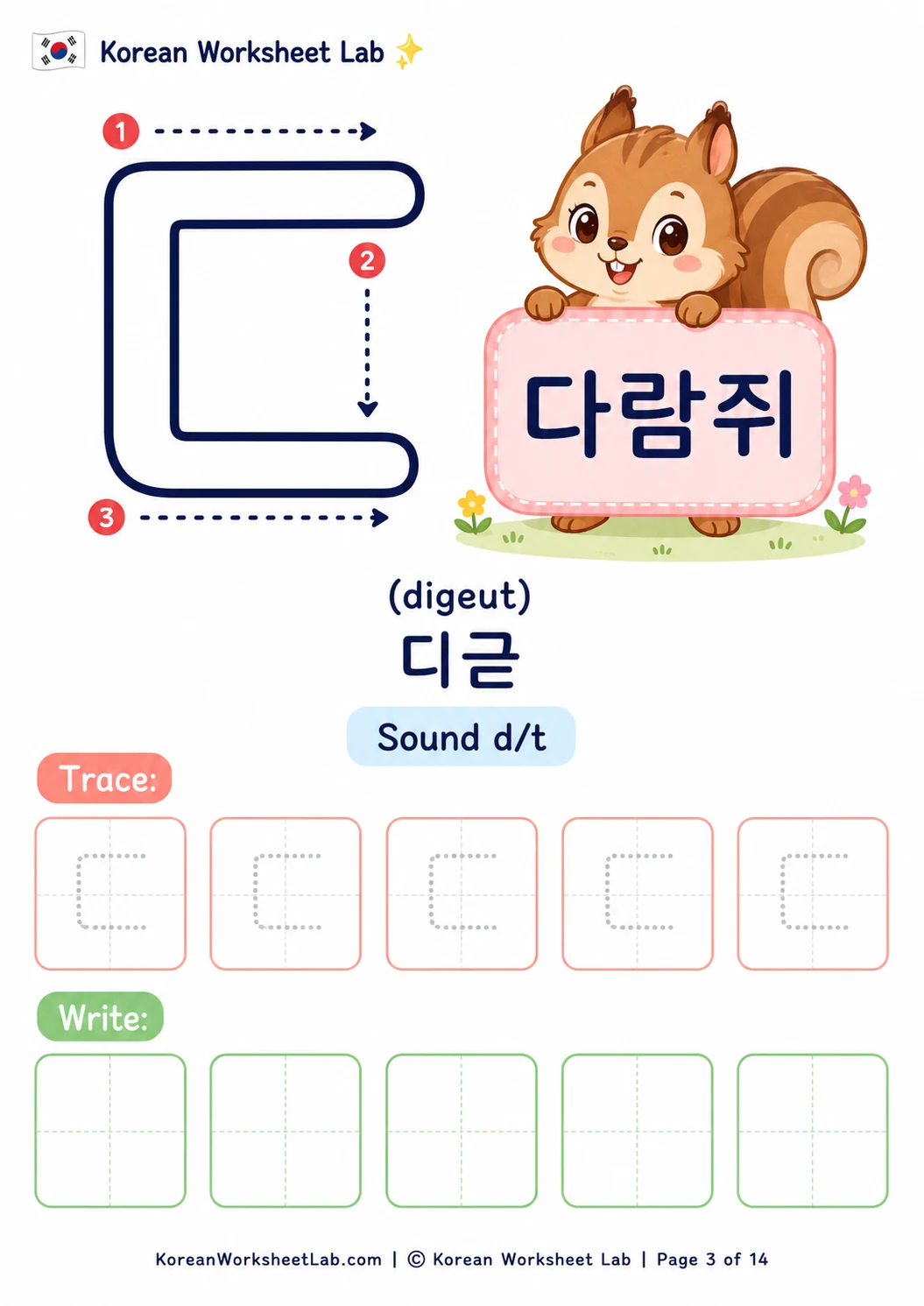
ㄷ Digeut
디귿 with 다람쥐 example
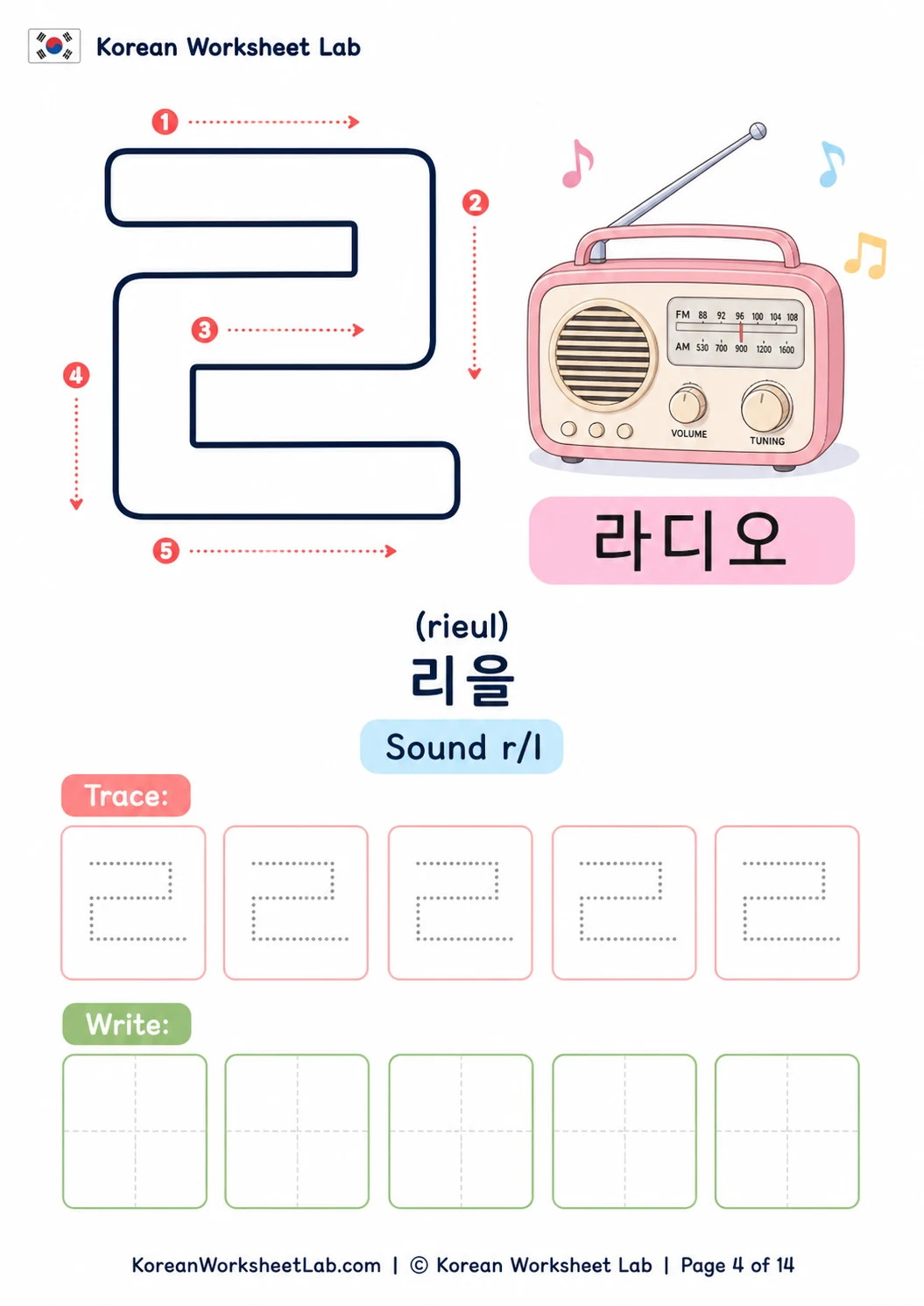
ㄹ Rieul
리을 with 라디오 example
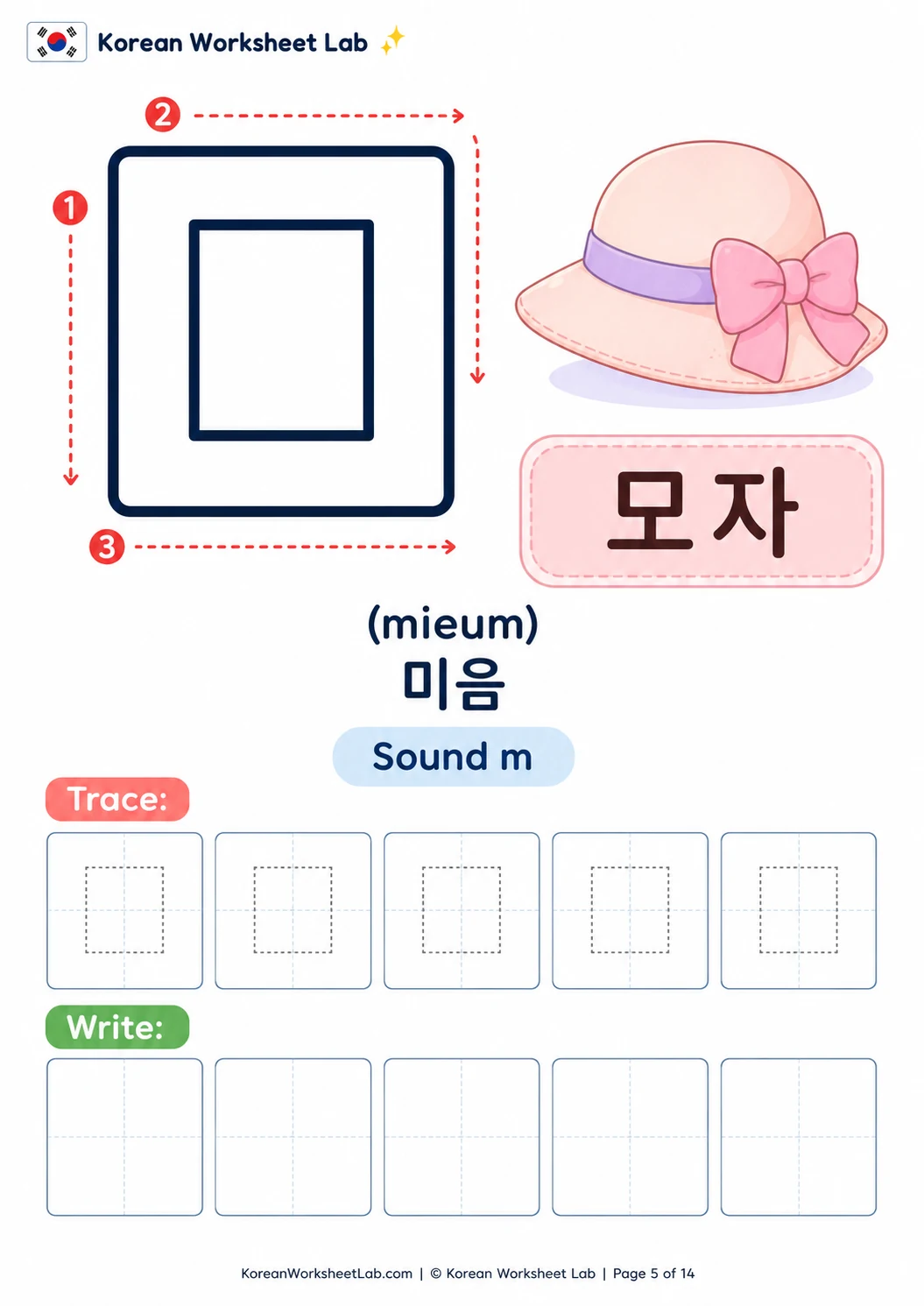
ㅁ Mieum
미음 with 모자 example
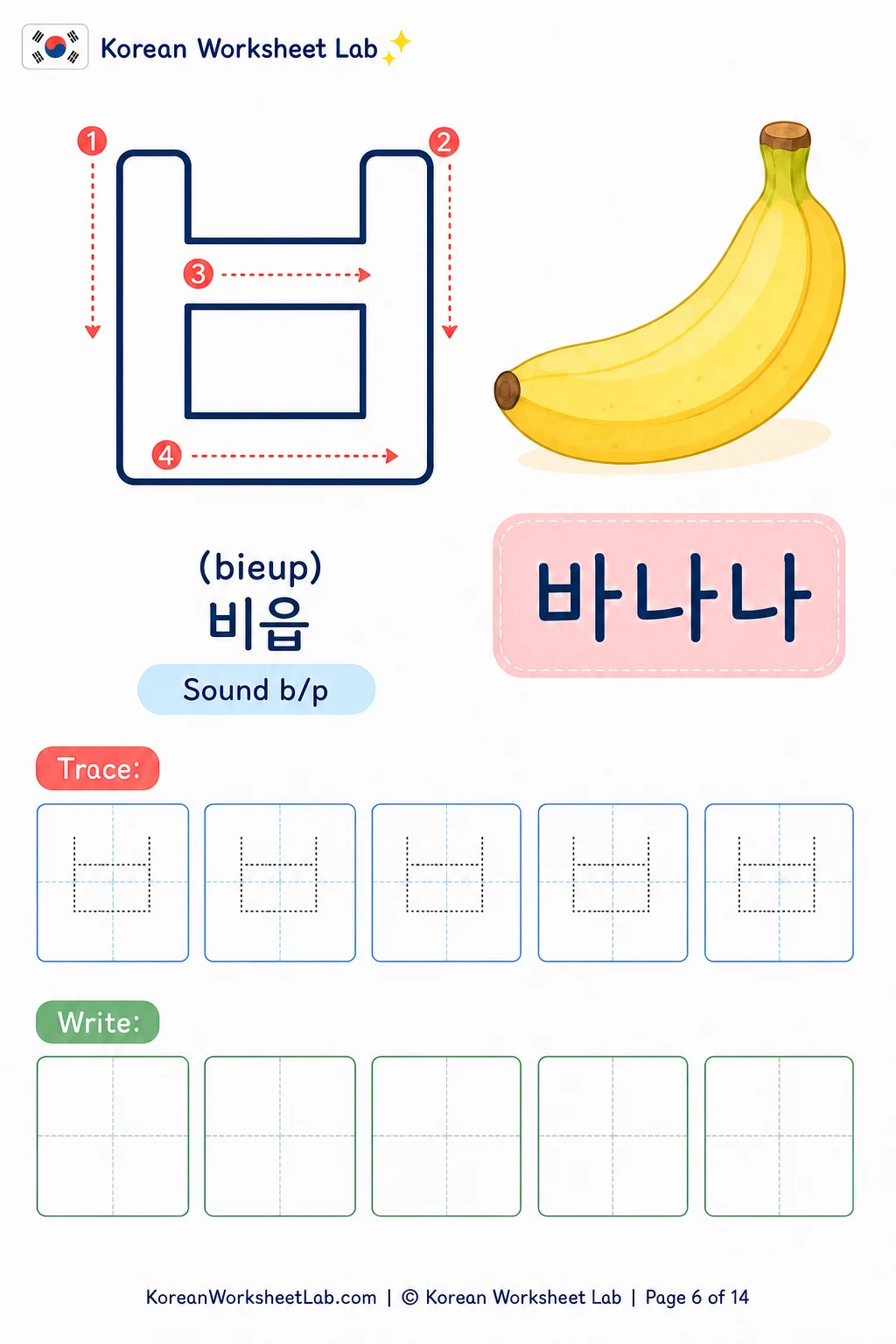
ㅂ Bieup
비읍 with 바나나 example
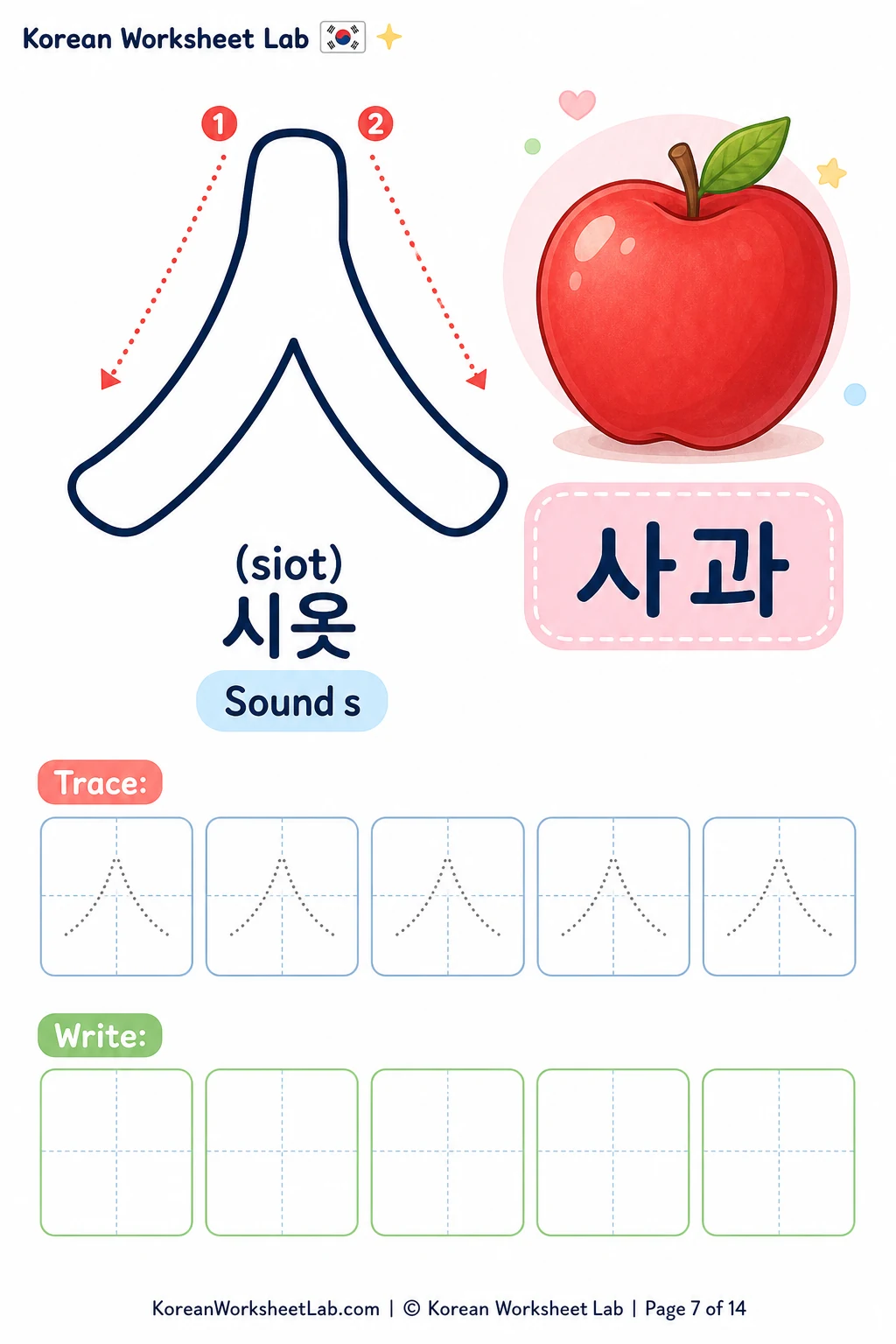
ㅅ Siot
시옷 with 사과 example
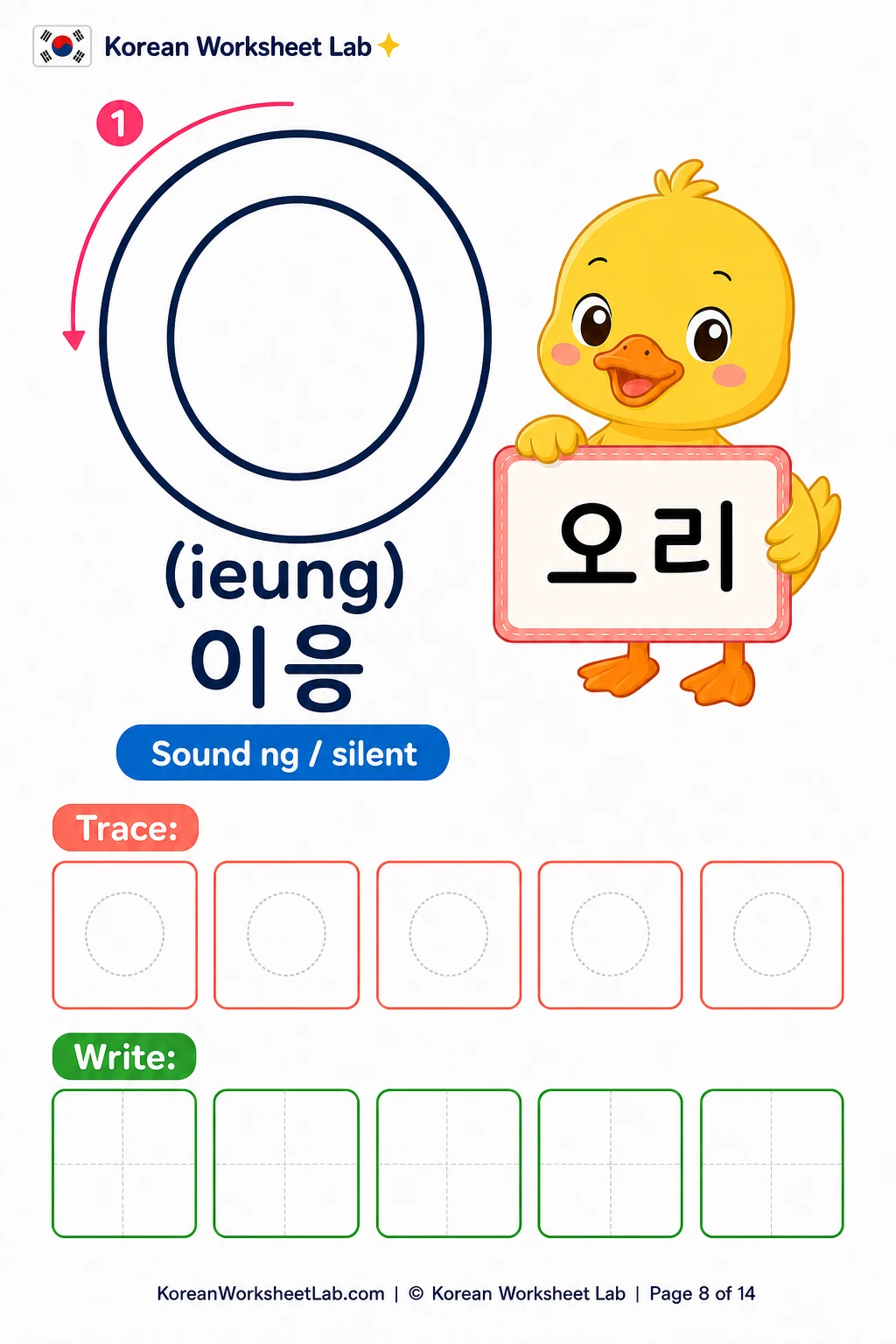
ㅇ Ieung
이응 with 오리 example
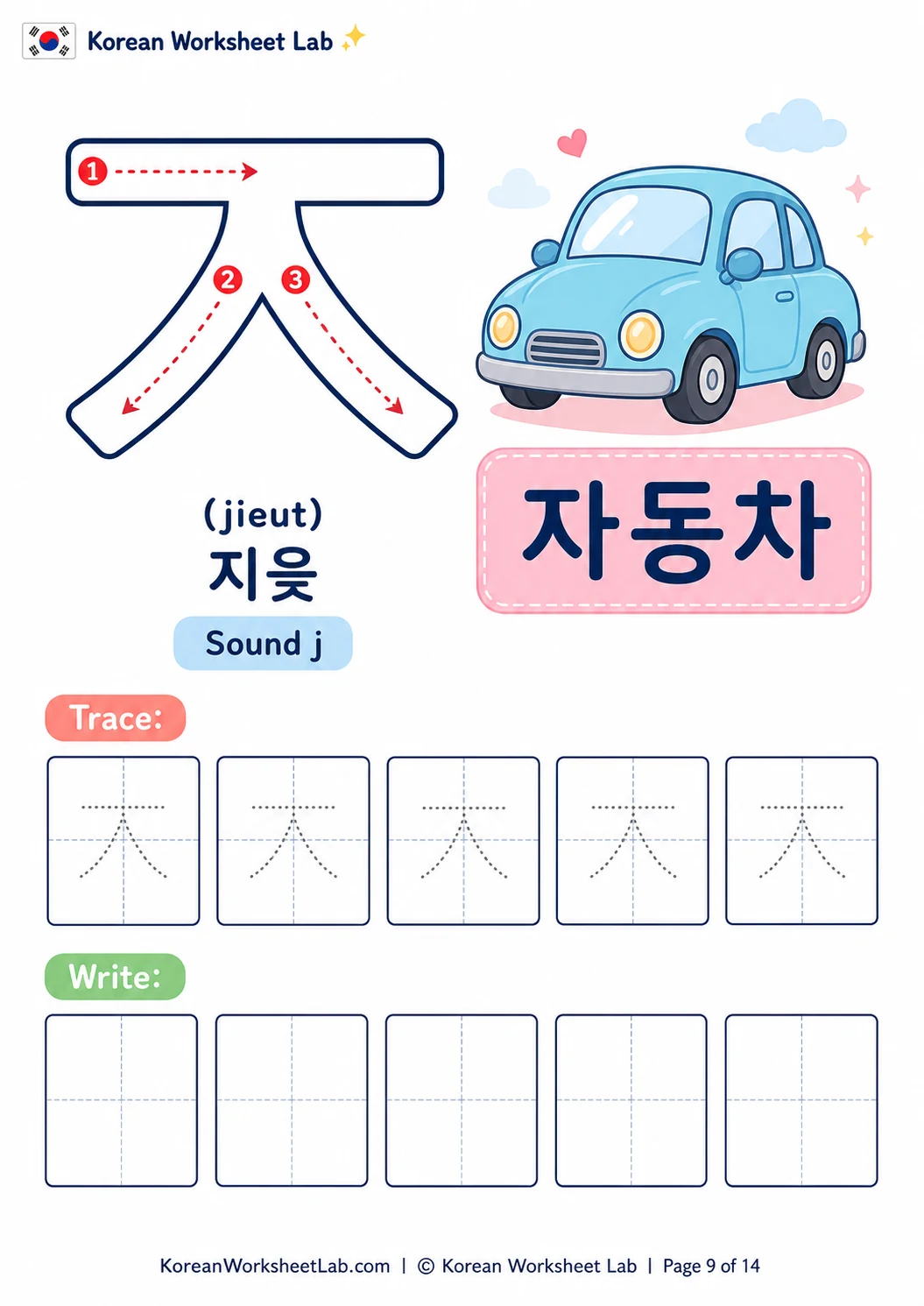
ㅈ Jieut
지읒 with 자동차 example
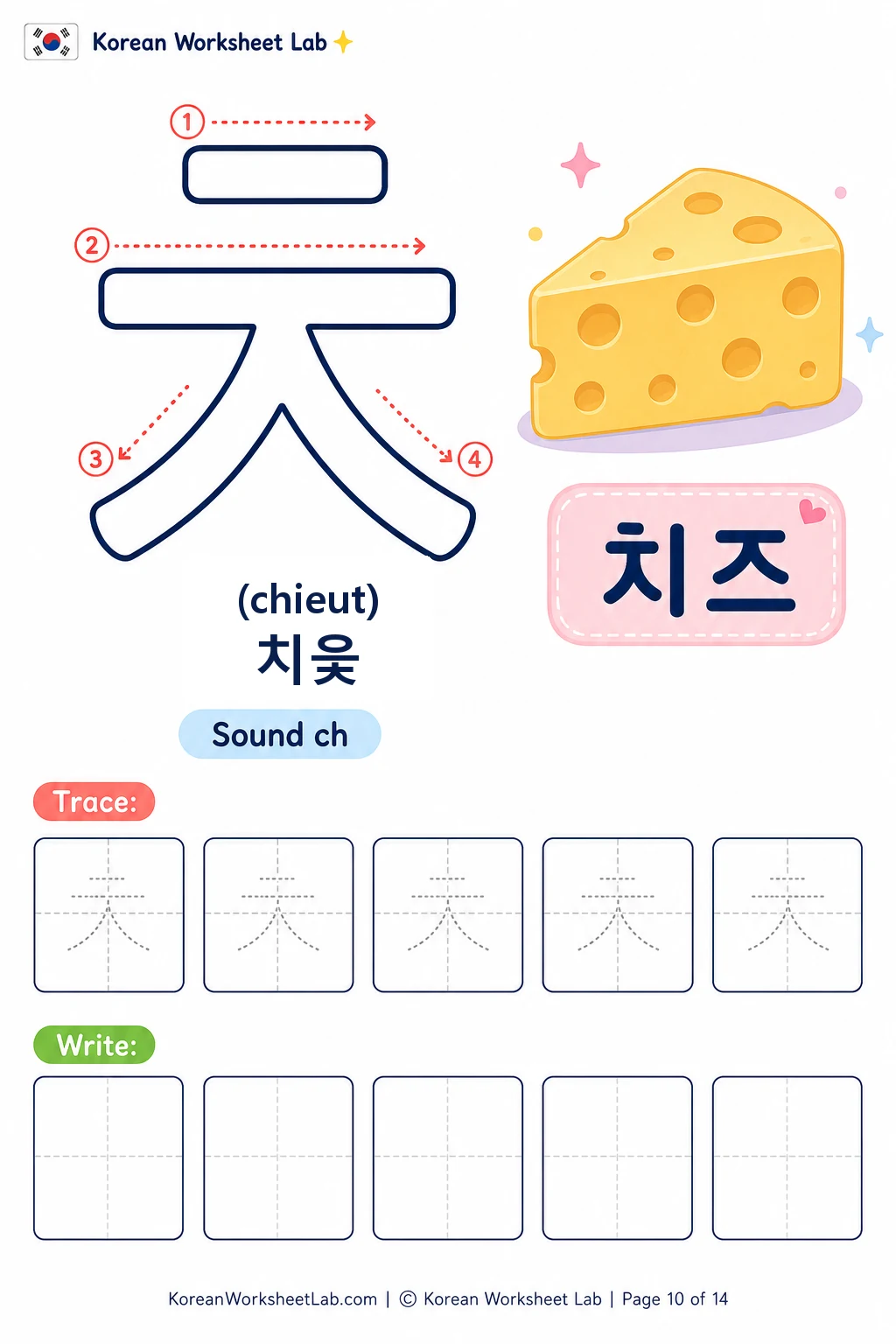
ㅊ Chieut
치읓 with 치즈 example
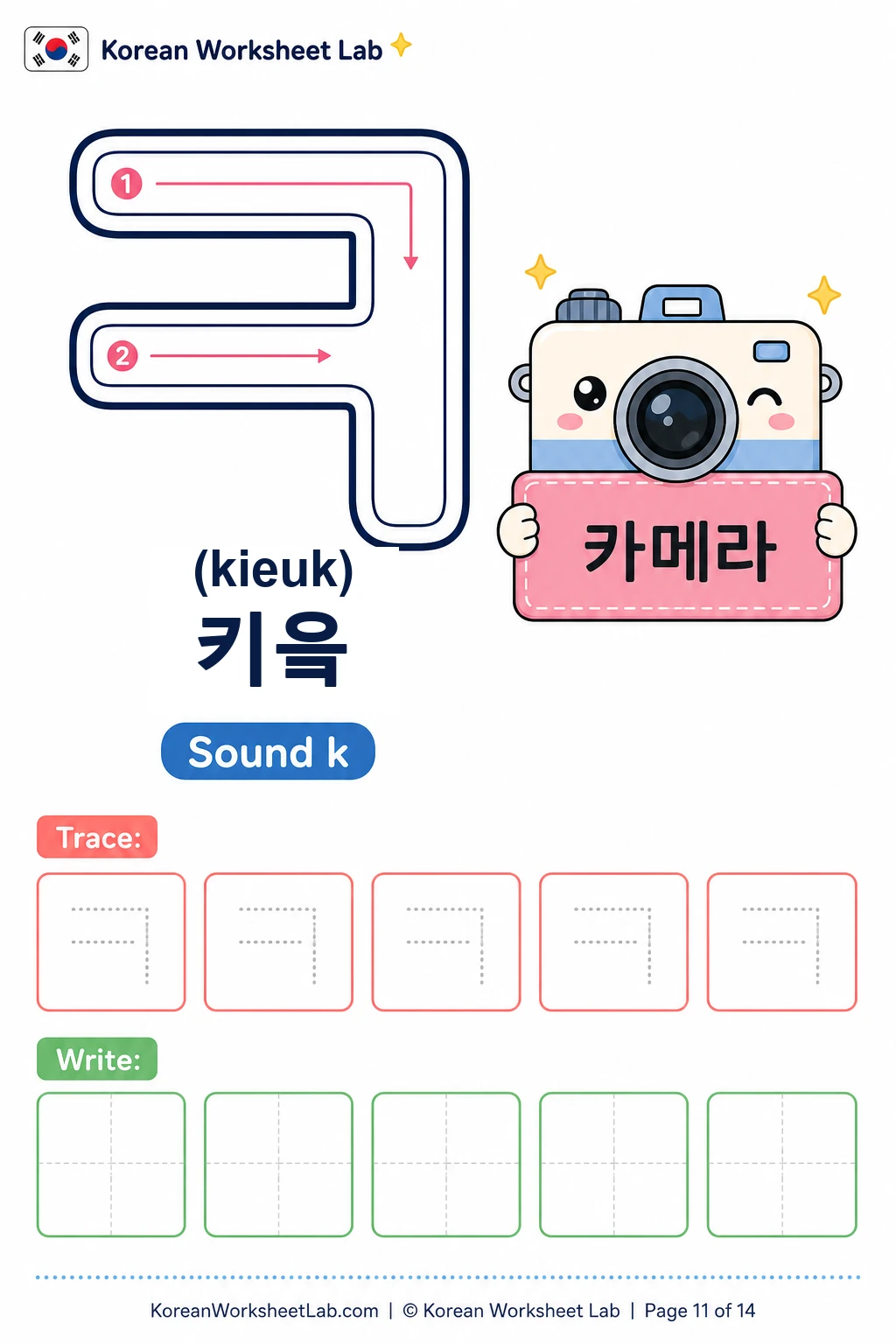
ㅋ Kieuk
키읔 with 카메라 example
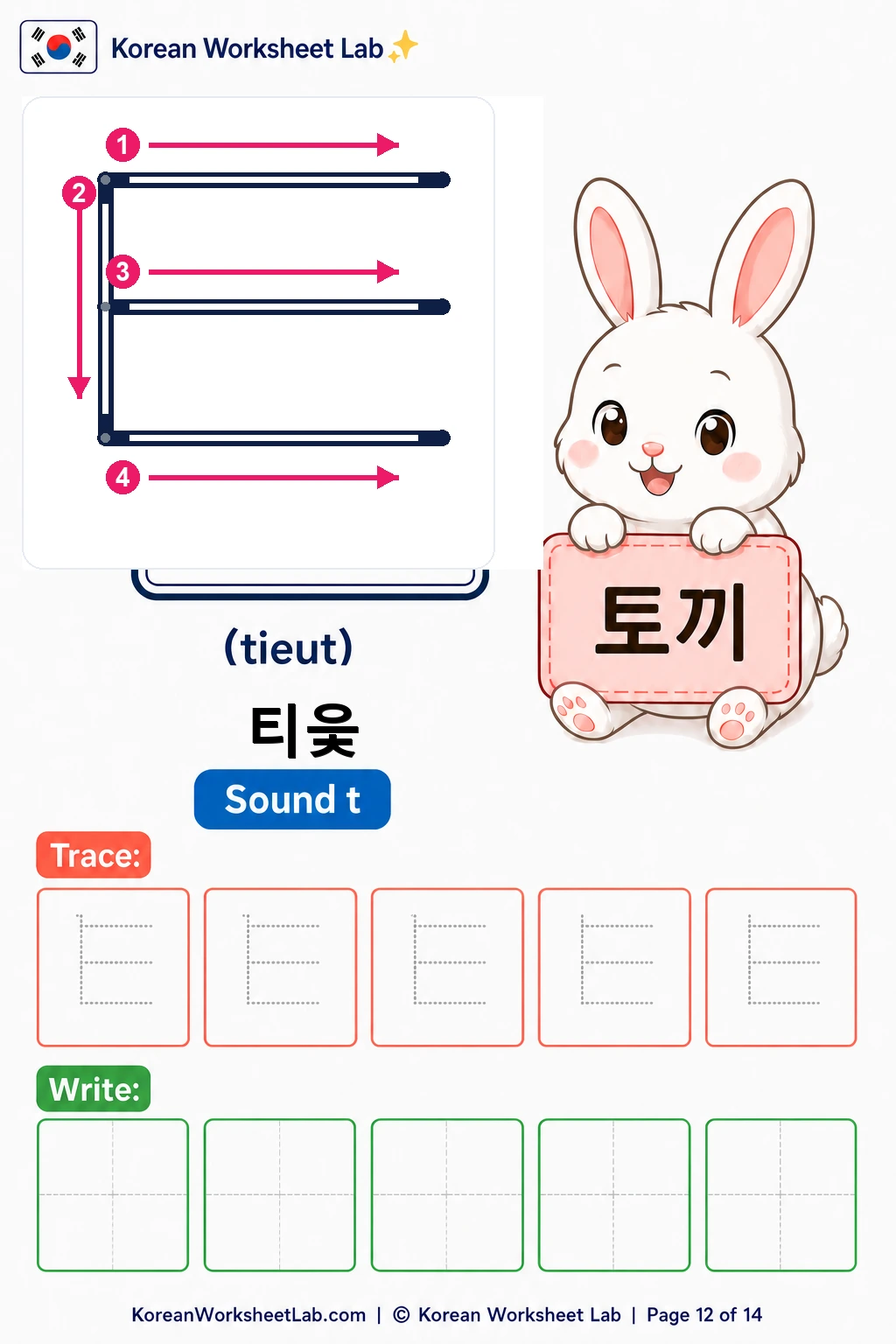
ㅌ Tieut
티읕 with 토끼 example
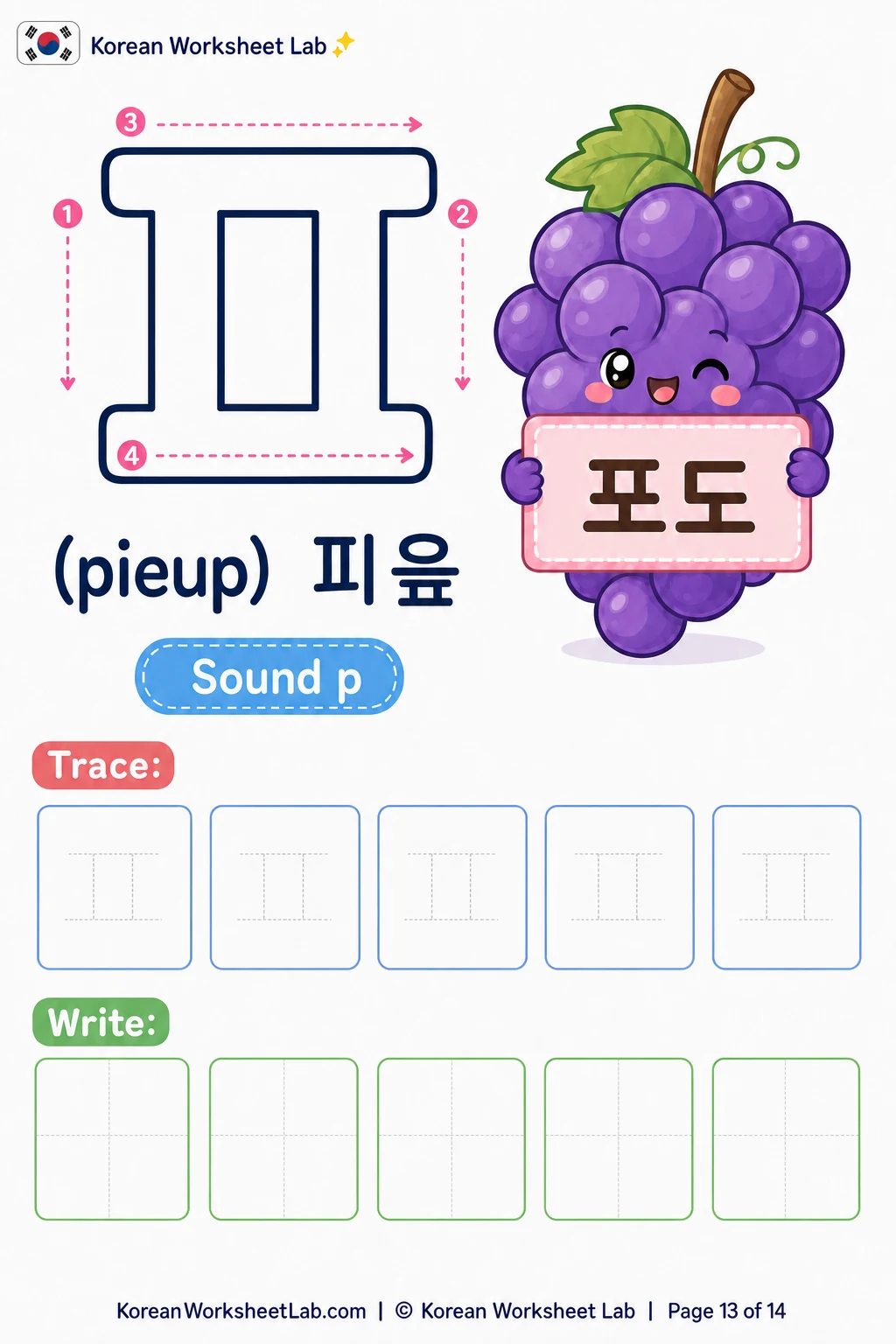
ㅍ Pieup
피읖 with 포도 example
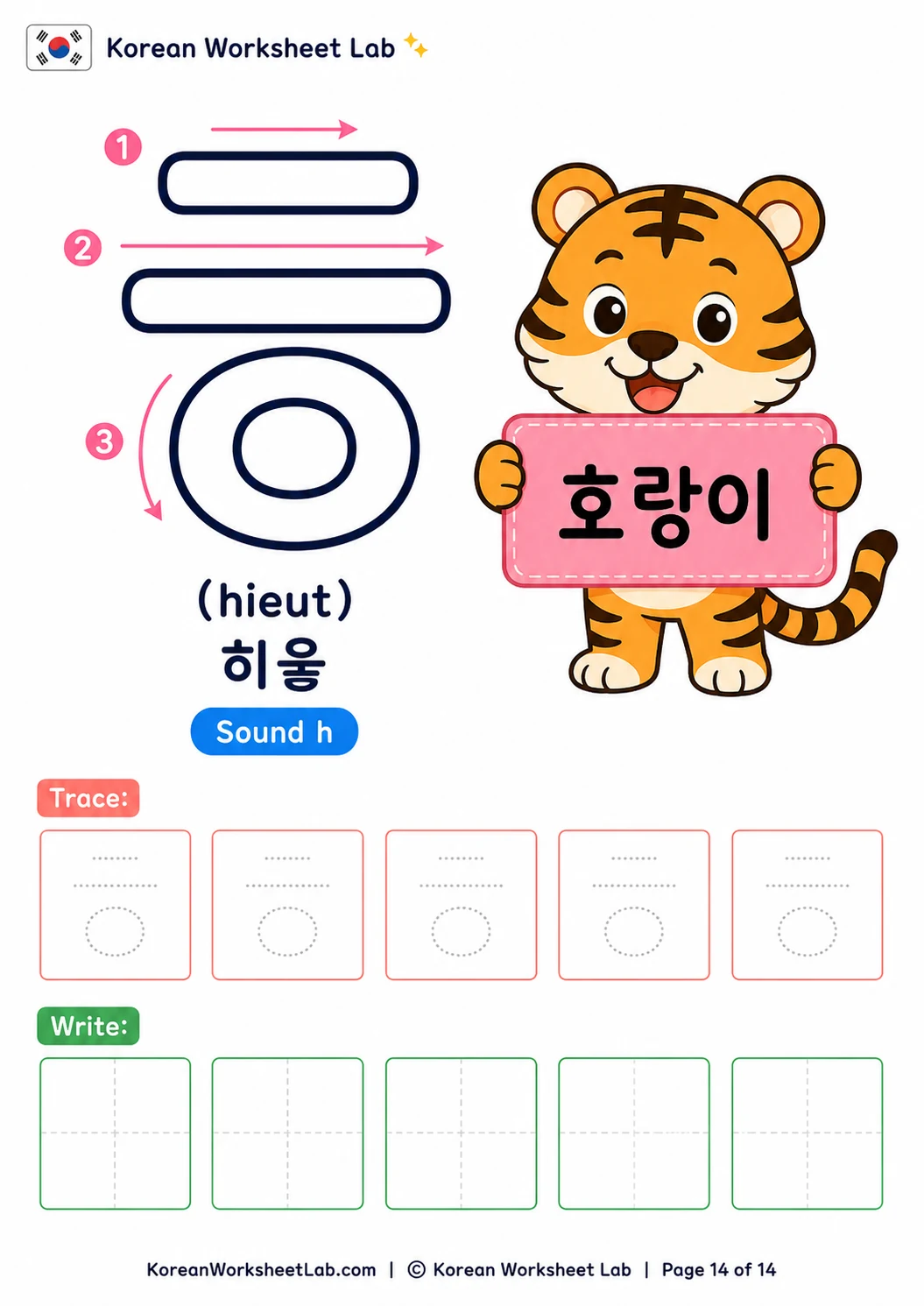
ㅎ Hieut
히읗 with 호랑이 example
Korean culture coloring page
A gentle culture worksheet where children color hanbok, notice traditional clothing details, and learn simple Korean words such as hanbok, jeogori, chima, gat, and daenggi.
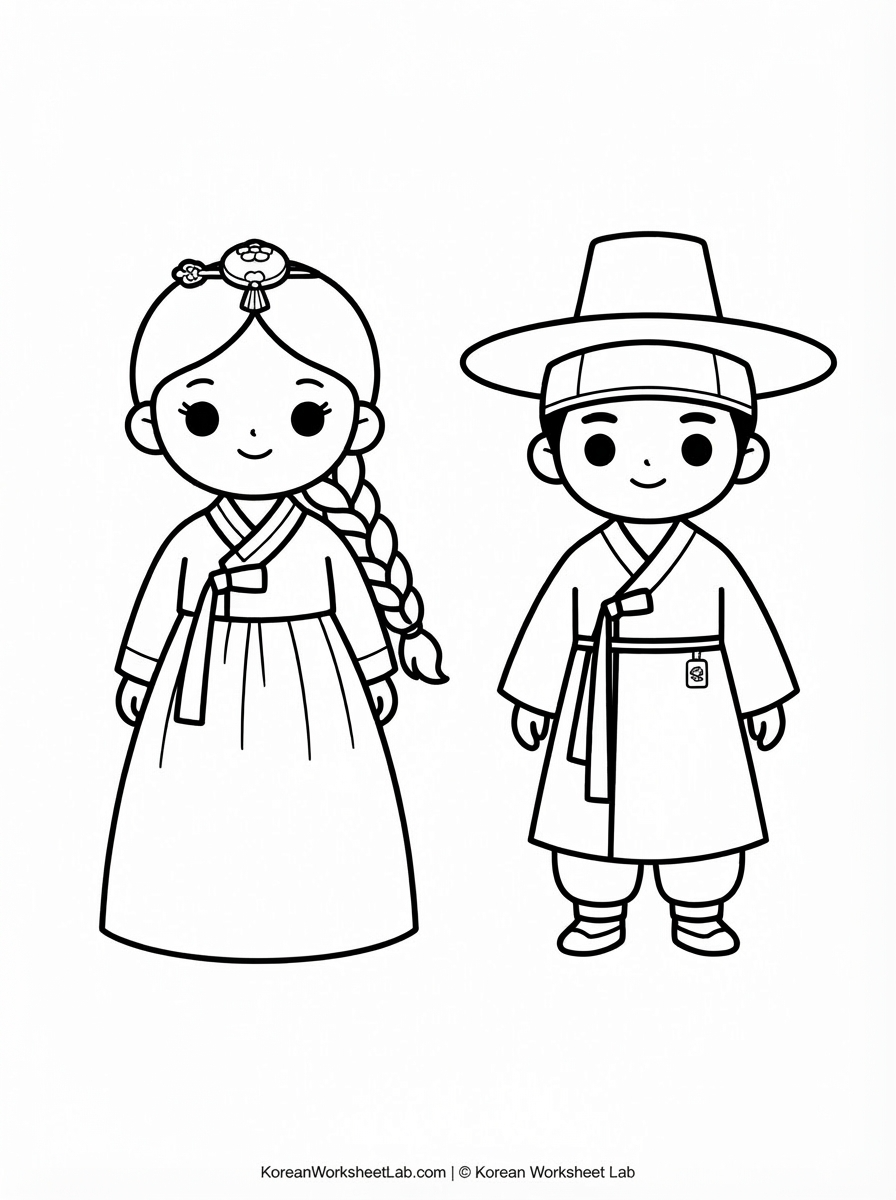
Printable Hanbok Coloring Page
A4 coloring worksheet for kids learning Korean culture and traditional clothing vocabulary.
Korean food culture coloring page
Children color a Korean bibimbap bowl, compare it with a color guide, and learn simple food words such as bibimbap, rice, egg, carrot, mushroom, gochujang, and chopsticks.
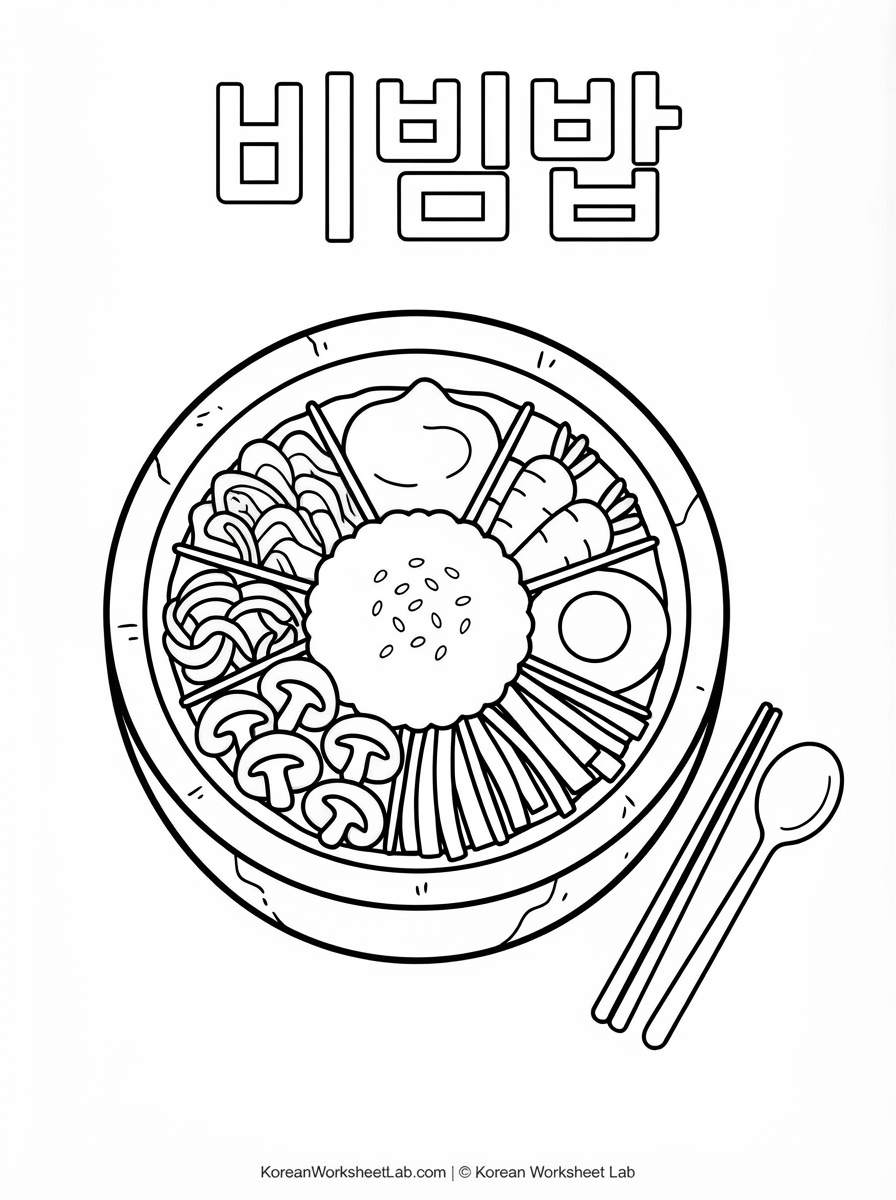
Page 1: Bibimbap Coloring Page
A blank bibimbap coloring page with Korean title text, rice, vegetables, egg, mushrooms, chopsticks, and spoon.
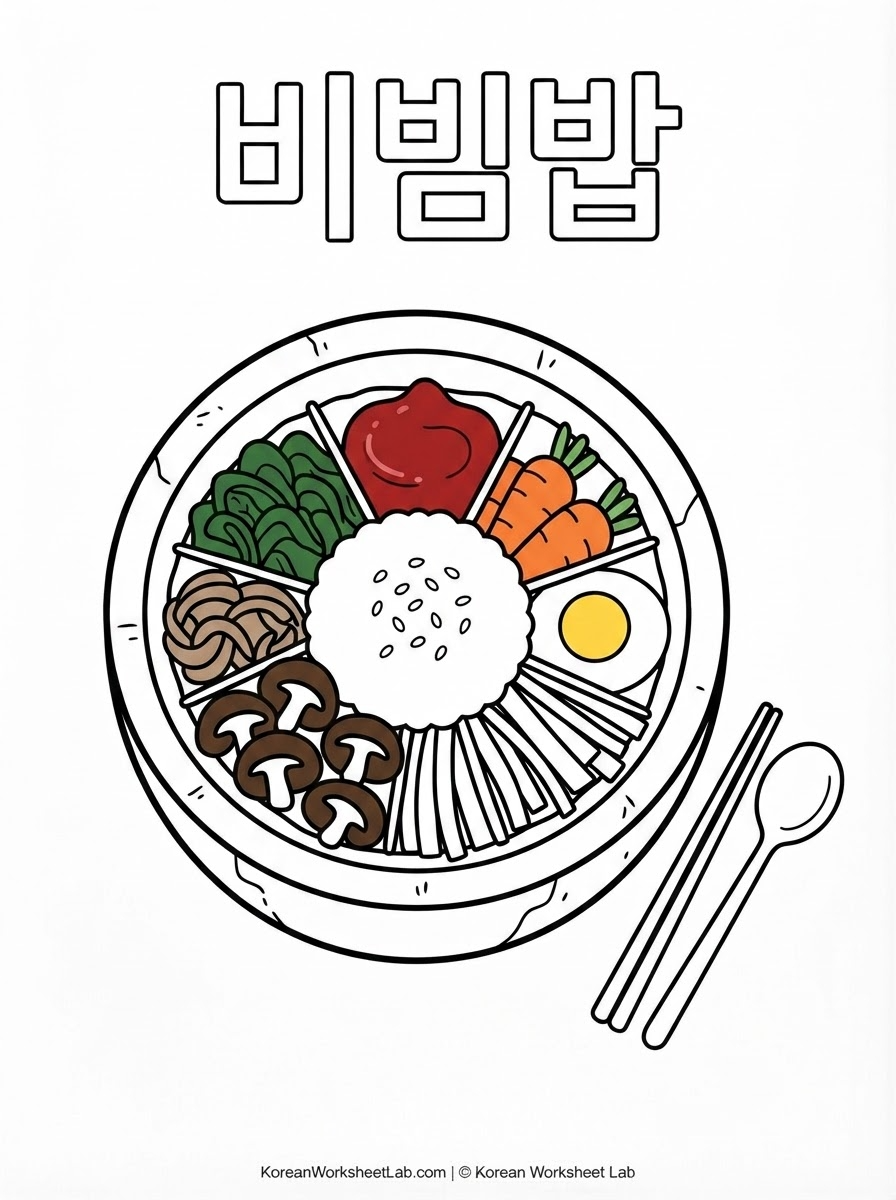
Page 2: Bibimbap Color Guide
A colored reference page that helps children notice common bibimbap ingredient colors before or after coloring.
Korean house culture coloring page
Children compare a realistic hanok reference image with two printable coloring pages, then learn simple culture words such as hanok, roof tile, courtyard, door, wood, and window.

Real-Life Hanok Reference Image
A realistic reference image for noticing the curved tiled roof, wooden doors, courtyard, and garden before coloring.
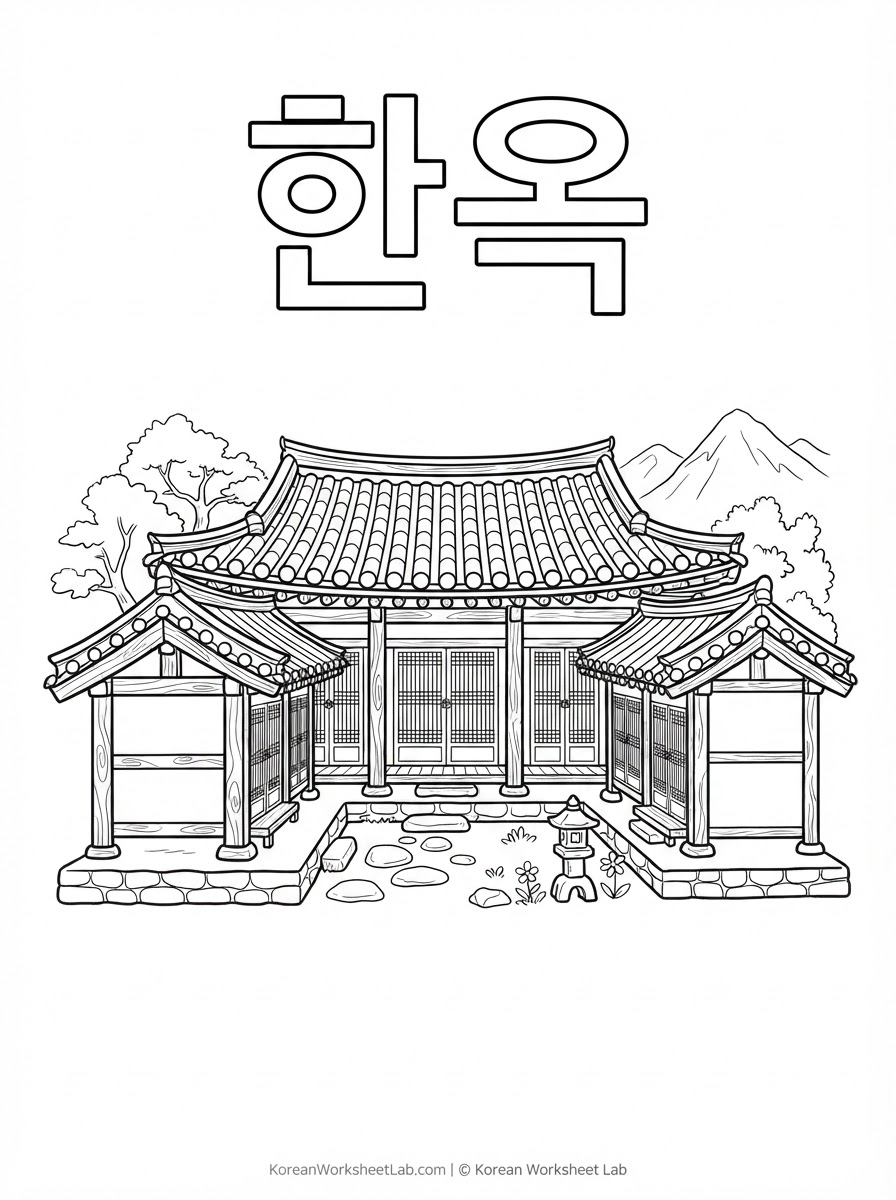
Page 1: Detailed Hanok Coloring Page
A detailed traditional Korean house coloring page with roof tiles, wooden structure, doors, yard, trees, and mountains.
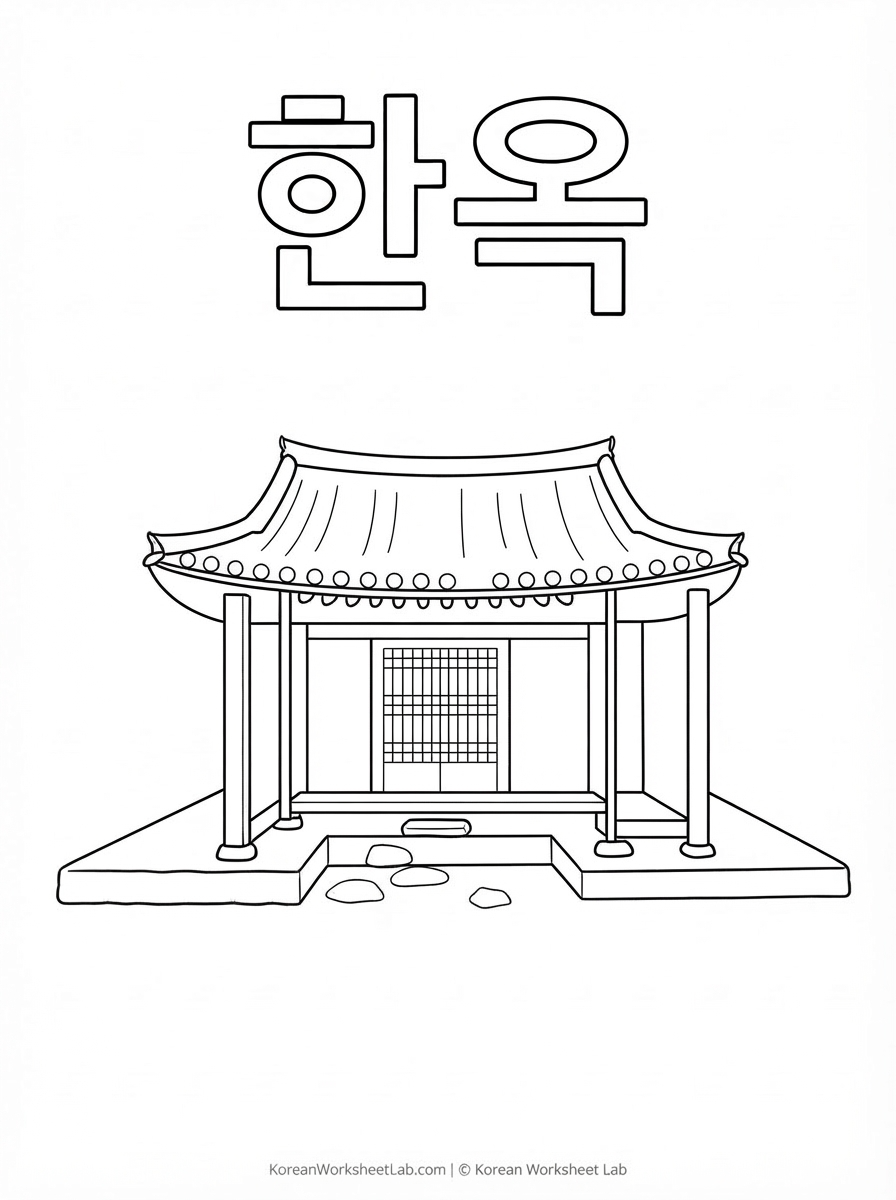
Page 2: Simple Hanok Coloring Page
A simpler hanok coloring page for younger children who need larger spaces and fewer details.
Korean national flower coloring page
Children color mugunghwa, Korea's national flower, and learn simple Korean nature words such as flower, leaf, stem, and Korea.
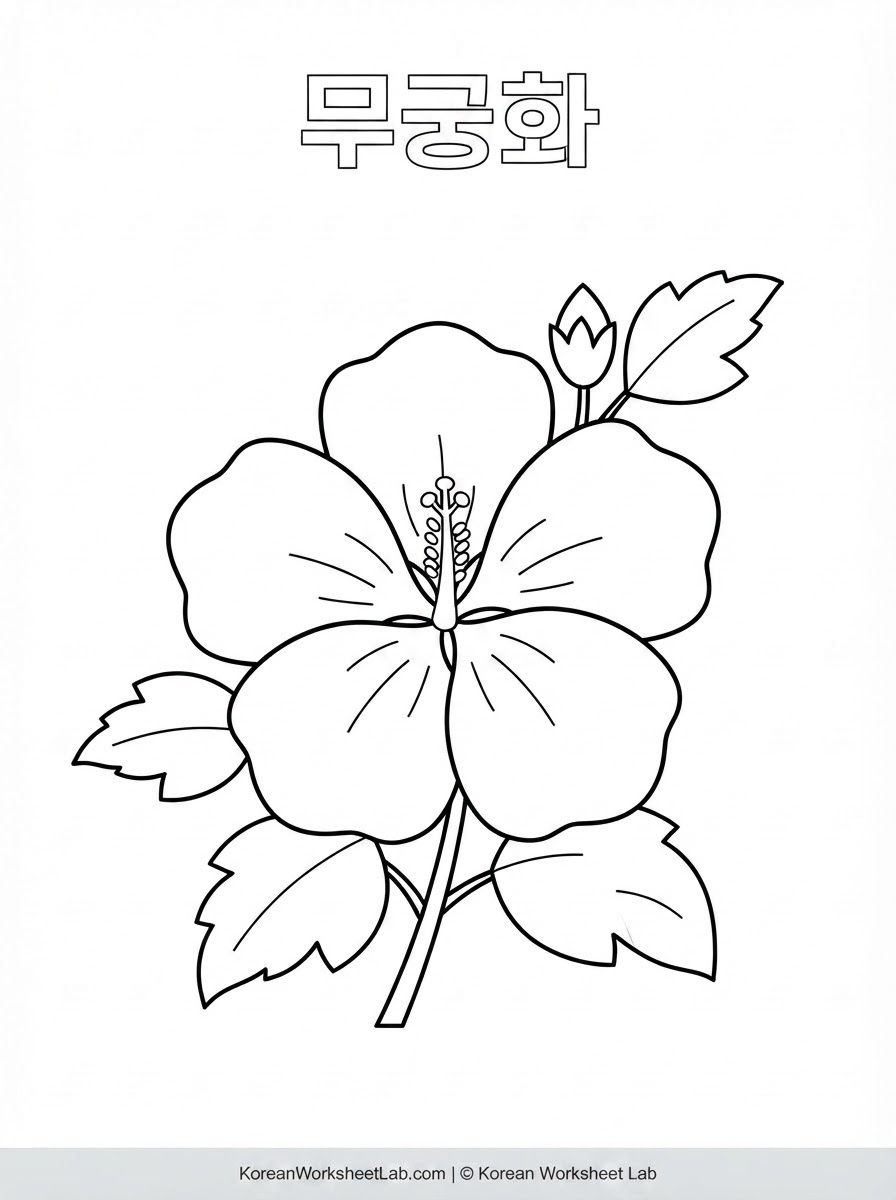
Printable Mugunghwa Coloring Page
A4 coloring worksheet for learning Korea's national flower with simple nature vocabulary.
Korean national flag coloring page
Children color Taegukgi, the Korean flag, using a clear color reference for the red and blue taegeuk, four black trigrams, and white background.

Korean Flag Color Reference
A color reference showing the white background, red and blue taegeuk, and four black trigrams.
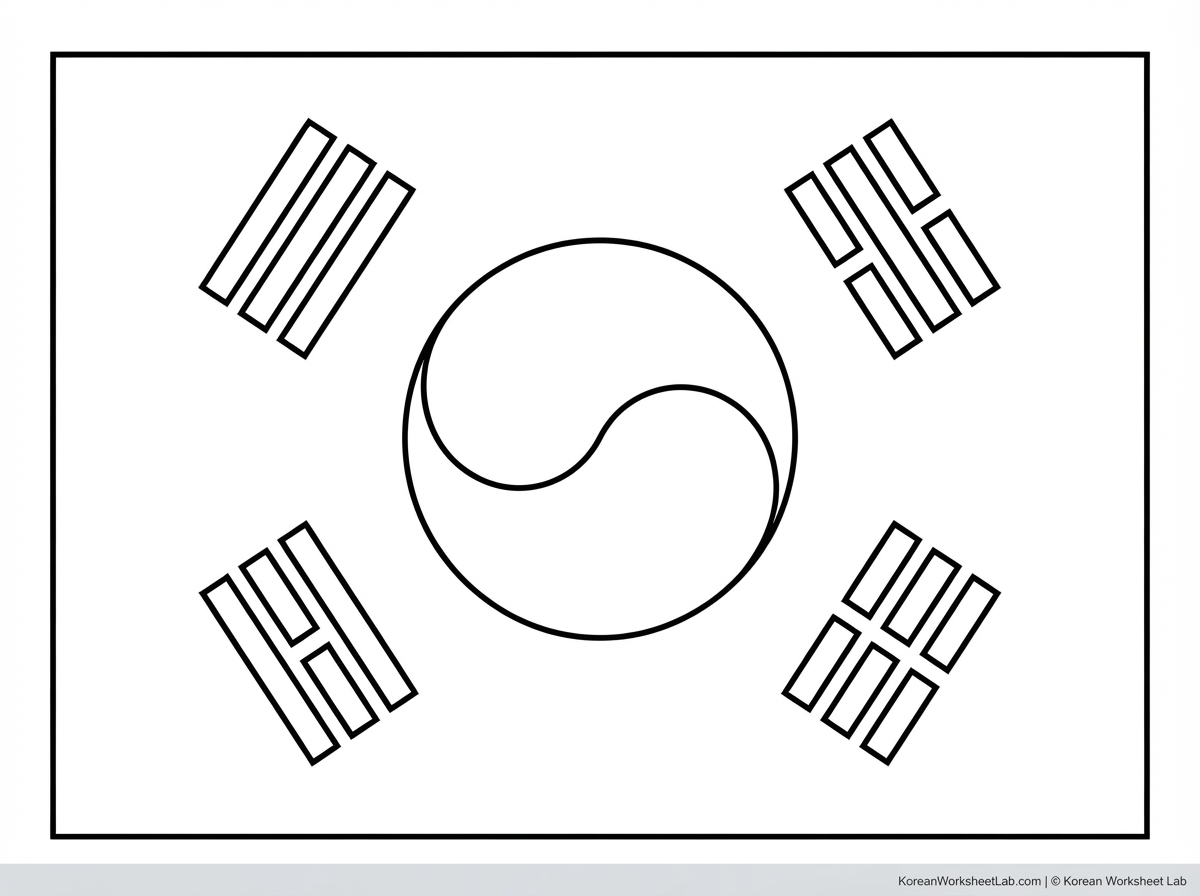
Taegukgi Coloring Worksheet
A landscape A4 coloring worksheet for practicing Korea's national flag with large clear shapes.
Korean music culture coloring page
Children color buk, a traditional Korean drum, then learn simple culture words such as drum, drumstick, rhythm, sound, music, and Korea.
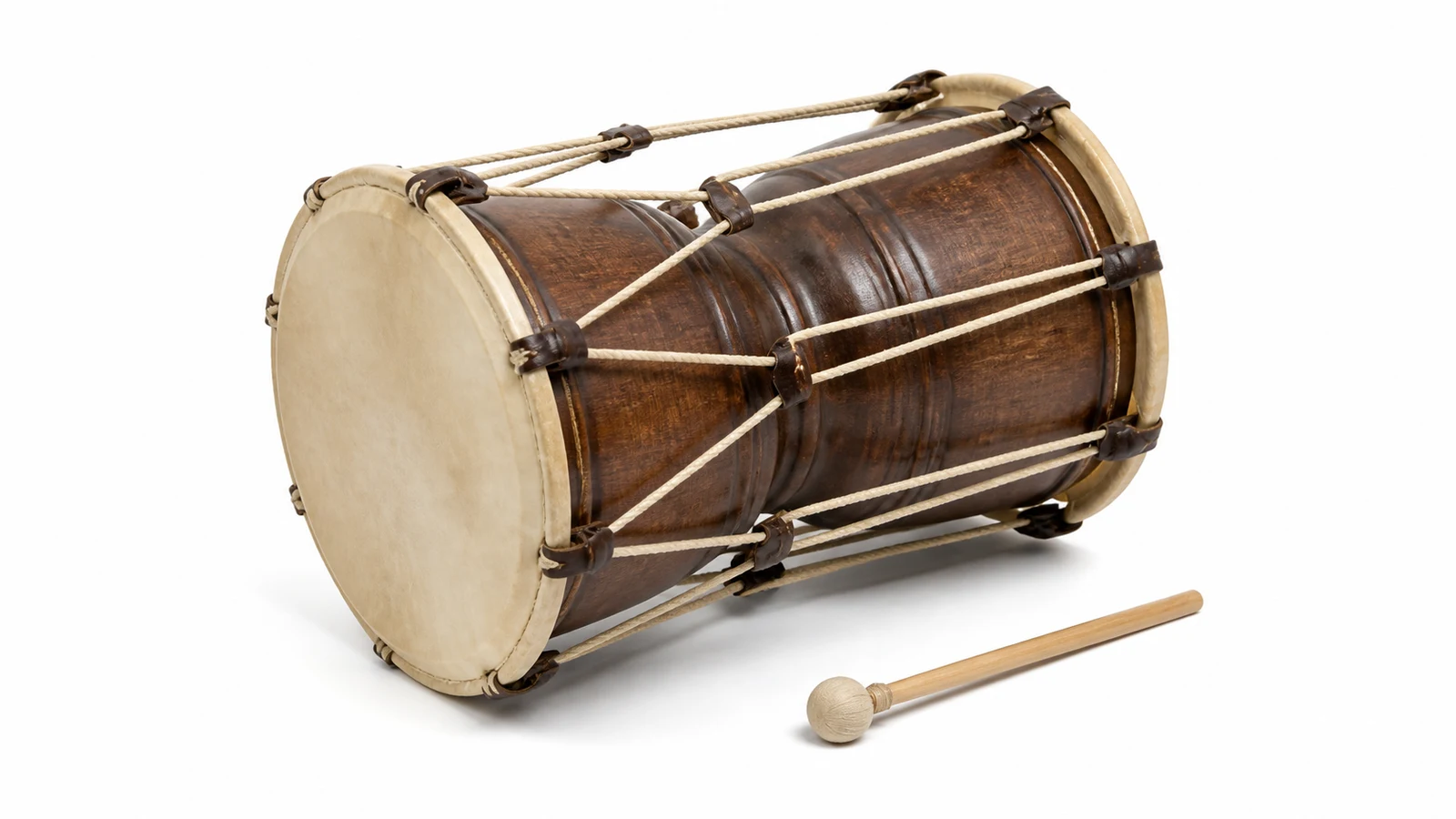
Korean Buk Drum Reference Image
A realistic reference image for noticing the wooden drum body, round drumheads, rope lacing, and drumstick.
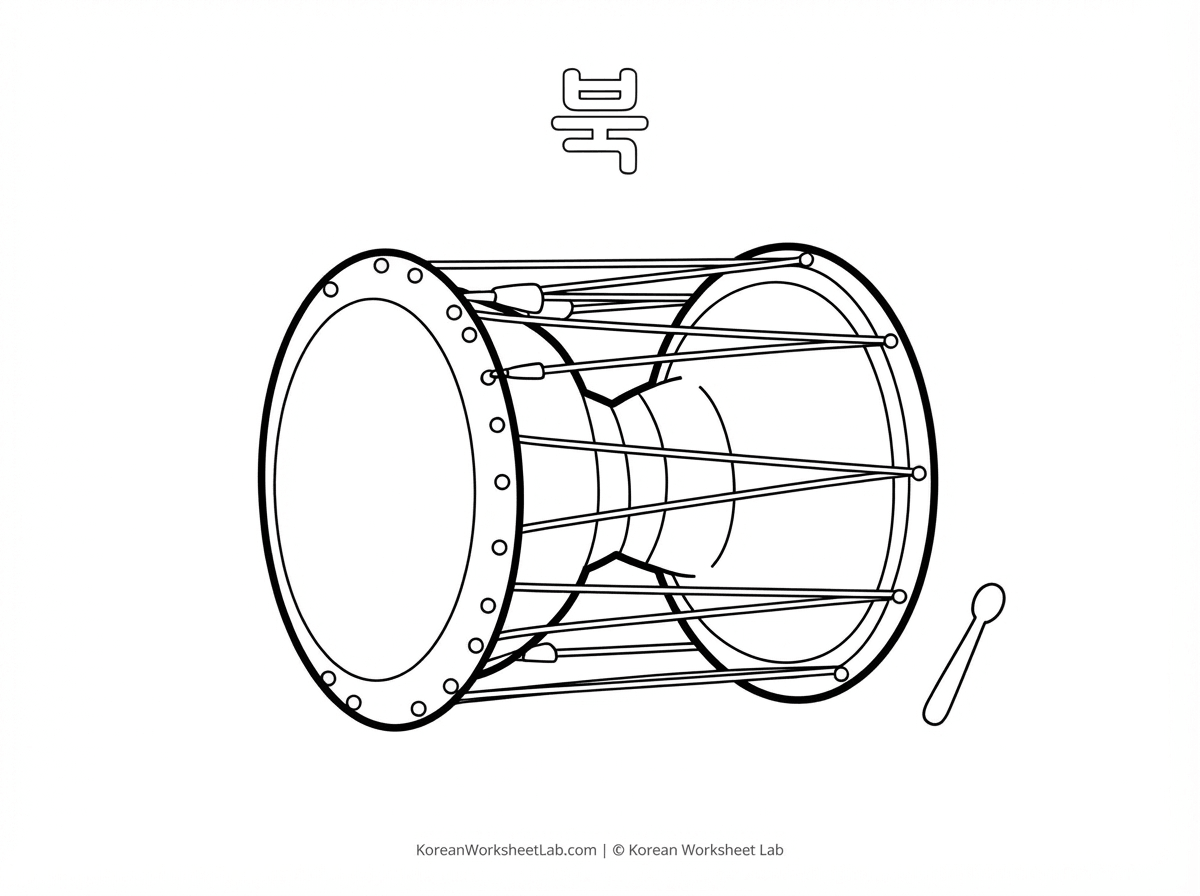
Buk Drum Coloring Worksheet
A landscape A4 coloring worksheet for learning the Korean word buk and exploring traditional Korean music culture.
Hangul handwriting practice
These kid-friendly previews show only the handwriting practice pages from the full consonants and vowels lessons, so children can jump straight into tracing and writing.
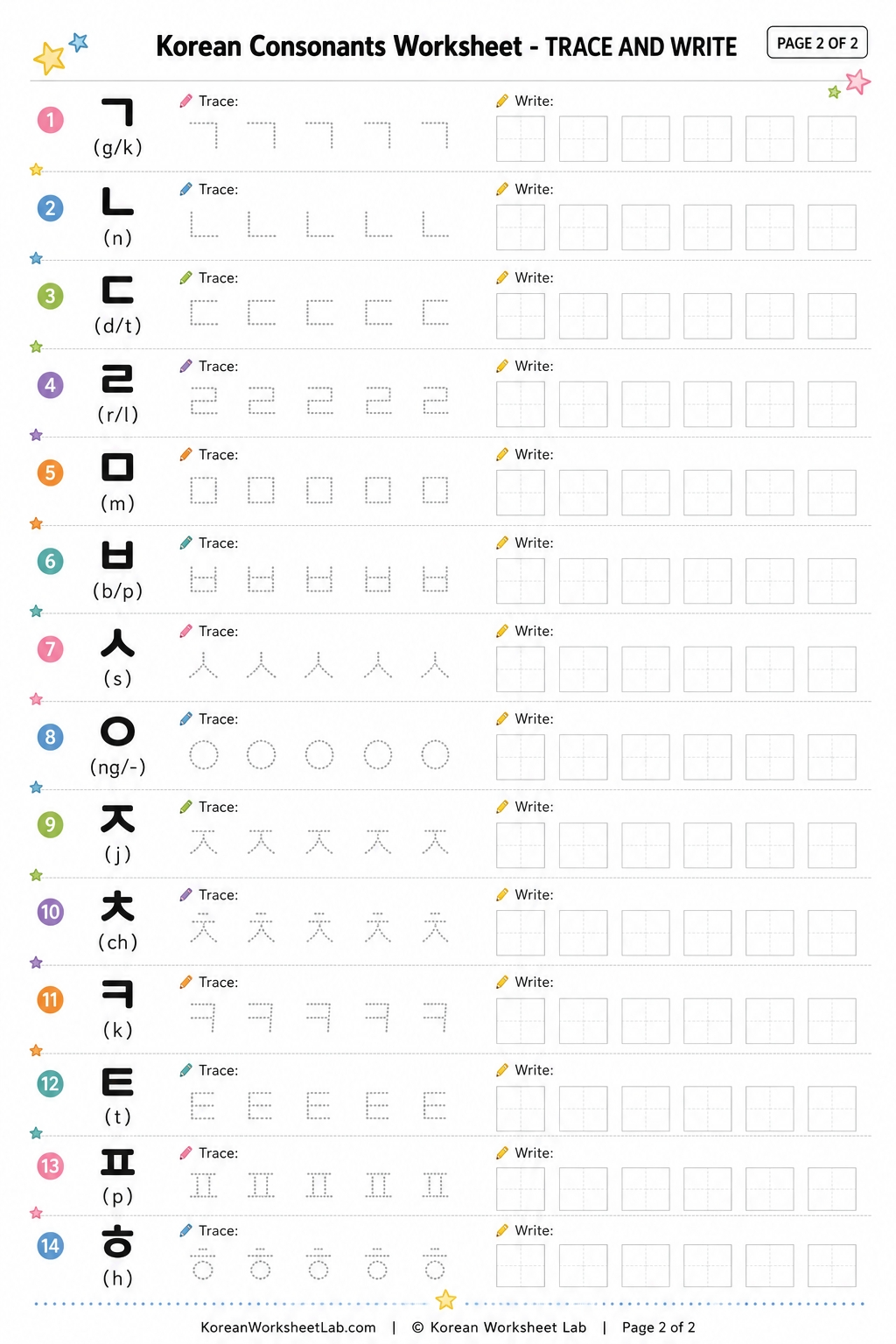
Korean Consonants Trace and Write
Trace and write the 14 basic Korean consonants with roomy practice boxes for early Hangul handwriting.
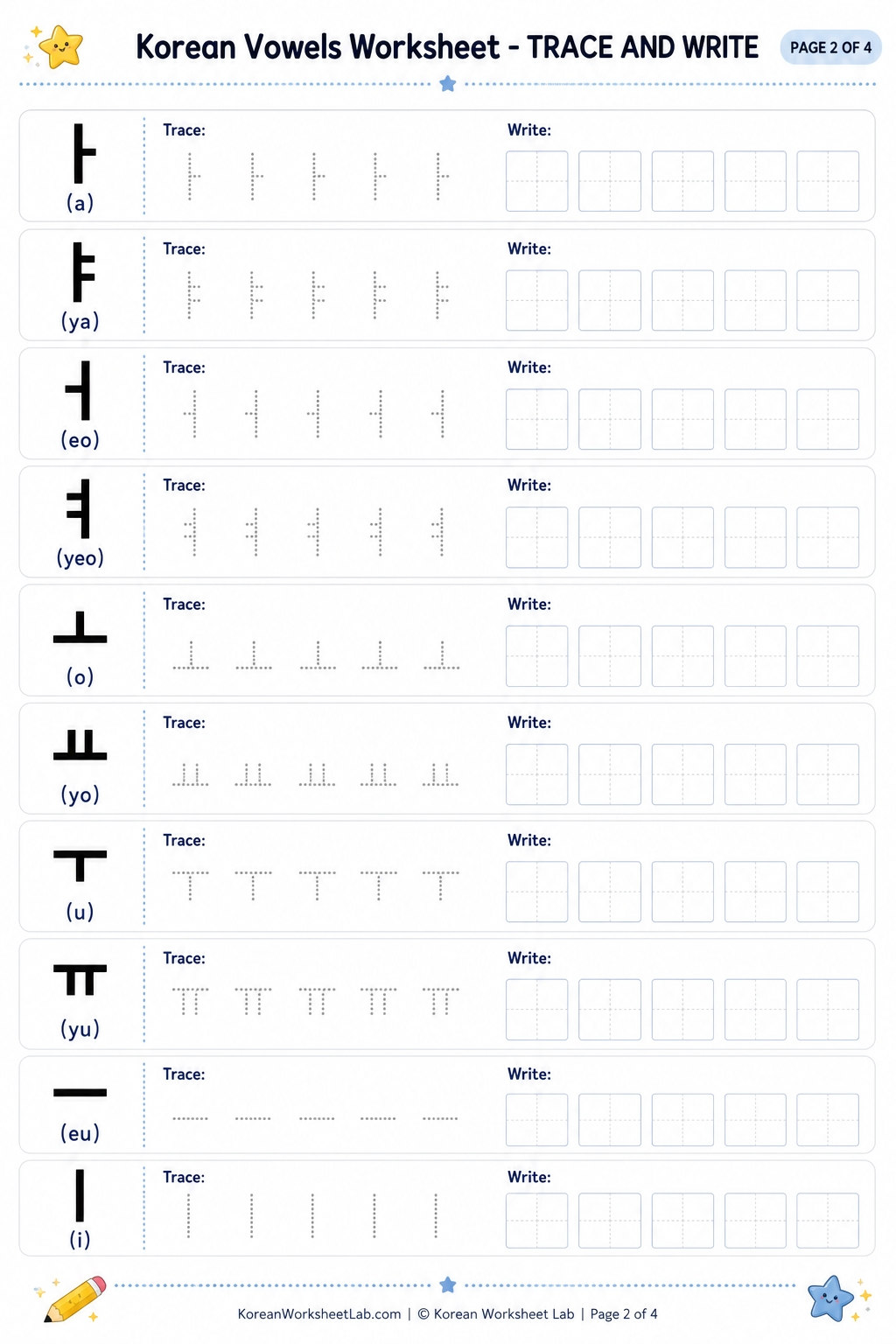
Korean Vowels Trace and Write
Trace and write the 10 basic Korean vowels with clear rows and beginner-friendly handwriting practice.
Days of the week worksheet
Children can learn Monday through Sunday with colorful calendar clues, then trace each Korean word using stroke-order cues before writing it independently.
Page 1: Learn 7 Korean Days of the Week
Colorful calendar clues with Korean day names, romanization, and English meanings.

Page 2: Trace and Write Korean Days
Stroke-order tracing and three large writing boxes for each Korean day of the week.
Color vocabulary worksheet
This color worksheet uses bright swatches, simple object clues, large Korean words, romanization, tracing, and writing boxes so children can connect color meaning with Korean reading practice.
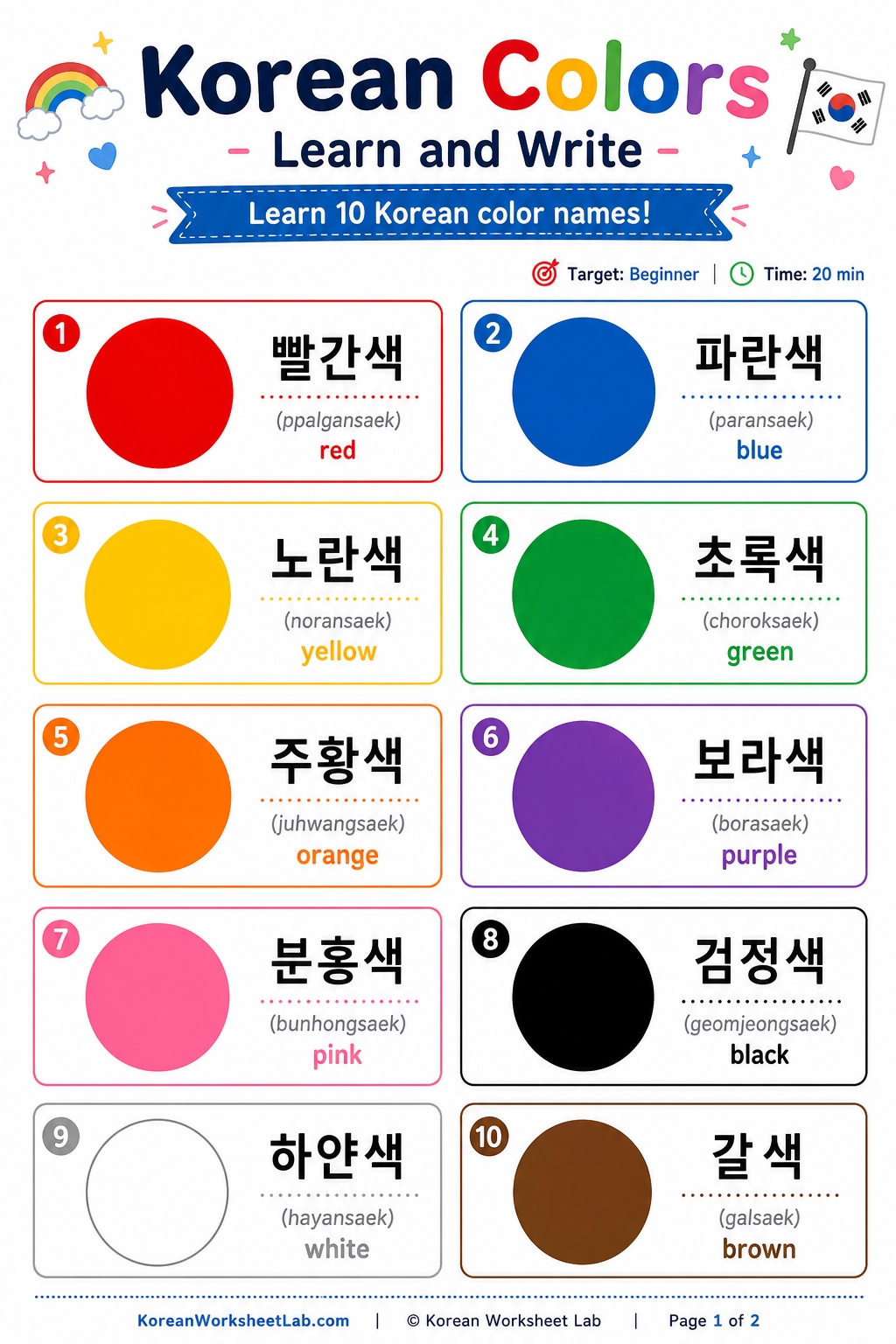
Page 1: Learn 10 Korean Color Names
Color swatches, kid-friendly picture clues, Korean color words, romanization, and English meanings.
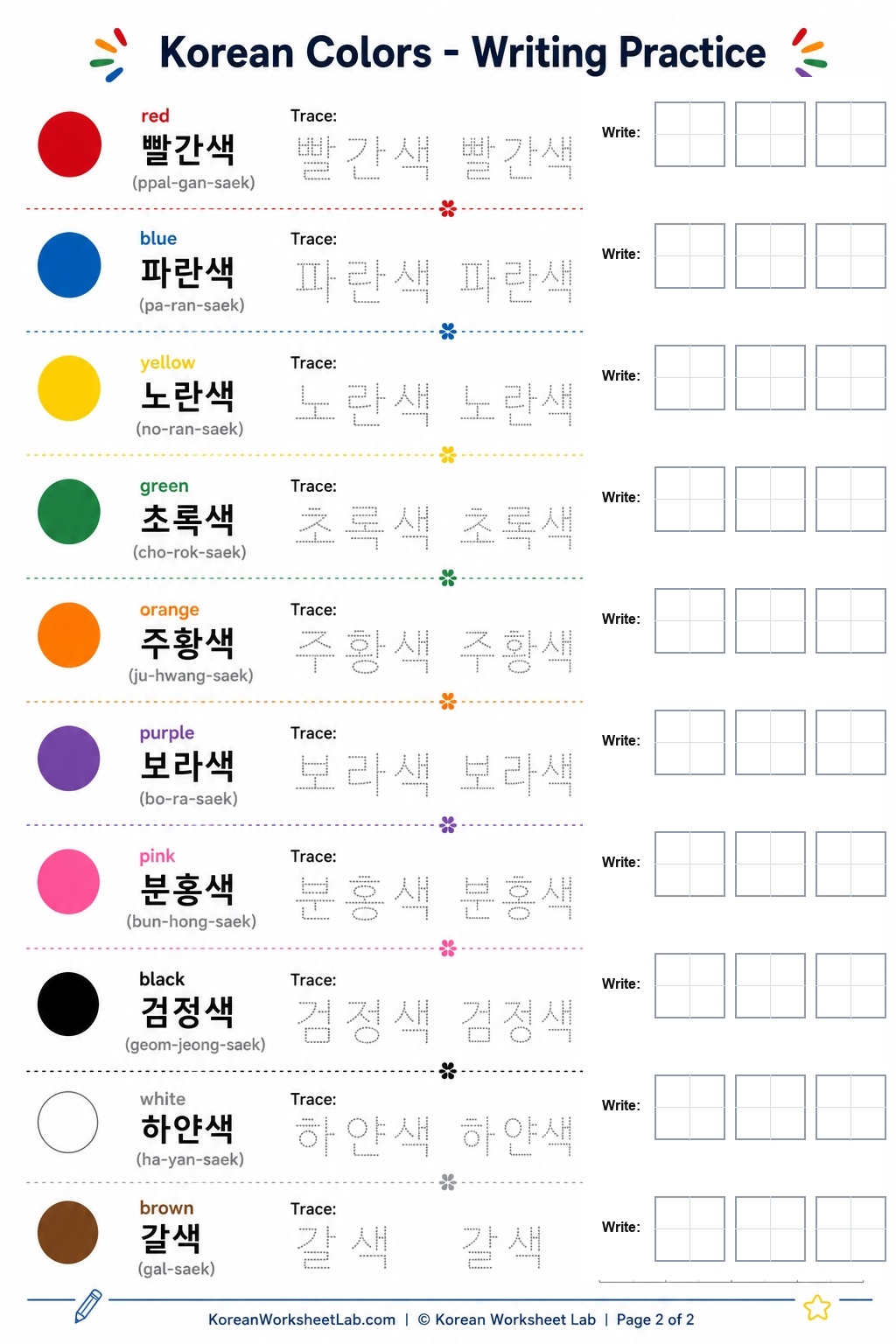
Page 2: Trace and Write Color Names
Tracing lines, writing boxes, and a simple color-and-match activity for early Korean vocabulary practice.
Seasons vocabulary worksheet
Four clear seasonal pictures help children connect spring, summer, autumn, and winter with meaning before they trace and write each Korean word.

Page 1: Learn the Four Korean Seasons
Friendly seasonal pictures with 봄, 여름, 가을, 겨울, romanization, and English meanings.

Page 2: Trace and Write Korean Seasons
Stroke-order tracing and six roomy writing boxes for each Korean season name.
Fruit vocabulary worksheet
This fruit worksheet uses friendly fruit illustrations, large Korean words, romanization, tracing, and writing boxes so children can connect everyday fruit names with Korean reading practice.
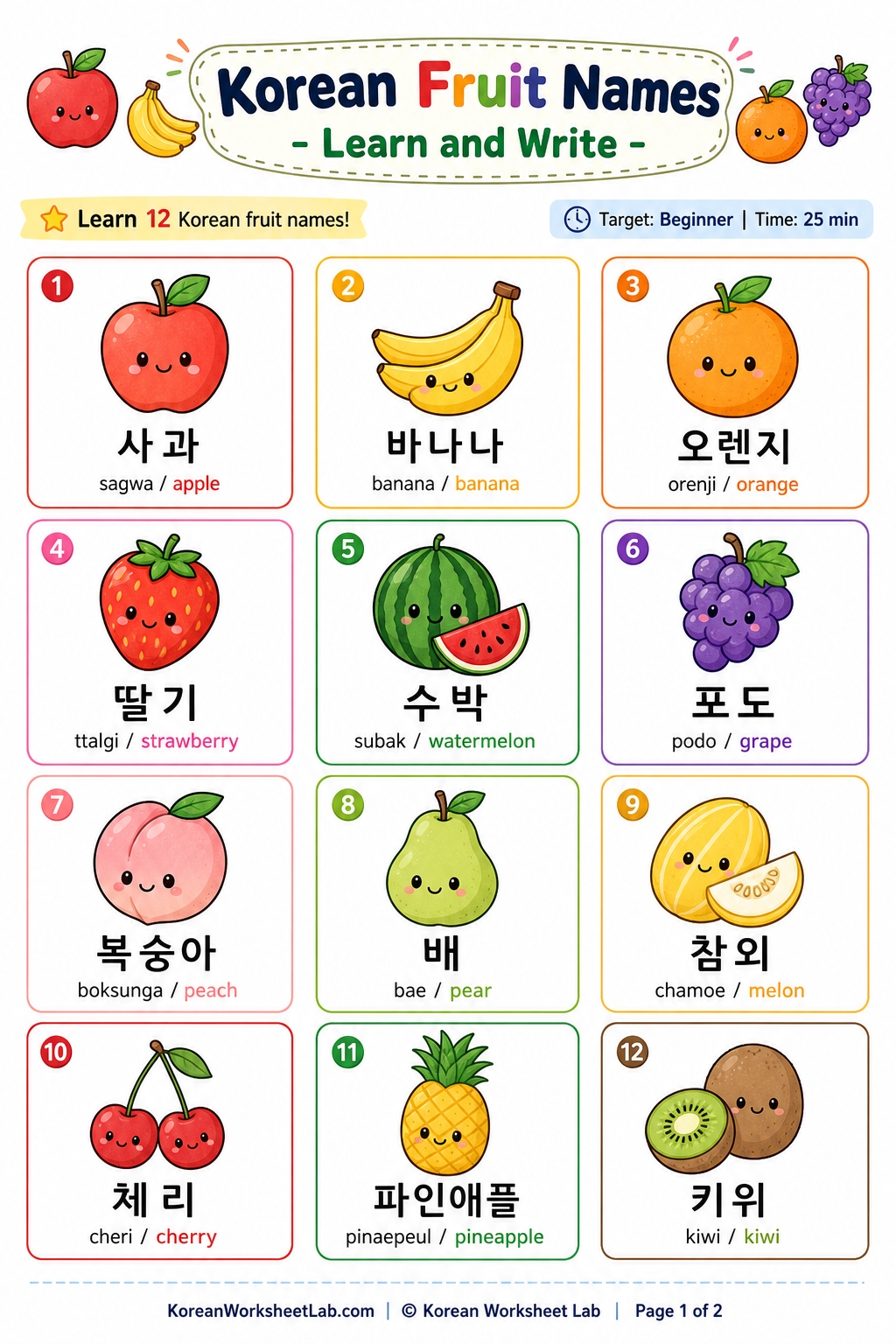
Page 1: Learn 12 Korean Fruit Names
Cute fruit picture vocabulary with Korean fruit names, romanization, and English meanings.
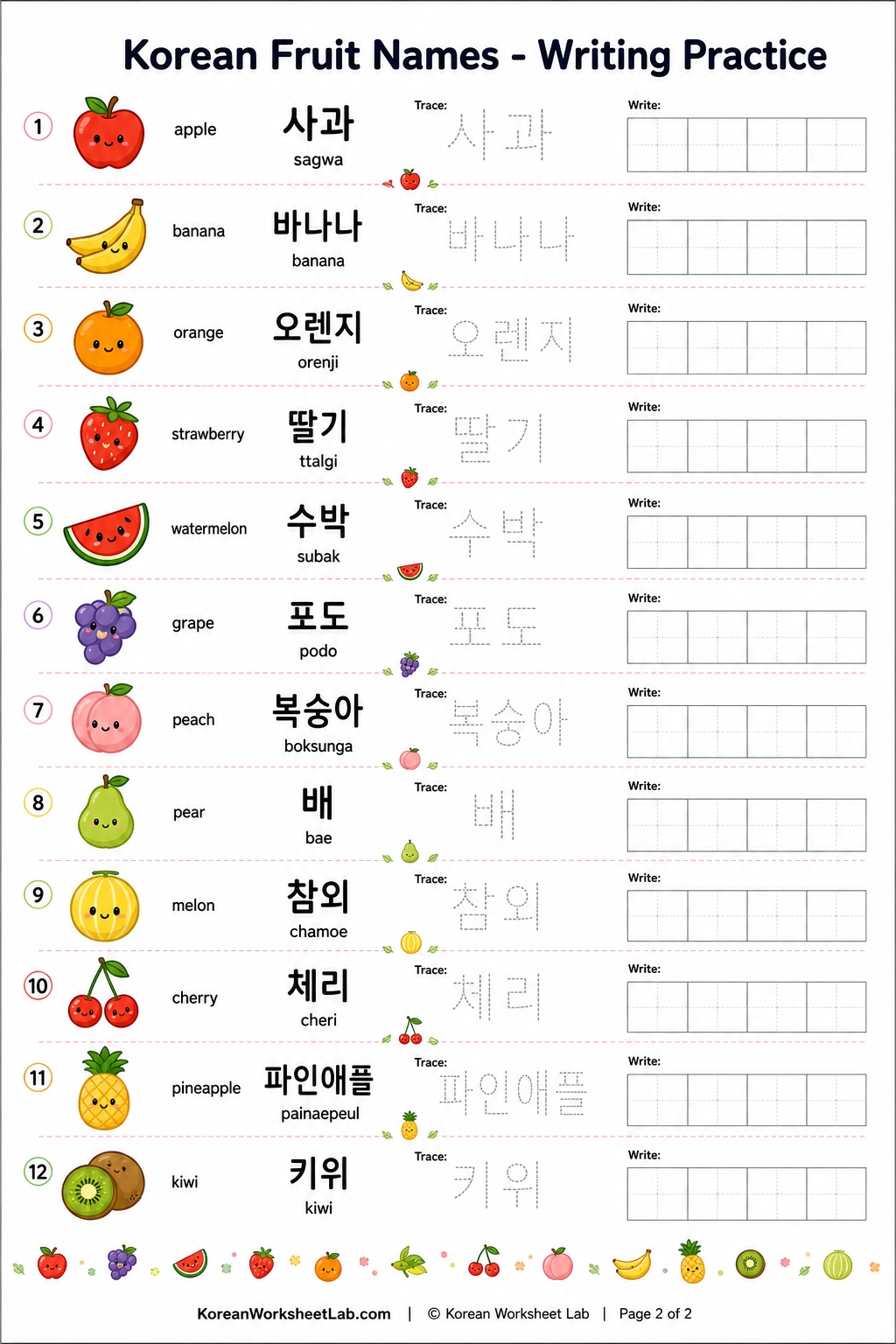
Page 2: Trace and Write Fruit Names
Tracing and writing practice for each Korean fruit word with large writing boxes.
Picture vocabulary worksheet
Friendly animal pictures, large Korean words, romanization, and simple tracing practice help children connect each animal with its Korean name.
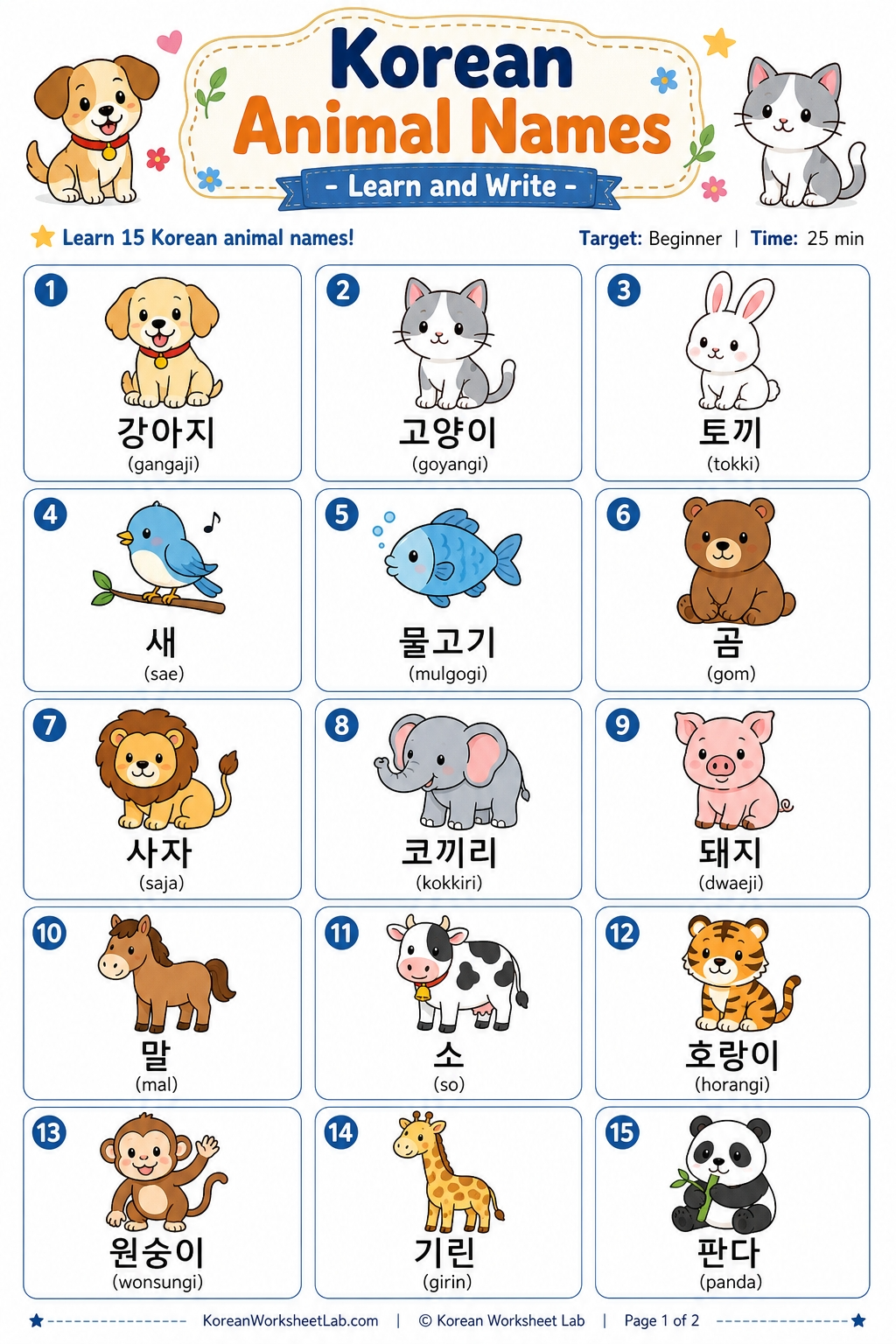
Page 1: Learn 15 Korean Animal Names
Picture vocabulary with Korean animal names, romanization, and child-friendly visual clues.
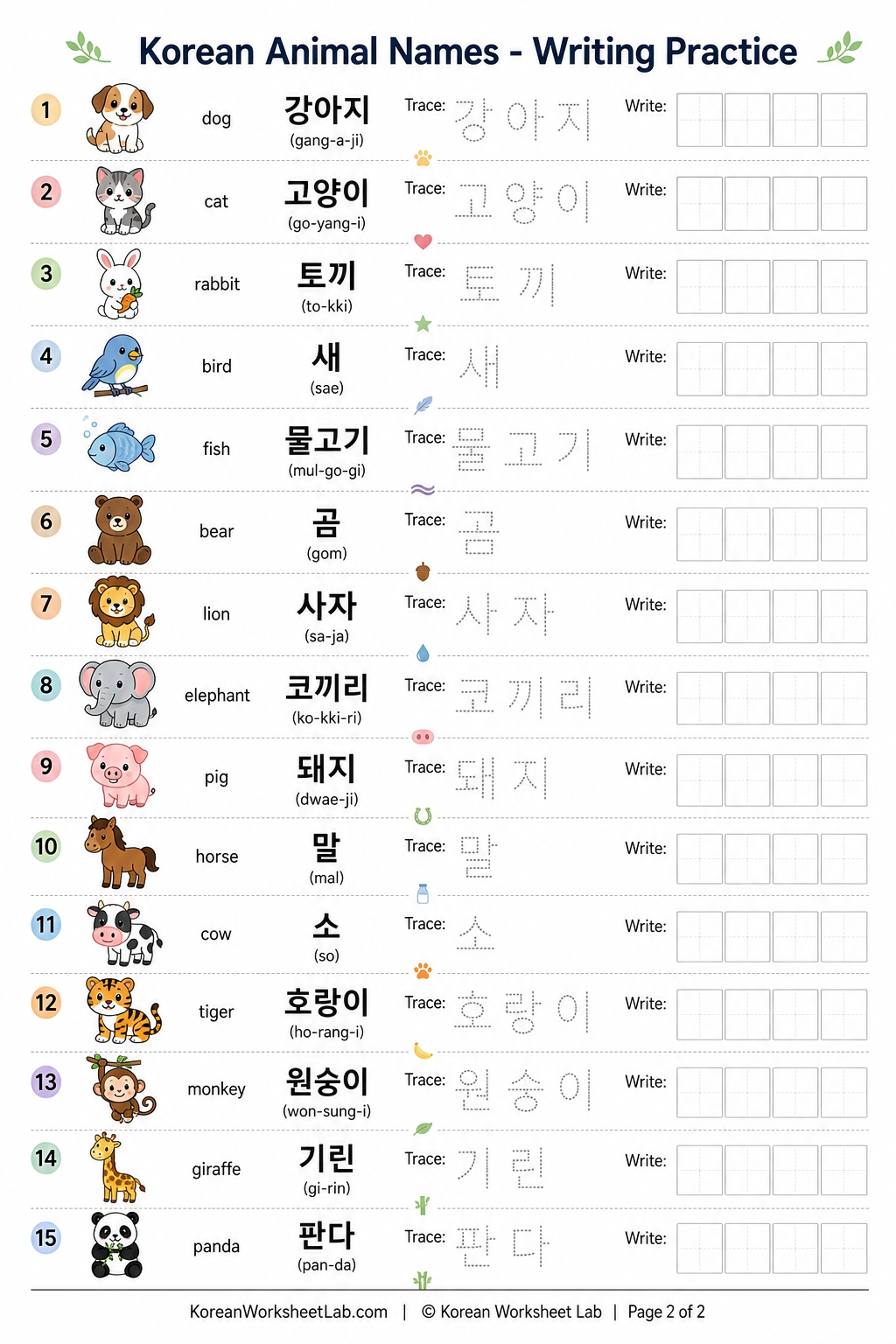
Page 2: Trace and Write Animal Names
Tracing and writing practice for each Korean animal word.
Each worksheet focuses on one Hangul consonant with dot marker circles, coloring space, syllable reading, and short parent-teacher support.
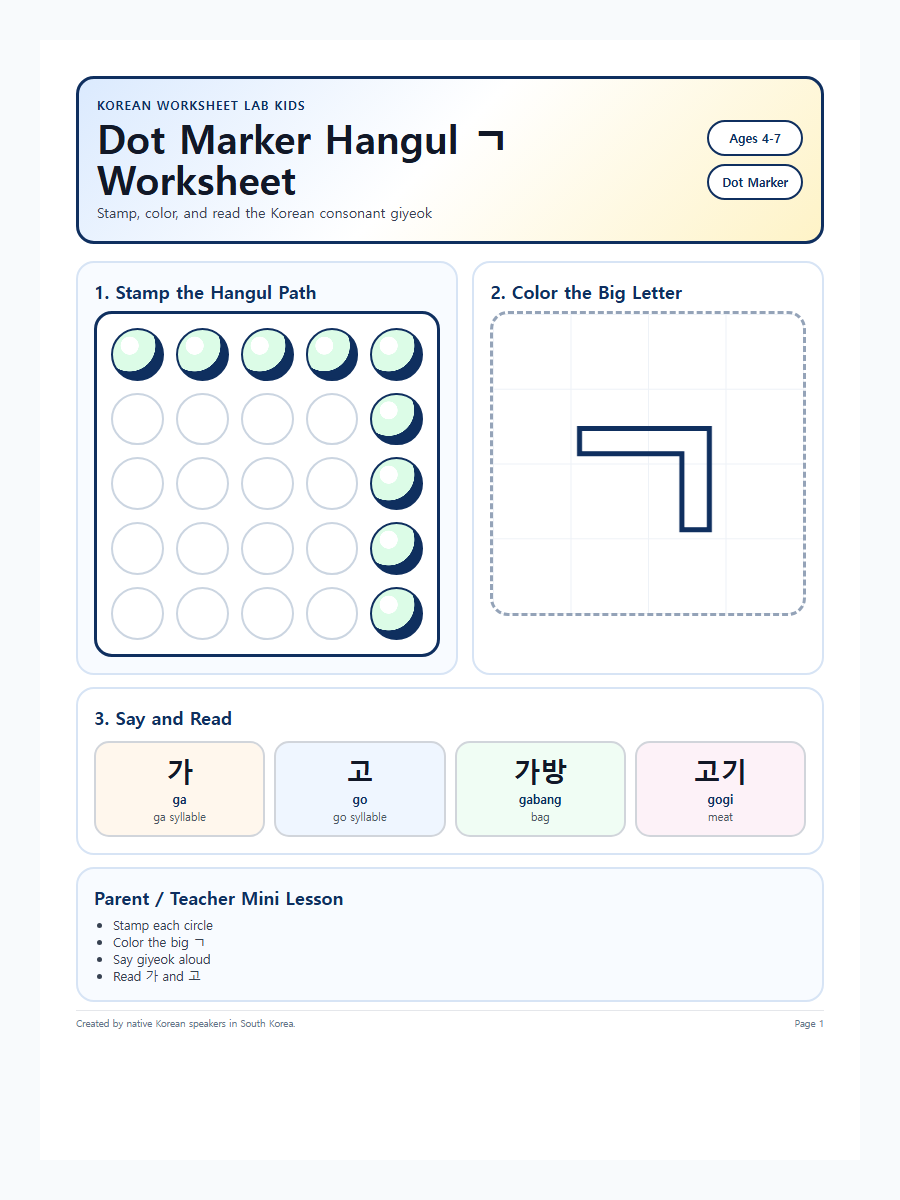
A preschool-friendly Hangul worksheet where children stamp or color the Korean consonant ㄱ, then read simple syllables and words that use the ㄱ sound.
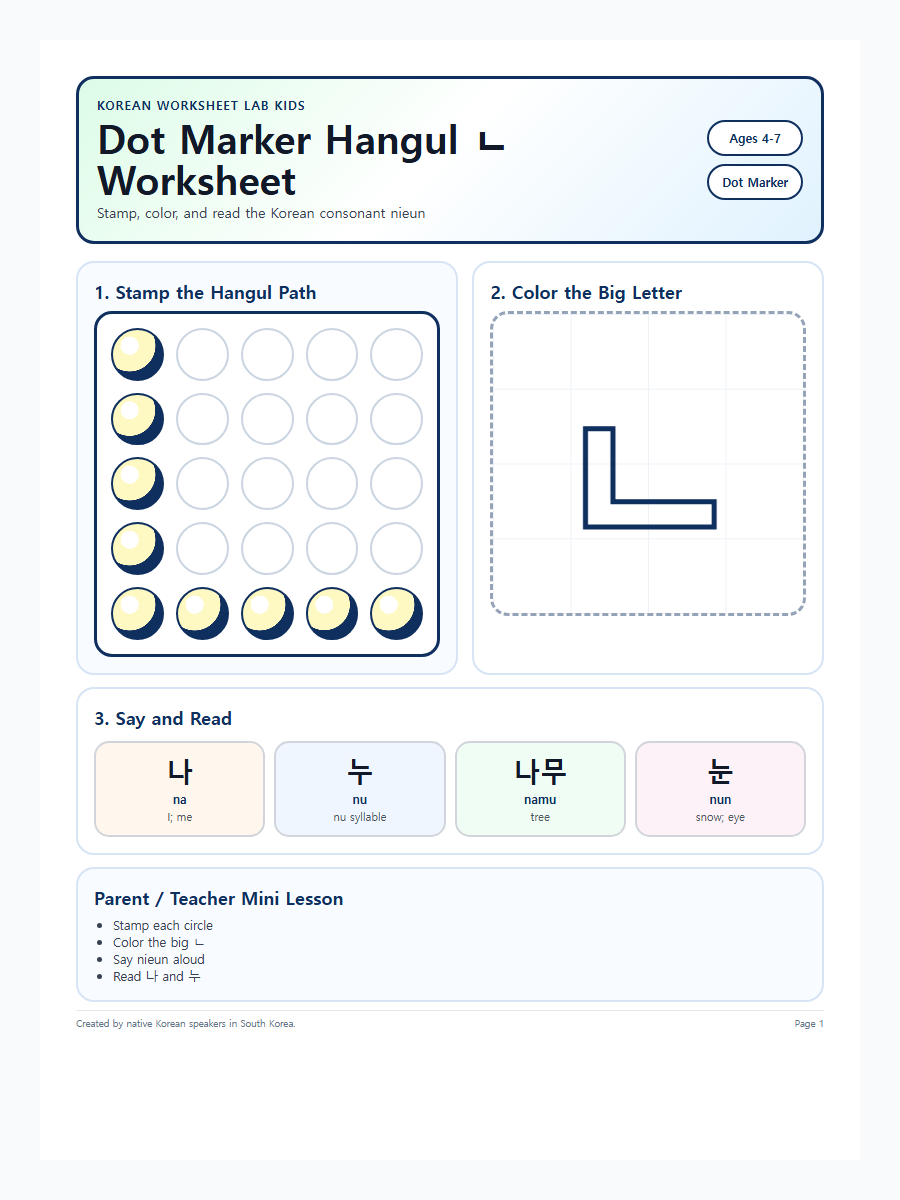
A hands-on ㄴ worksheet for kids using dot markers, stickers, crayons, and short Korean reading practice with natural beginner words.
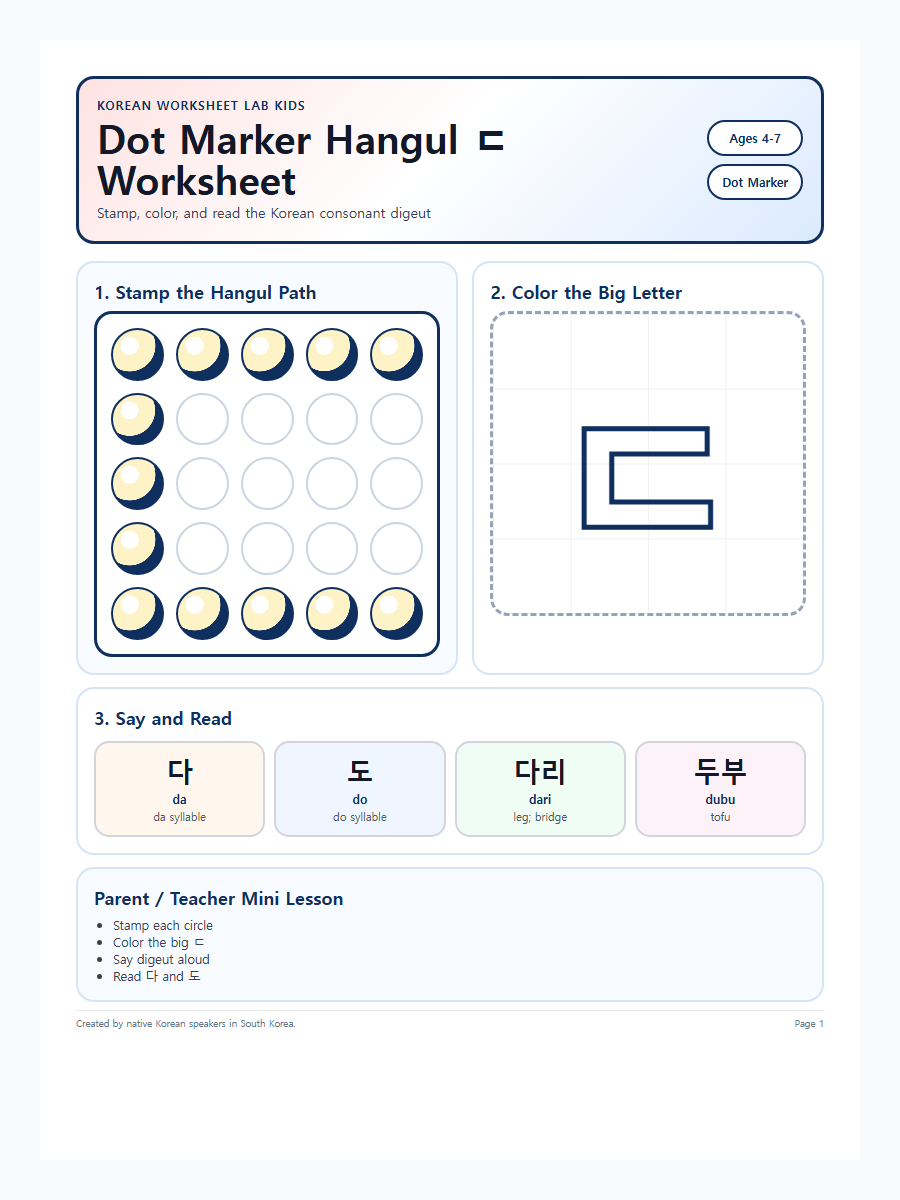
A ㄷ dot marker worksheet that lets children build fine-motor confidence while reading useful Korean syllables and words.
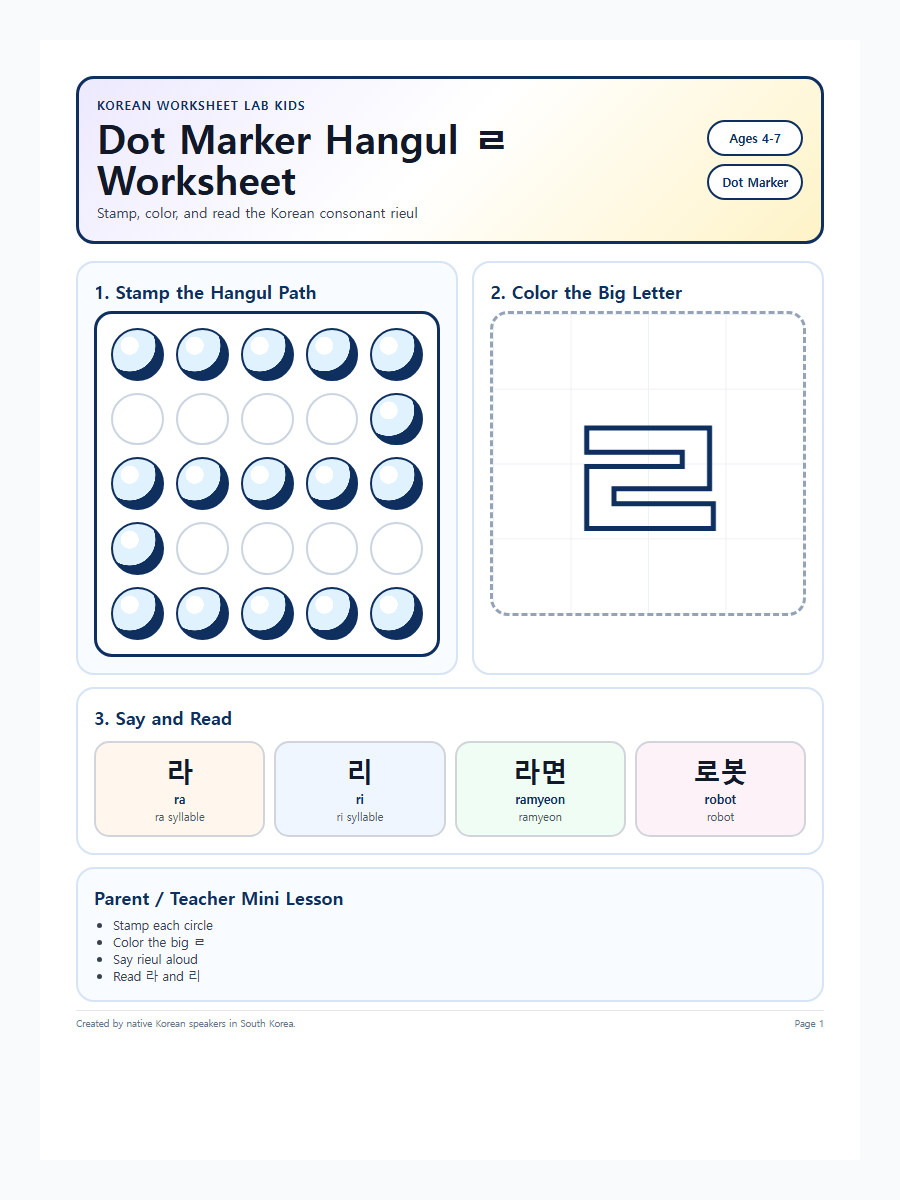
A playful ㄹ worksheet for children to stamp the letter path, color the outline, and practice Korean syllables with romanization support.
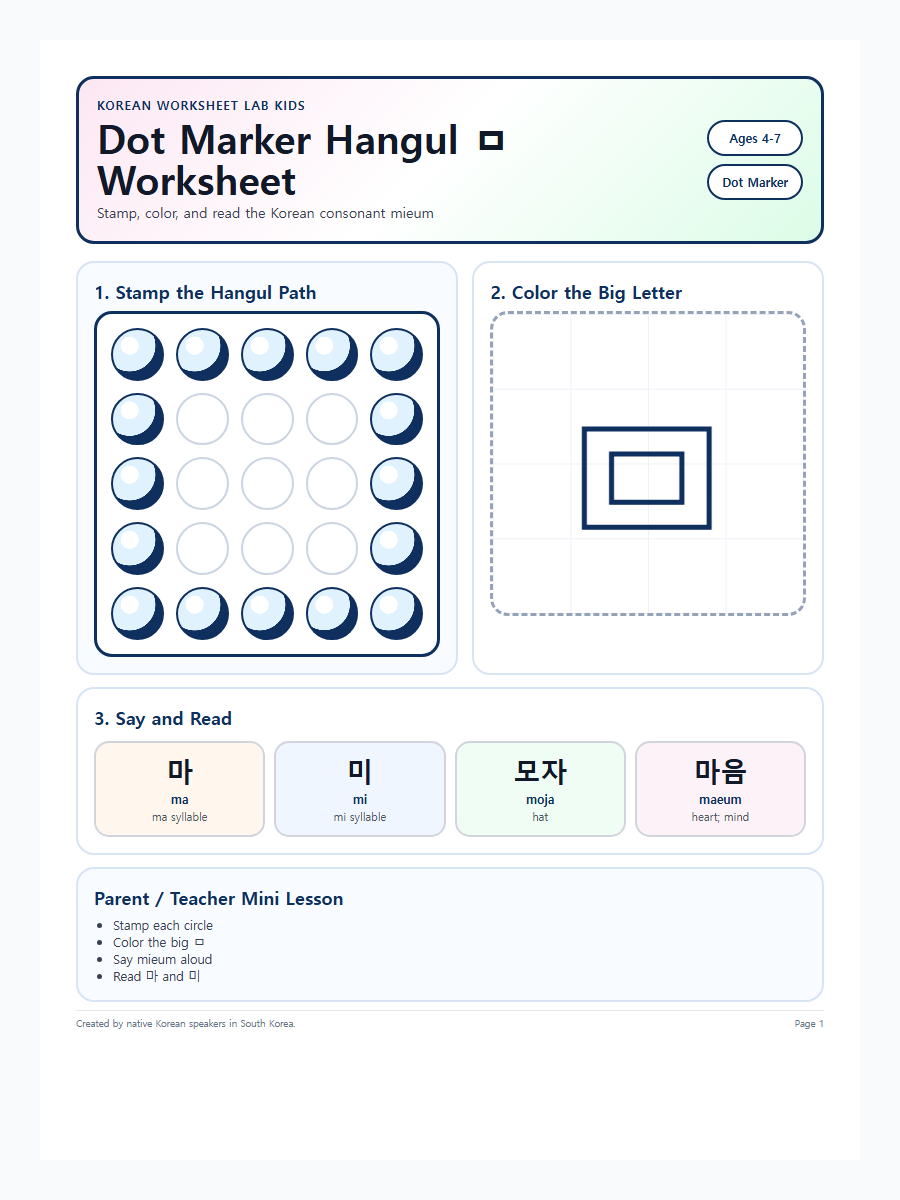
A Korean ㅁ worksheet for young learners with stamp circles, coloring space, and words that actually match the target sound.
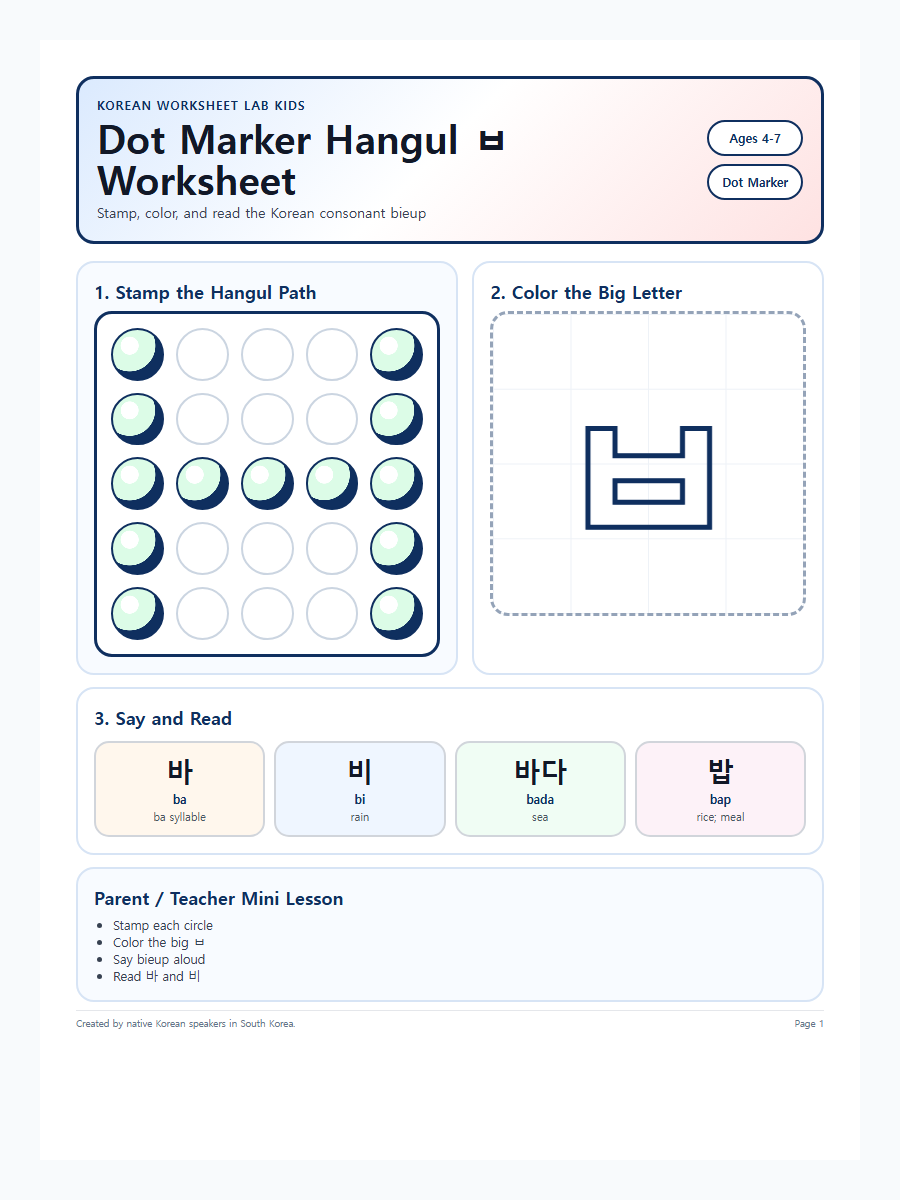
A child-centered ㅂ worksheet with dot marker practice, simple coloring, Korean syllables, and familiar beginner words.
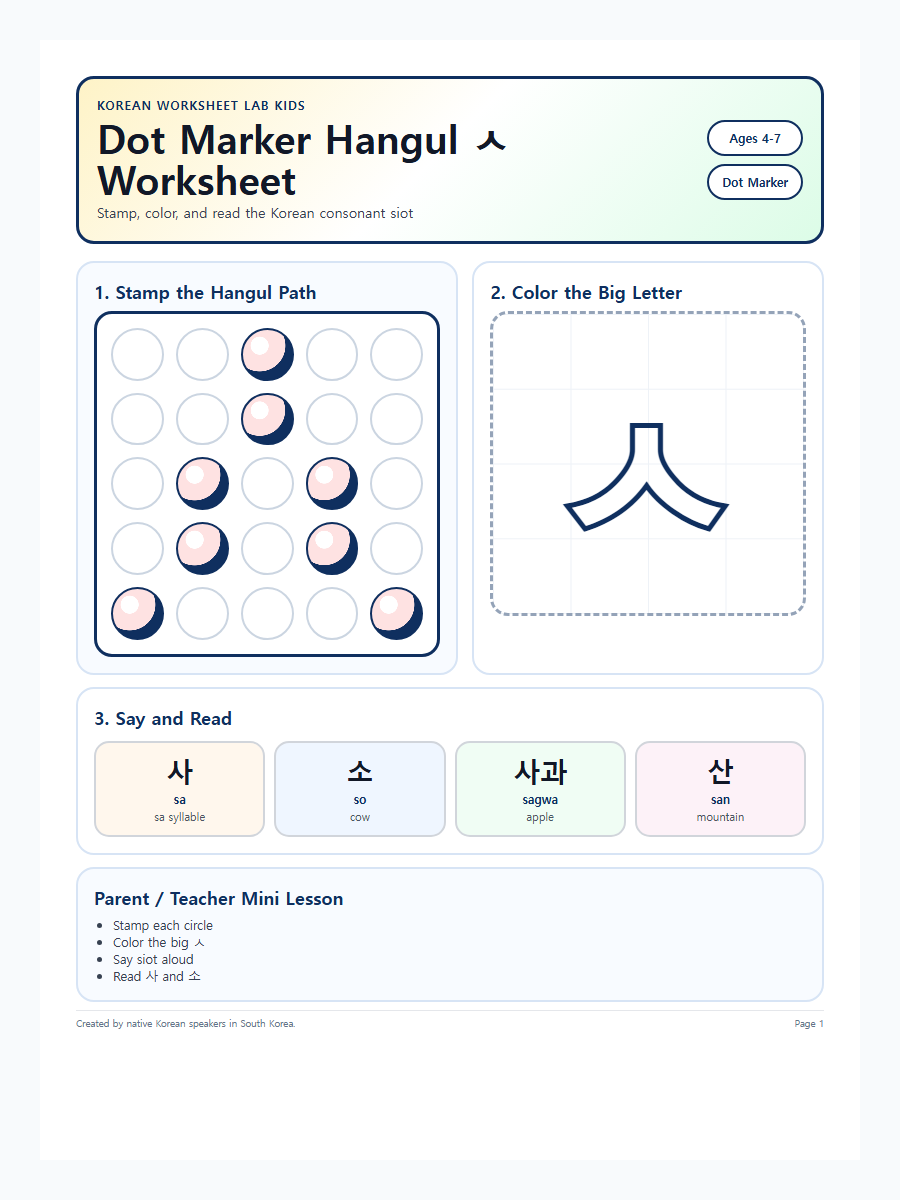
A ㅅ dot marker worksheet for children to practice the letter shape and read simple Korean syllables and words.
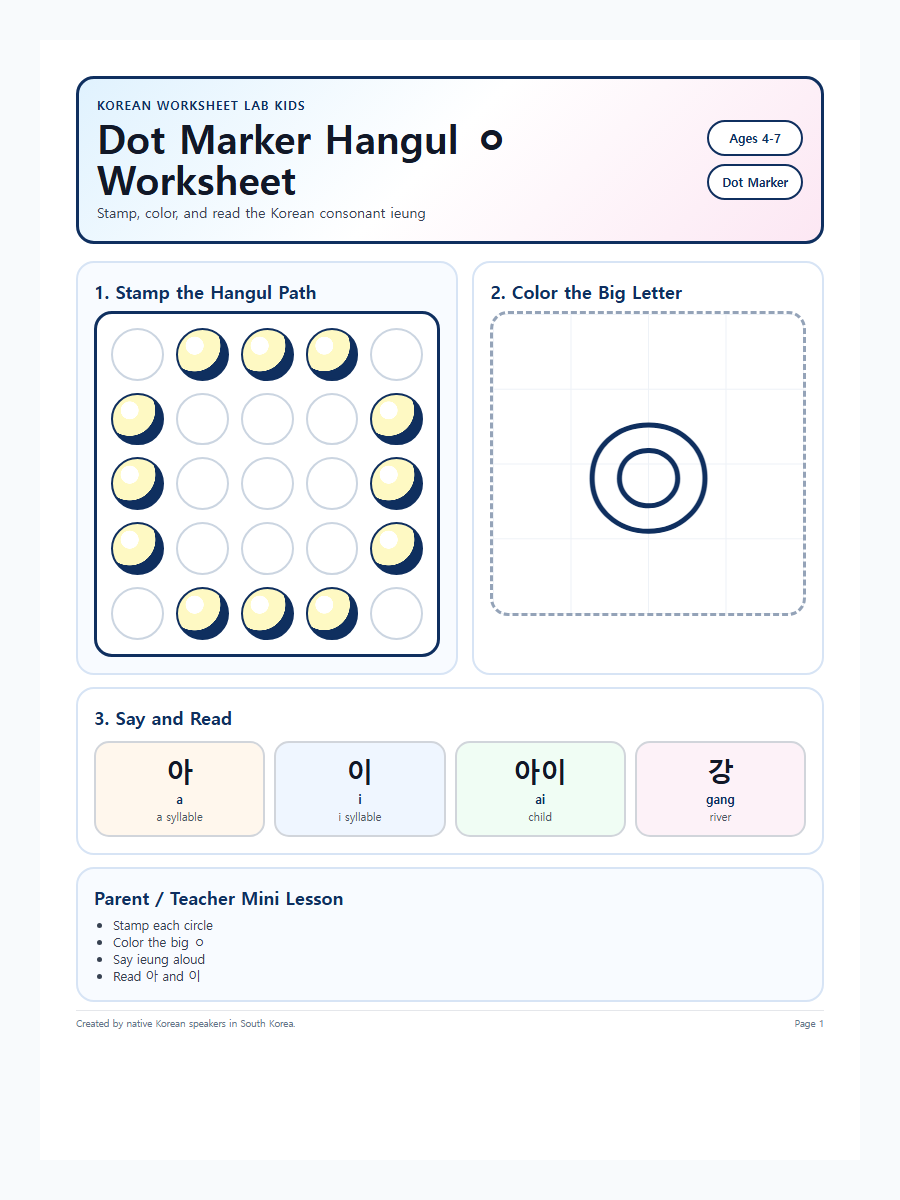
A beginner ㅇ worksheet that helps children notice the round Hangul shape and read easy Korean syllables with clear romanization.
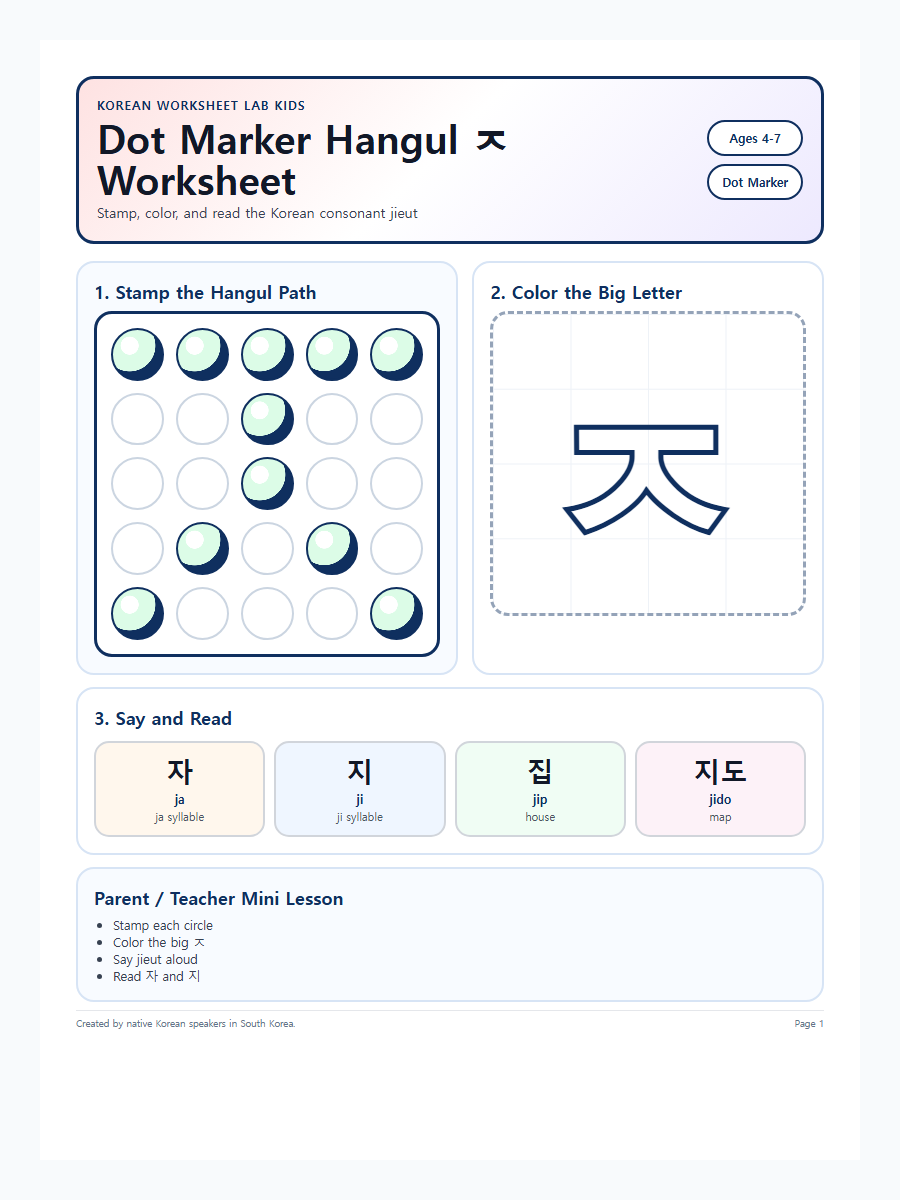
A ㅈ worksheet for dot markers, crayons, or stickers, with short Korean sound practice for early learners.
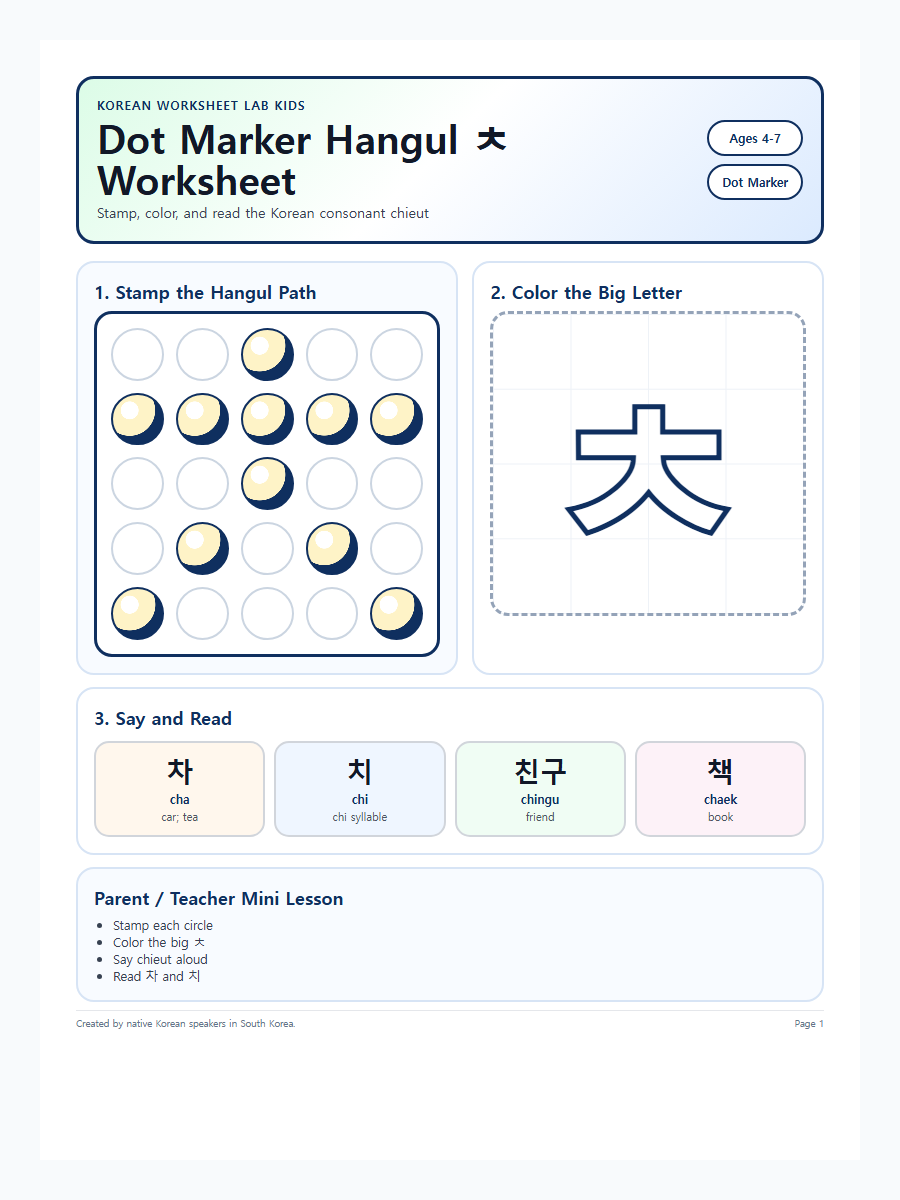
A ㅊ dot marker worksheet with a clear letter path, kid-sized coloring space, and Korean words that match the target consonant.
Keep each session short. For younger children, choose one Korean word or one Hangul syllable and let them trace, point, color, and say it aloud. A finished page is less important than a calm, successful first contact with Korean.
Parents and teachers can print the same worksheet twice: once for guided practice and once for independent review later in the week.
If a child is brand new to Korean, begin with recognition before handwriting. Point to the large Hangul shape, say the sound slowly, and let the child find the same shape in another box or picture label. After that, move to tracing with a finger, crayon, or pencil. This sequence helps children notice the letter first instead of treating the page like a copying test.
For culture coloring pages, talk about one simple idea before coloring. A hanbok page can introduce traditional clothing, a bibimbap page can introduce Korean food, and a Taegukgi page can introduce the Korean flag colors. The goal is not a long lecture; it is a short conversation that gives the Korean word a real memory.
Children also need repetition, but repetition should feel varied. One day they can color the page, another day they can trace only the target word, and another day they can point to the picture when an adult says the Korean word aloud. This makes the same printable useful across a week without overwhelming the learner.
Use big tracing, coloring, pointing, and one-word speaking tasks.
Add slower tracing, syllable reading, and simple word review after stamping.
Use cards as warmups, stations, partner practice, or review games.
Repeat one worksheet across several short sessions instead of doing it all at once.
A strong kids worksheet has one clear job: one Korean letter, one small word set, or one cultural object. When a page asks children to color, read, trace, and remember too many new words at once, the activity becomes busy work. Choose the worksheet that matches today's smallest goal.
Picture clues help children understand Korean words before they can read every syllable confidently. Say the Korean word, point to the picture, then let the child trace or color. This keeps Hangul practice connected to meaning instead of isolated shapes.
Review should be short and positive. Ask a child to find ㄱ, circle one Korean color word, match one animal, or read one familiar word aloud. Small successful reviews build confidence and make it easier to return to Korean practice the next day.