Path 1
Essential First Words
Begin with greetings, introductions, numbers, colors, and family words that appear in early conversations.
Learn vocabulary with clear explanations, learning objectives, key vocabulary, worksheet previews, and printable Korean PDFs.
Beginner vocabulary course
Choose one path and finish its lesson, examples, practice, and review before opening another printable. The paths move from essential conversation to daily-life vocabulary.
Path 1
Begin with greetings, introductions, numbers, colors, and family words that appear in early conversations.
Path 2
Connect days, months, weather, time words, and routine vocabulary to plans and schedules.
Path 3
Learn vocabulary for school, the home, body parts, clothes, transportation, and emotions.
Path 4
Build highly visual vocabulary with food, fruit, and animal names before using them in descriptions.
These collections use existing full lessons. Each link includes educational explanation, examples, practice, worksheet previews, answer support, and related resources.
A word is not learned when you only recognize its English meaning. Use the same cycle for every topic.
Look at the Hangul first and use romanization only to check the initial reading.
Learn the core meaning, part of speech, and the situation where the word appears.
Attach the word to a counter, particle, adjective, verb, or familiar word family.
Say the word, write it from memory, and place it in one short sentence.
Review after one day and one week without looking at the answer first.
Korean vocabulary is easier to remember when sound, spelling, meaning, and usage are studied together.
Do not spell a word as separate letters. Blend each Hangul block, then connect the blocks.
Batchim and neighboring sounds may change the spoken form even when the spelling stays the same.
Keep the rhythm even and listen to the whole word instead of emphasizing one syllable heavily.
Connect words to real images and situations. Avoid invented sound tricks that teach an inaccurate pronunciation.
Study school with classroom and student, or weather with rain and snow, instead of random unrelated words.
Build outward from one word. This prevents vocabulary study from becoming a disconnected translation list.
Word
학교
school
Word family
학생 · 교실 · 선생님
student · classroom · teacher
Sentence
저는 학교에 가요.
I go to school.
Mini dialogue
오늘 학교에 가요? 네, 학교에 가요.
Are you going to school today? Yes.
The destination particle 에 follows 학교, and 가요 is the polite present form of 가다, “to go.” Study the word together with the location particle 에 lesson.
Try each question from memory. Open the answer only after saying or writing your response.
What does 가족 mean?
family
Read 학교 aloud.
hakgyo · school
Which group does 비 belong to?
weather · rain
Write the Korean word for Monday.
월요일
Complete: 저는 학교___ 가요.
에
How can you politely say hello?
안녕하세요.
Rotate activity types so learners practice recognition, recall, spelling, sentence building, and speaking.
Match the Hangul word to an image before checking English.
Choose a word from meaning and sentence context.
Add a particle, counter, or polite ending to the target word.
Answer a personal question using two words from the topic.
Write the Hangul word without tracing or copying.
Combine two new items with three words from an older topic.
Your checks are saved on this device.
0% complete
A small set of five to eight useful words is enough when you also read, say, write, and review them. Learning fewer words deeply is more useful than collecting long lists.
No. Romanization can support the first reading, but the goal is to recognize and recall the Hangul word directly.
Connect each word to a picture, personal example, short phrase, and review schedule. Retrieve the word before checking the answer.
Korean rhythm and sound contrasts do not map neatly to English stress. Listen to complete words and avoid forcing strong English-style stress onto one syllable.
Learn them together in small steps. A new word becomes more useful when attached to a particle, counter, adjective, or polite verb ending.
Read the lesson, study the examples, and preview the activity first. Use the printable after you understand what the practice is testing.
Beginner Korean word lists organized by useful themes such as food, family, school, weather, and daily life.
Each page is built as a learning resource, not just a PDF link. Read the lesson first, preview the worksheet, and then print the PDF for active practice.
A short explanation of the topic and why it matters.
Clear goals for learners, parents, and teachers.
Korean, romanization, and English meaning in one table.
Nearby lessons to continue studying without guessing.
 P1
P1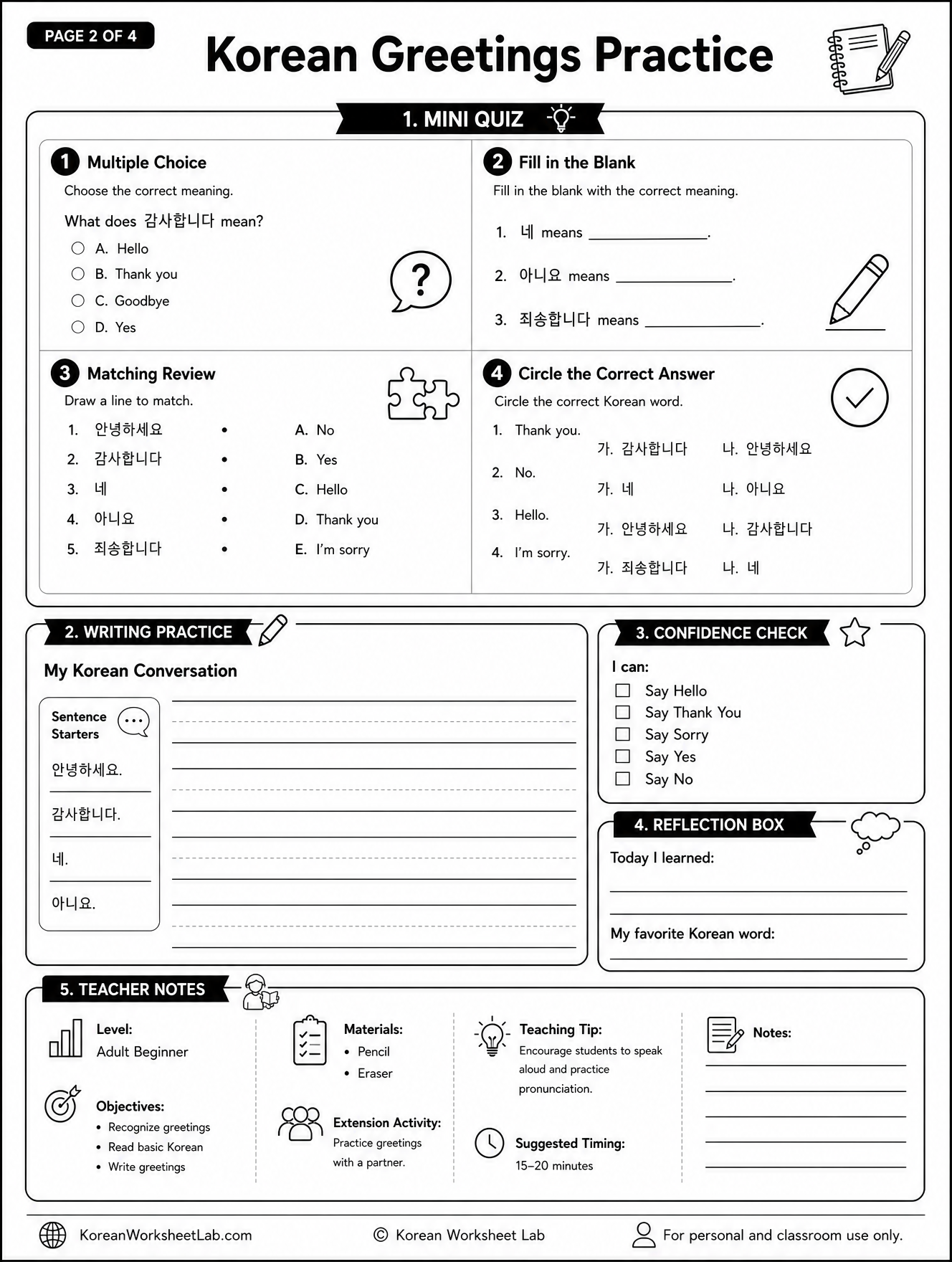 P2
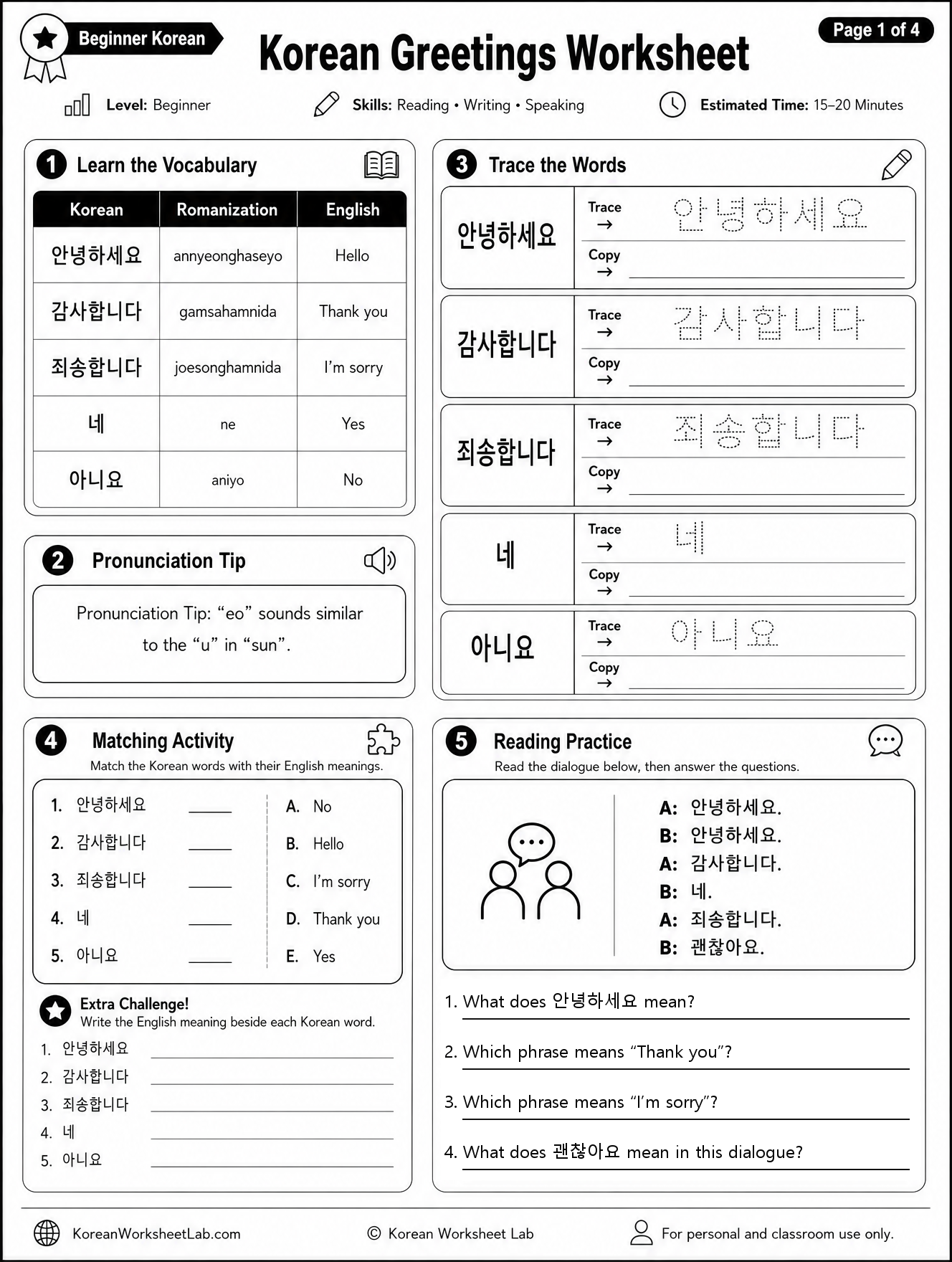
P2Learn polite Korean greetings for meeting people, thanking someone, apologizing, and saying goodbye.
 P1
P1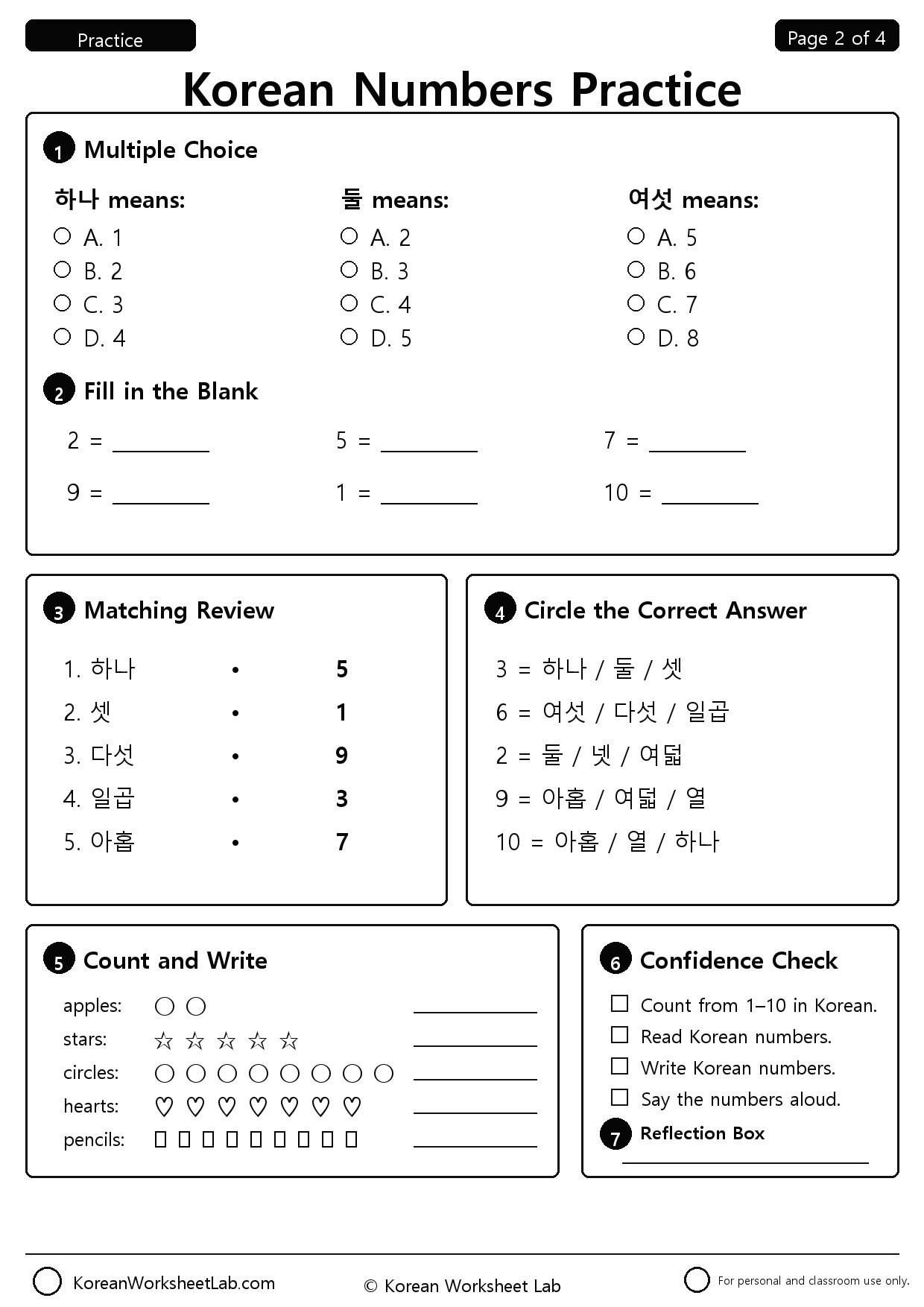 P2
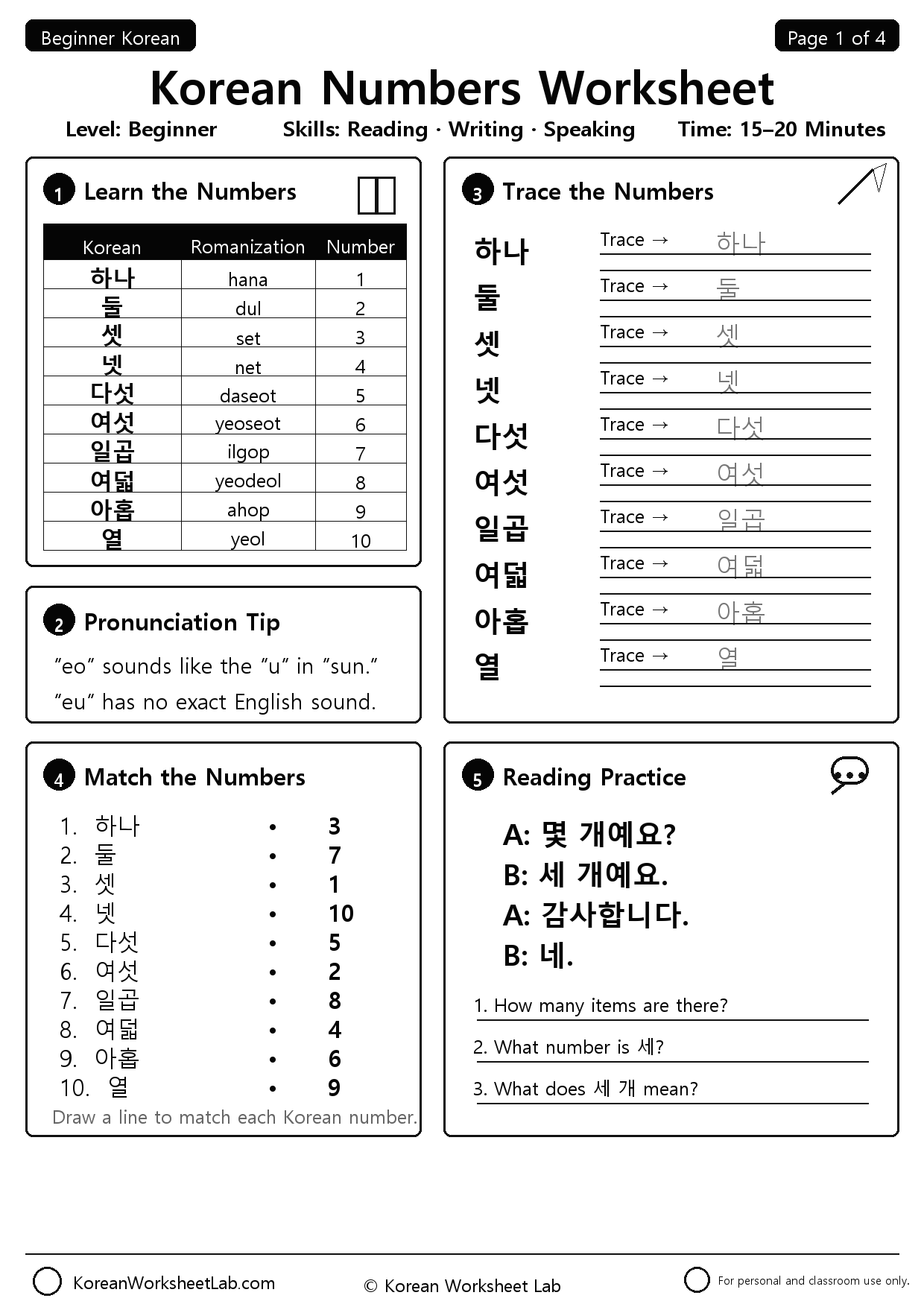
P2Practice native Korean and Sino-Korean numbers with everyday examples for age, counting, time, and prices.
 P1
P1 P2
P2Learn how to ask and tell time in Korean with native-number hour forms, minute expressions, tracing practice, clock activities, answer key, and teacher notes.
 P1
P1 P2
P2Learn common Korean place words with reading, tracing, matching, sentence practice, 에 and 에서 usage notes, answer key, and teacher notes.
 P1
P1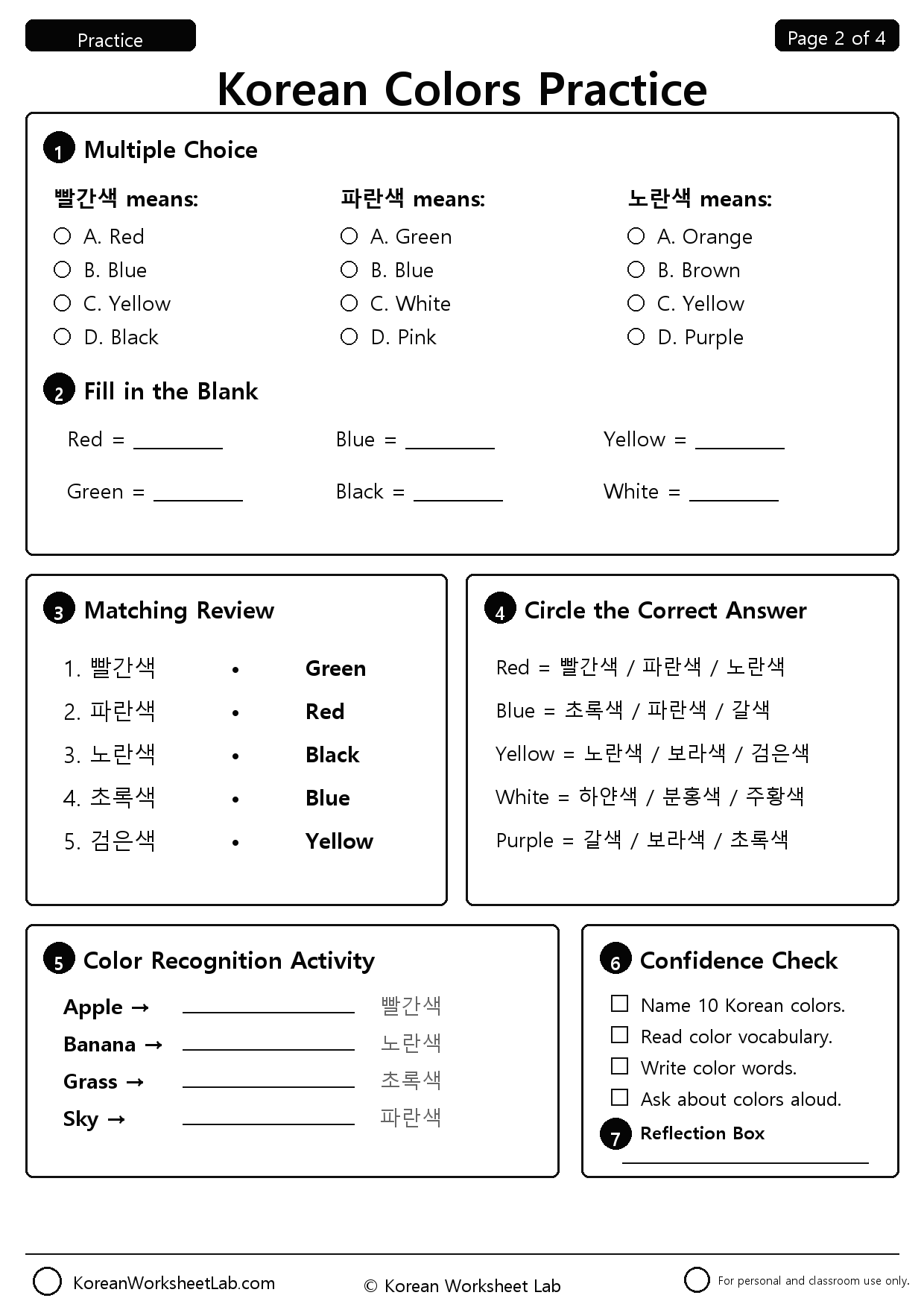 P2
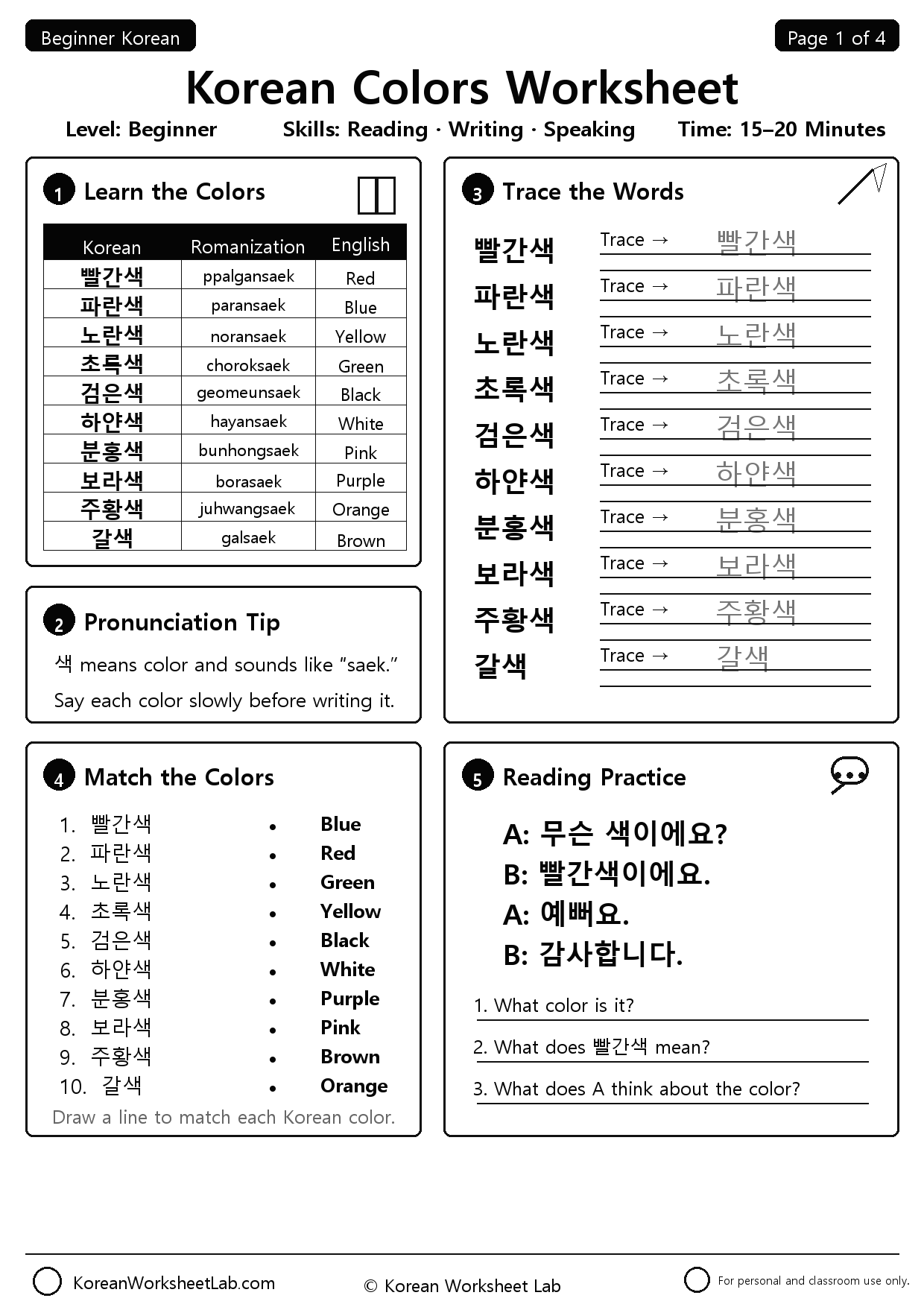
P2Learn 10 Korean color words with reading, writing, speaking practice, object recognition, teacher notes, and a printable PDF.
 P1
P1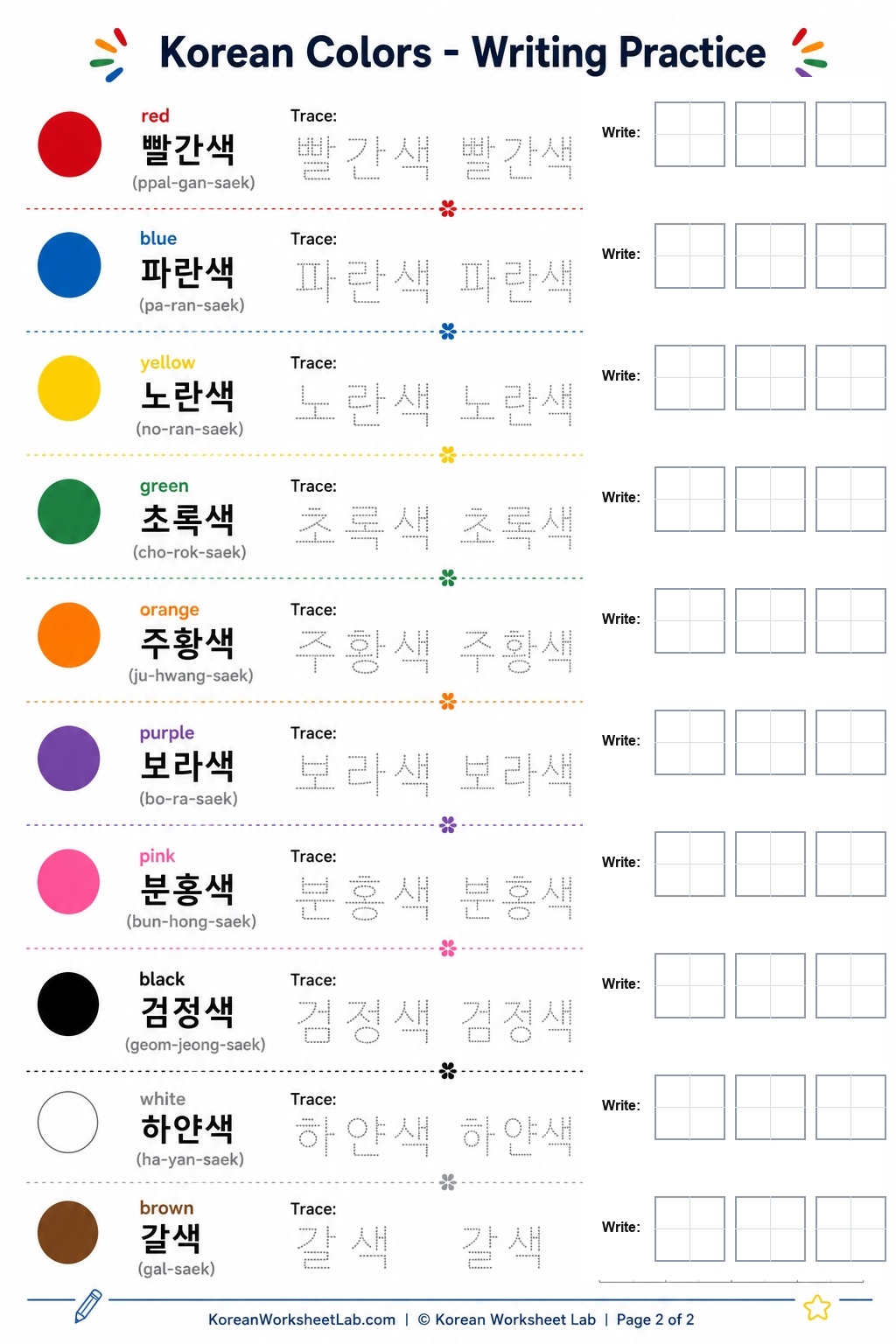 P2
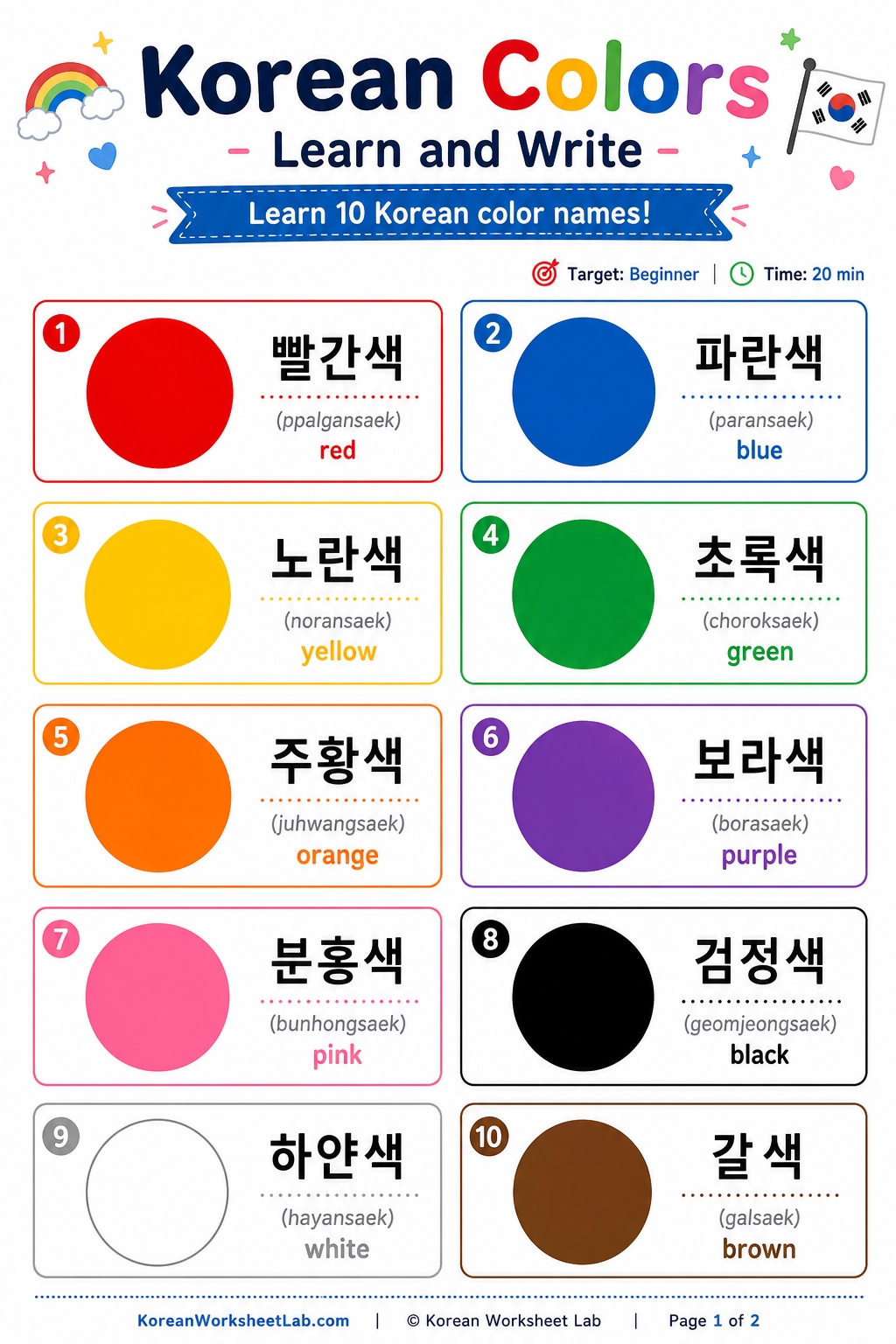
P2Learn 10 Korean color names with picture clues, color swatches, romanization support, tracing practice, writing boxes, and a printable 2-page worksheet for kids and beginners.
 P1
P1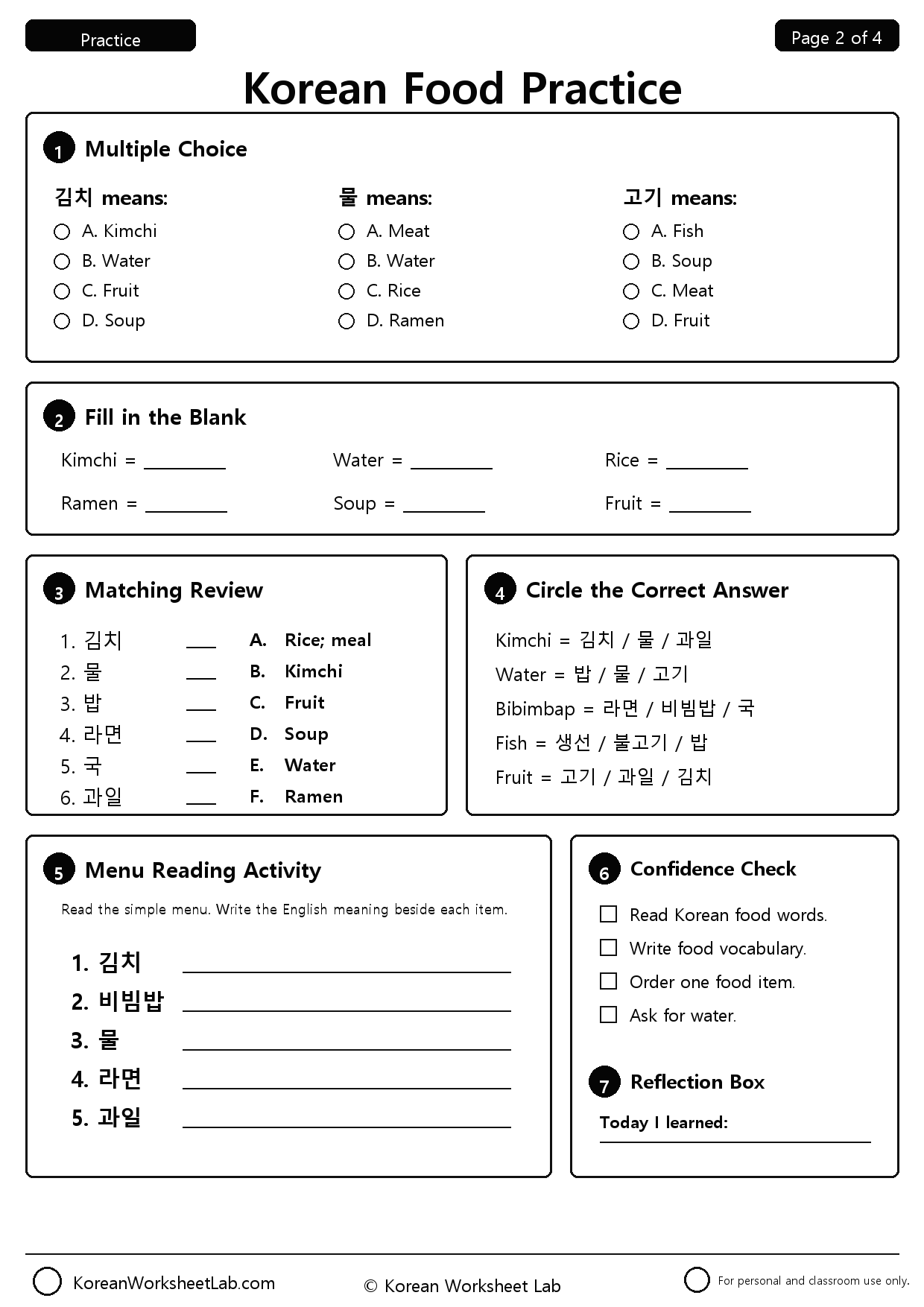 P2
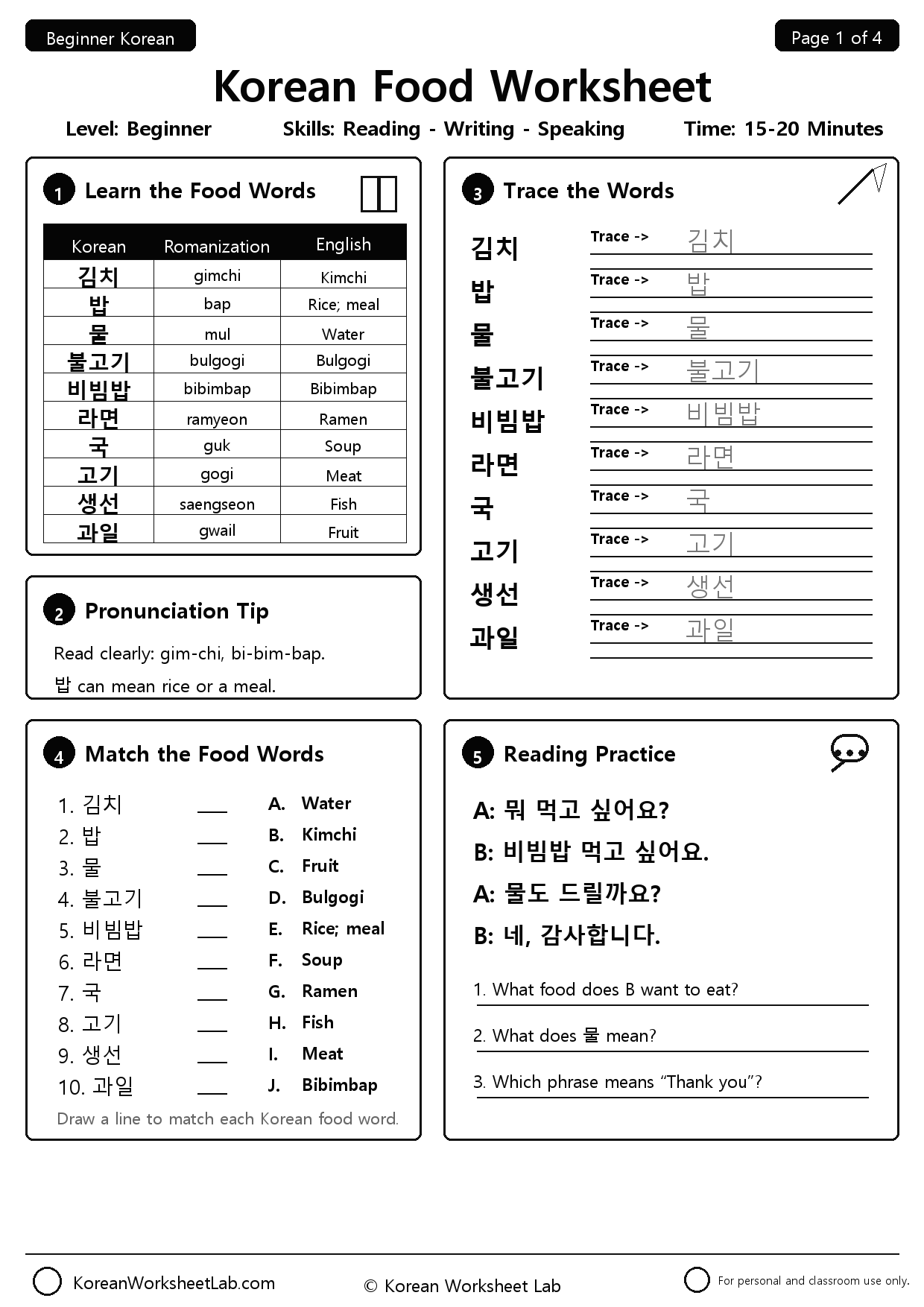
P2Practice 10 common Korean food words with tracing, menu reading, ordering phrases, an answer key, teacher notes, and a printable PDF.
 P1
P1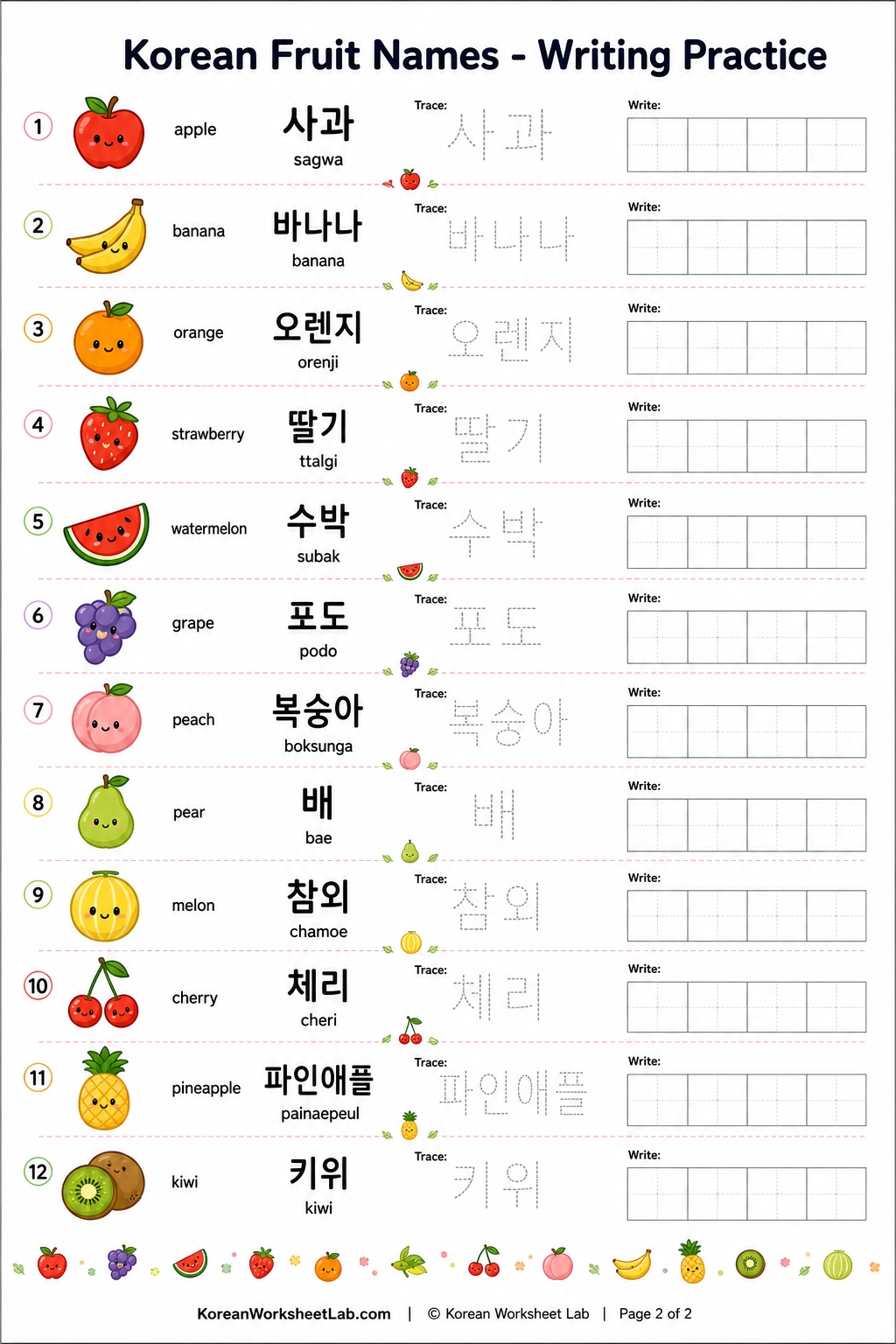 P2
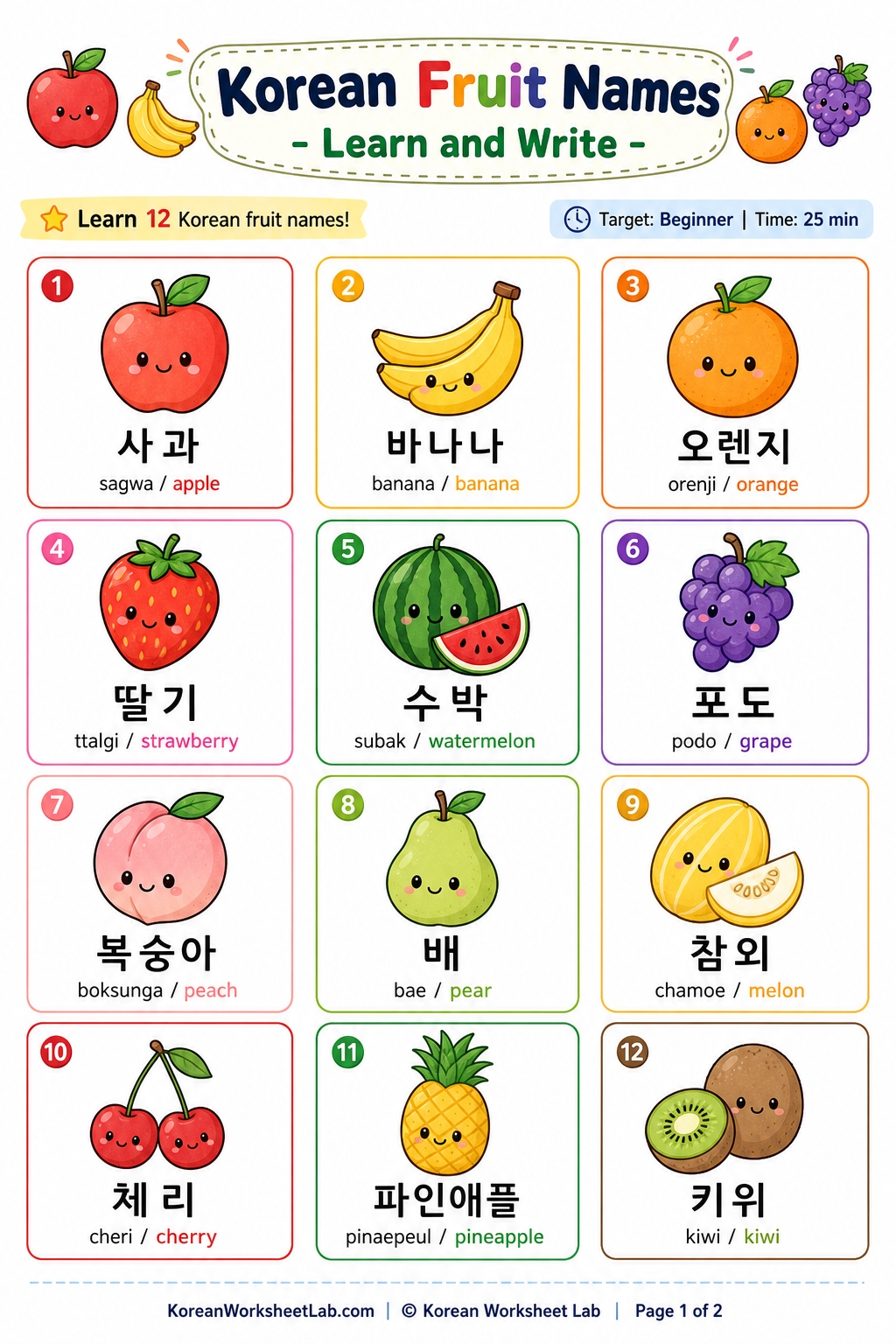
P2Learn 12 Korean fruit names with cute picture clues, romanization support, tracing practice, large writing boxes, and a printable 2-page worksheet for kids and beginners.
 P1
P1 P2
P2Learn the four Korean season names with clear picture clues, romanization, stroke-order tracing, independent writing boxes, and a printable 2-page worksheet for kids and beginners.
 P1
P1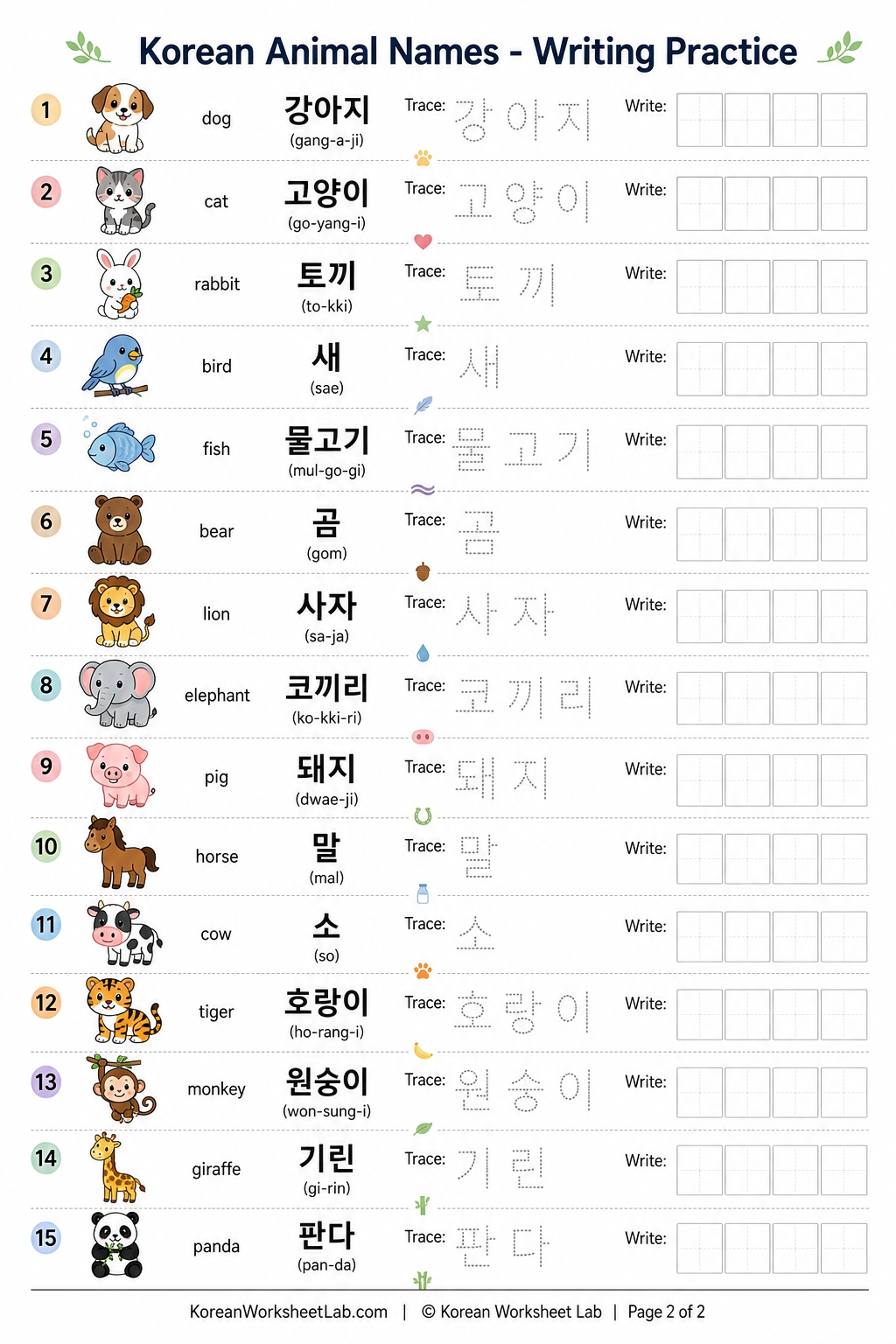 P2
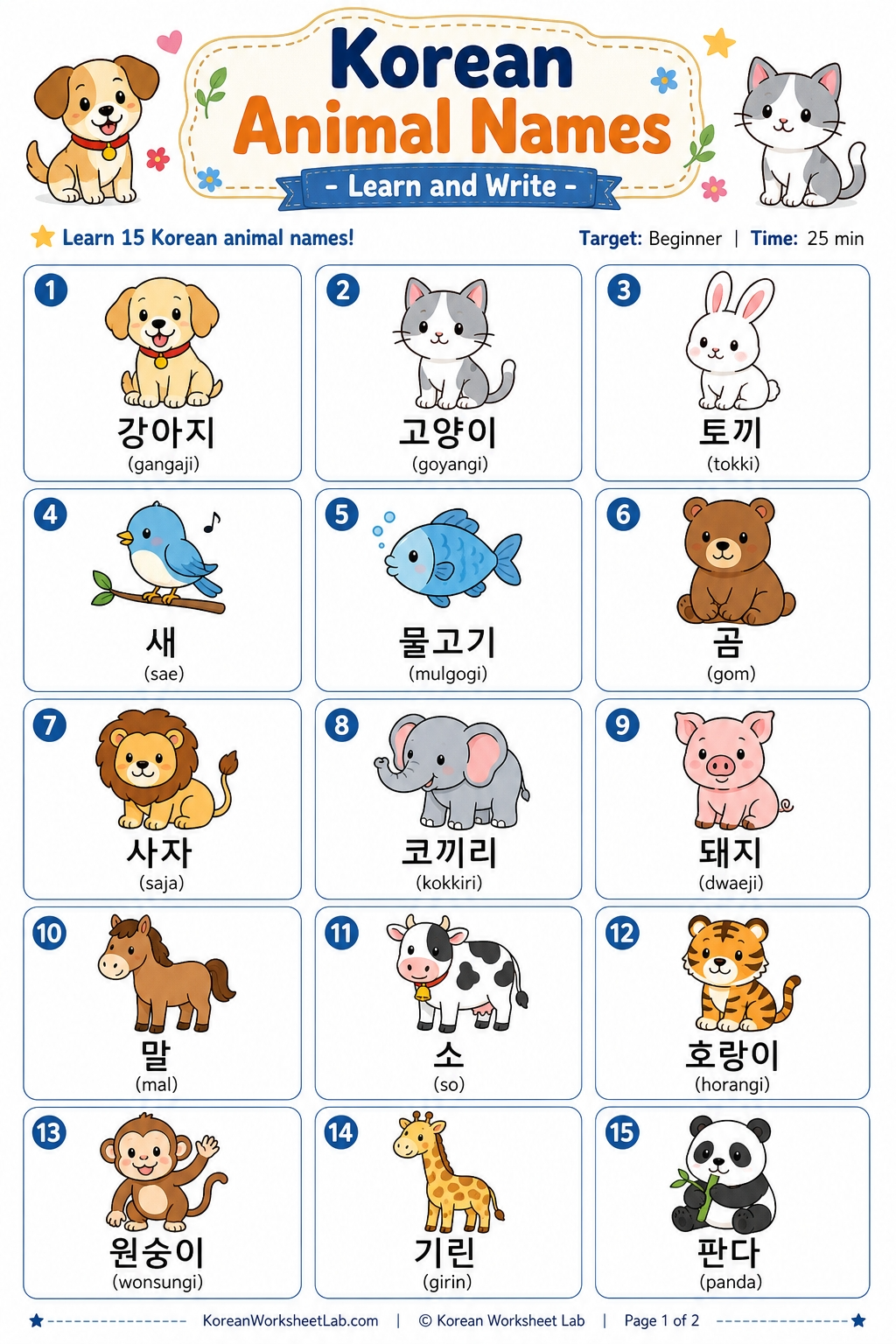
P2Learn 15 Korean animal names with picture vocabulary, romanization support, tracing practice, writing boxes, and a printable animal names worksheet.
 P1
P1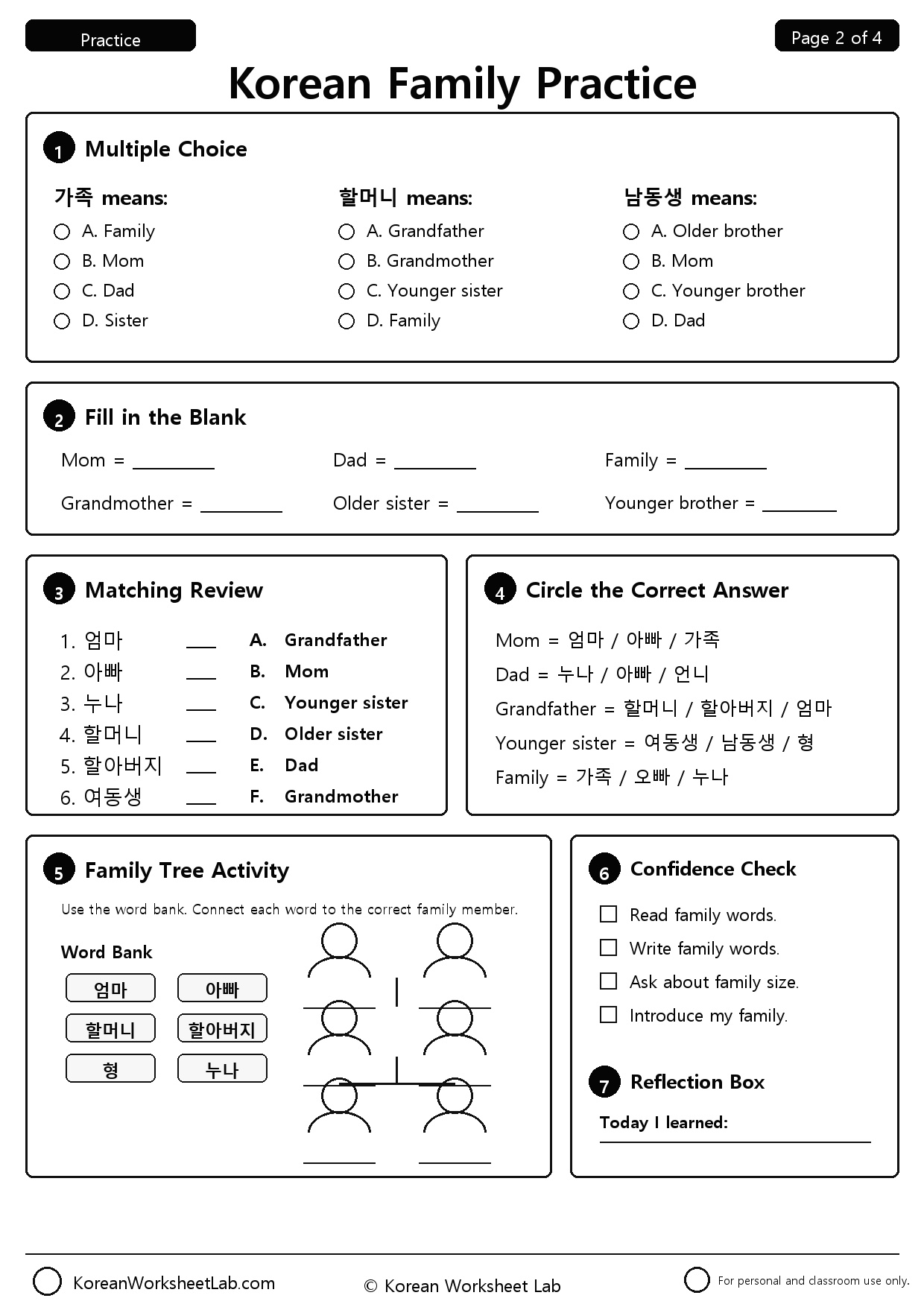 P2
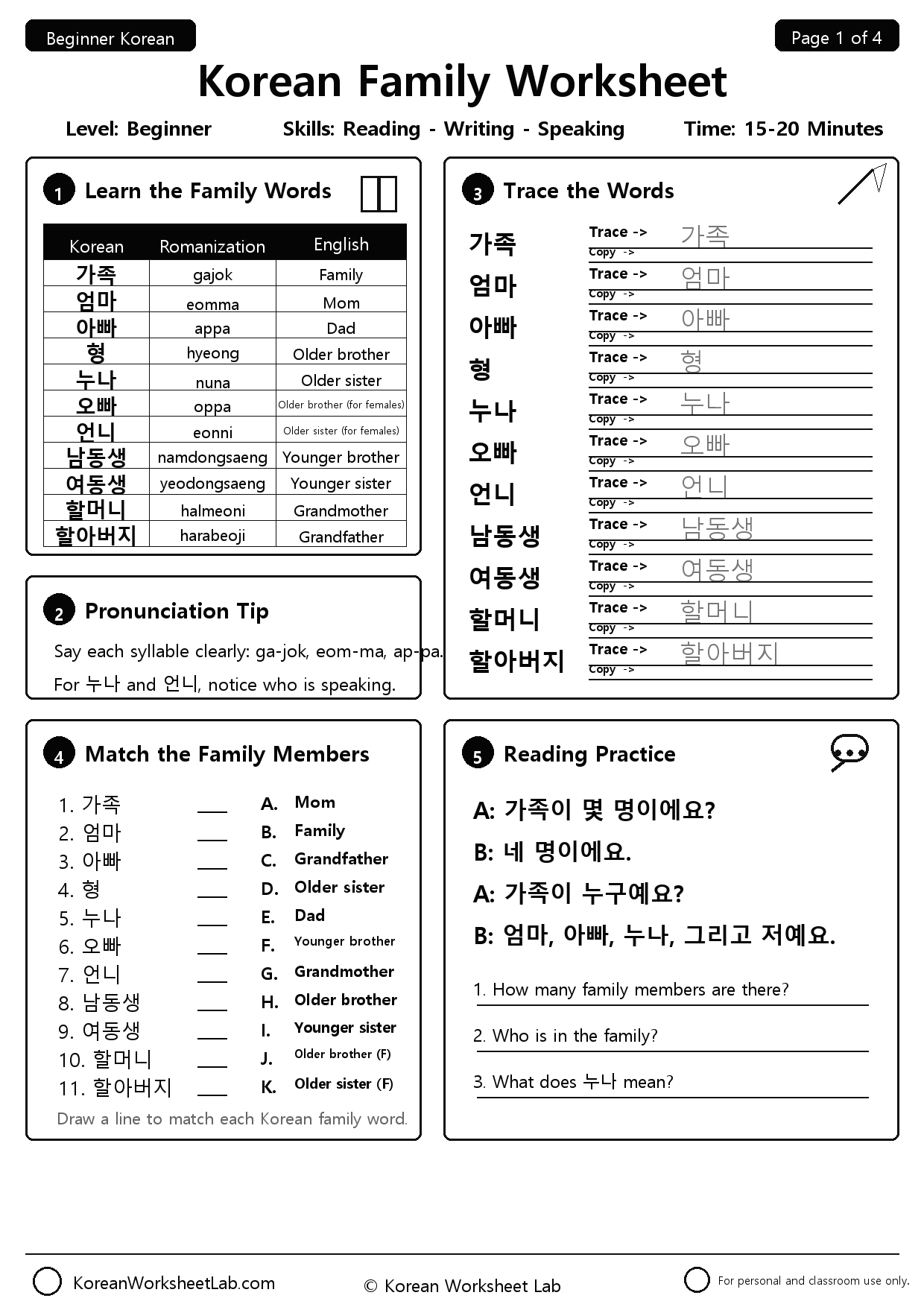
P2Understand Korean family words, including basic family members and age-based relationship terms.
 P1
P1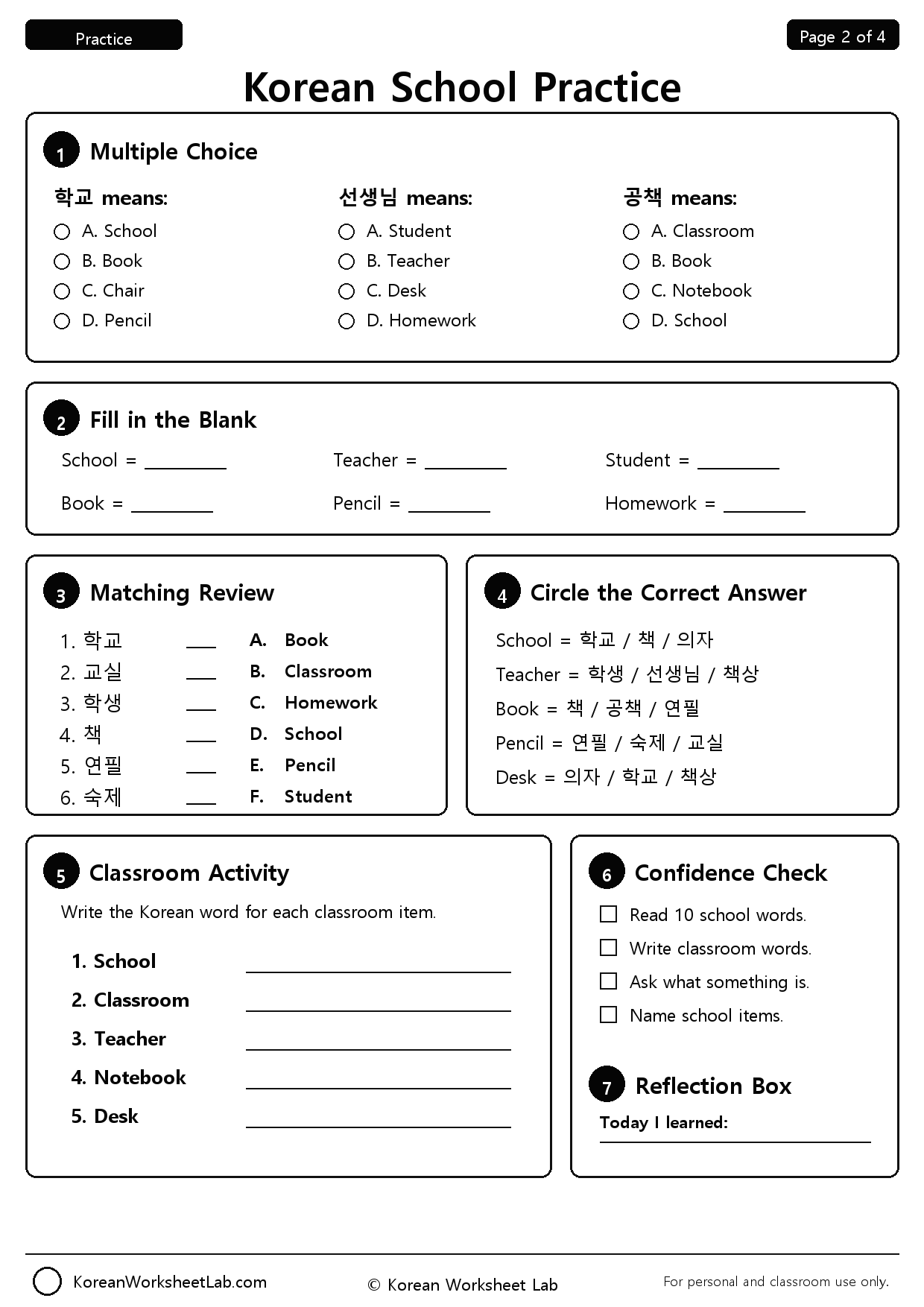 P2
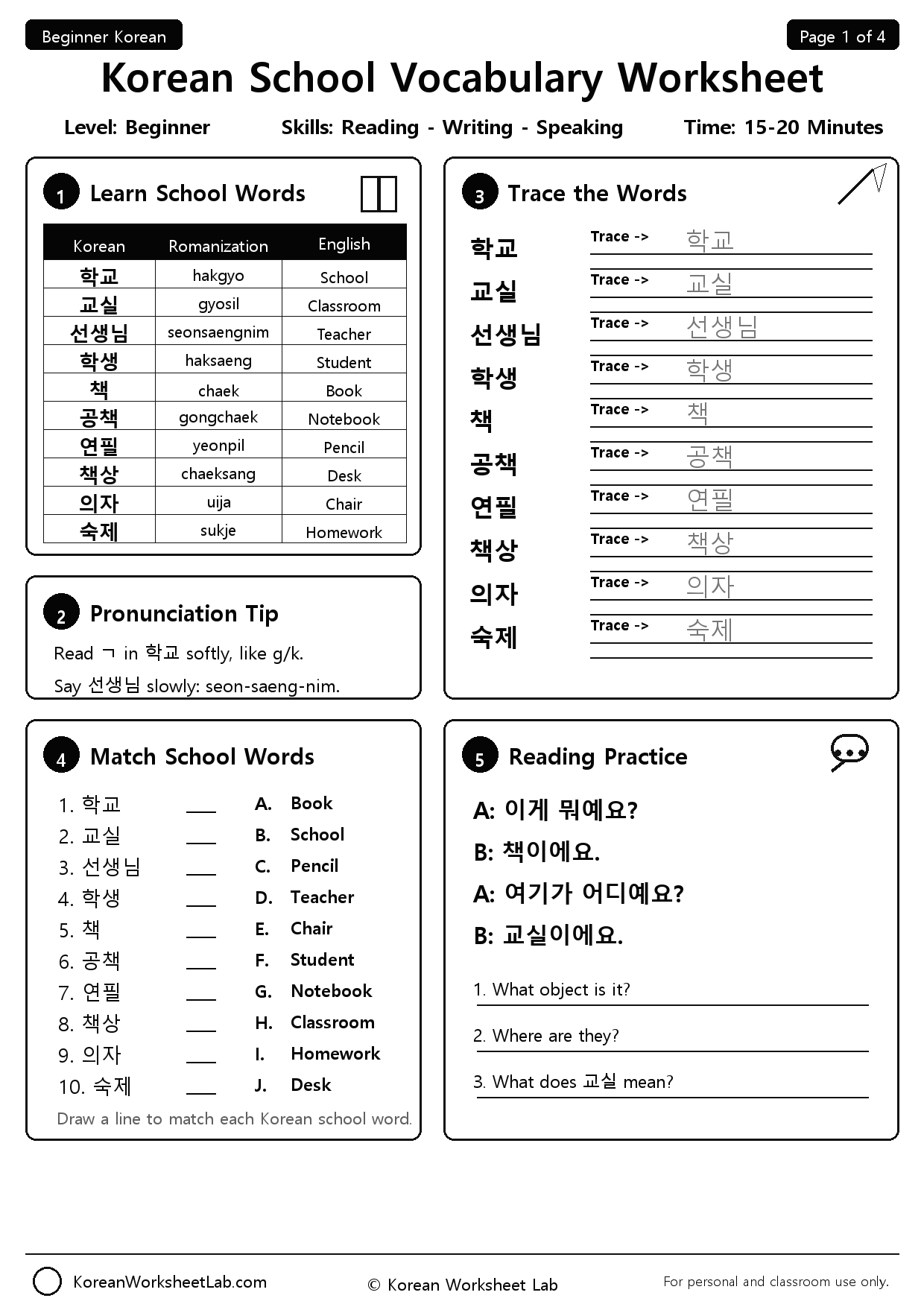
P2Learn 10 Korean school and classroom words with tracing, matching, reading practice, answer key, teacher notes, and a printable 4-page PDF worksheet.
 P1
P1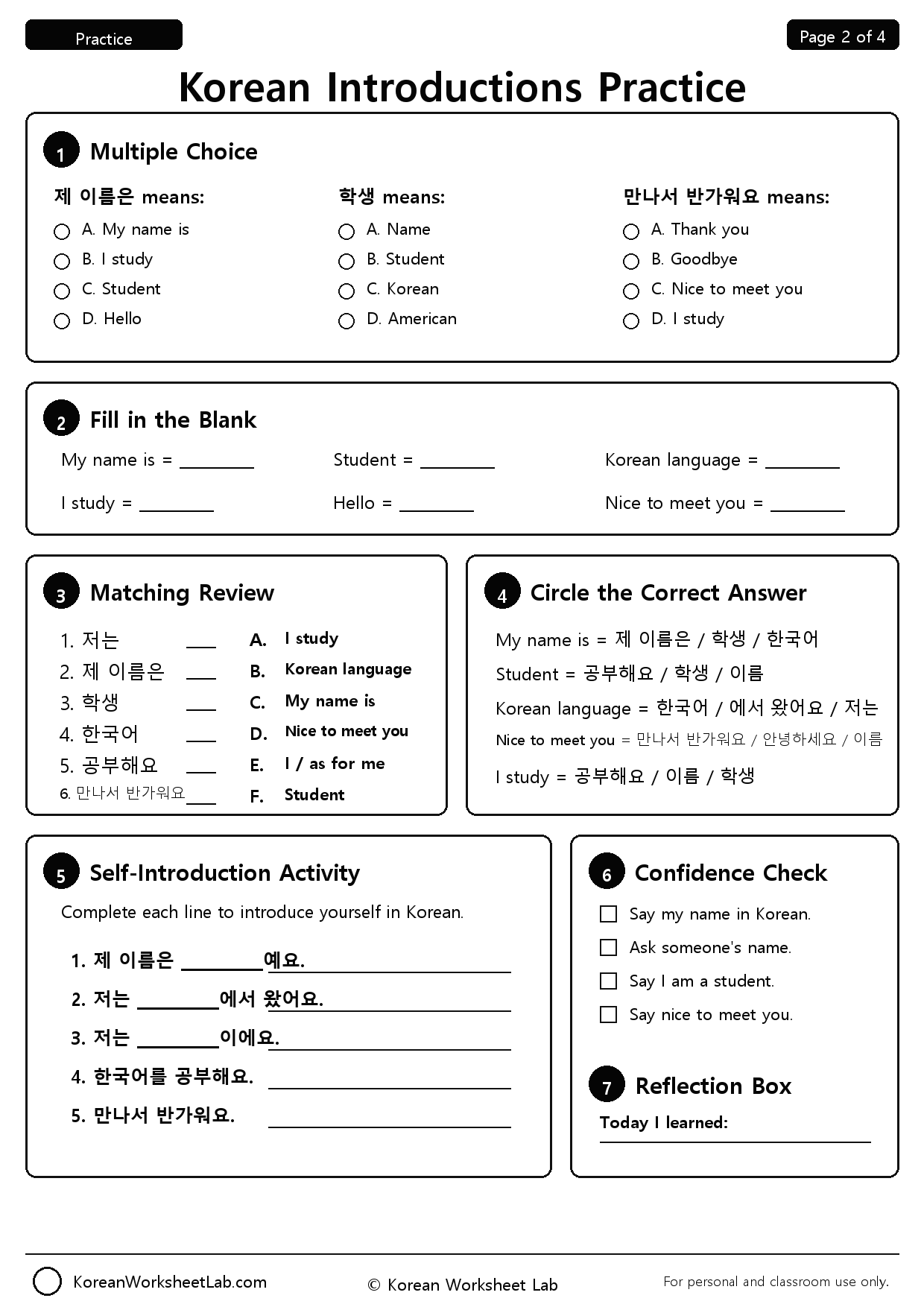 P2
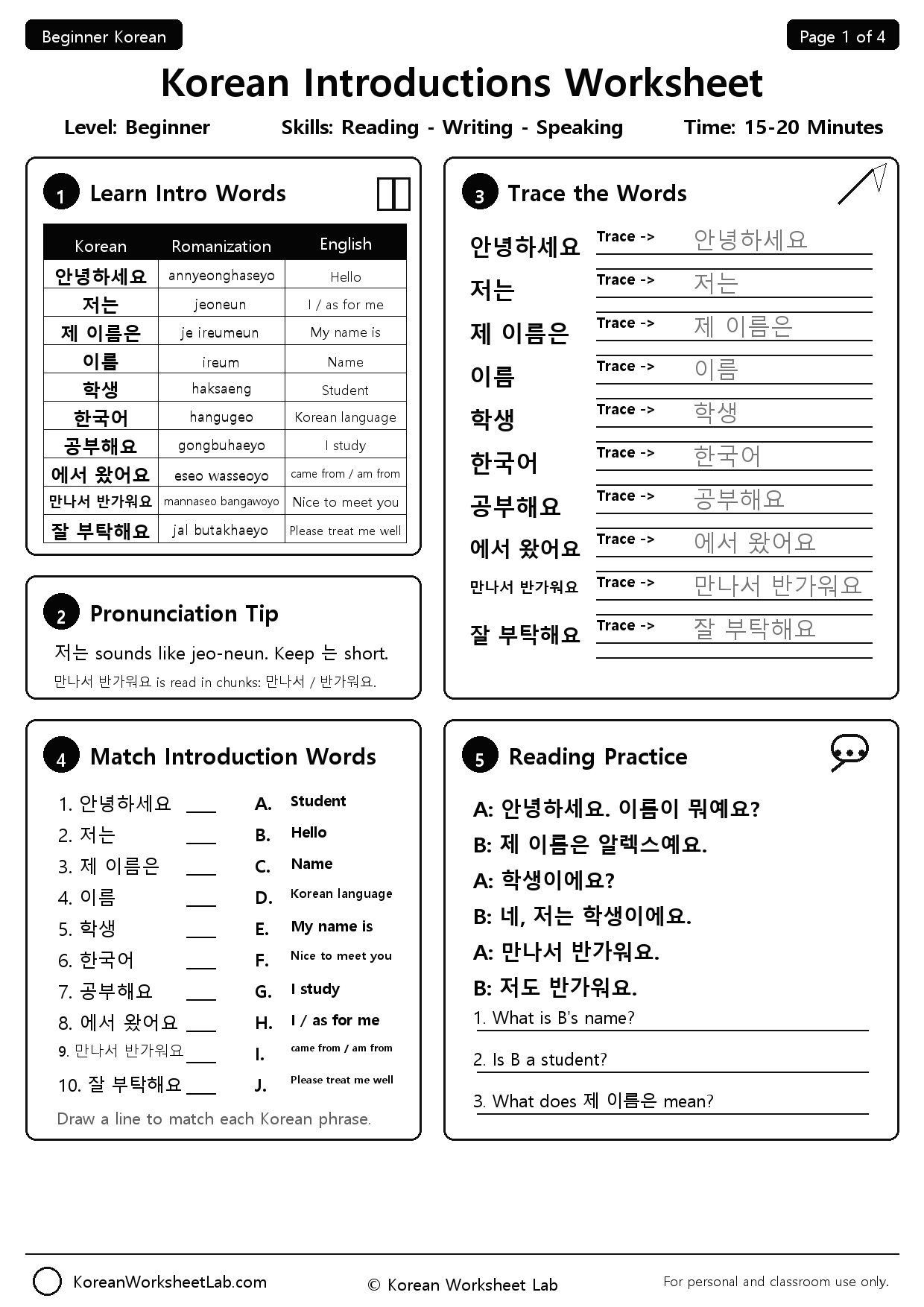
P2Practice Korean self-introduction phrases for saying your name, asking someone's name, saying where you are from, saying you are a student, and using nice-to-meet-you expressions with a printable 4-page worksheet set.
 P1
P1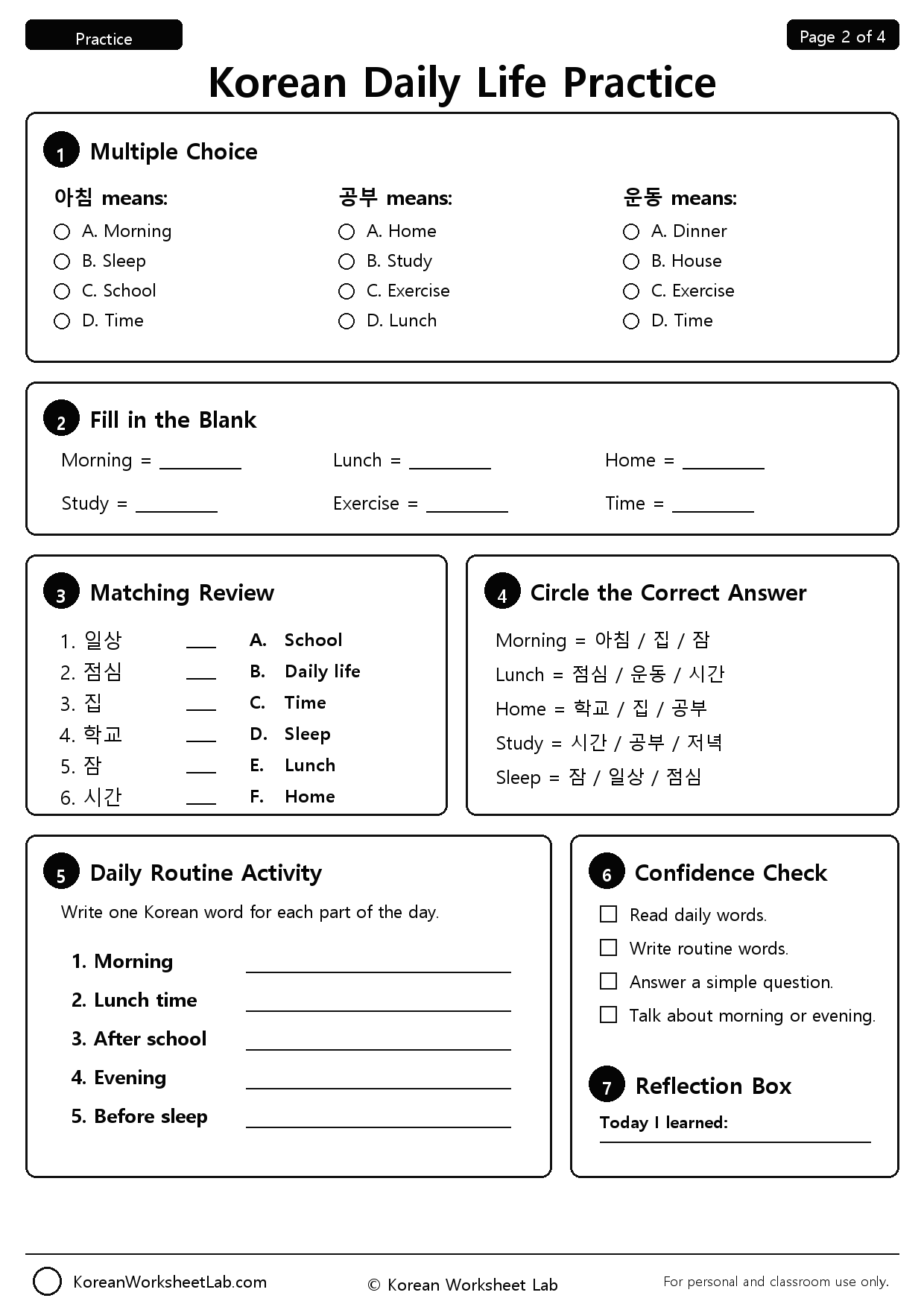 P2
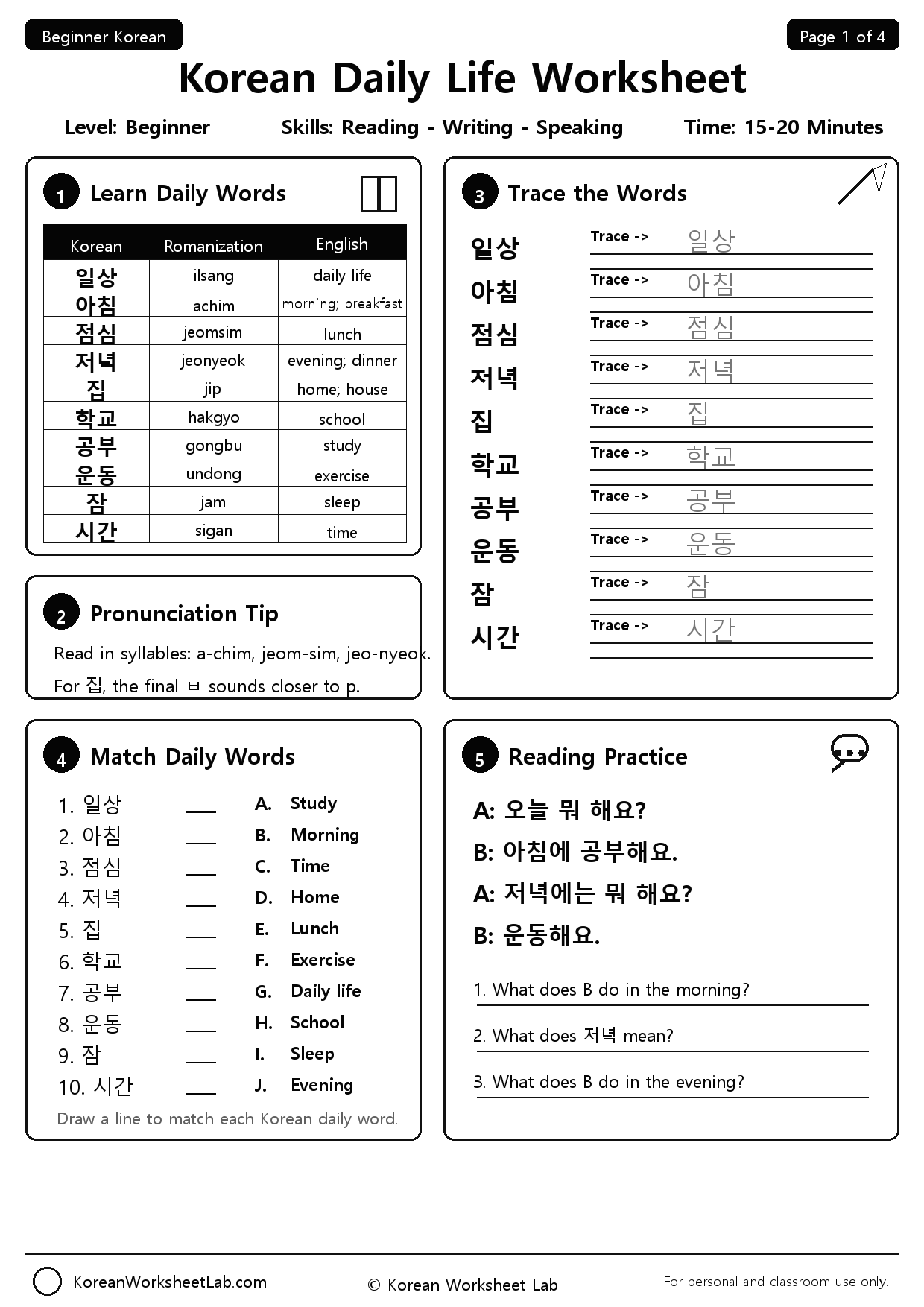
P2Learn practical Korean daily life words for routines, time of day, home, school, study, exercise, and sleep with a printable 4-page worksheet set.
 P1
P1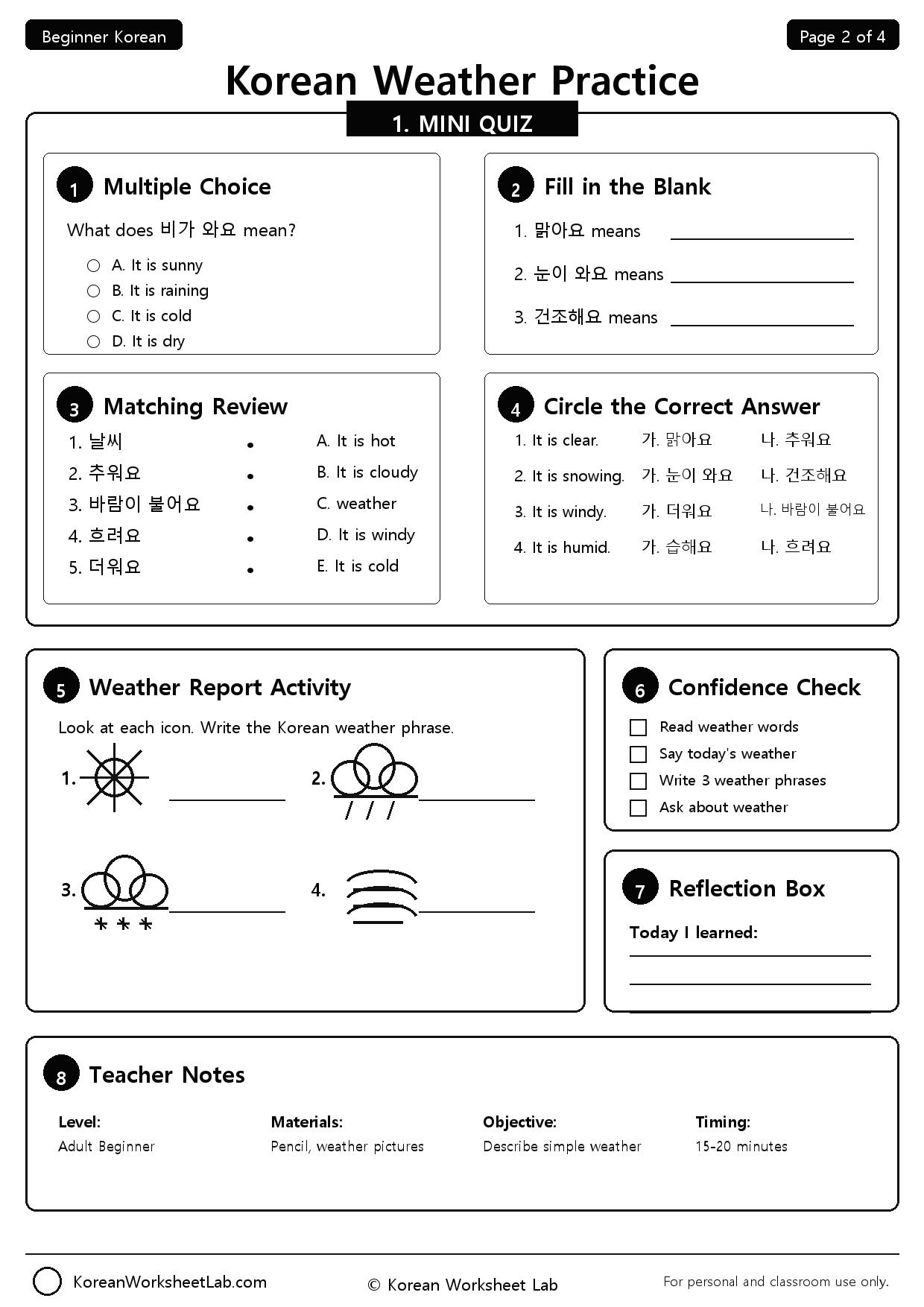 P2
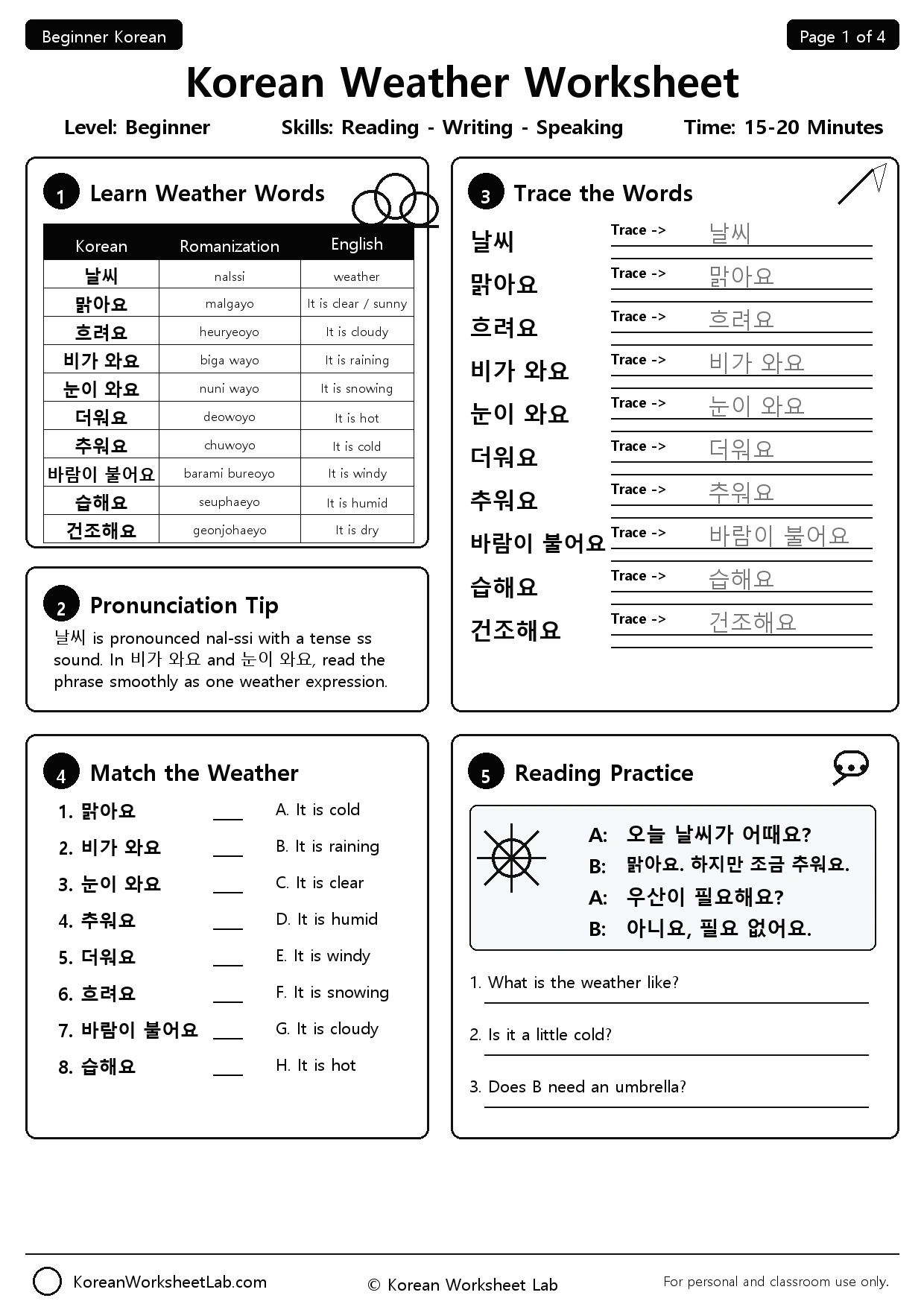
P2Learn Korean weather words and phrases for sunny, rainy, snowy, hot, cold, windy, humid, and dry days with a printable 4-page worksheet set.
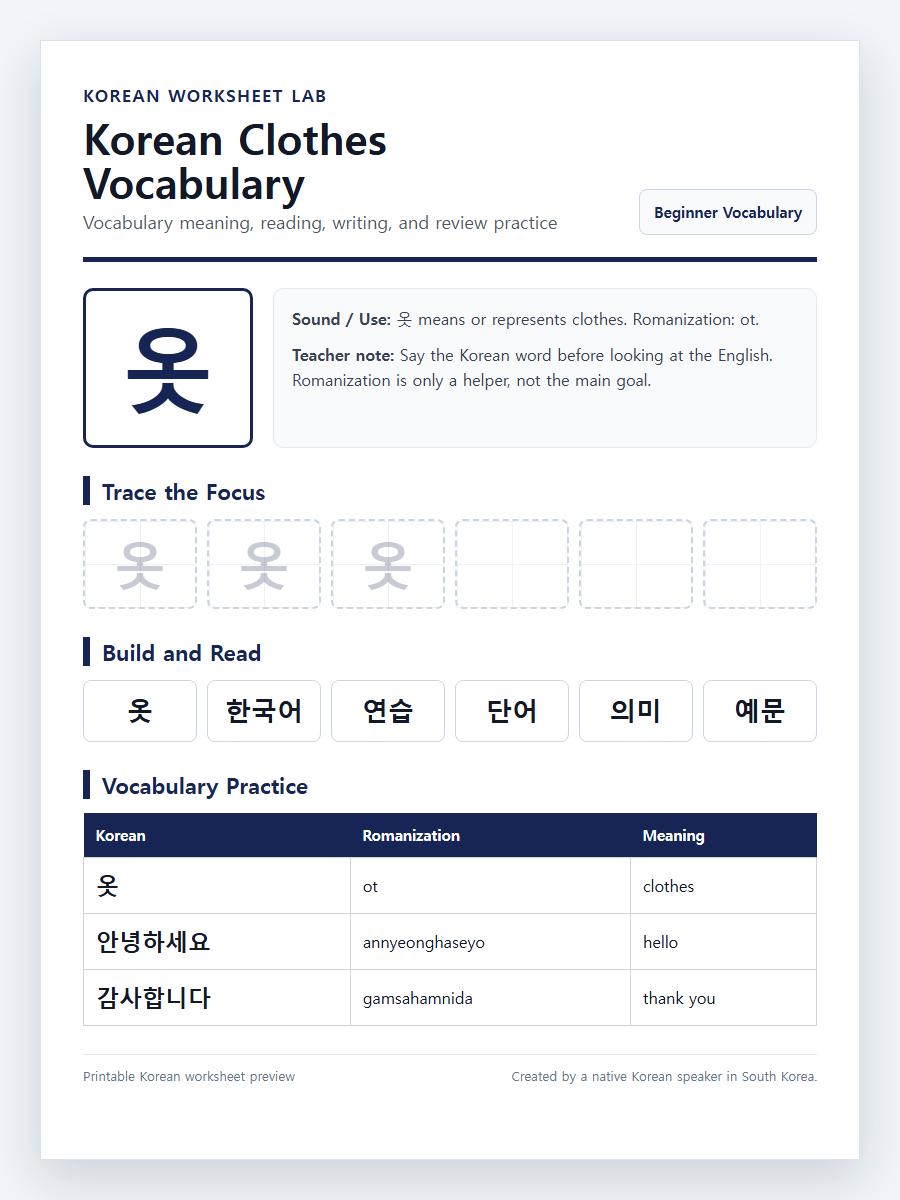
Learn clothing words and simple Korean phrases for describing outfits and shopping.
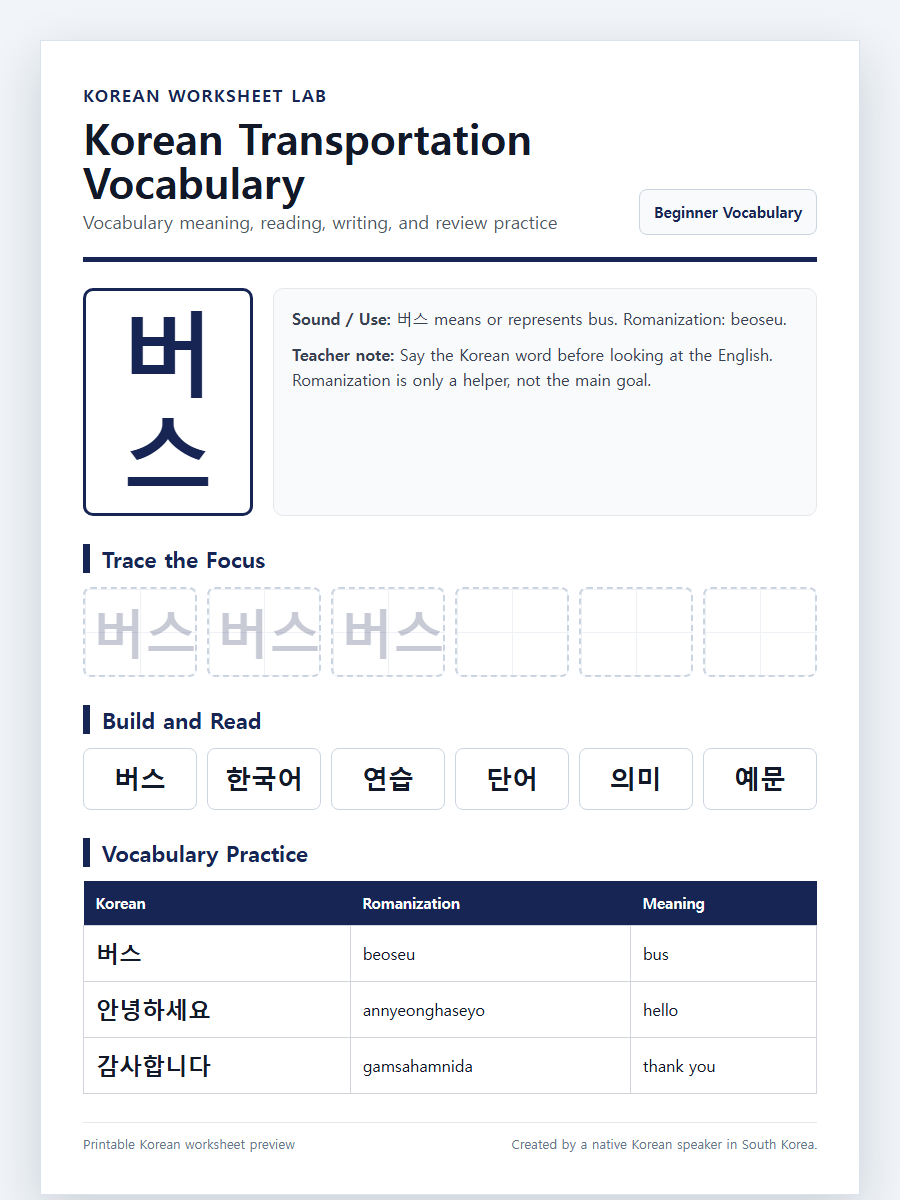
Study bus, subway, taxi, walking, and travel vocabulary for practical Korean.
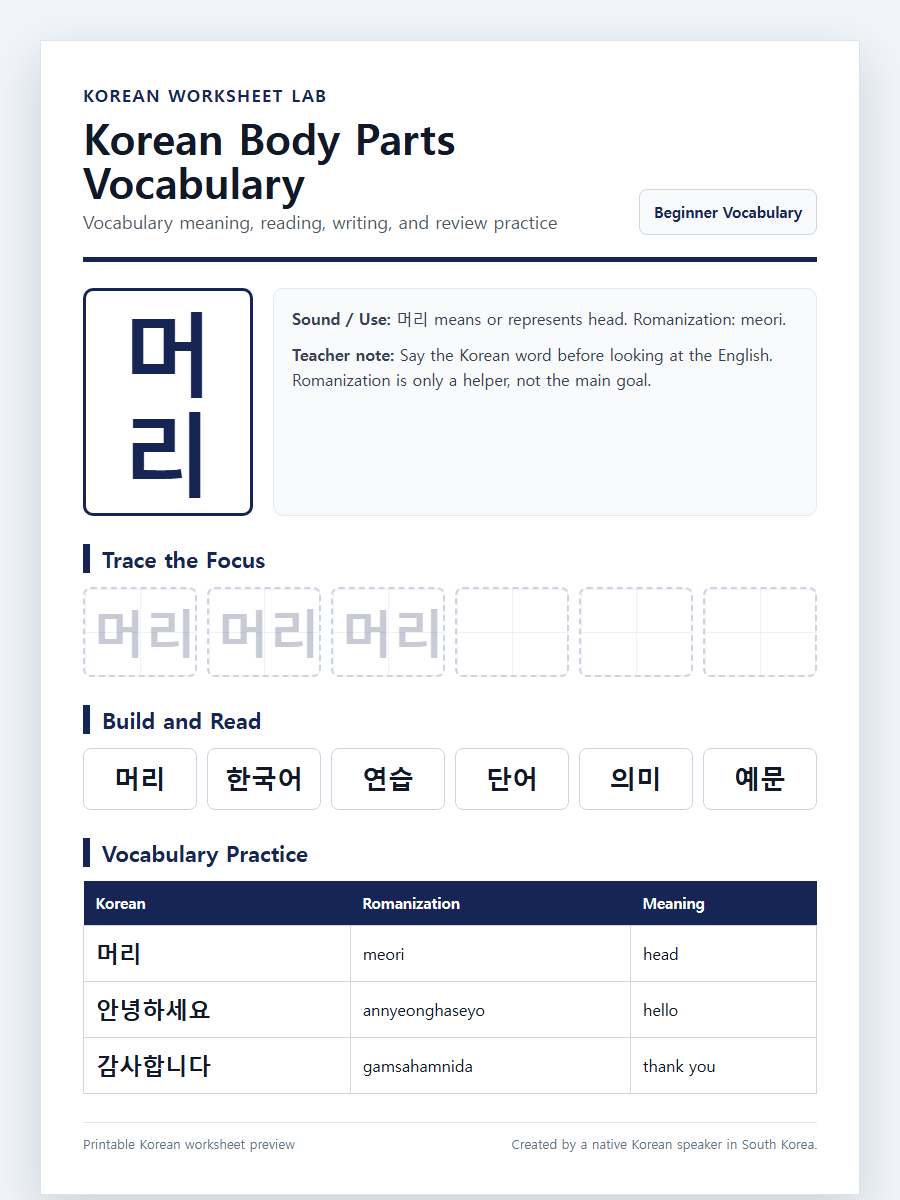
Practice Korean body part words with clear examples for health, description, and classroom activities.
 P1
P1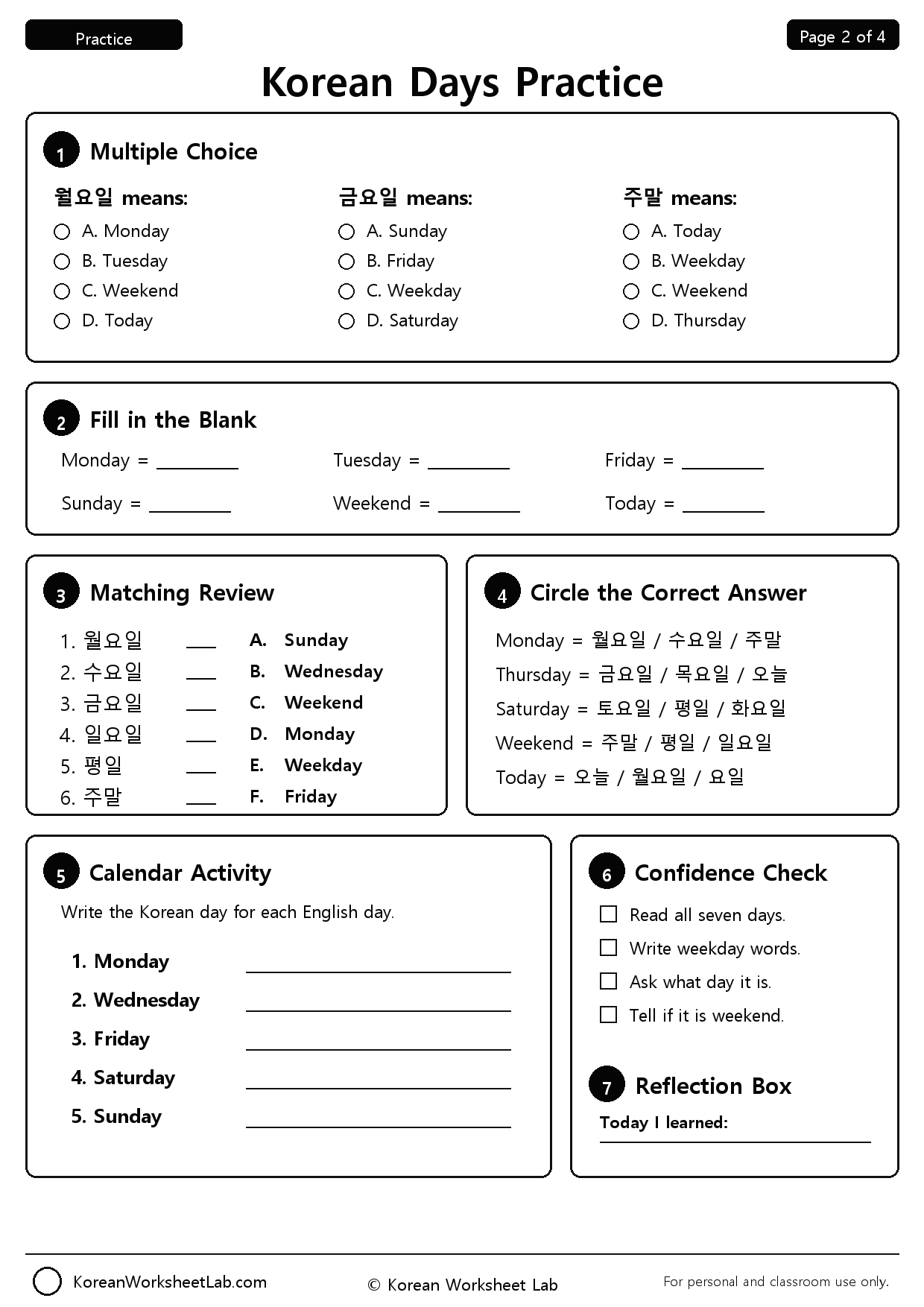 P2
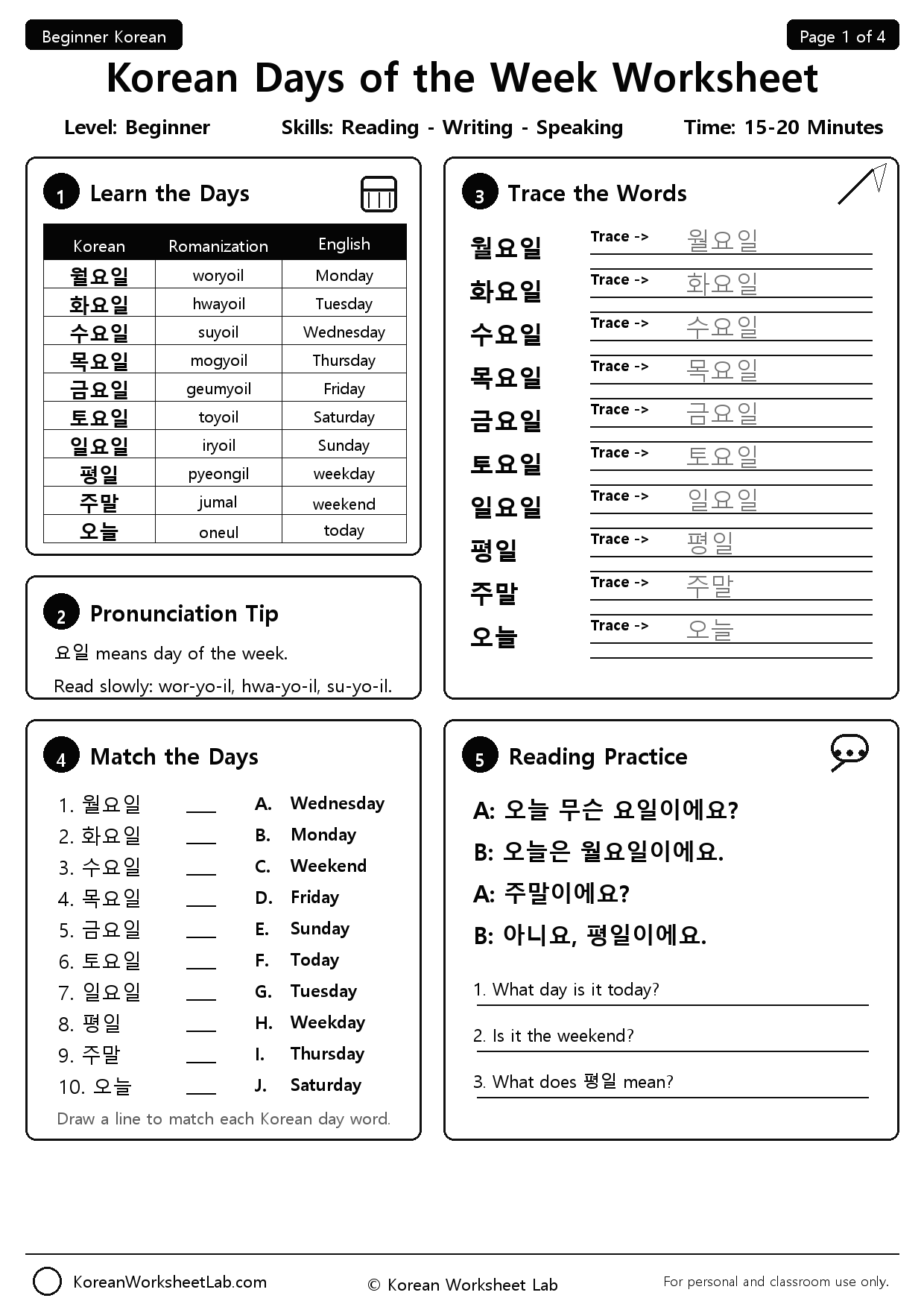
P2Learn the seven Korean days of the week plus weekday, weekend, and today with a printable 4-page worksheet set for schedules and calendar practice.
 P1
P1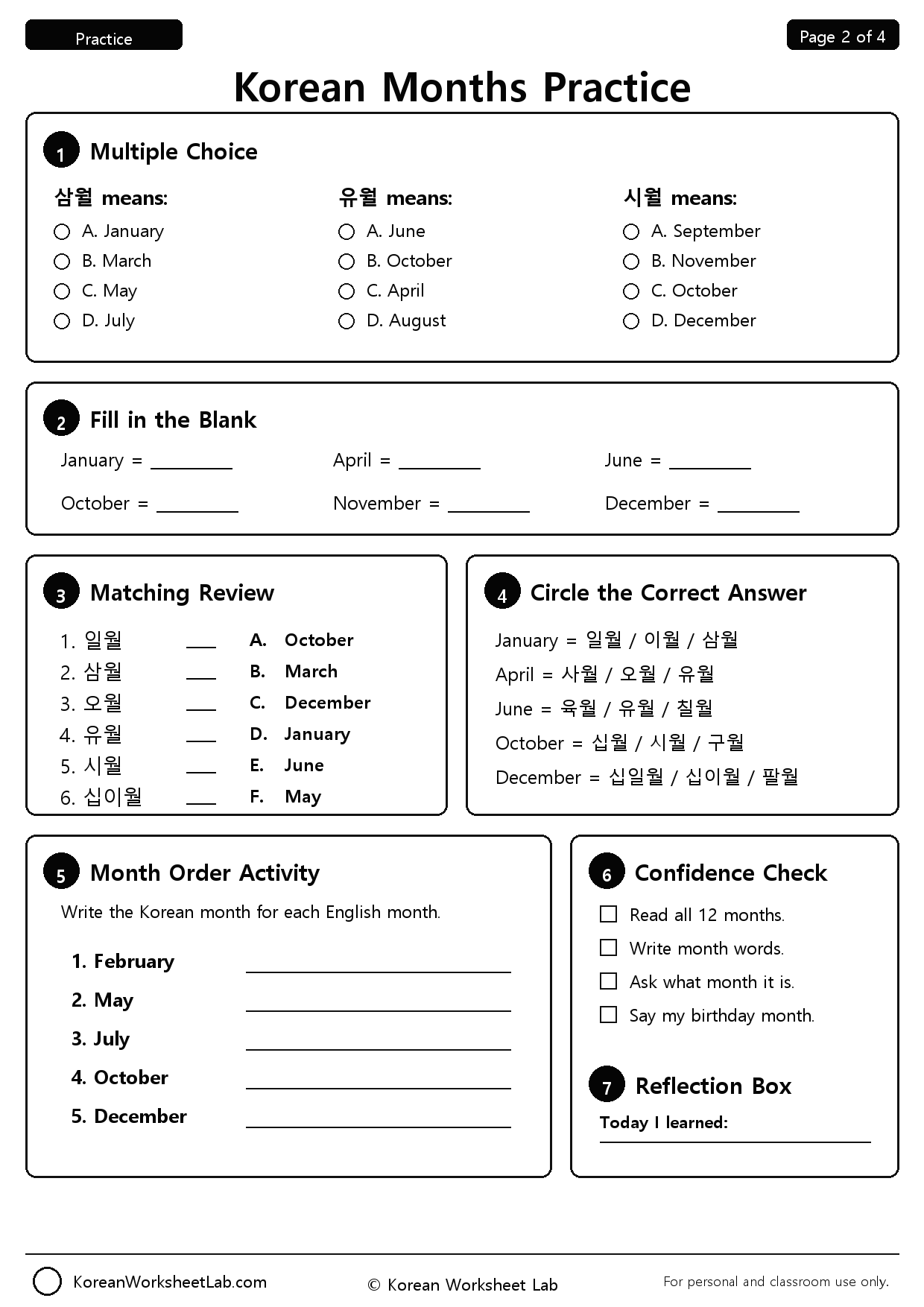 P2
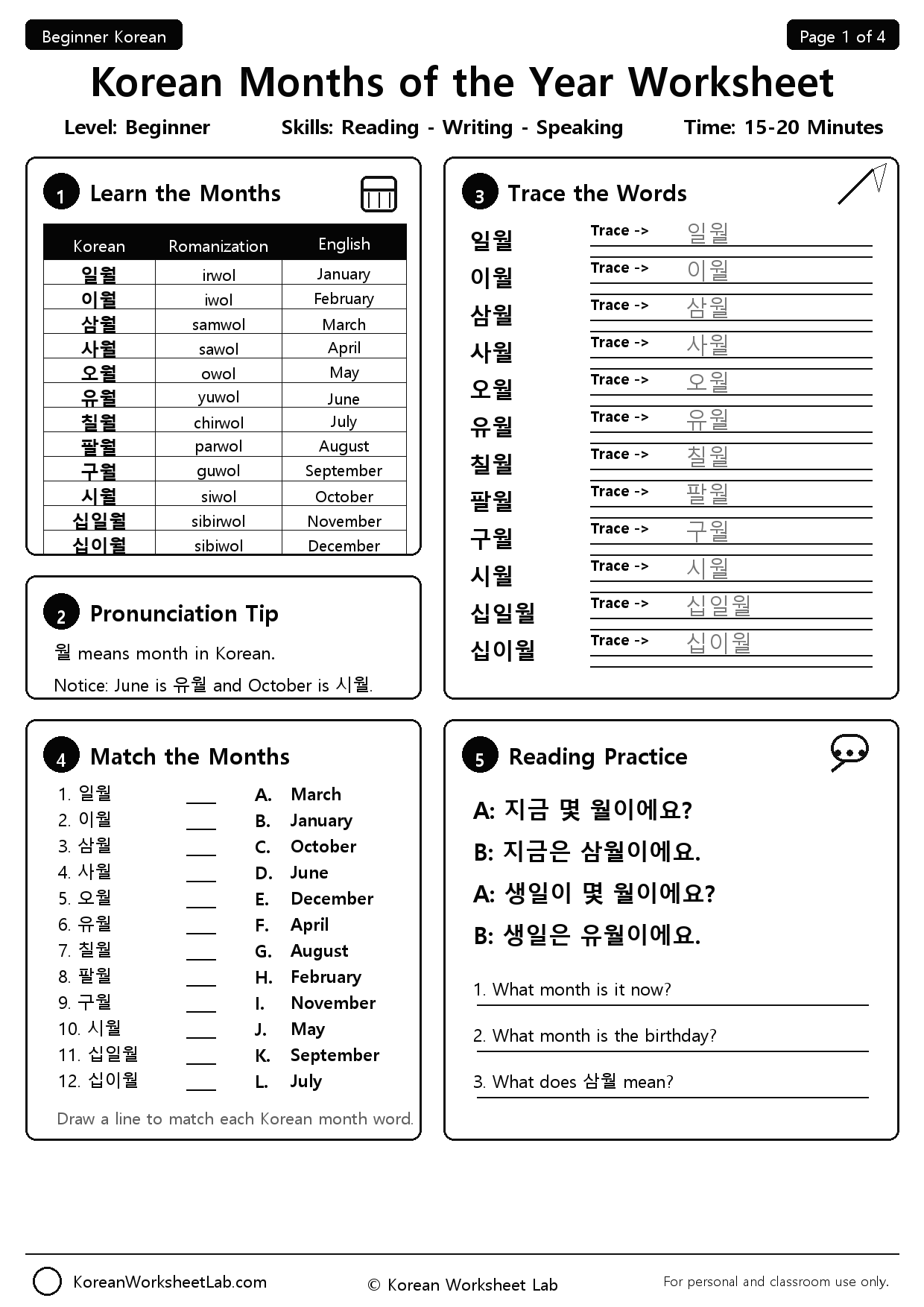
P2Learn the 12 Korean months of the year with a printable 4-page worksheet set for calendar practice, birthday months, reading, writing, and review.
Study Korean room, furniture, and household words for daily conversation.
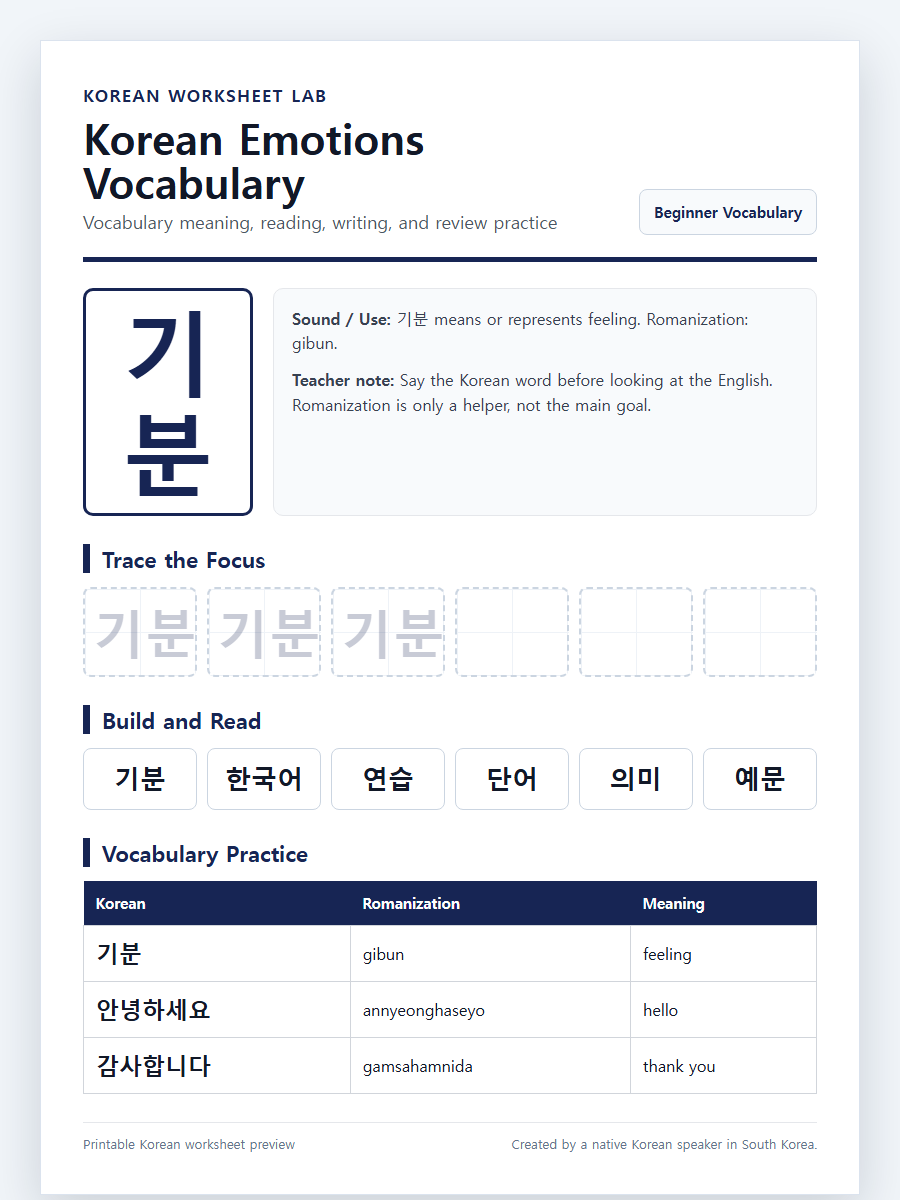
Learn beginner Korean words for feelings and simple self-expression.
 P1
P1 P2
P2Learn all seven Korean days of the week with colorful calendar pictures, clear romanization, guided tracing, stroke-order cues, and large handwriting boxes in a free two-page printable worksheet.
 P1
P1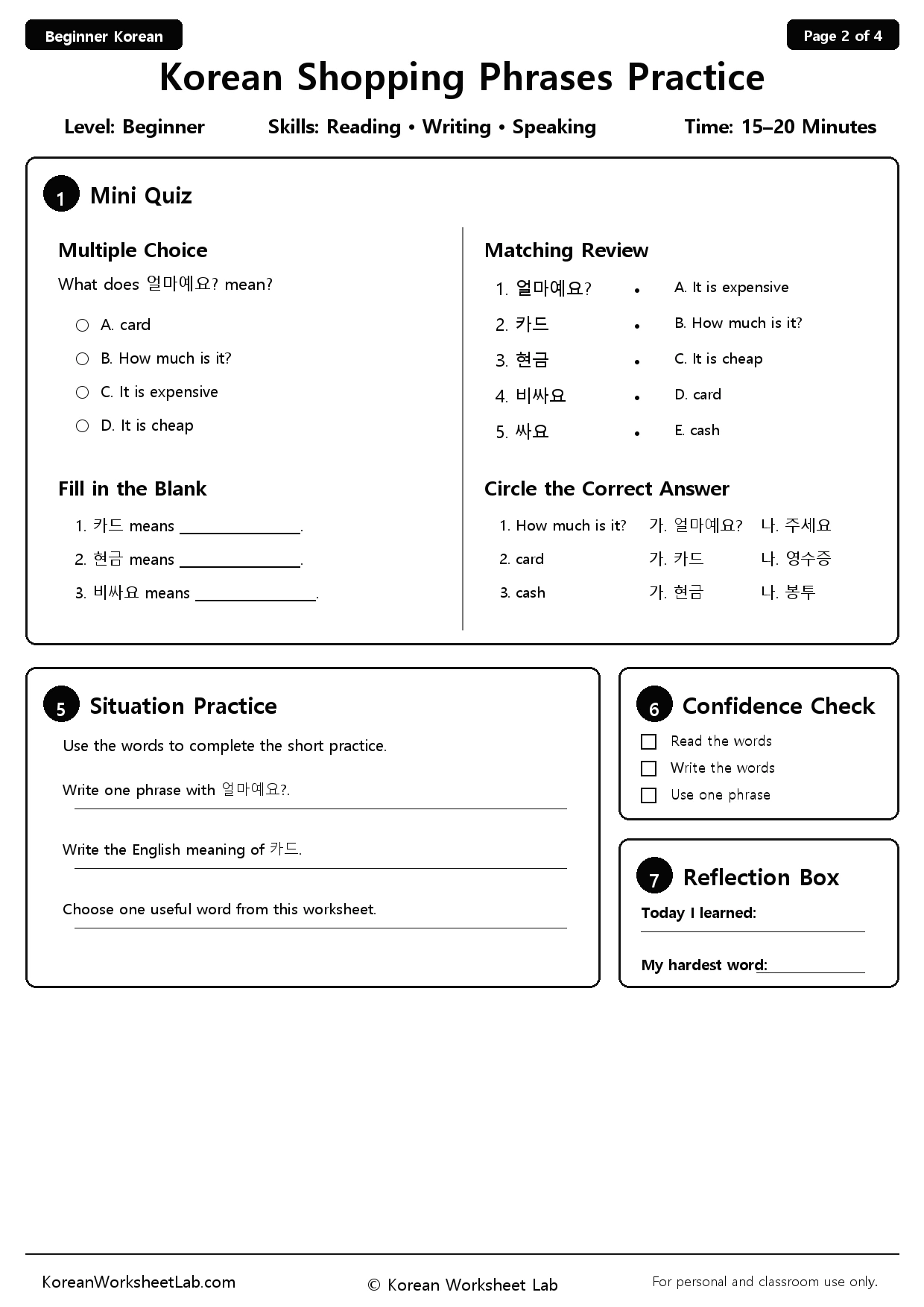 P2
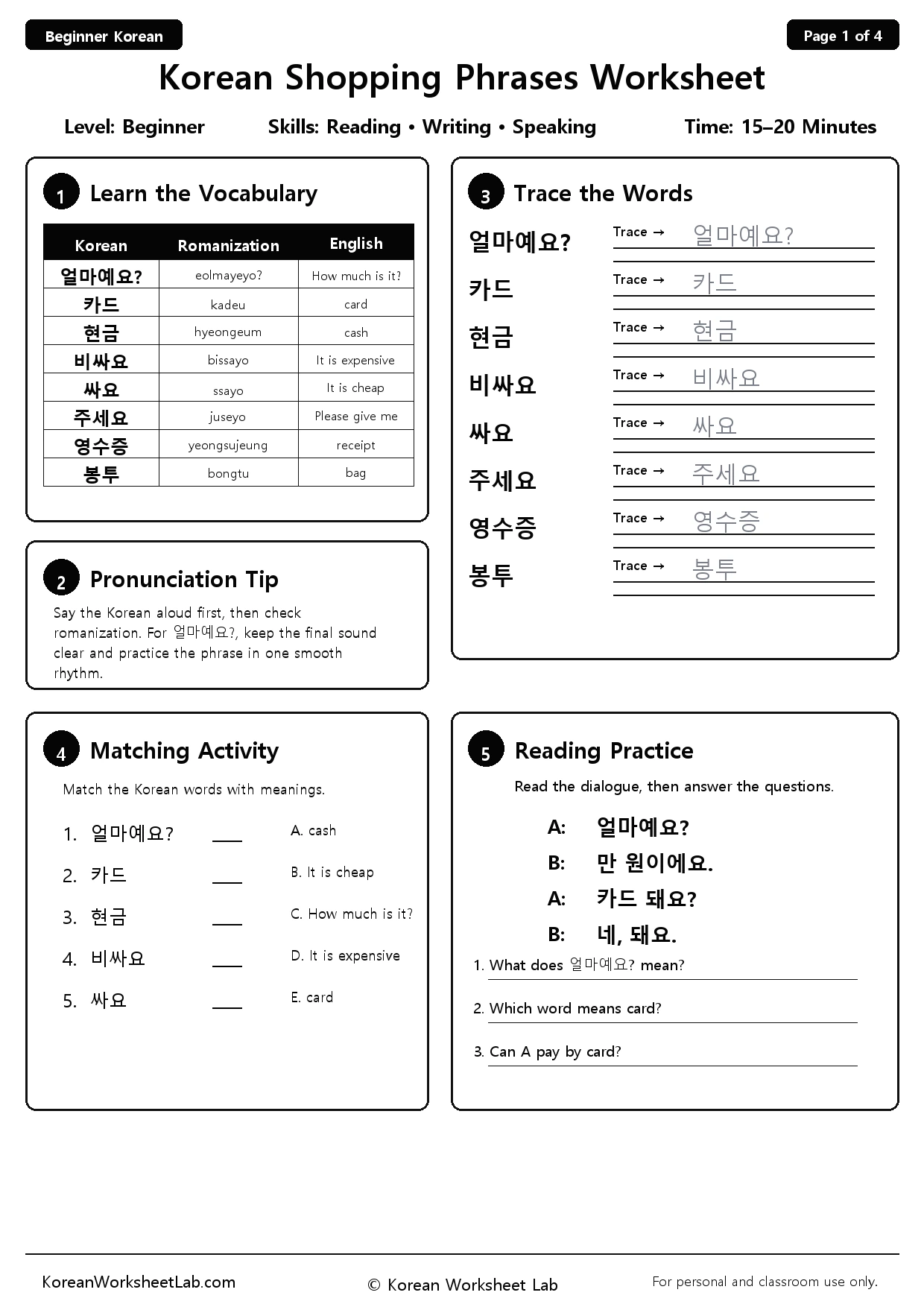
P2Learn practical Korean shopping phrases for prices, payment, receipts, bags, and polite requests with guided writing practice.
 P1
P1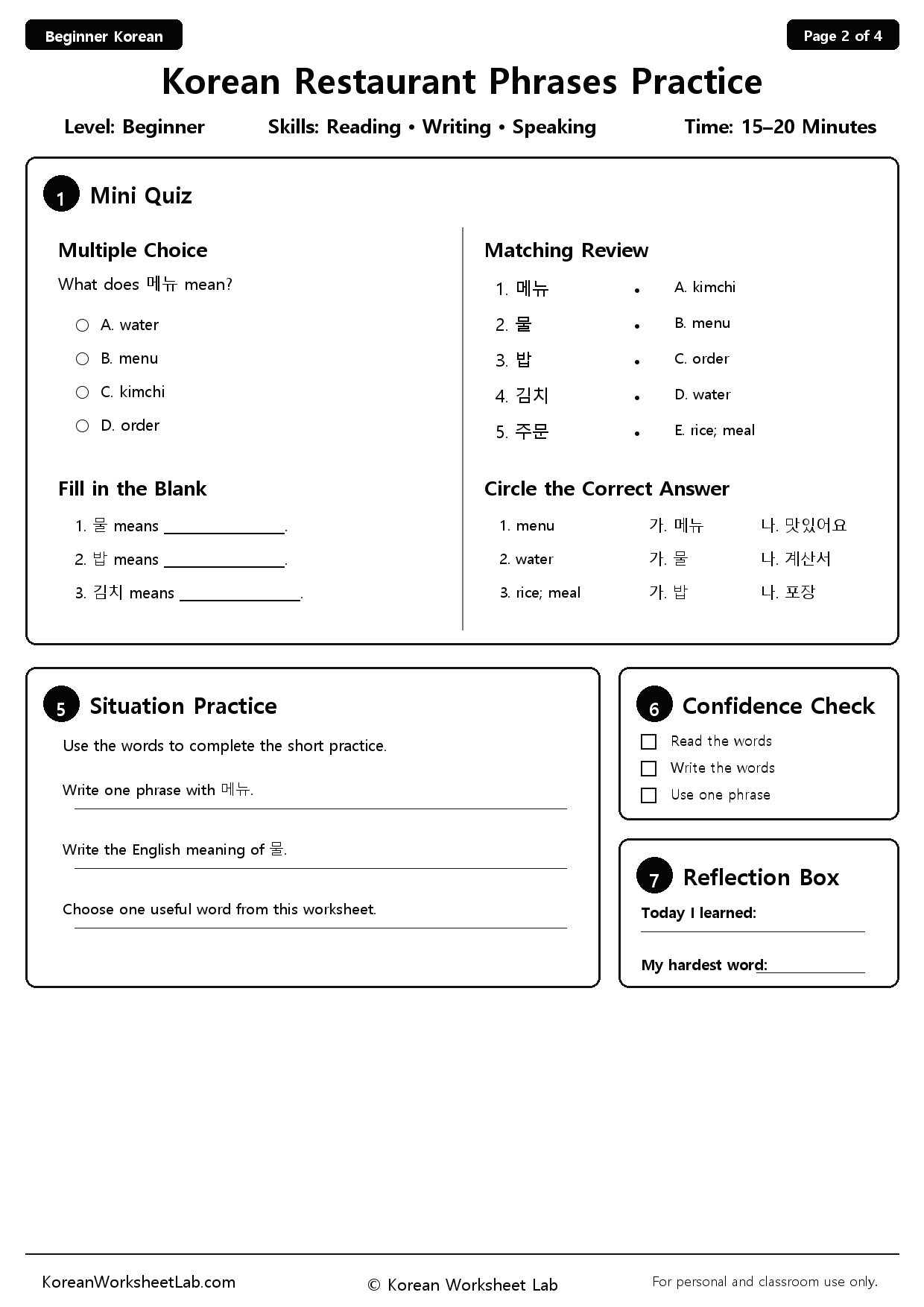 P2
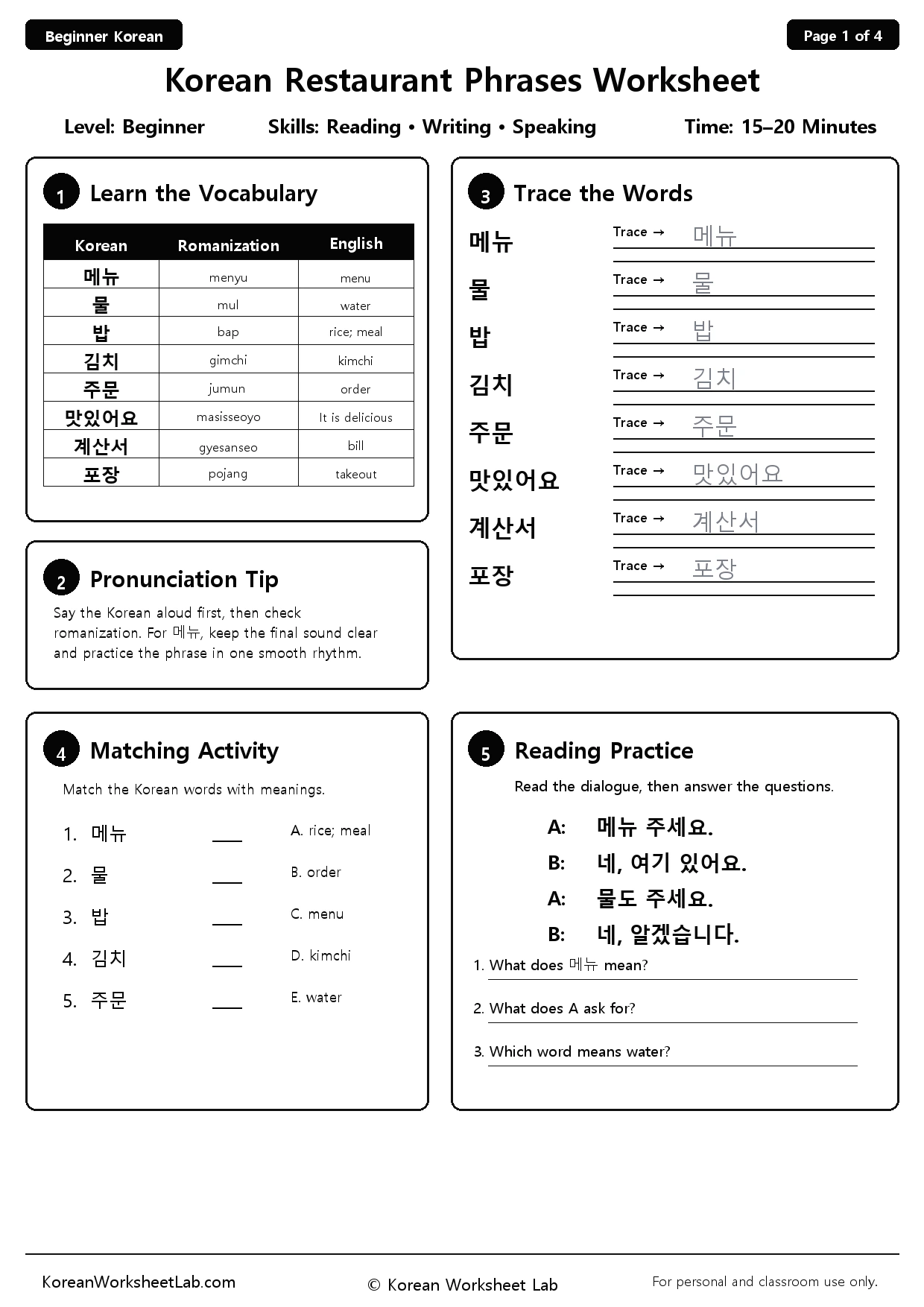
P2Practice Korean restaurant vocabulary and ordering phrases for menus, water, food, takeout, and payment in beginner situations.
 P1
P1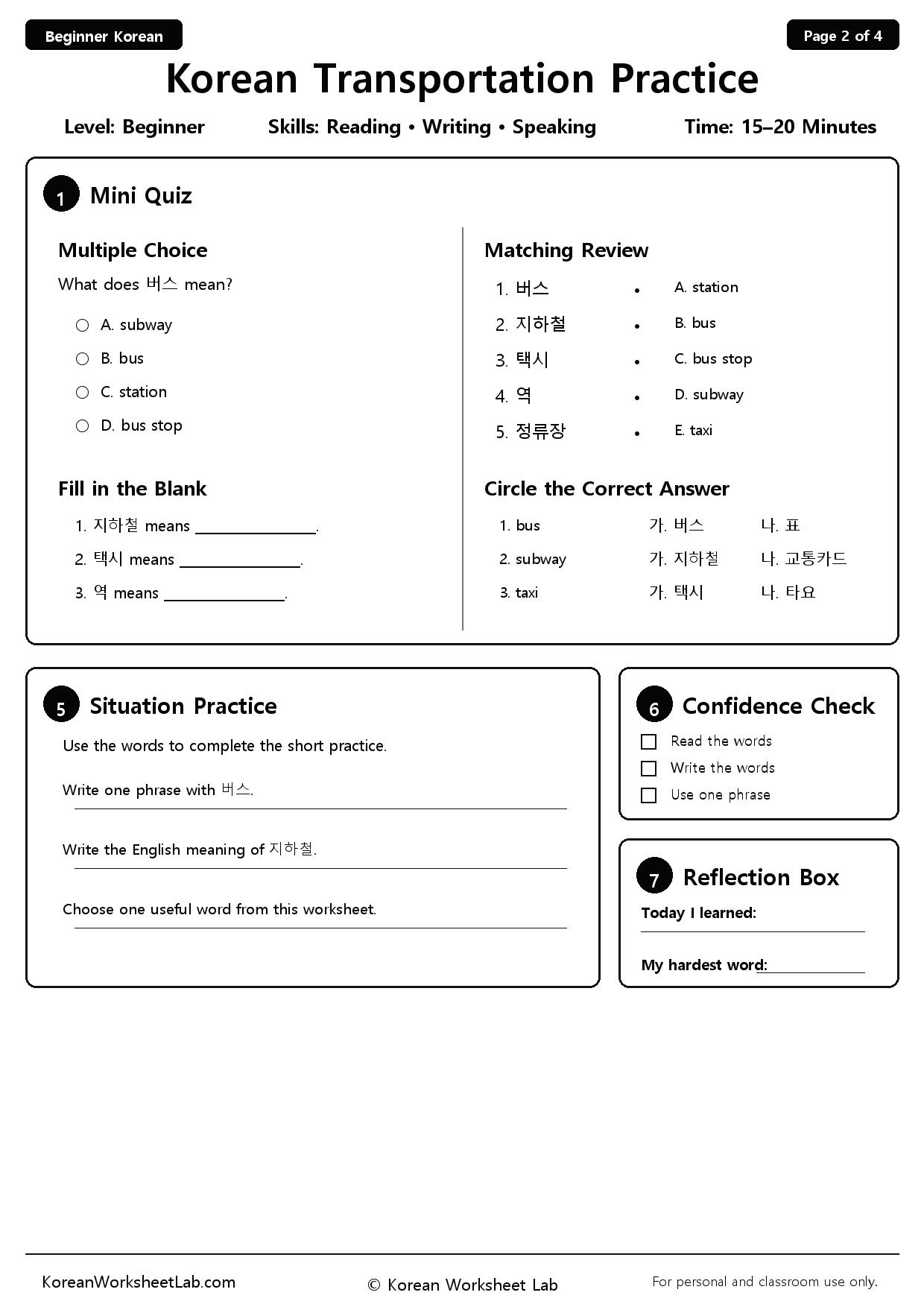 P2
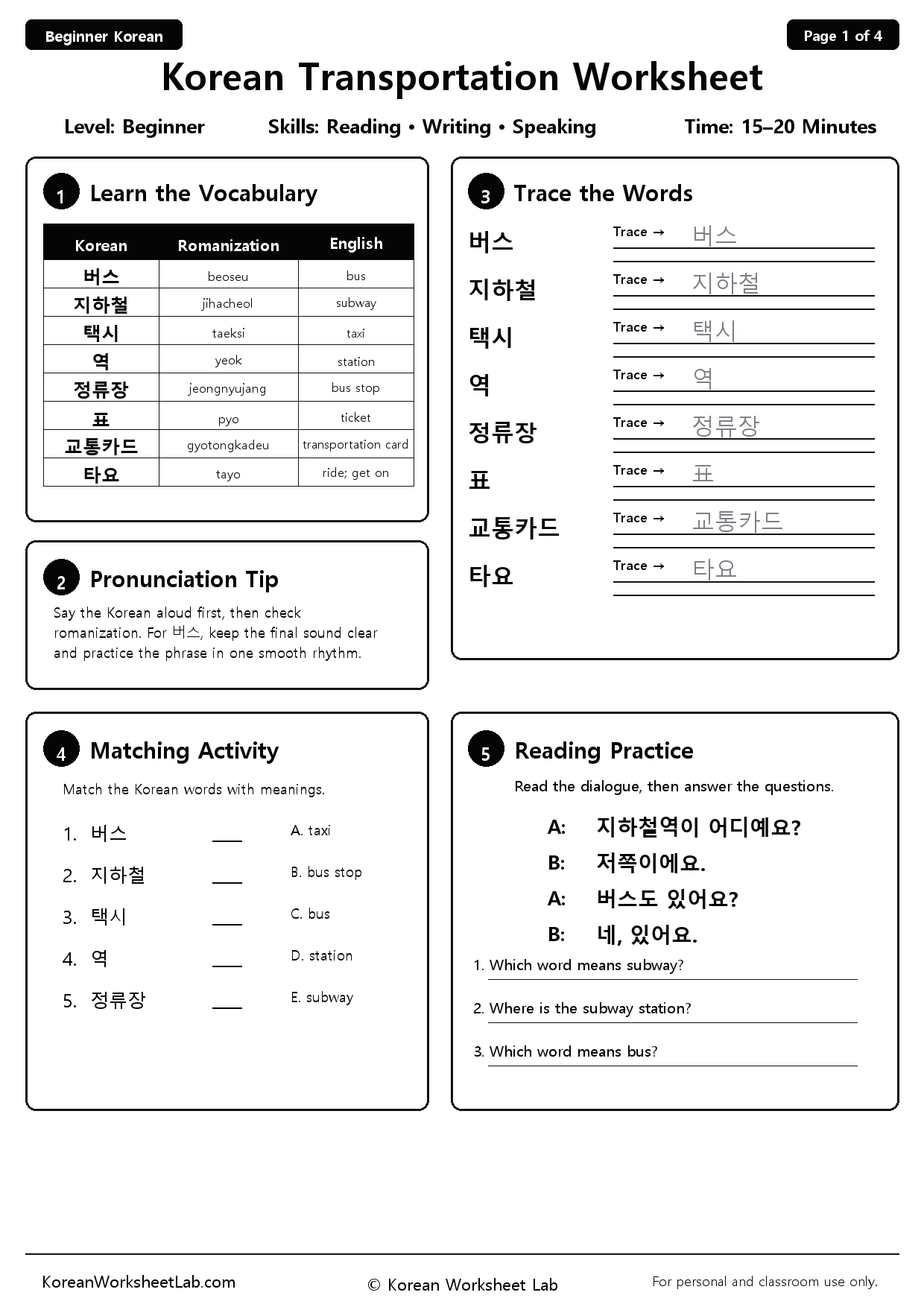
P2Learn Korean transportation words for buses, subways, taxis, stations, stops, tickets, and transit cards.
 P1
P1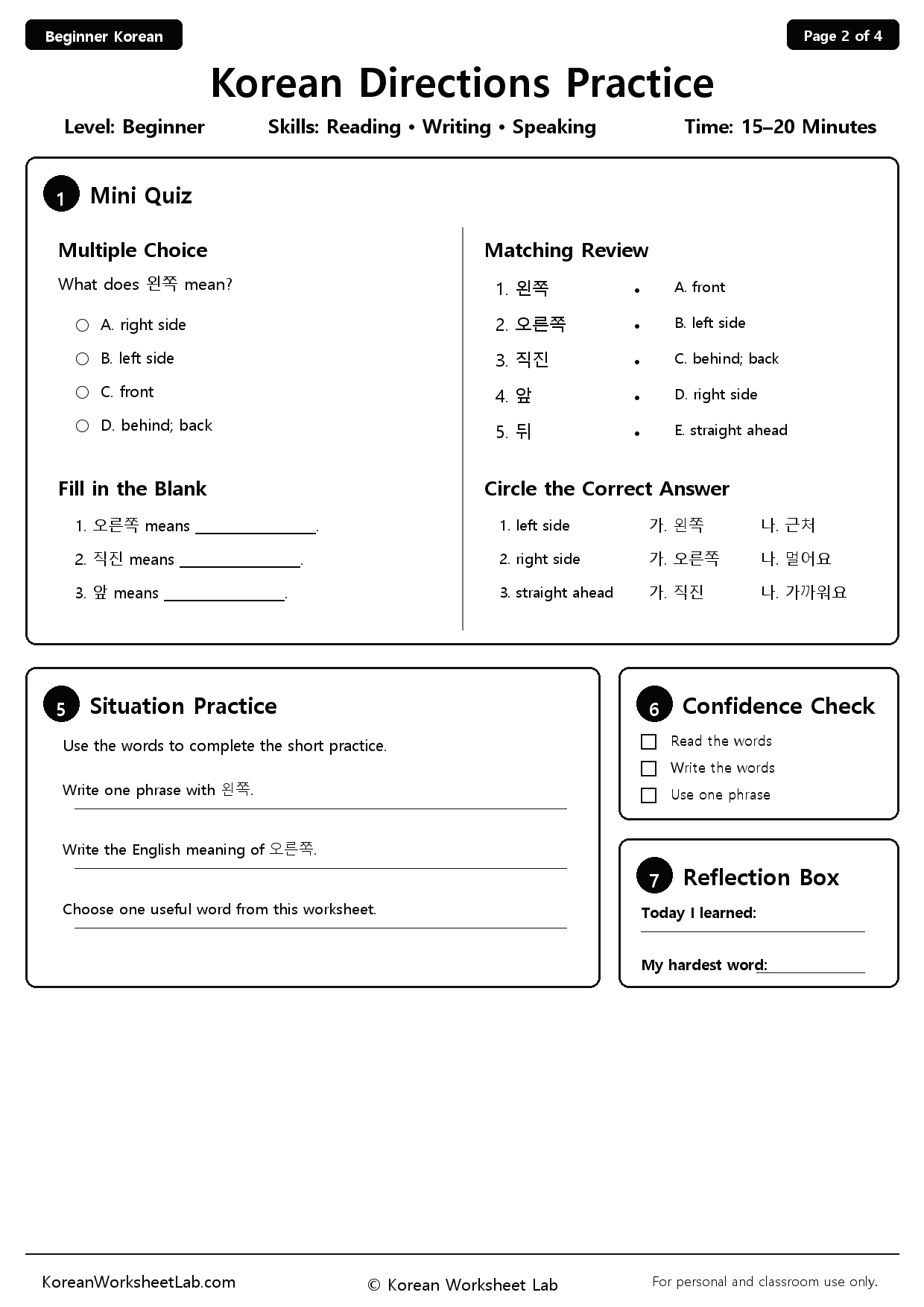 P2
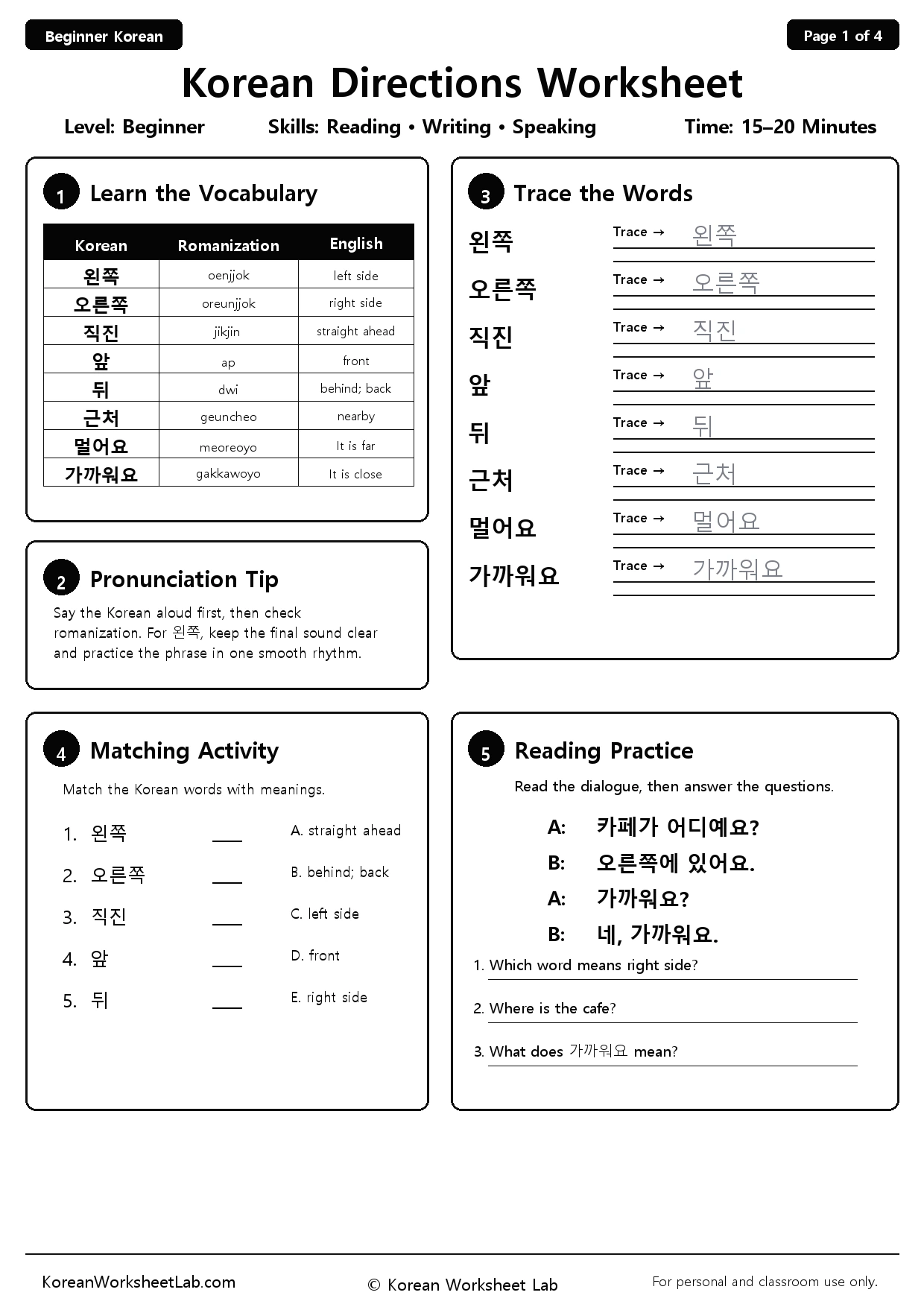
P2Practice Korean direction words for left, right, straight, front, back, near, far, and close in beginner navigation contexts.
 P1
P1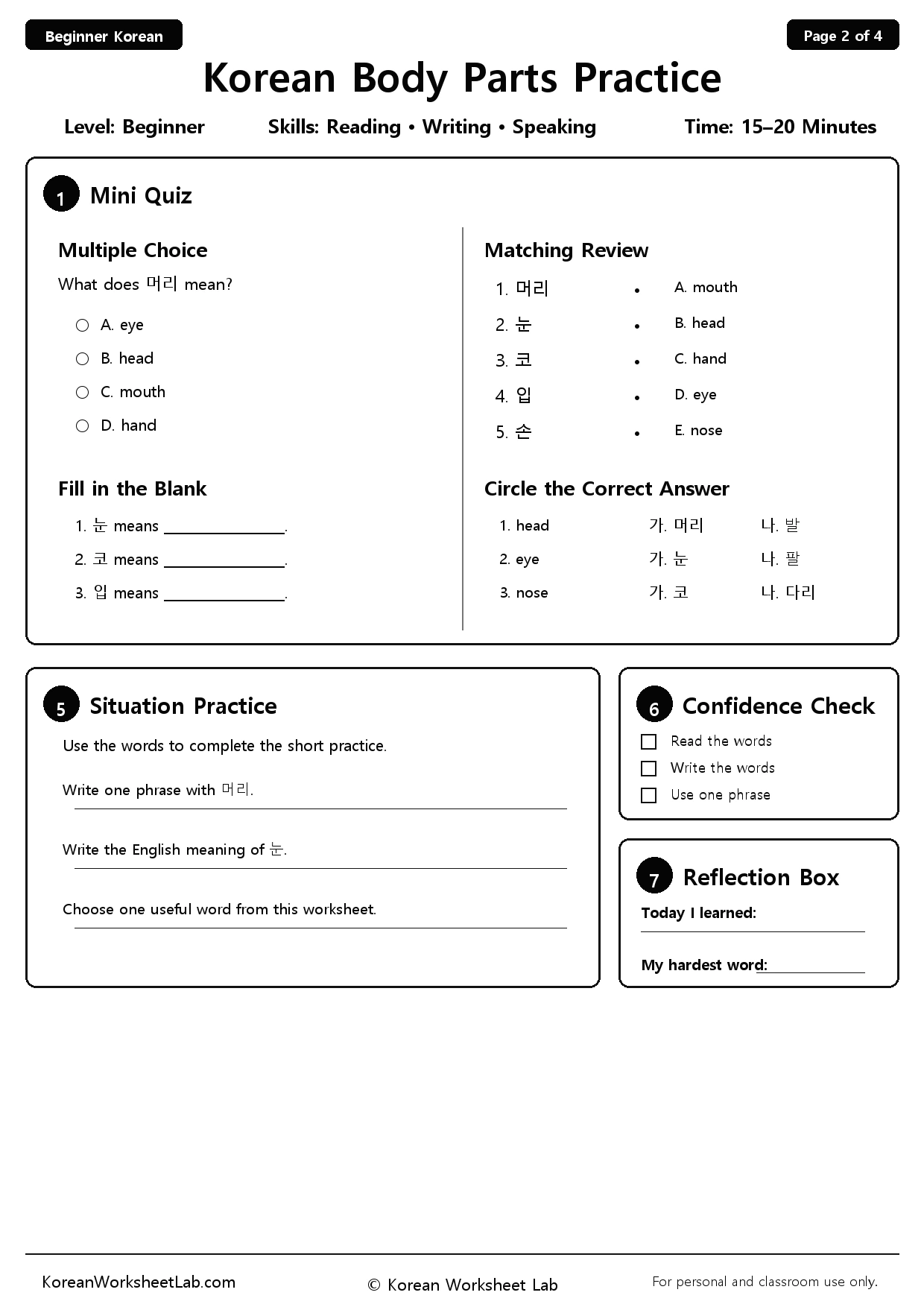 P2
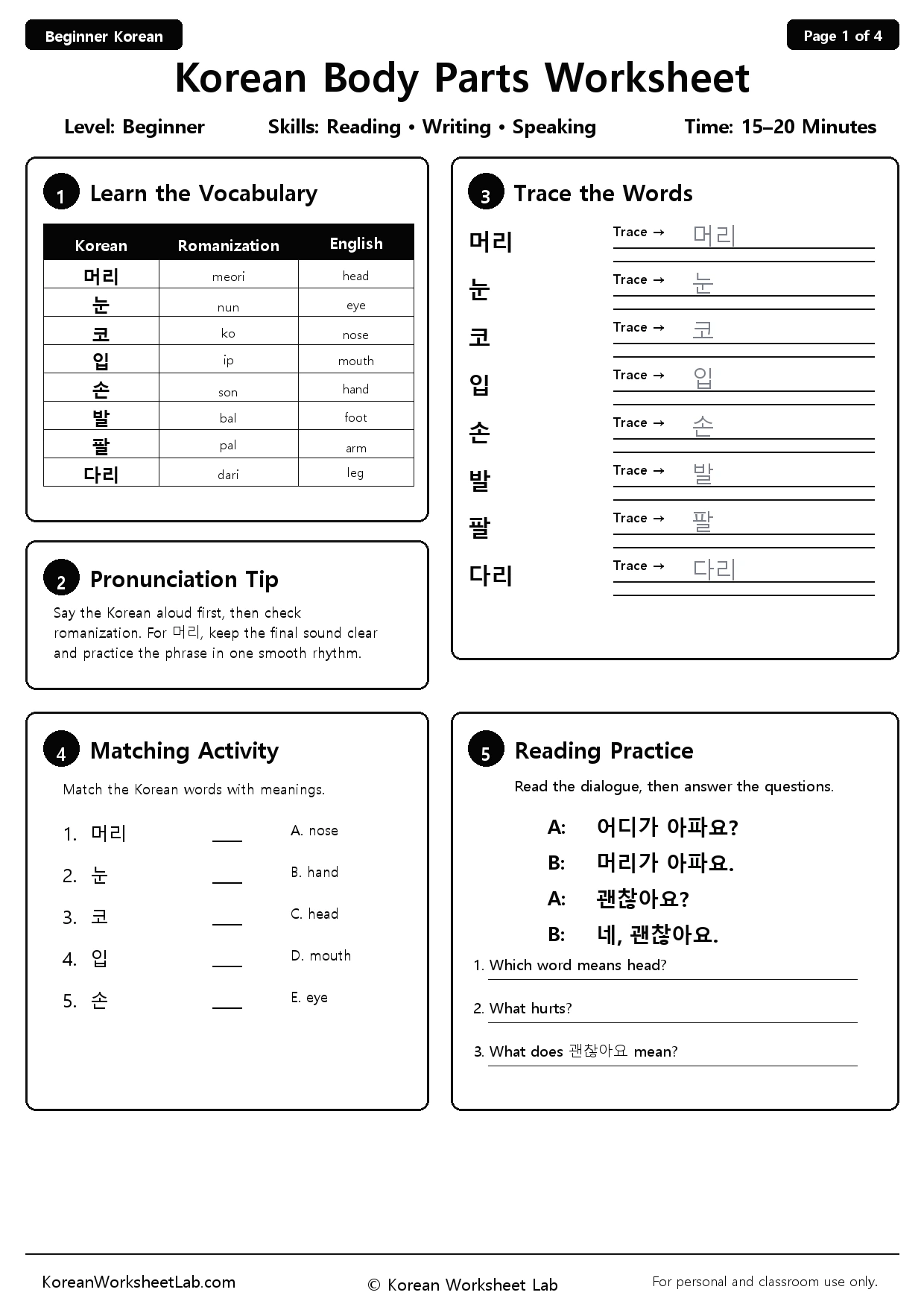
P2Learn basic Korean body parts with beginner pronunciation, tracing practice, matching, and a simple health-related dialogue.
 P1
P1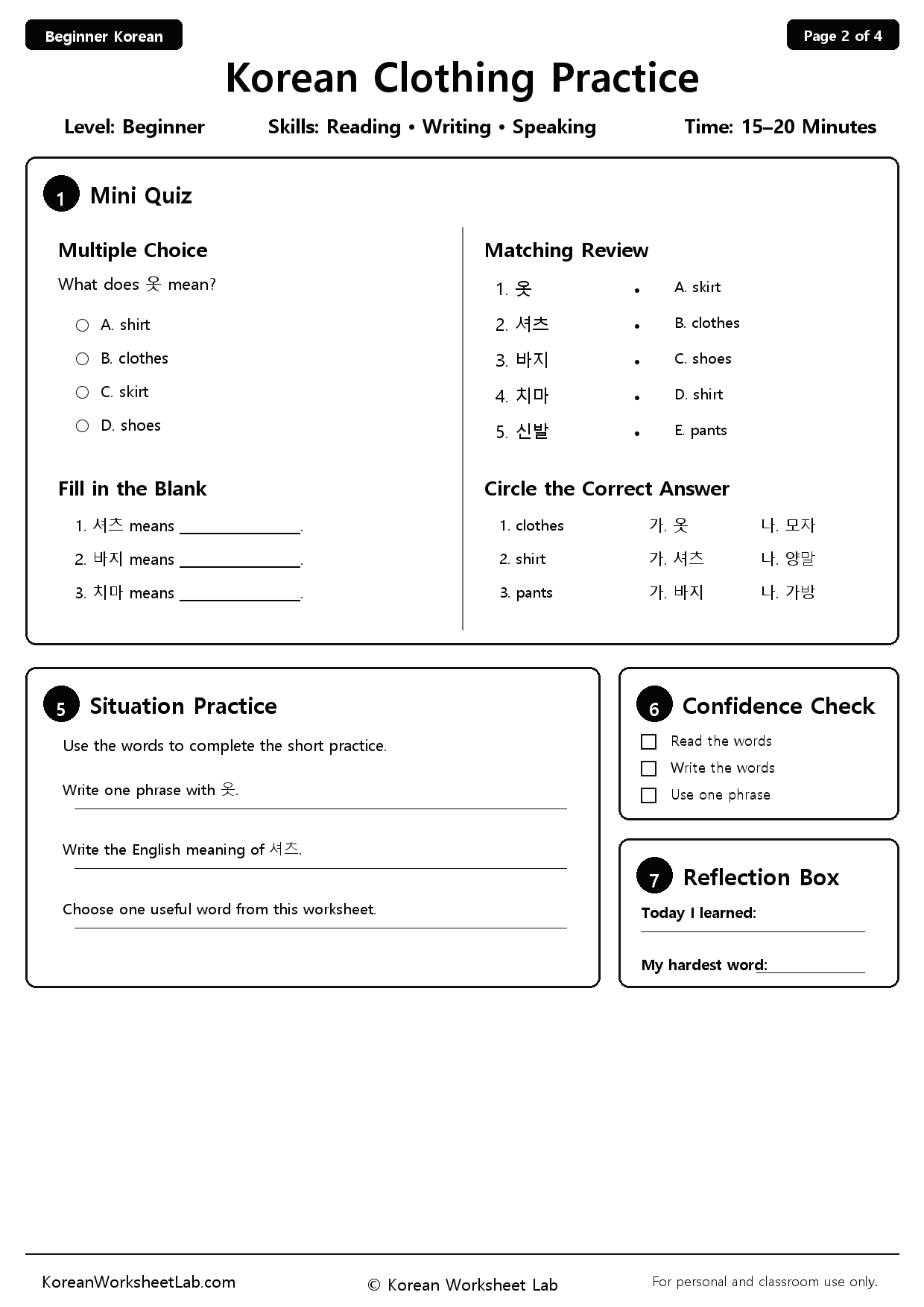 P2
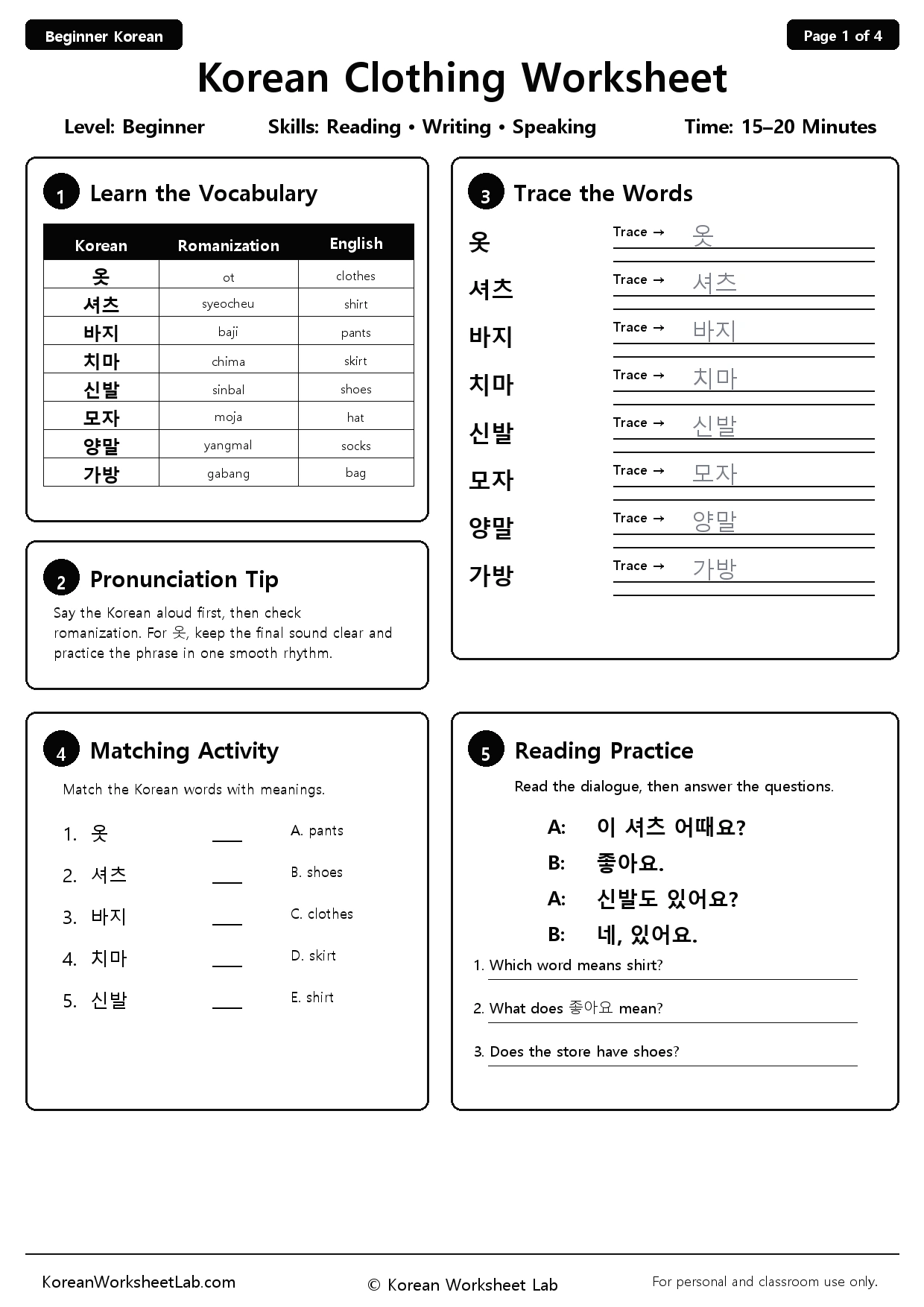
P2Study Korean clothing vocabulary for shirts, pants, skirts, shoes, hats, socks, bags, and everyday descriptions.
 P1
P1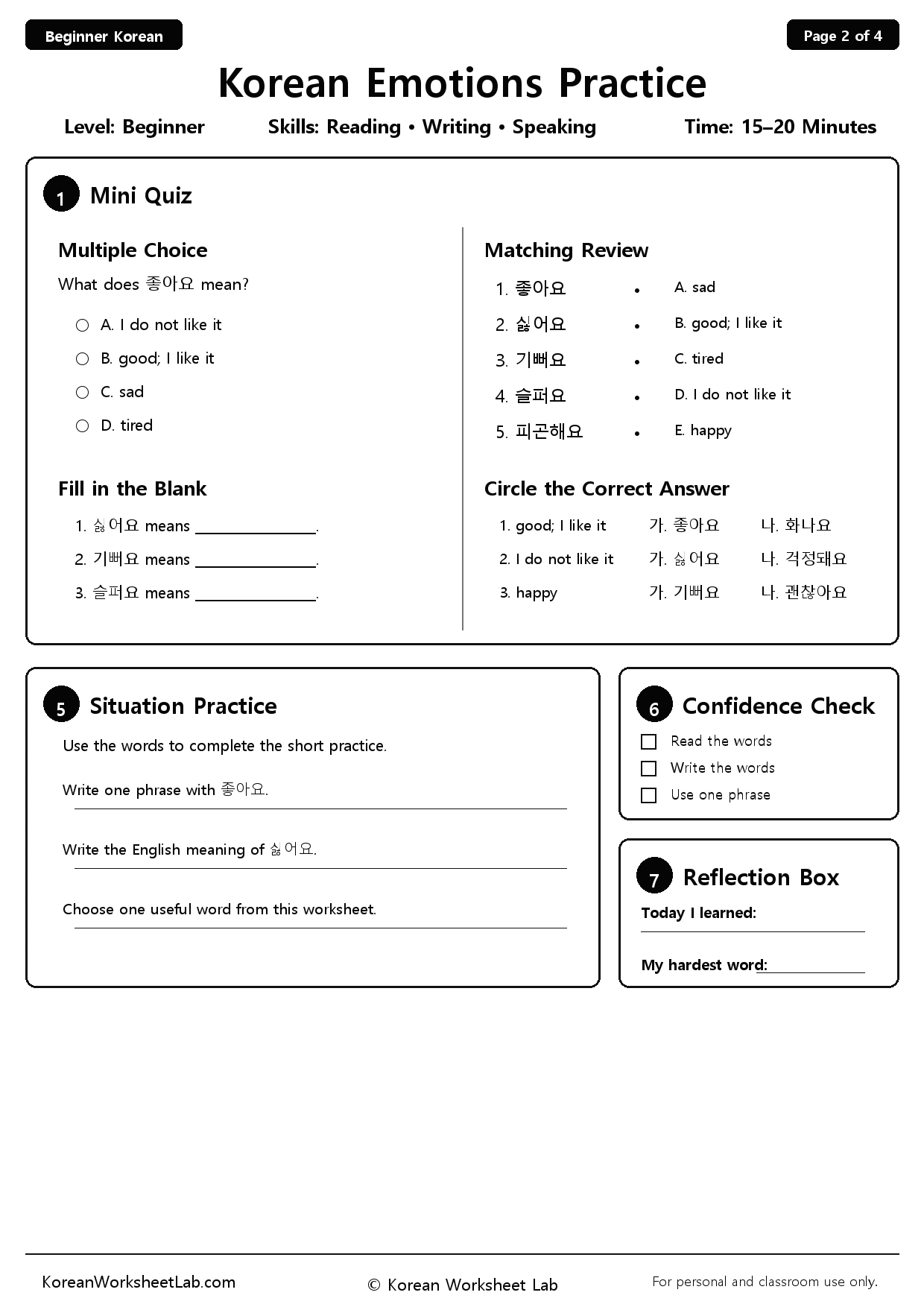 P2
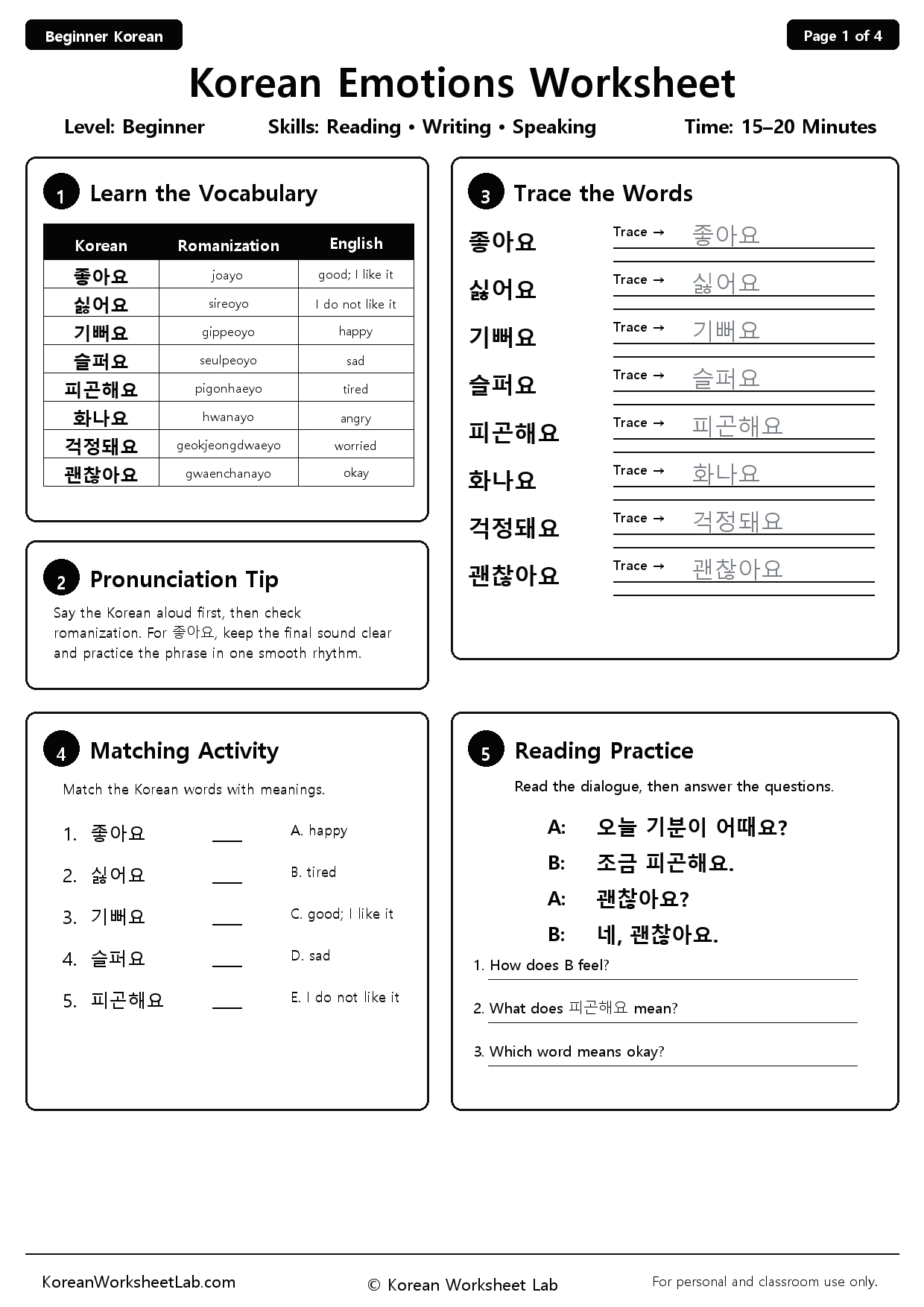
P2Learn beginner Korean emotion words and feeling expressions such as happy, sad, tired, angry, worried, and okay.
 P1
P1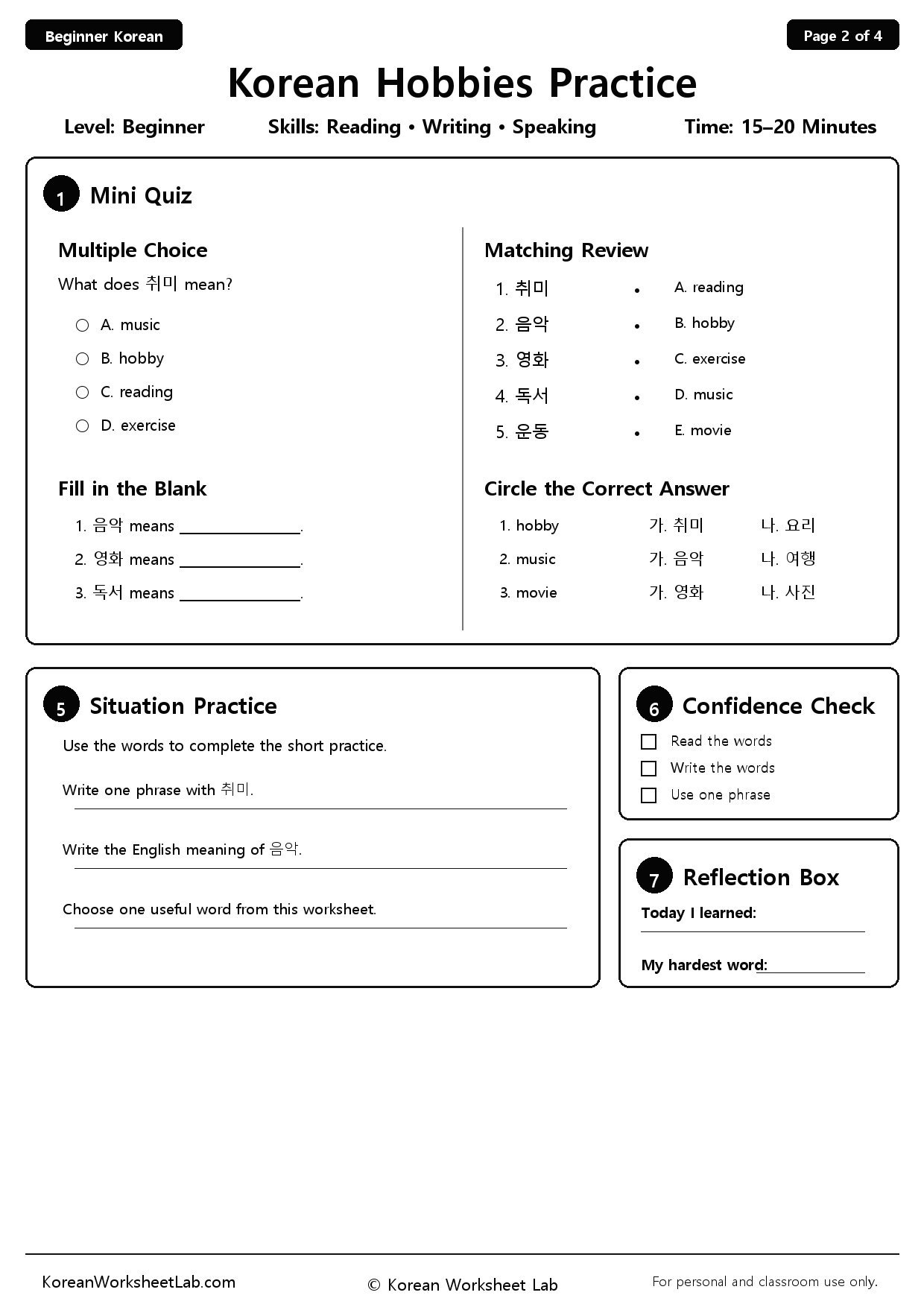 P2
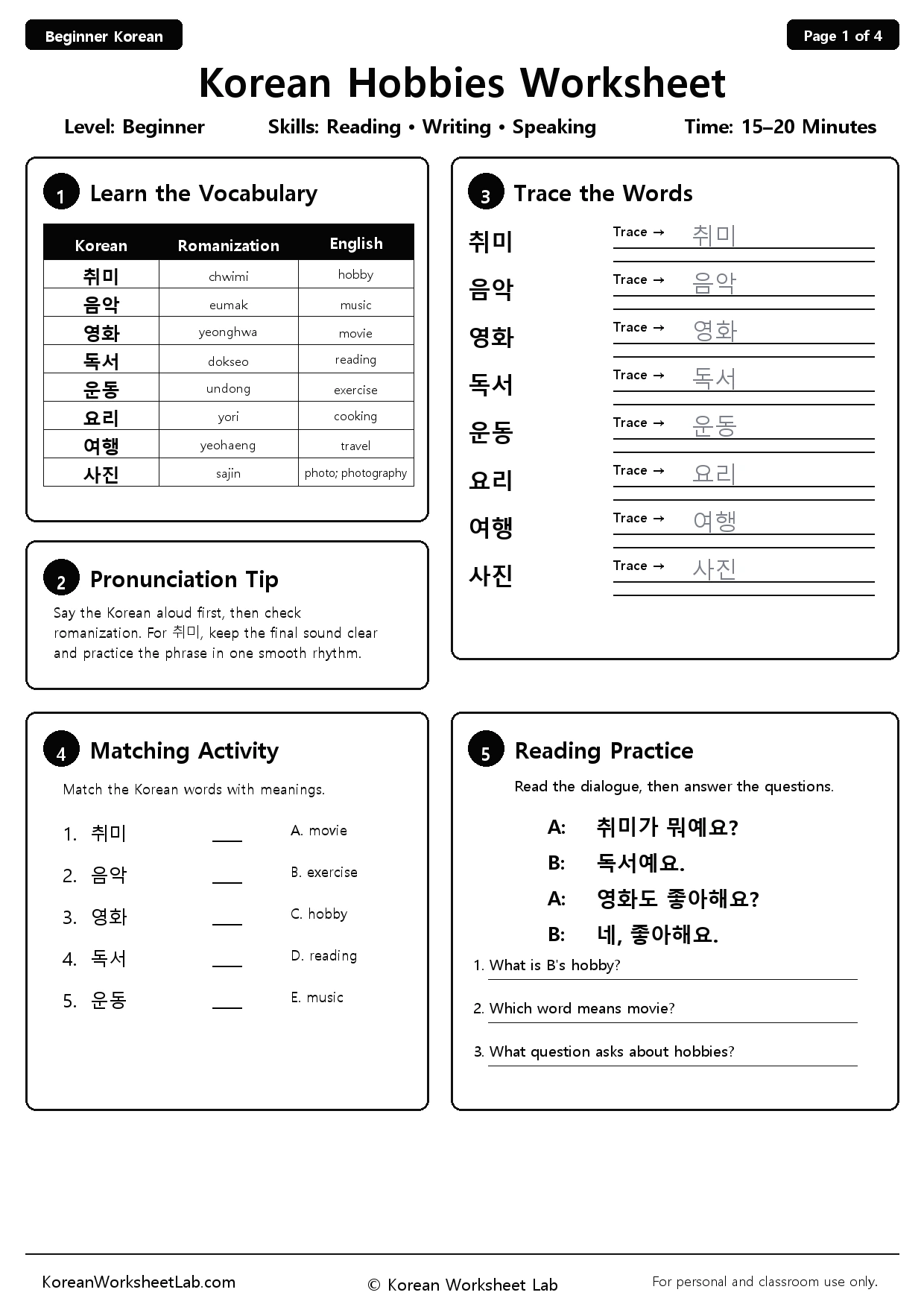
P2Practice Korean hobby vocabulary for music, movies, reading, exercise, cooking, travel, and photography.
 P1
P1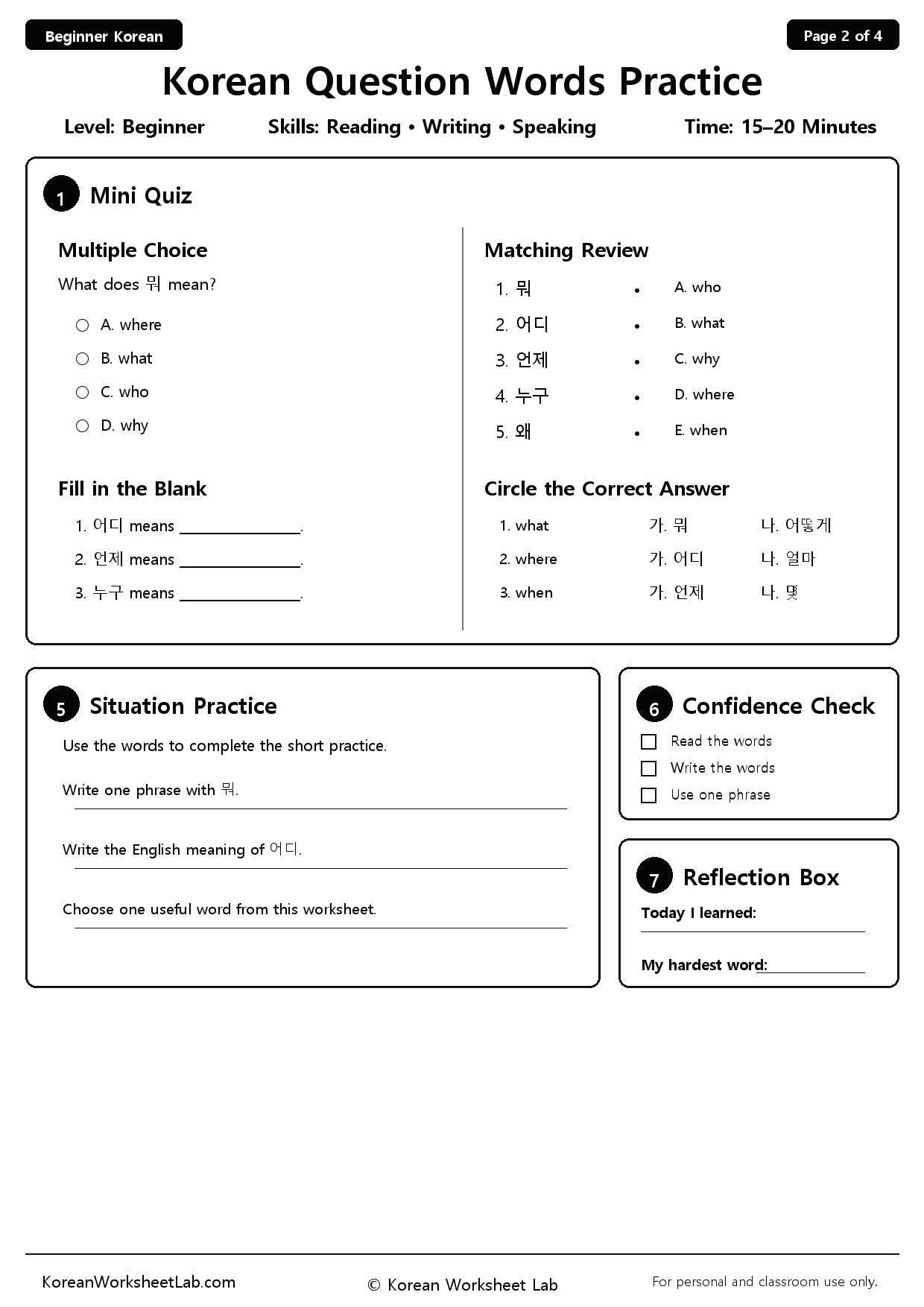 P2
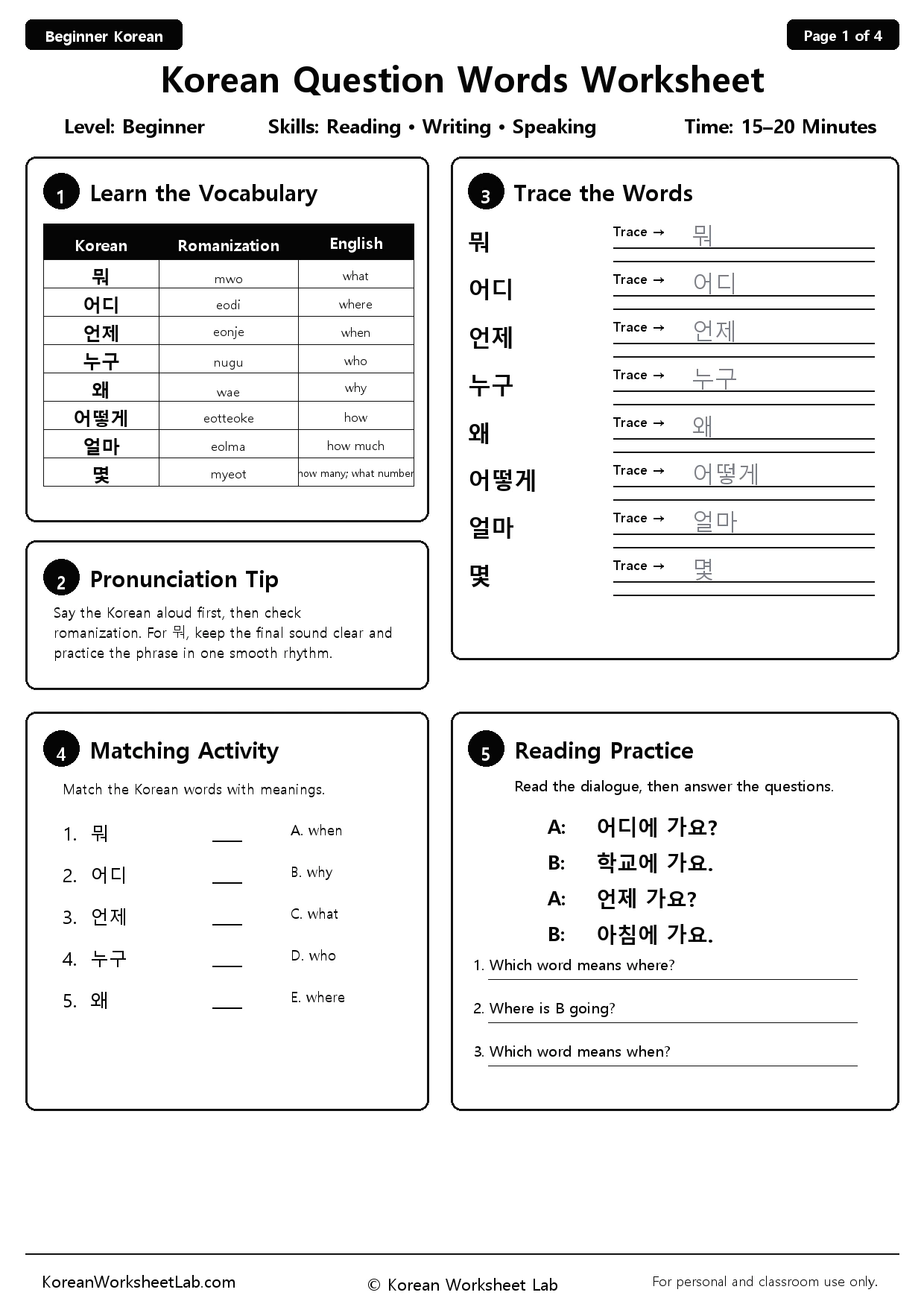
P2Learn essential Korean question words including what, where, when, who, why, how, how much, and how many.
 P1
P1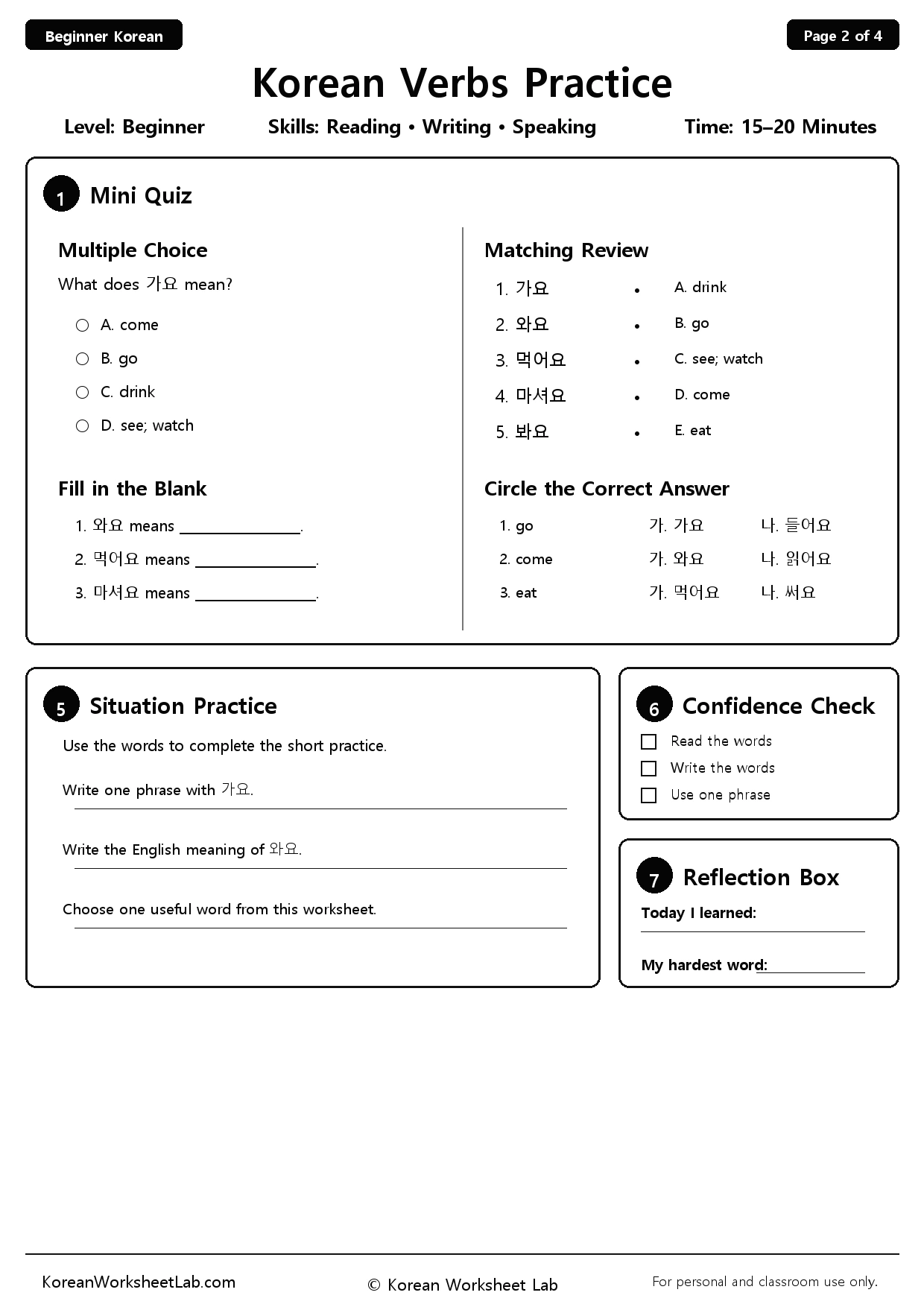 P2
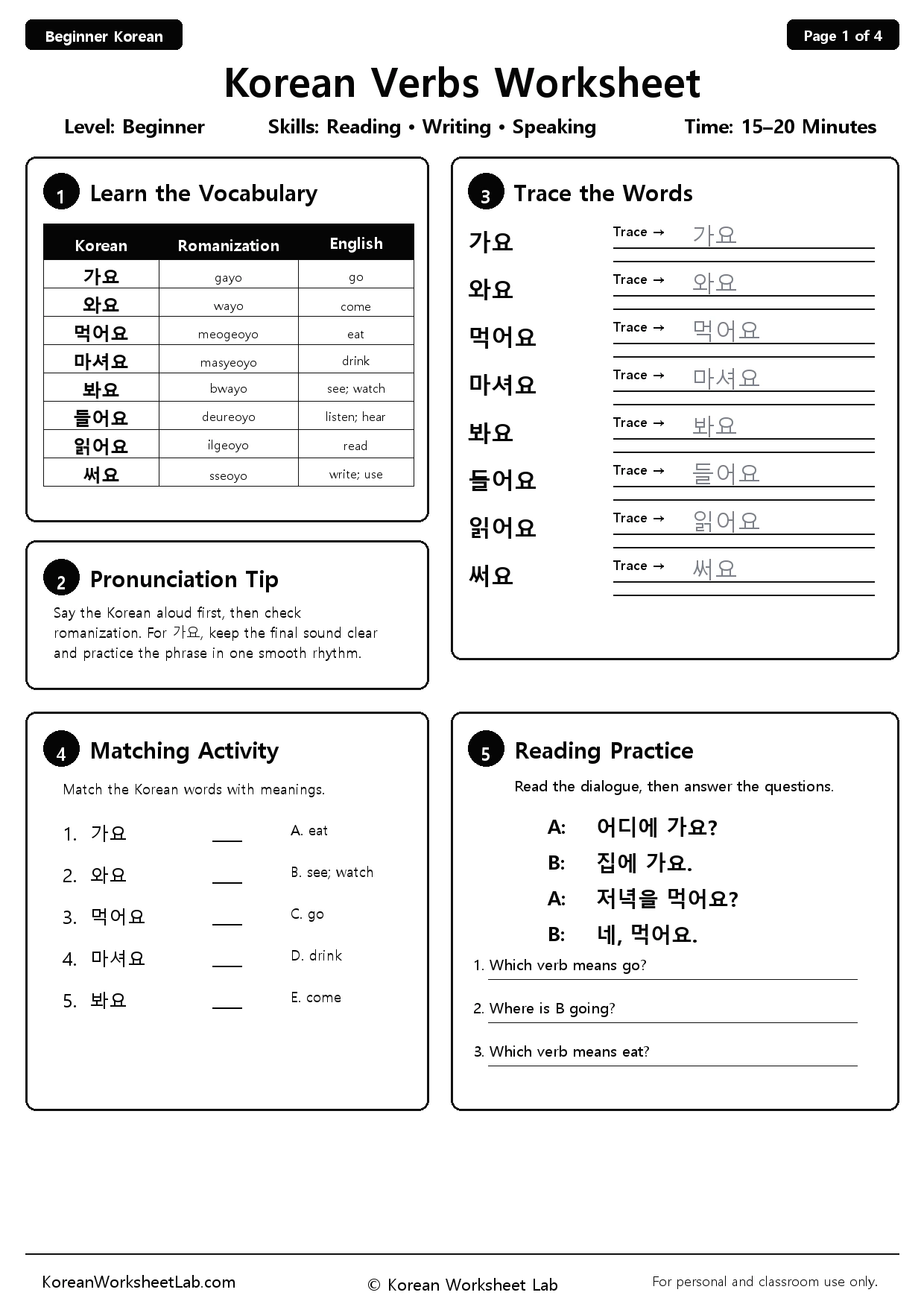
P2Learn common beginner Korean verbs in polite present tense, including go, come, eat, drink, see, listen, read, and write.
 P1
P1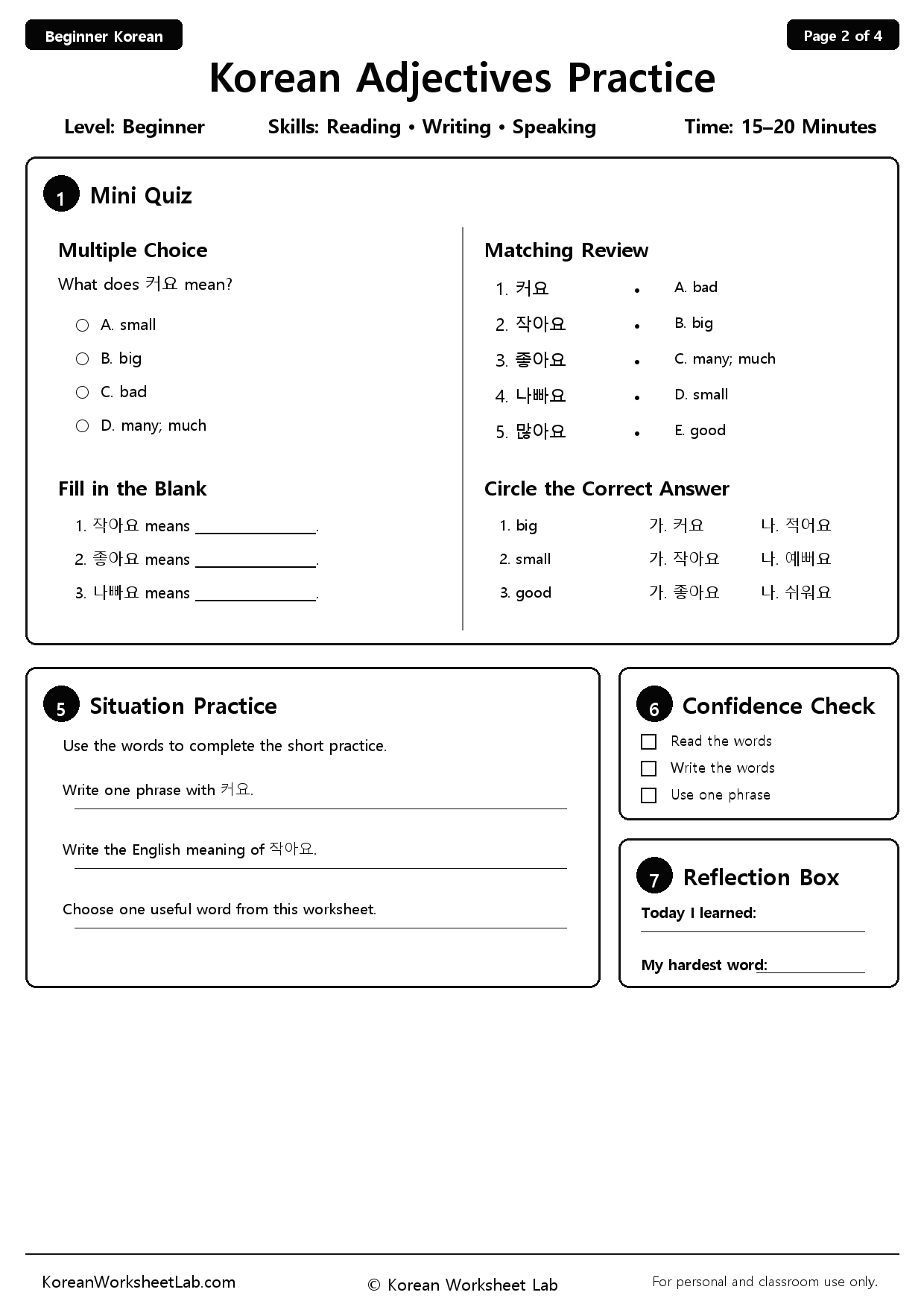 P2
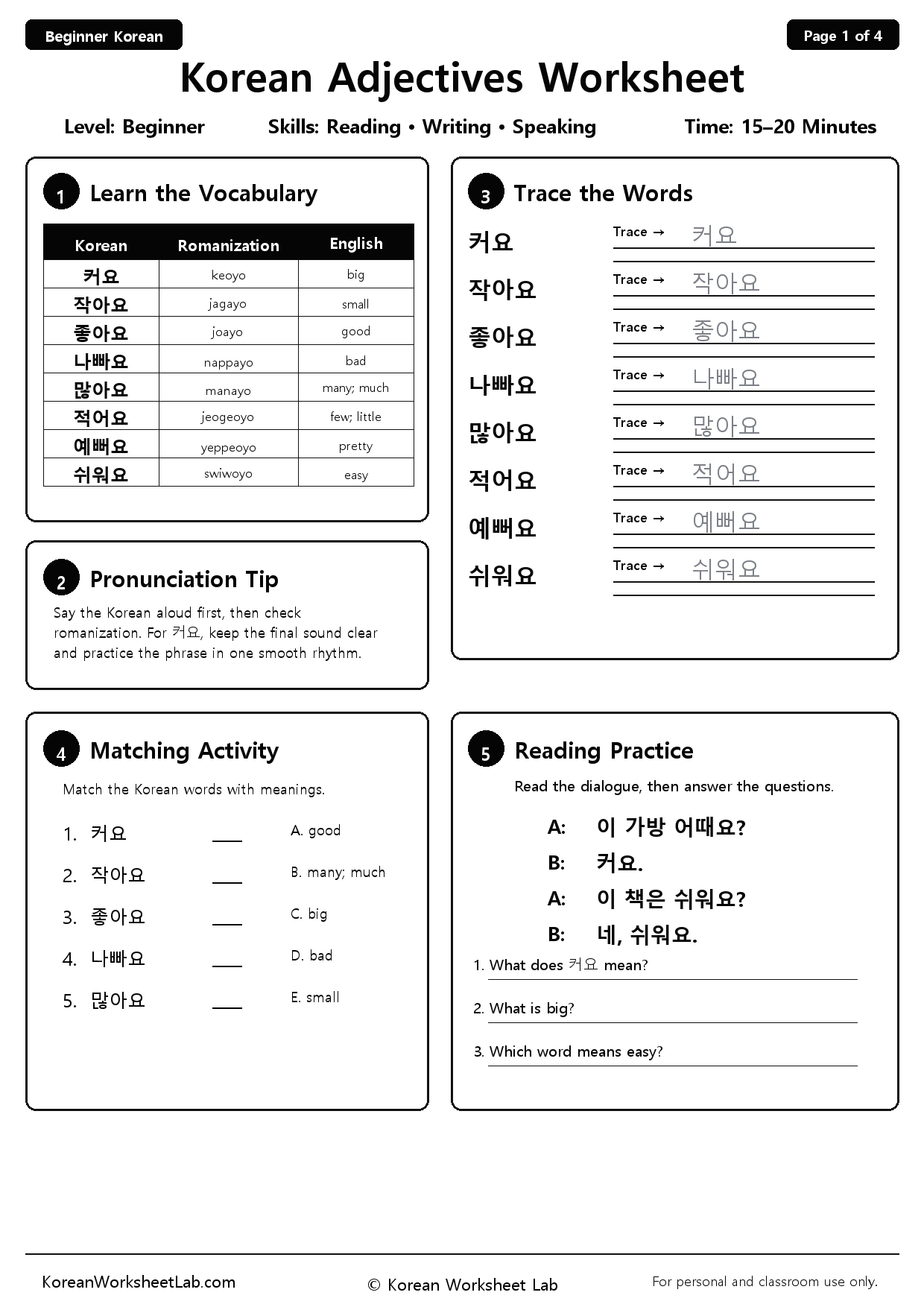
P2Practice beginner Korean descriptive words such as big, small, good, bad, many, few, pretty, and easy.
 P1
P1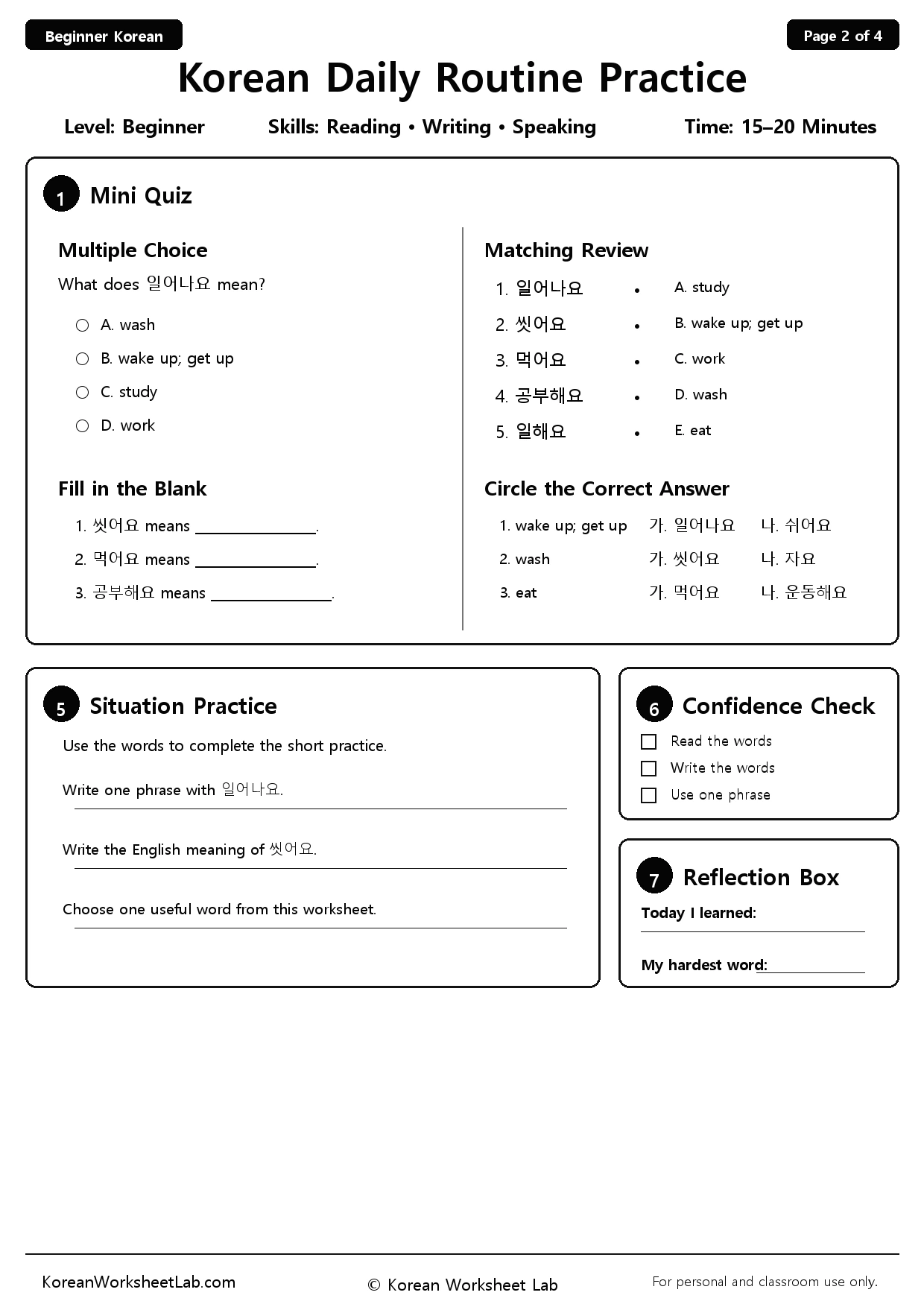 P2
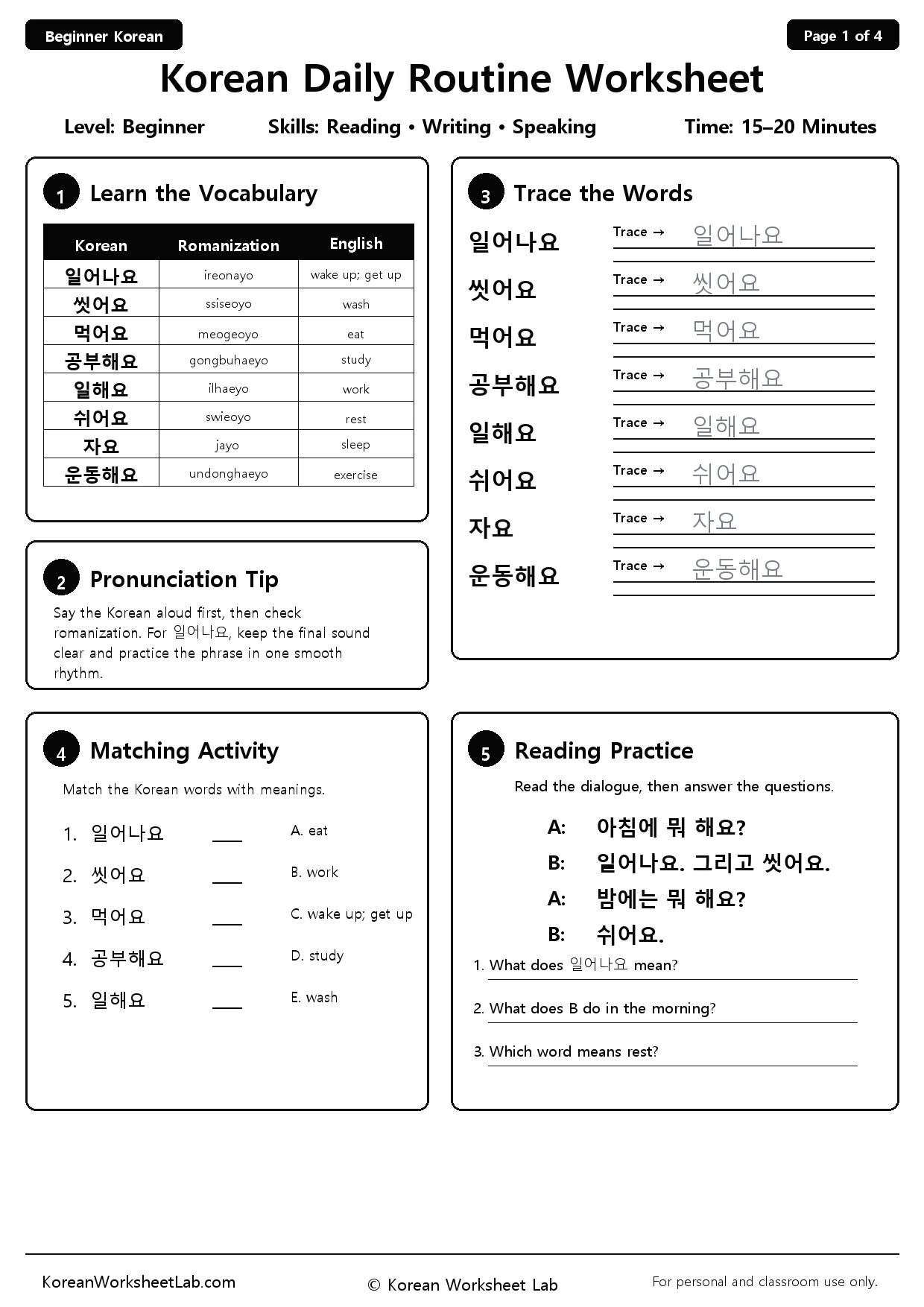
P2Learn Korean daily routine verbs for waking up, washing, eating, studying, working, resting, sleeping, and exercising.
 P1
P1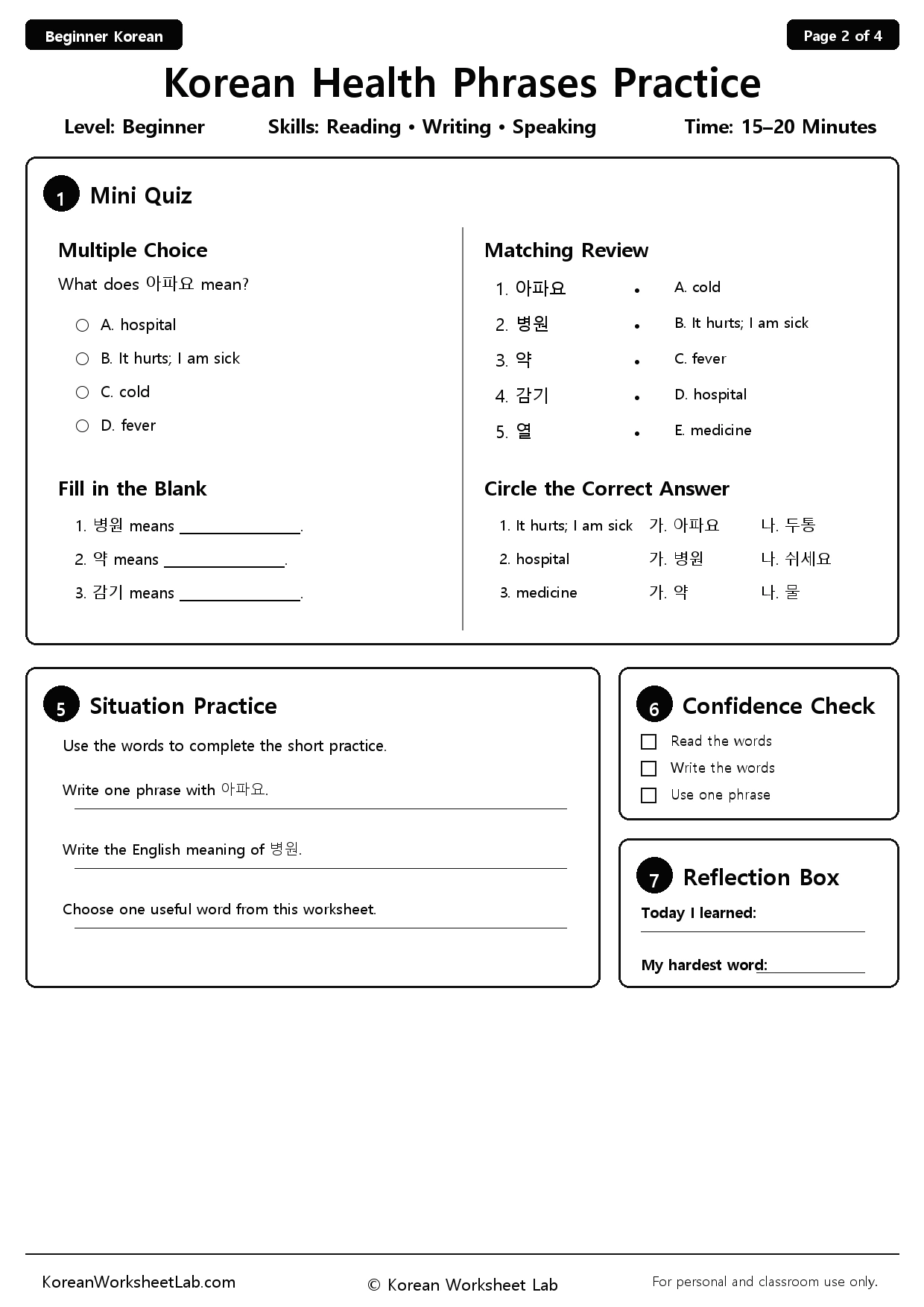 P2
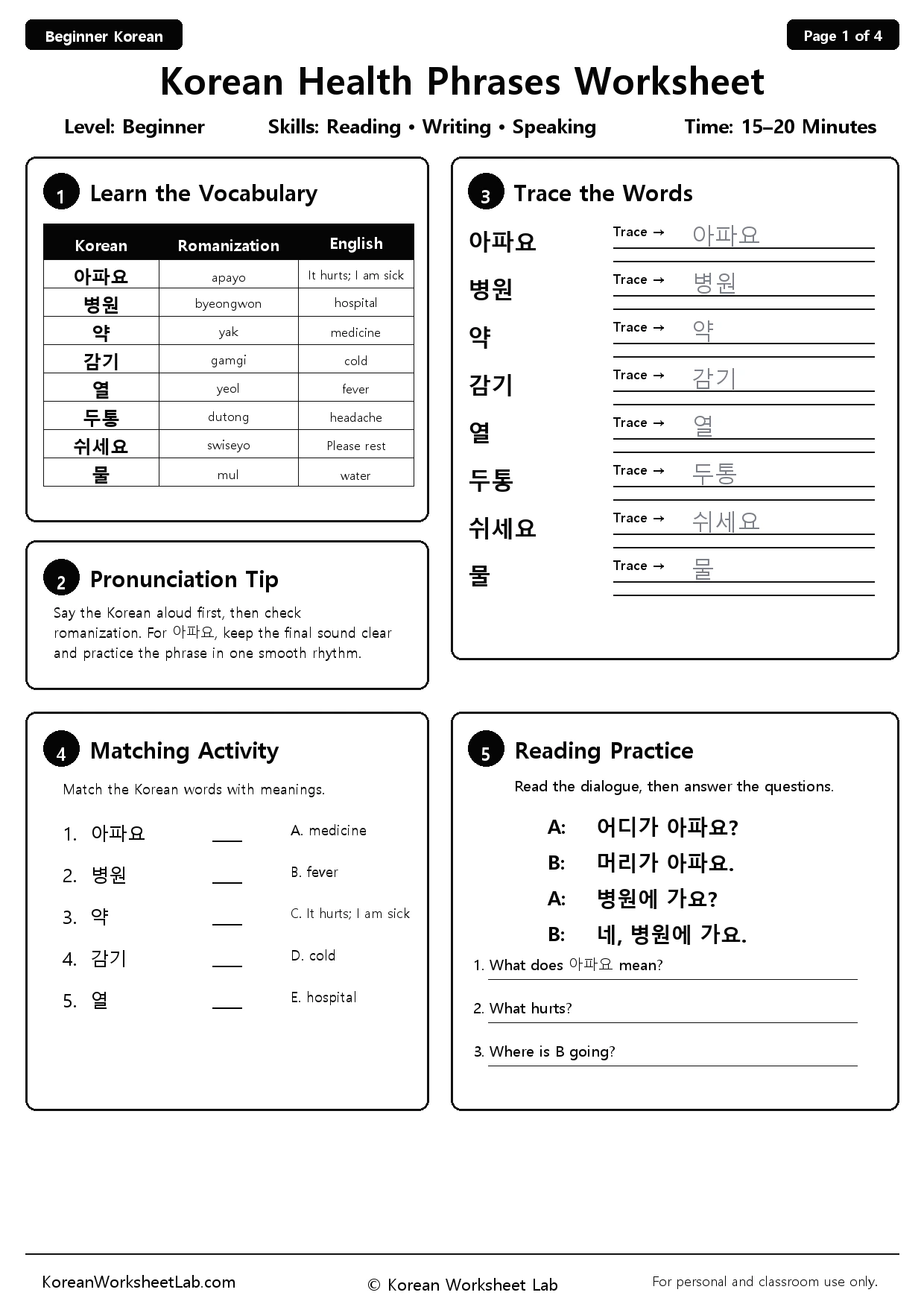
P2Learn beginner Korean health phrases for saying something hurts, going to the hospital, medicine, colds, fever, and headaches.
 P1
P1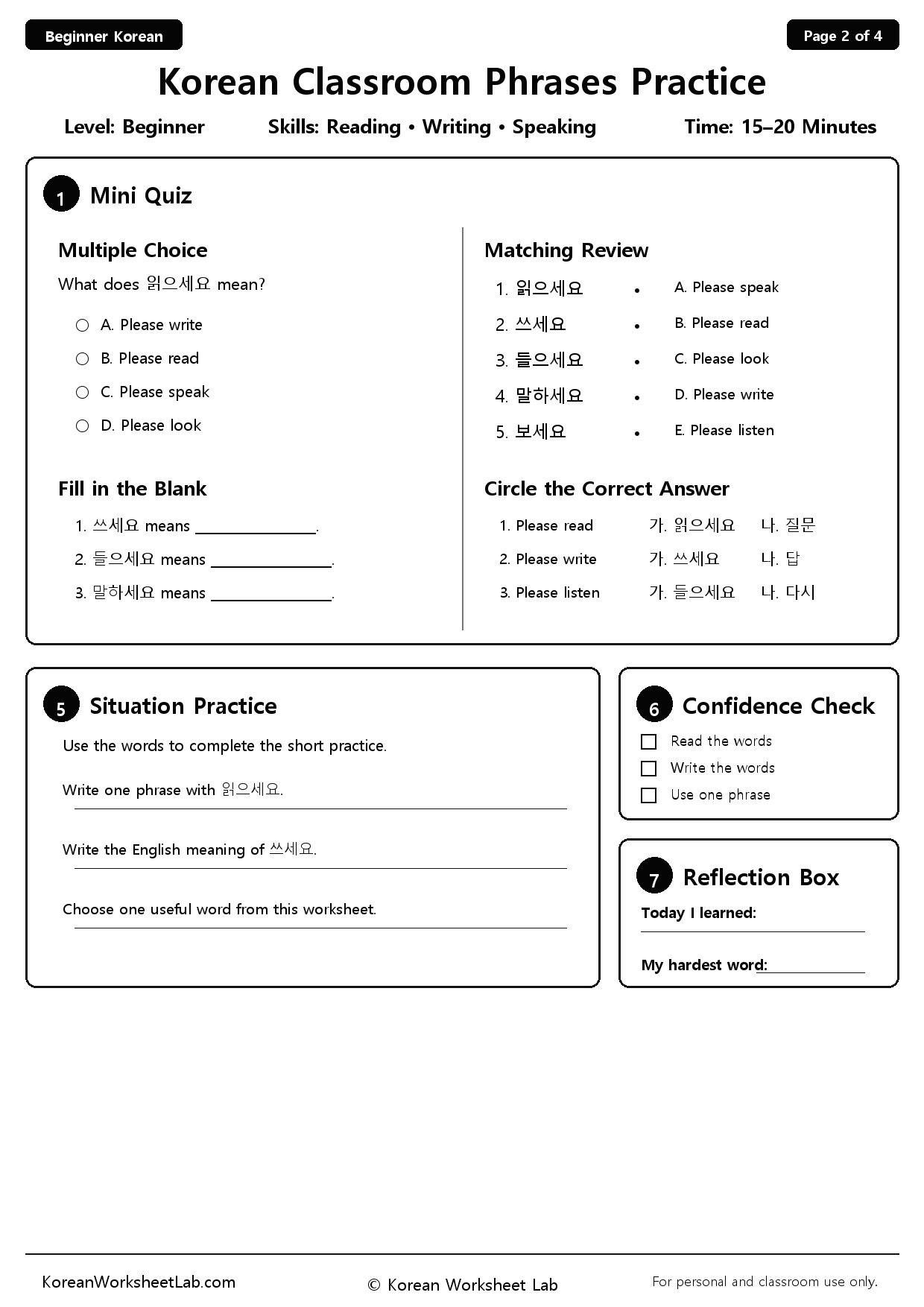 P2
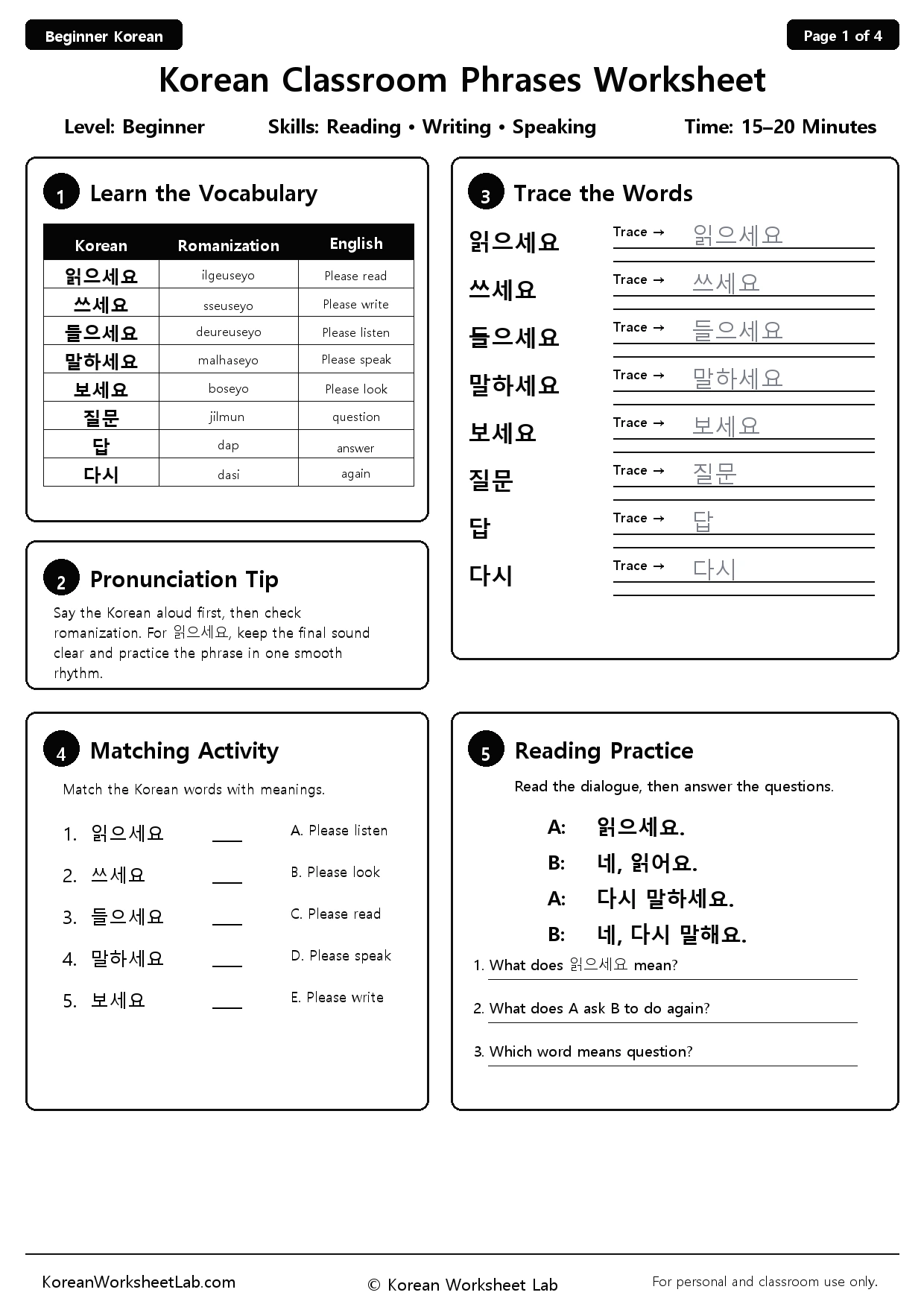
P2Learn Korean classroom phrases for reading, writing, listening, speaking, looking, asking questions, answers, and repeating.
 P1
P1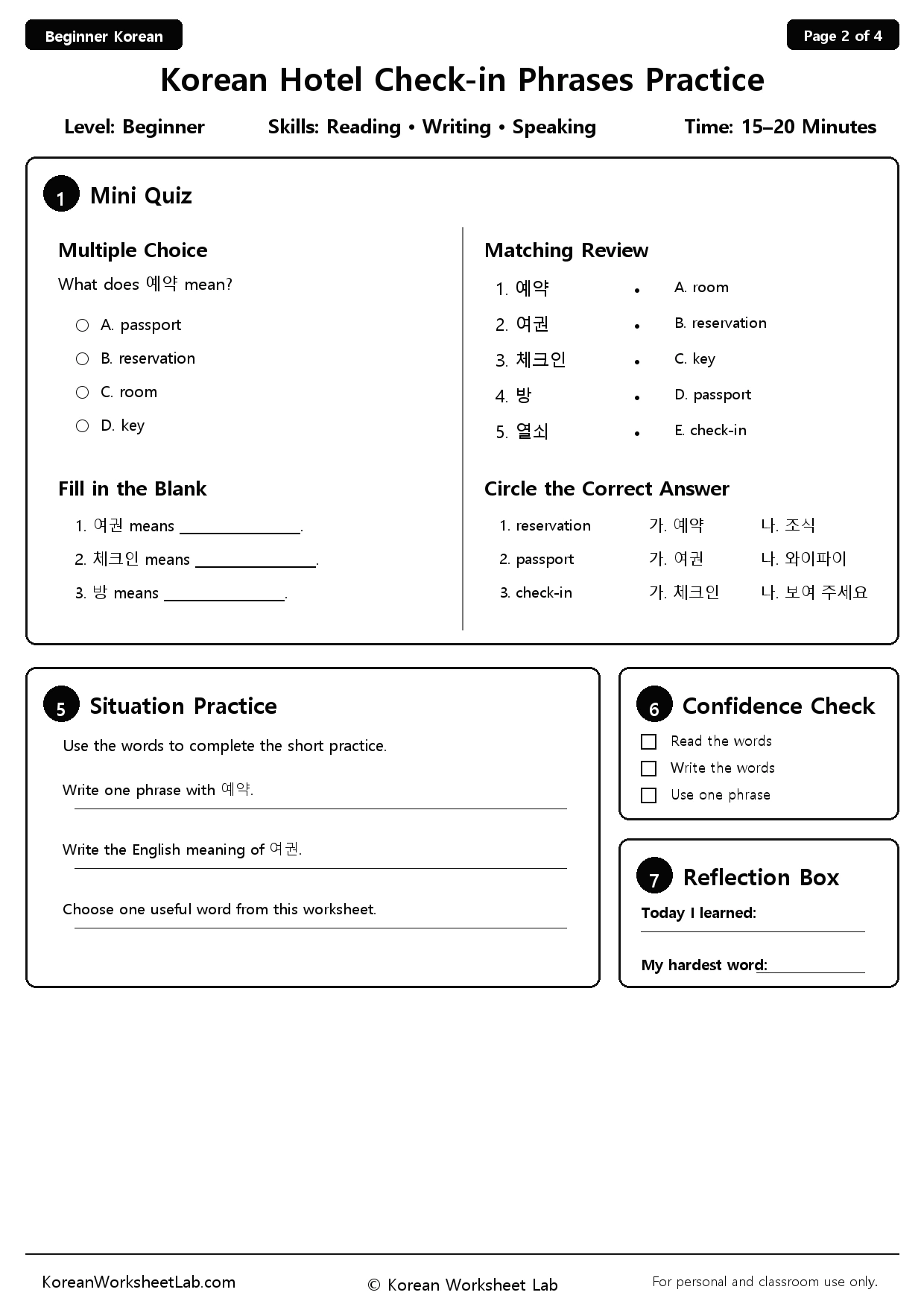 P2
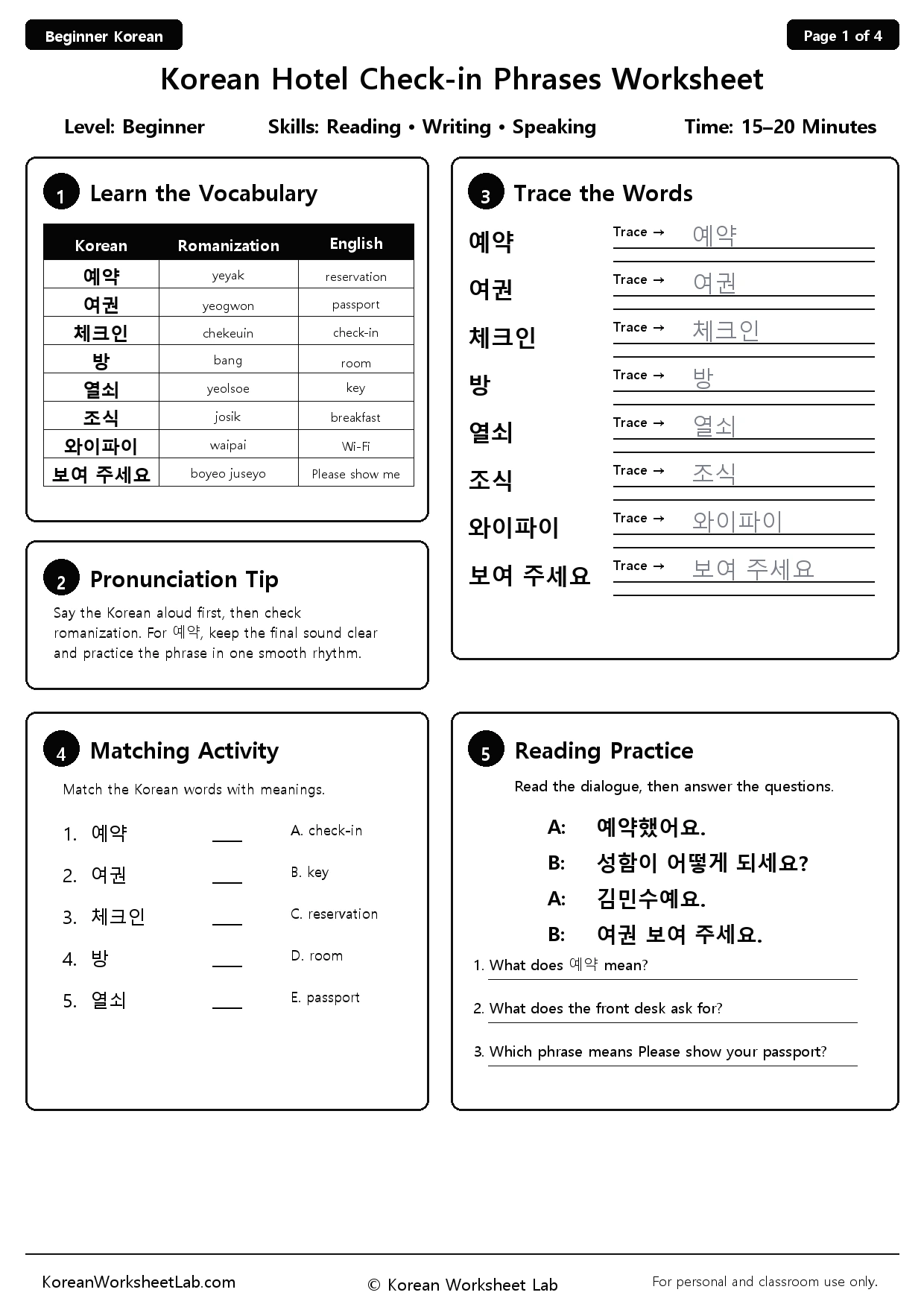
P2Practice practical Korean hotel check-in phrases for reservations, passports, rooms, keys, breakfast, Wi-Fi, and polite requests.
 P1
P1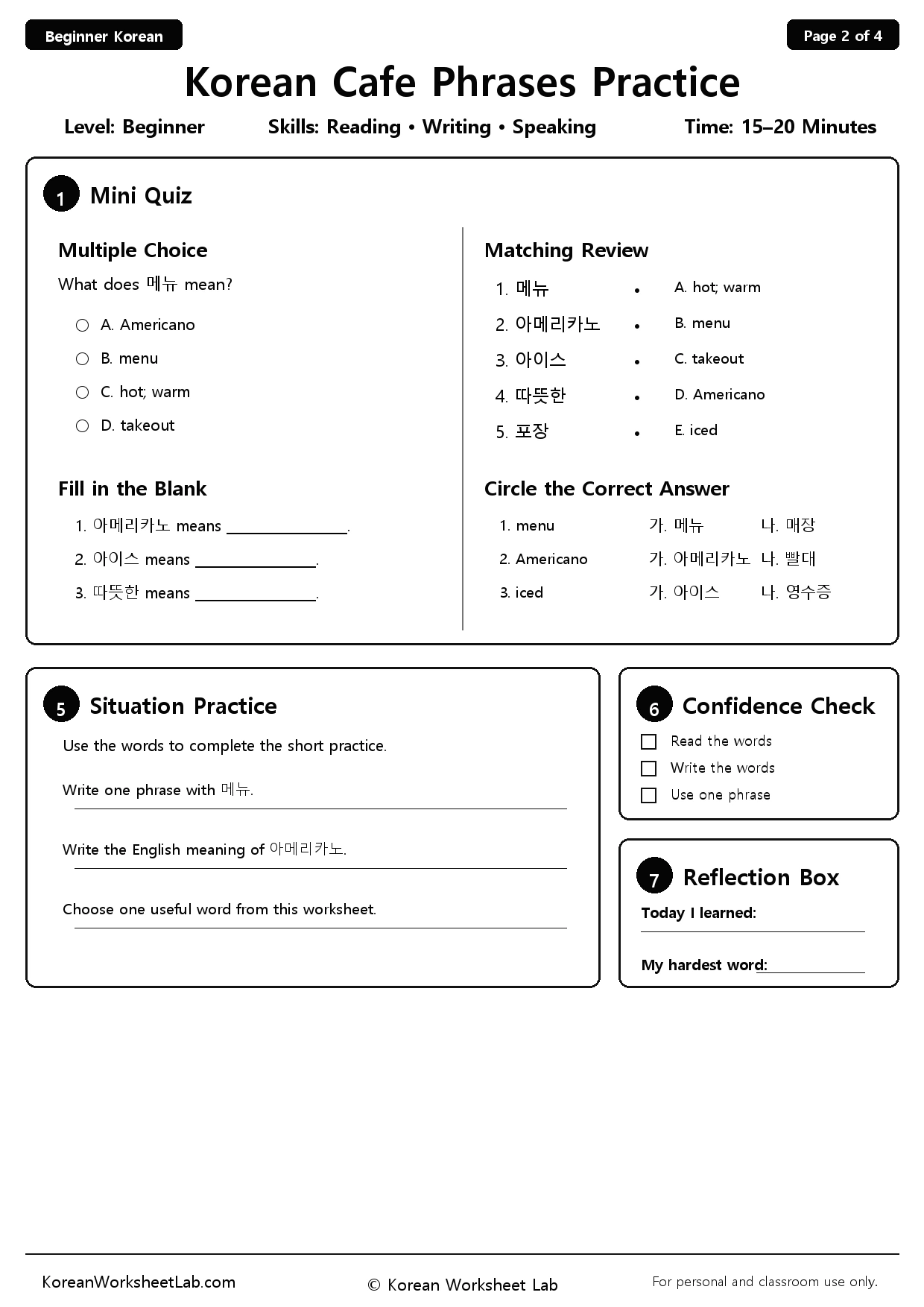 P2
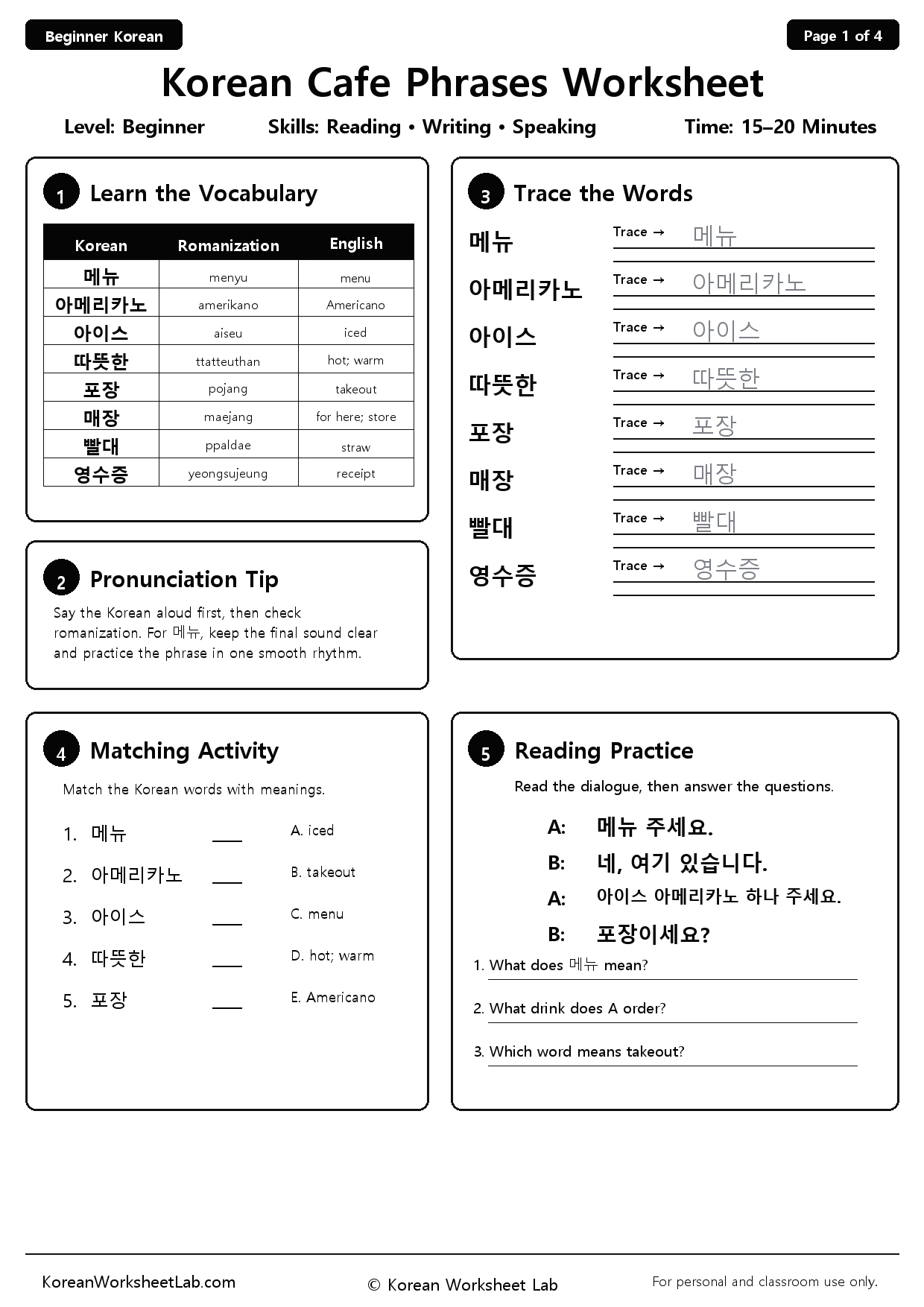
P2Practice practical Korean cafe phrases for ordering drinks, asking for iced or hot coffee, takeout, receipts, straws, and polite requests.
 P1
P1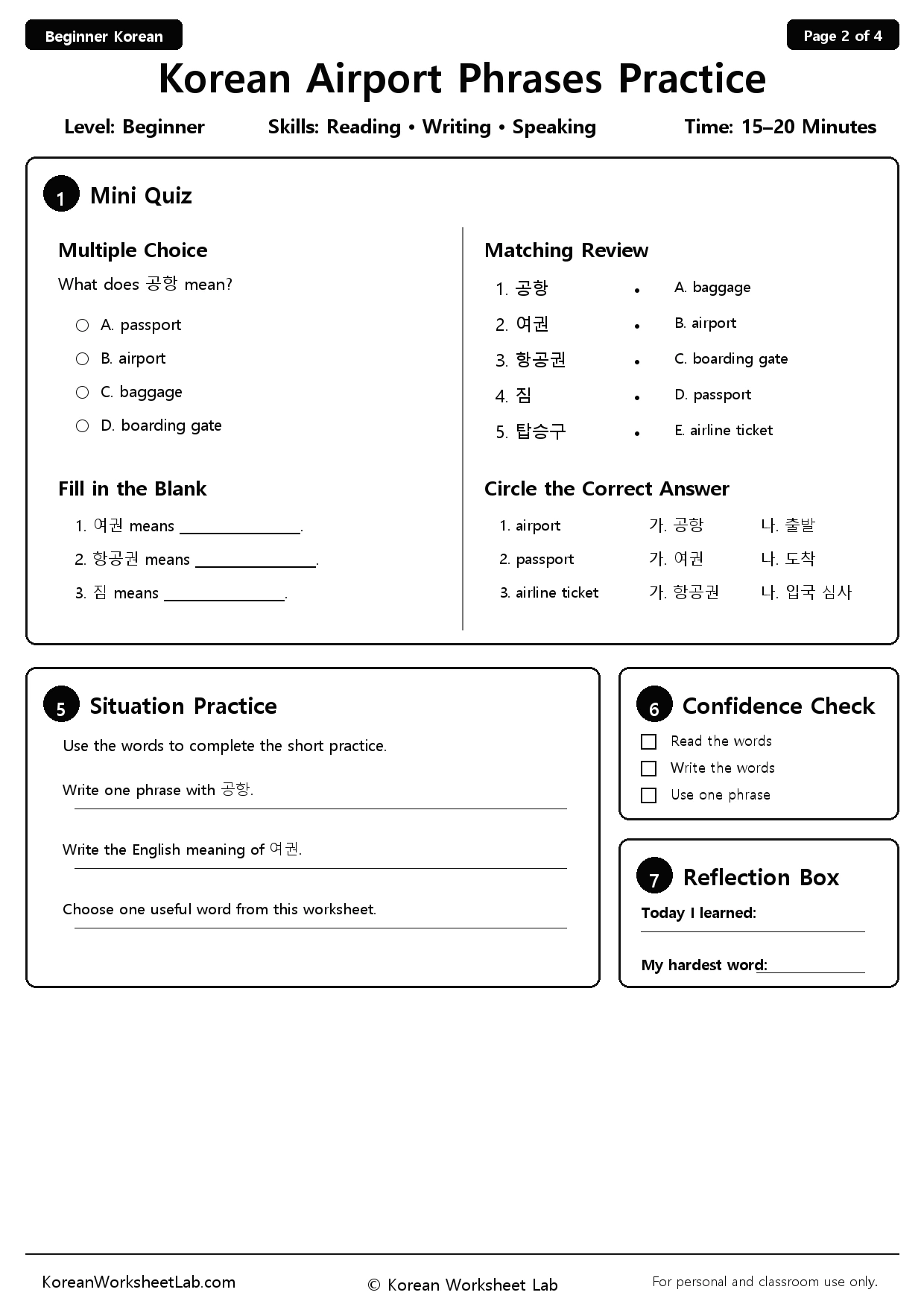 P2
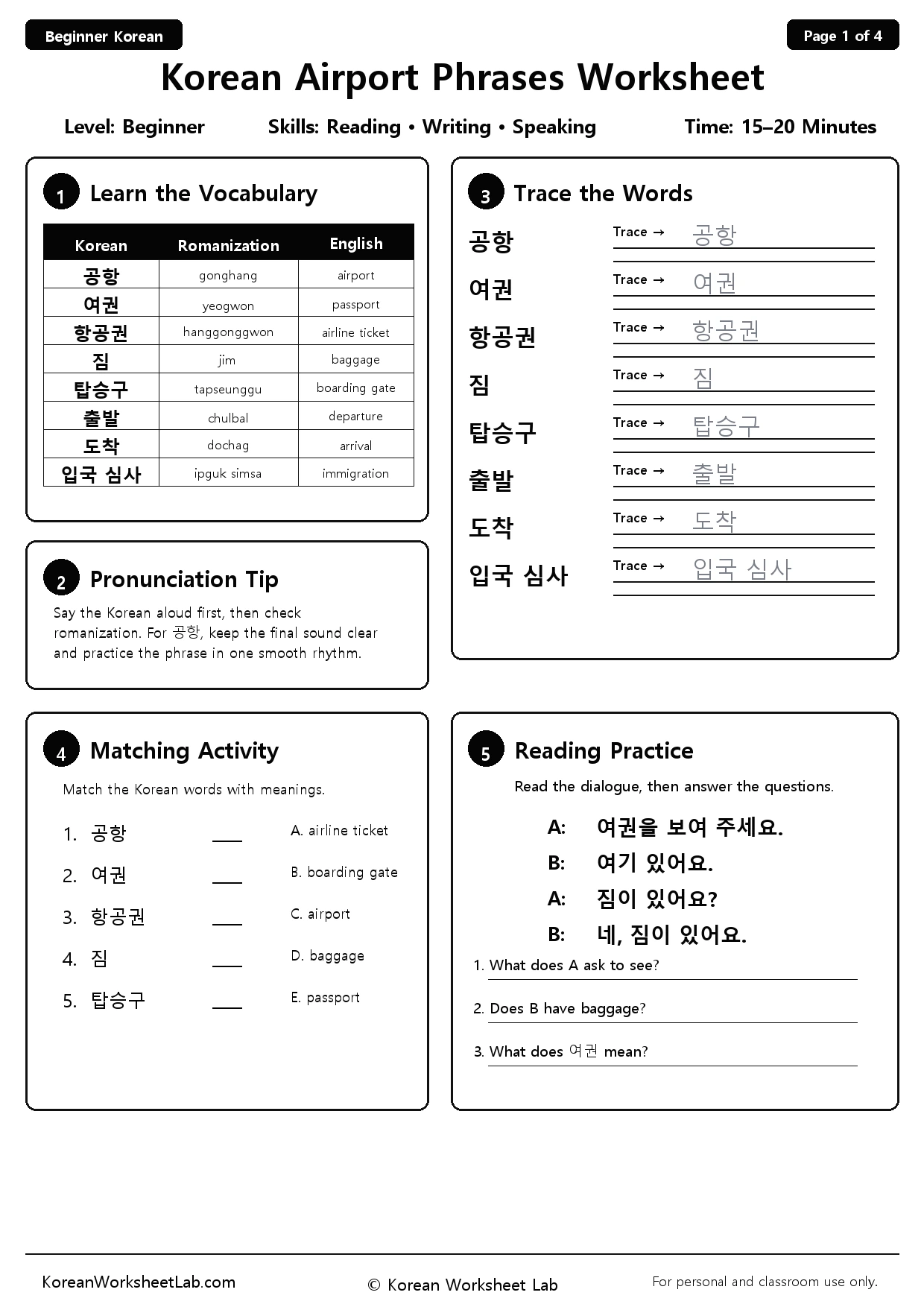
P2Practice Korean airport phrases for passports, tickets, baggage, boarding gates, arrivals, departures, and immigration questions.
 P1
P1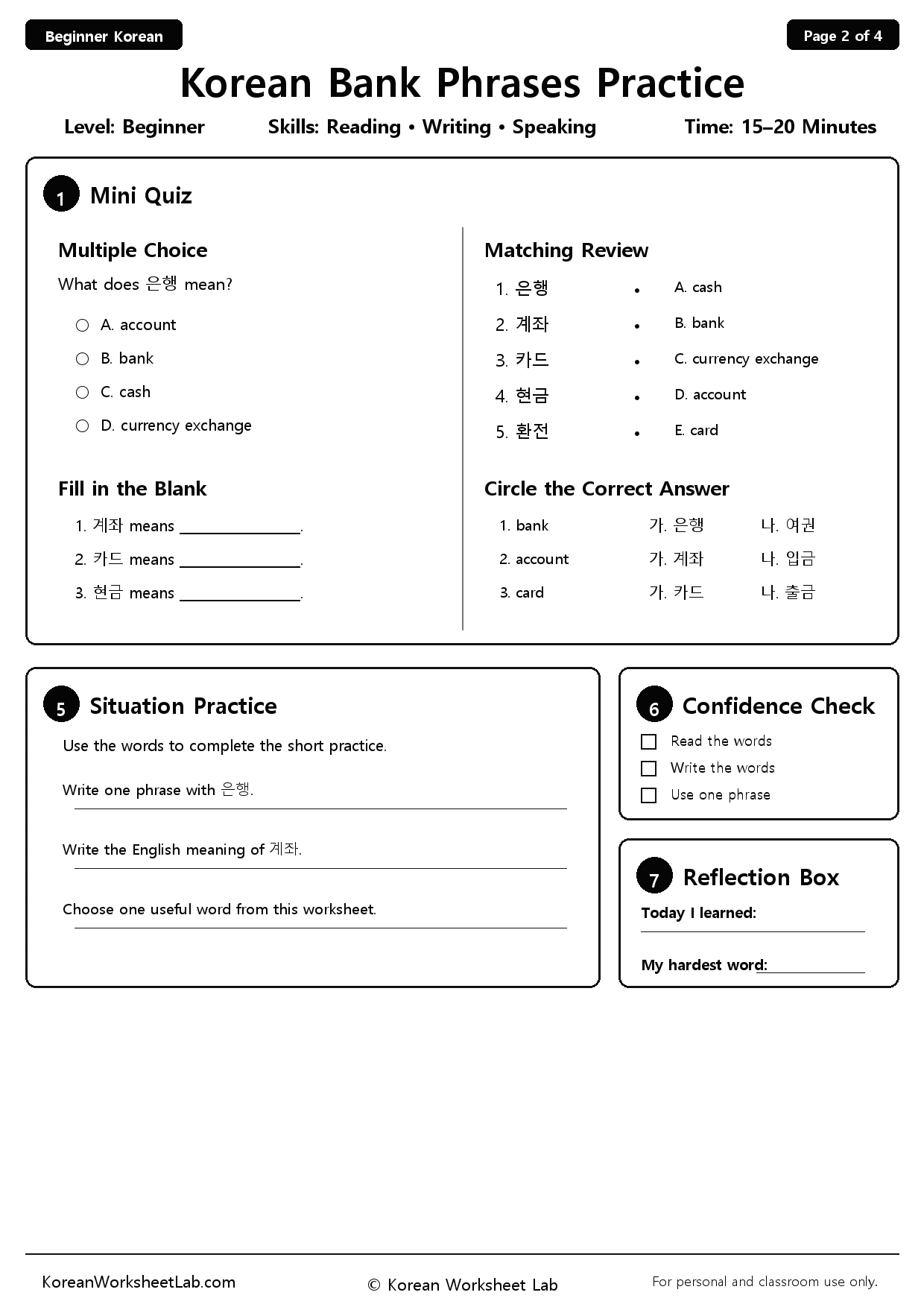 P2
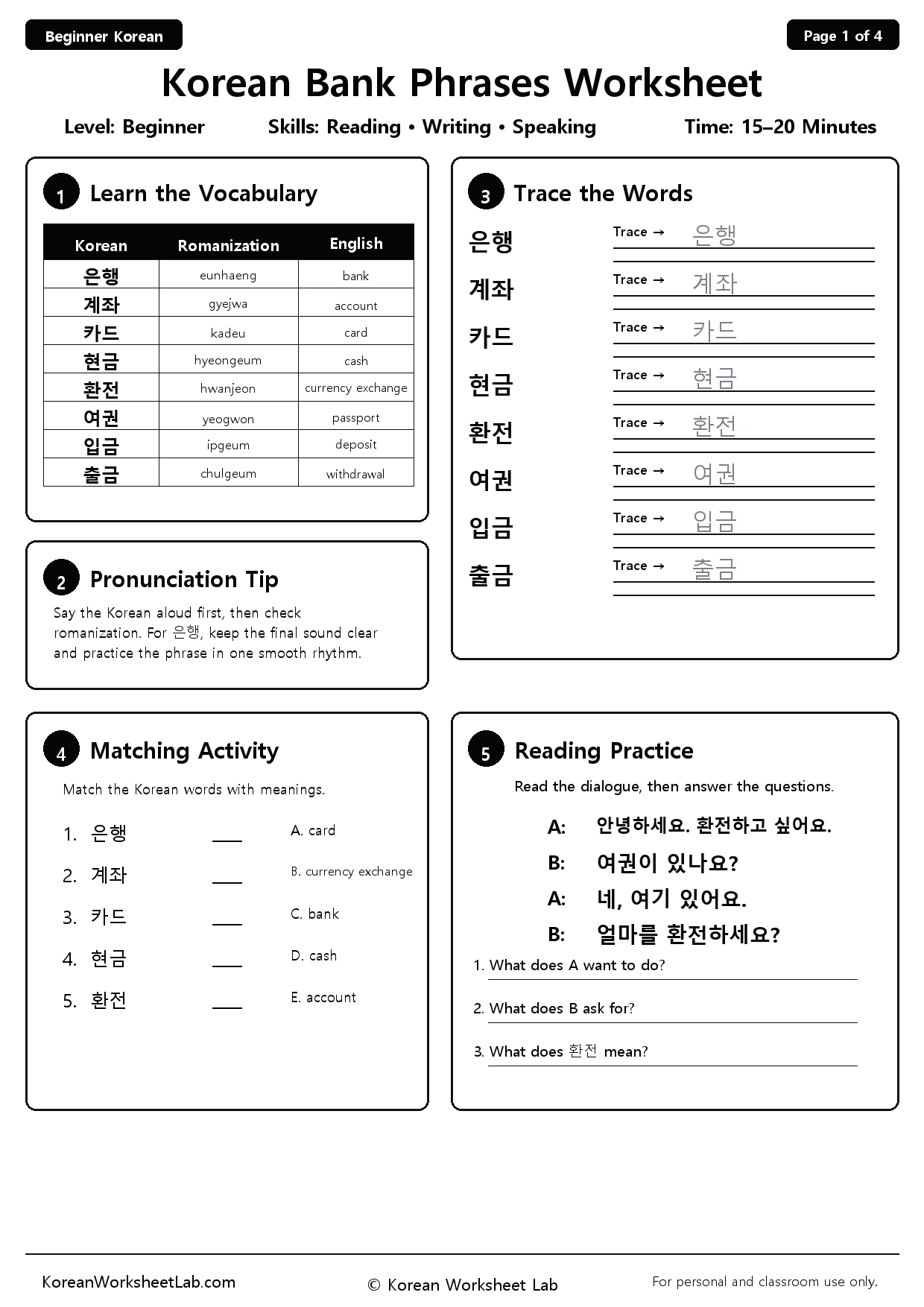
P2Practice beginner Korean bank phrases for accounts, cards, cash, currency exchange, passports, deposits, and withdrawals.
 P1
P1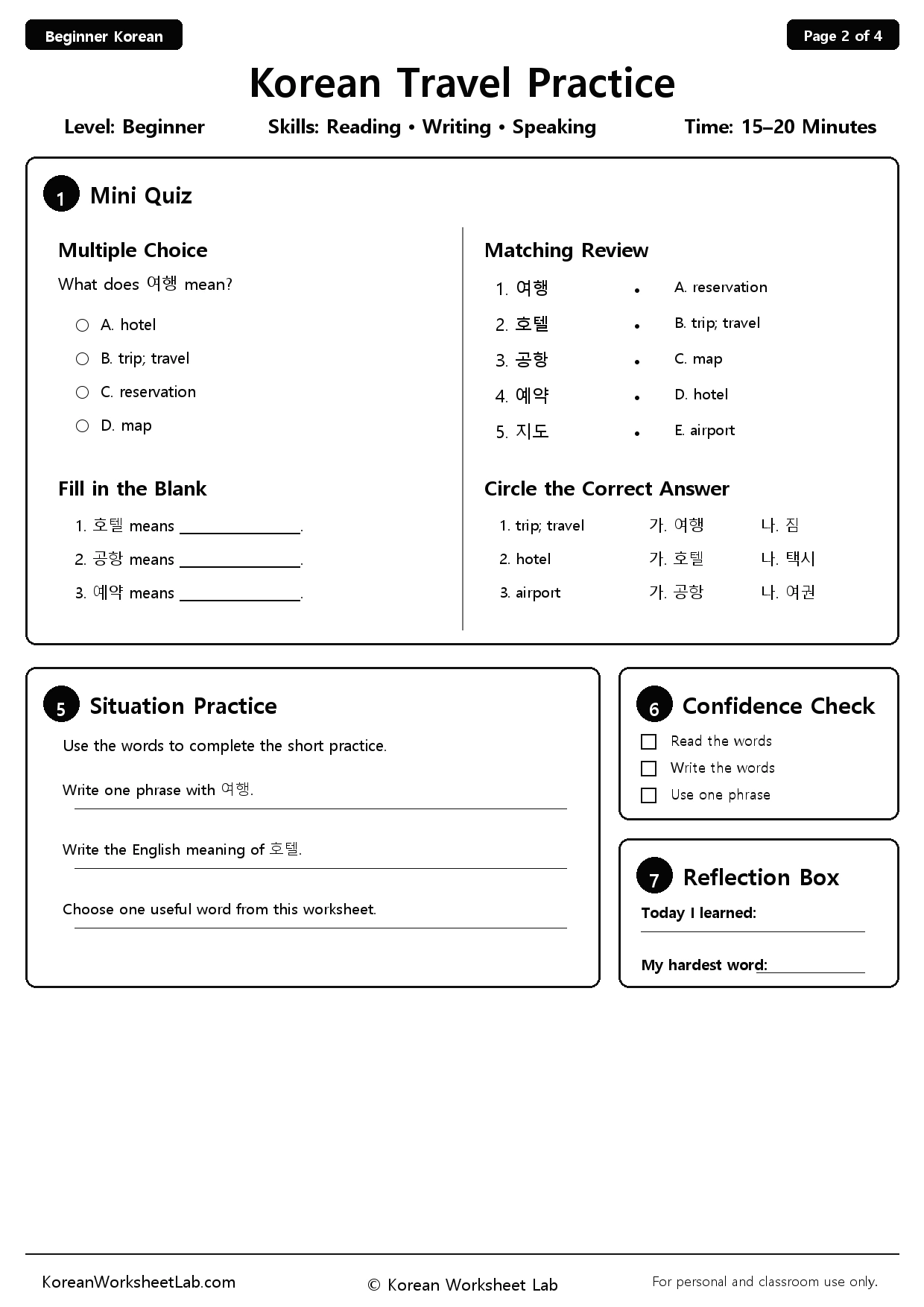 P2
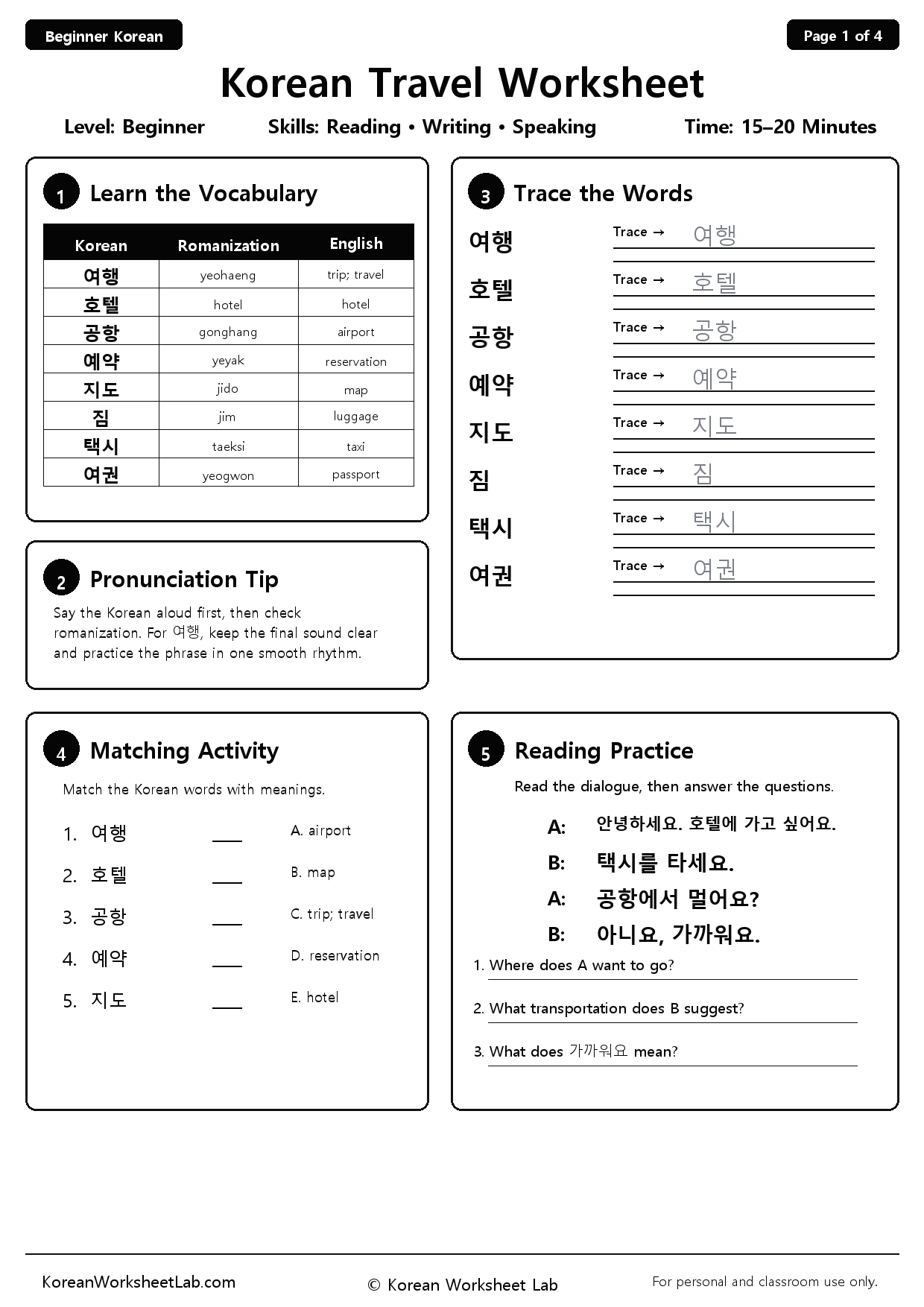
P2Practice beginner Korean travel phrases for trips, hotels, airports, reservations, maps, luggage, taxis, and passports.
 P1
P1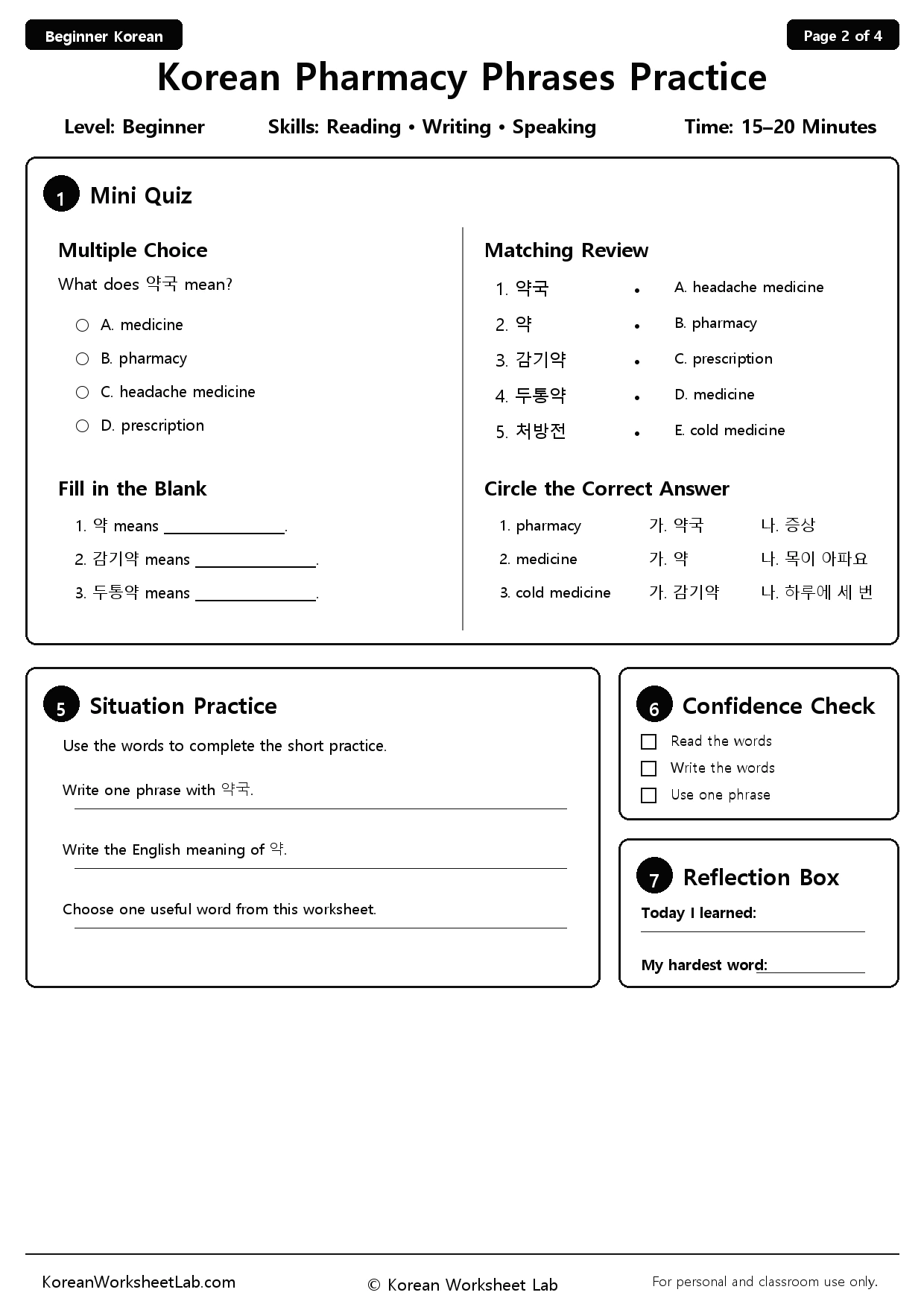 P2
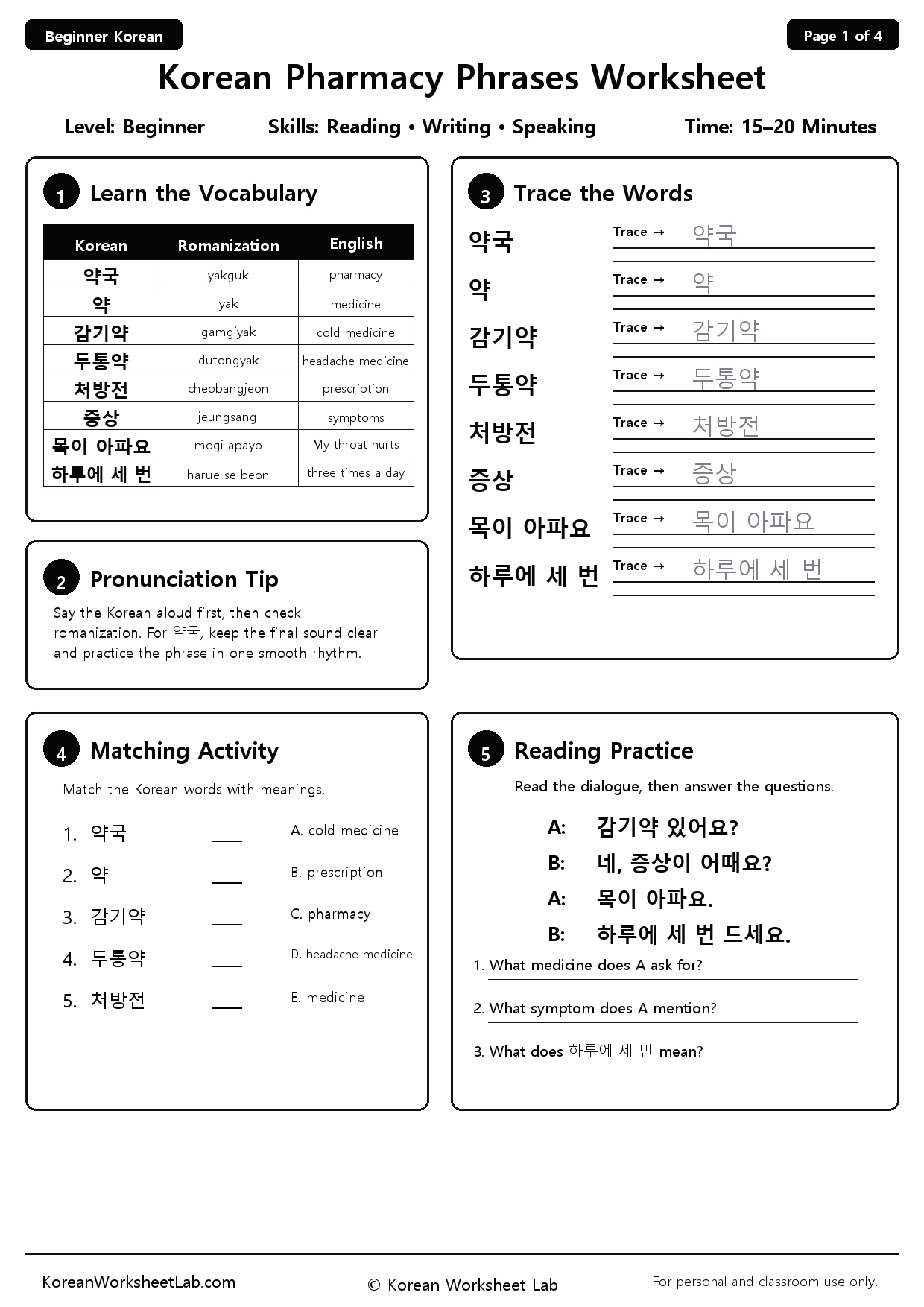
P2Practice beginner Korean pharmacy phrases for medicine, symptoms, prescriptions, cold medicine, headache medicine, and dosage instructions.
 P1
P1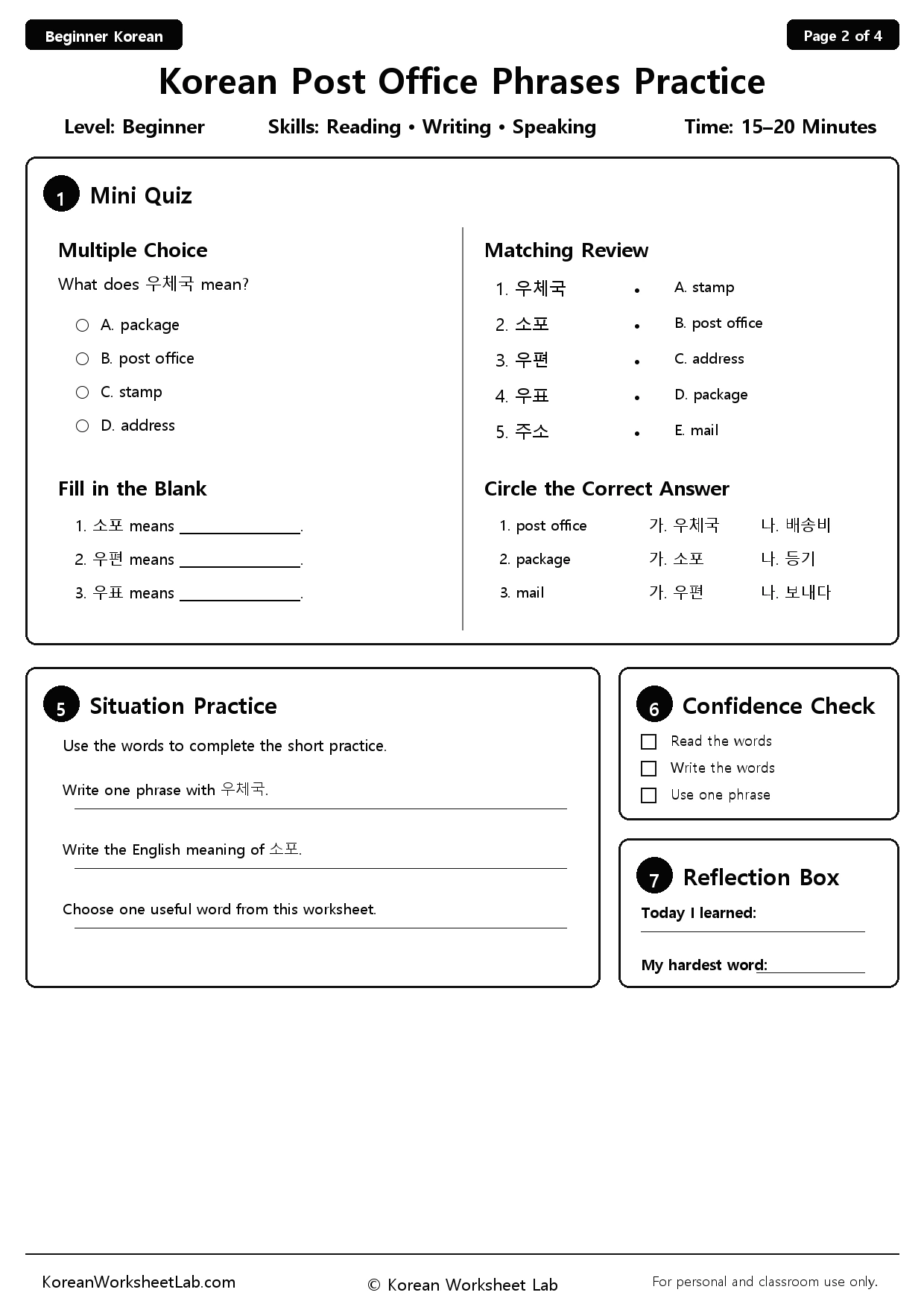 P2
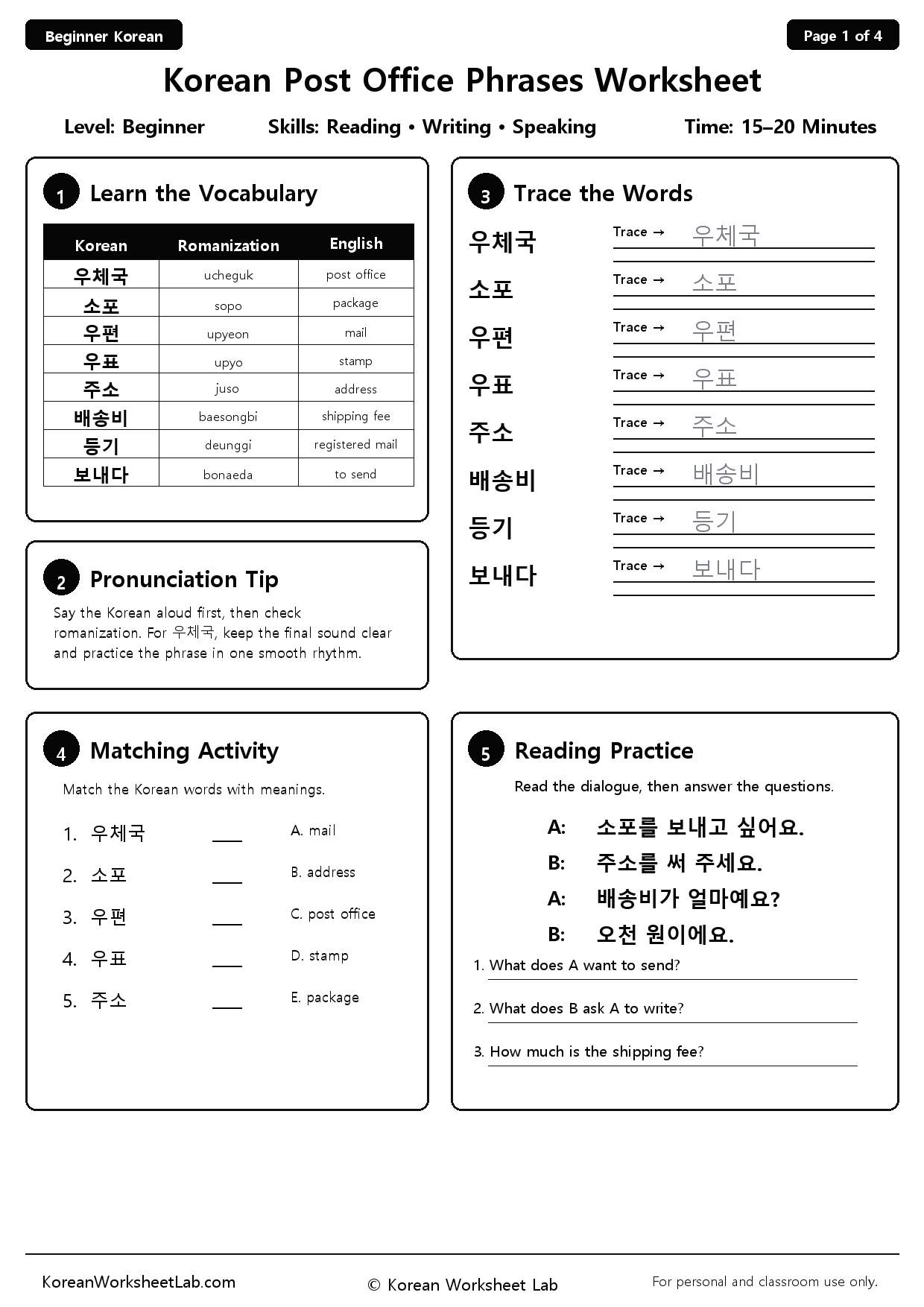
P2Practice beginner Korean post office phrases for mail, packages, stamps, addresses, shipping fees, registered mail, and tracking numbers.
 P1
P1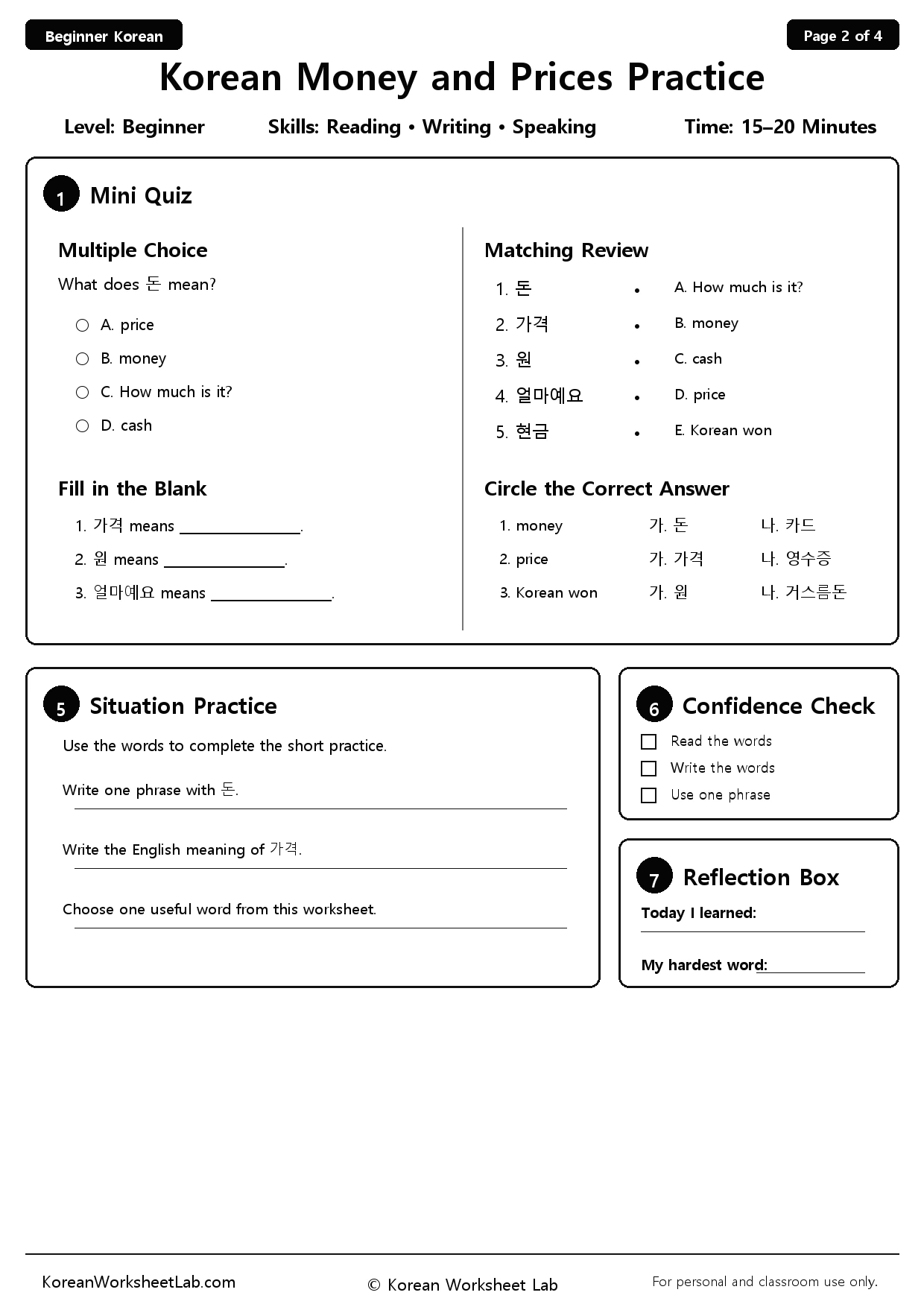 P2
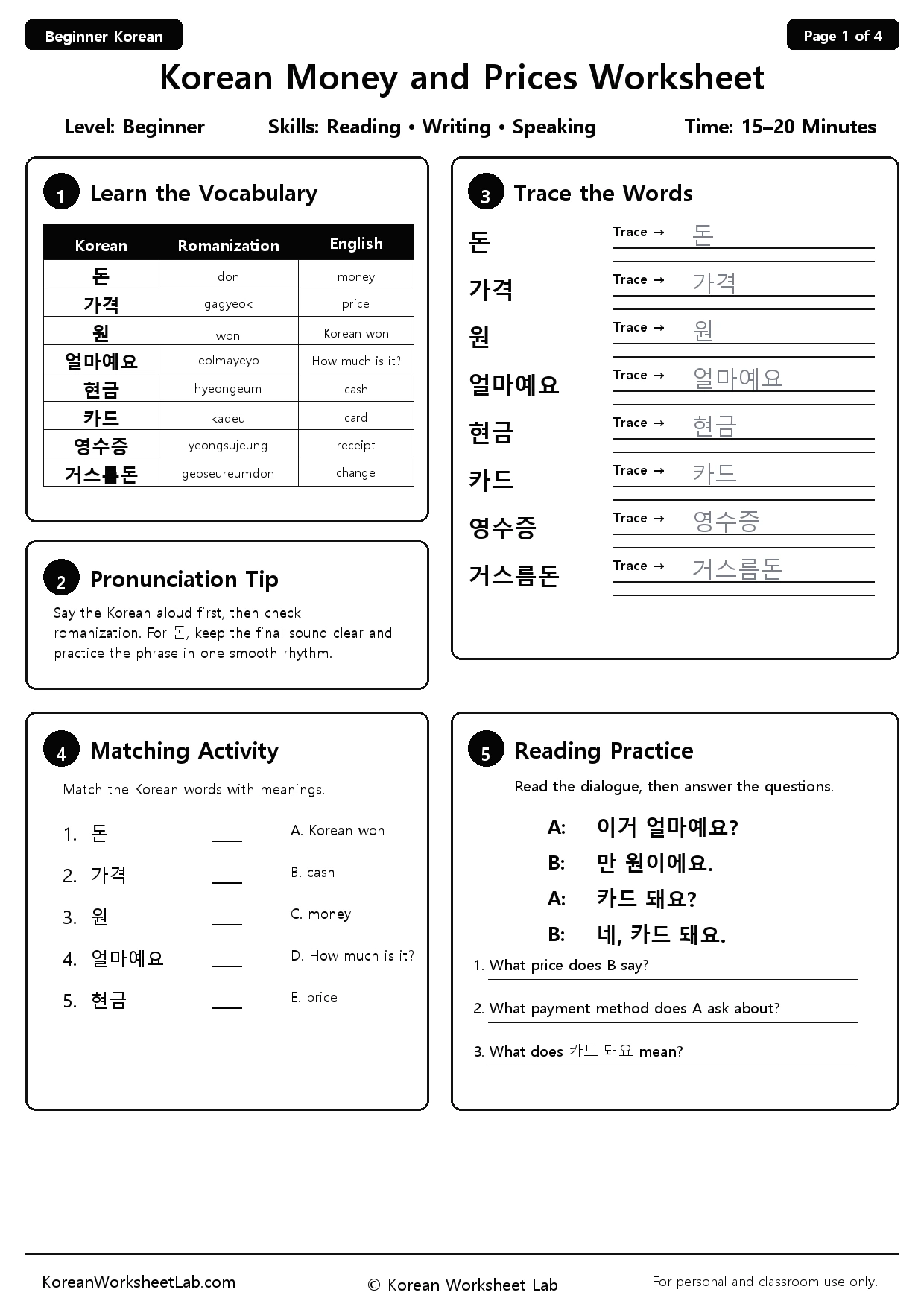
P2Practice beginner Korean money and price phrases for won, cash, cards, receipts, discounts, change, and asking how much something costs.
 P1
P1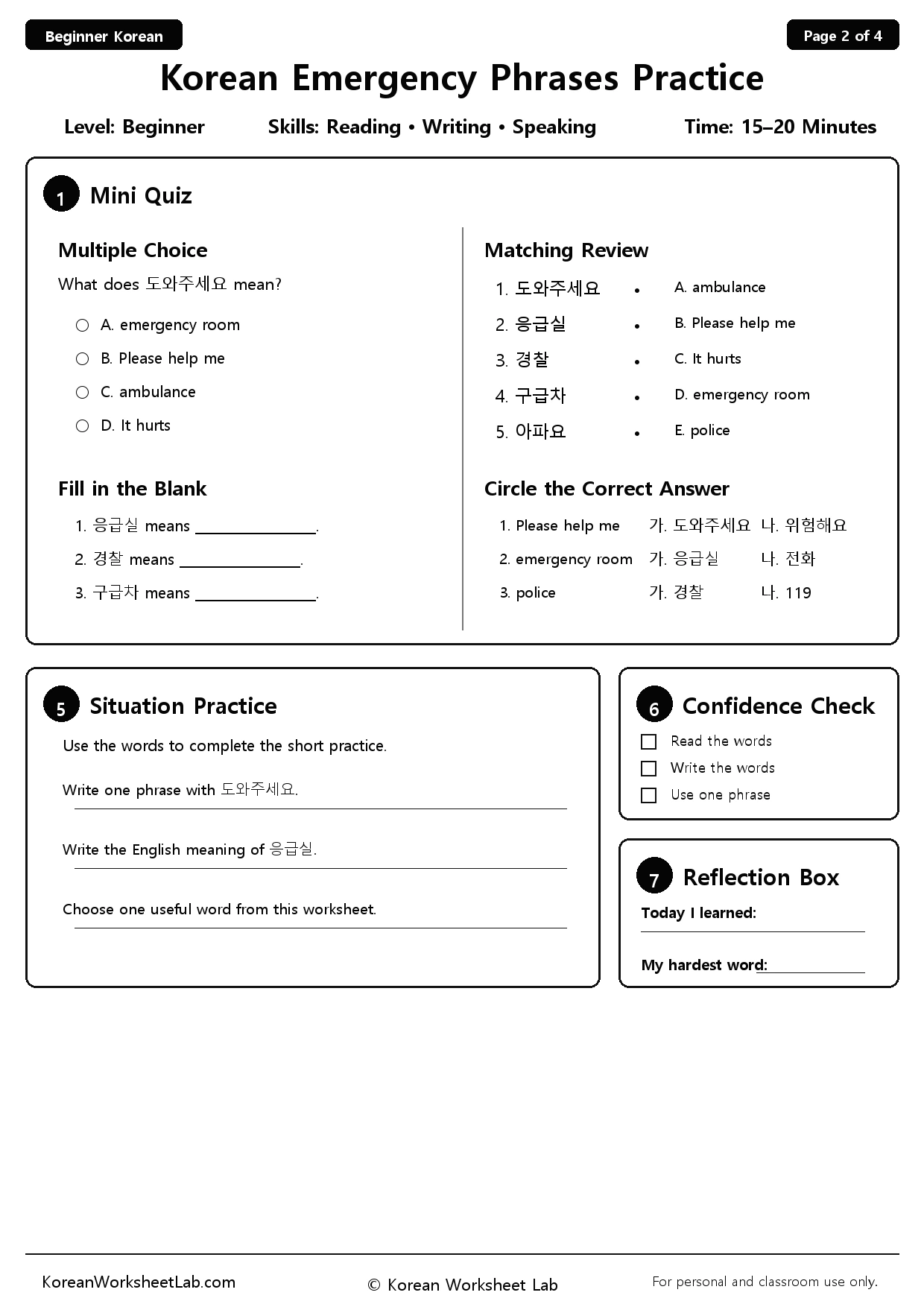 P2
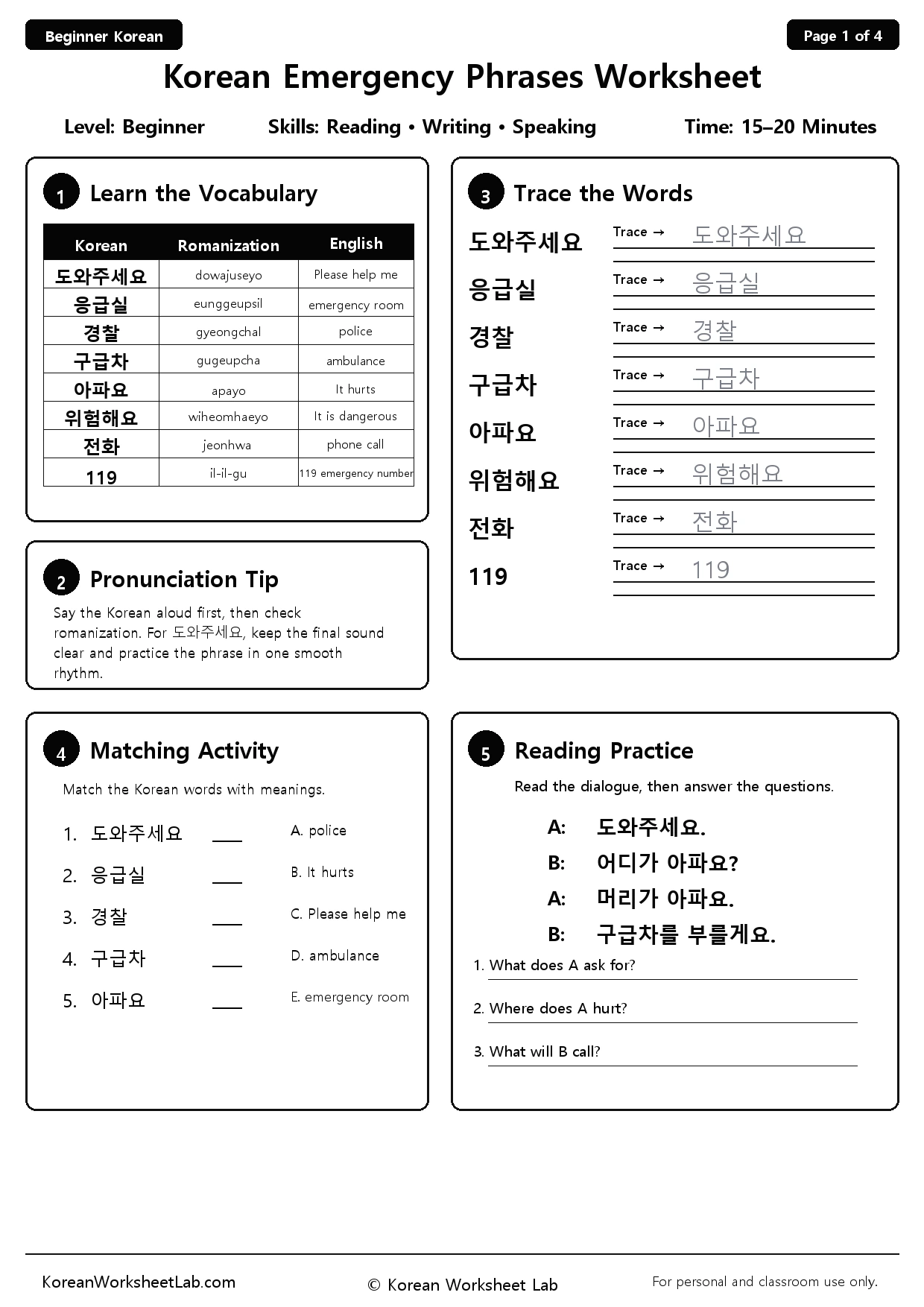
P2Practice beginner Korean emergency phrases for asking for help, pain, police, ambulance, emergency room, phone calls, and 119 in Korea.
 P1
P1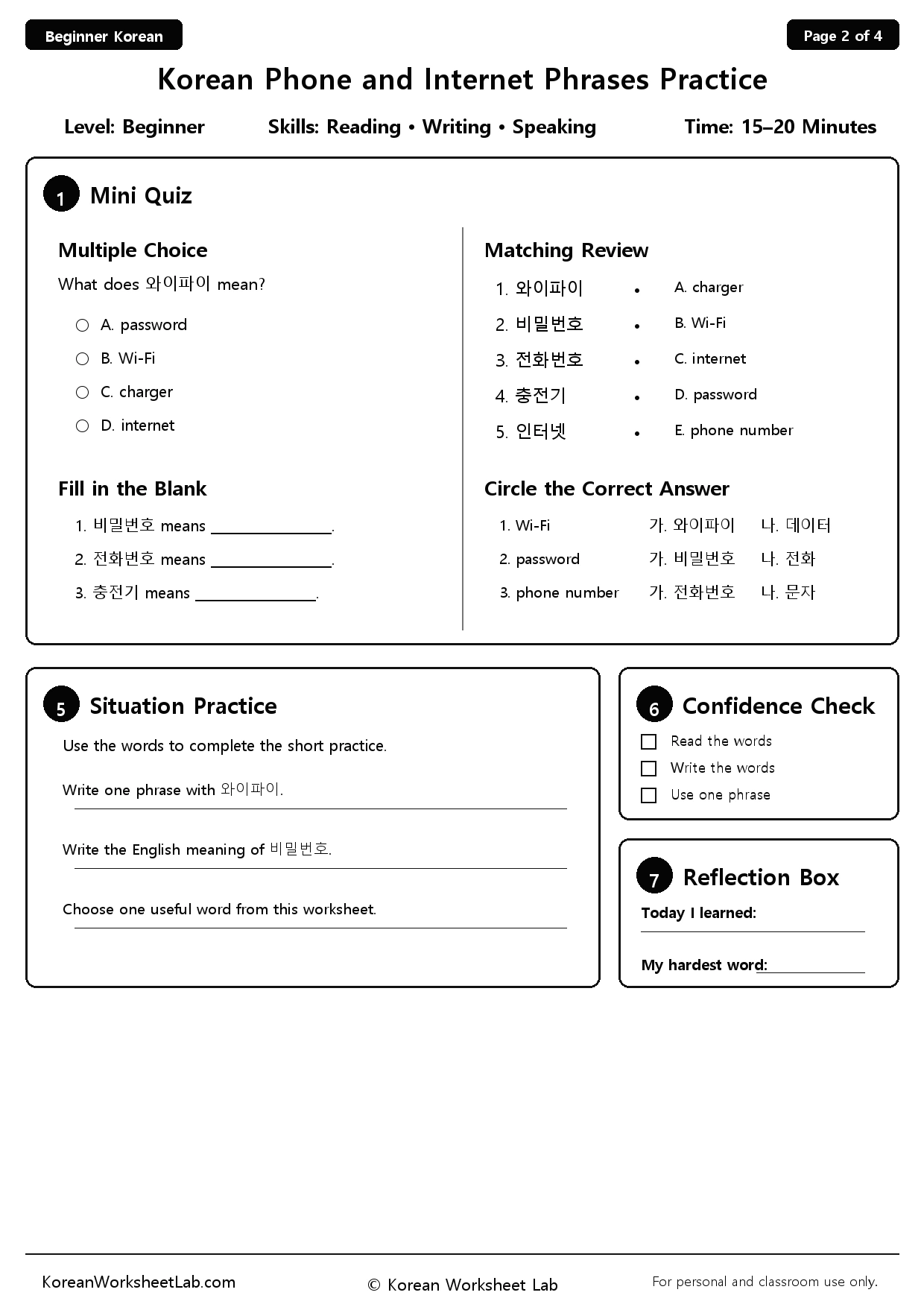 P2
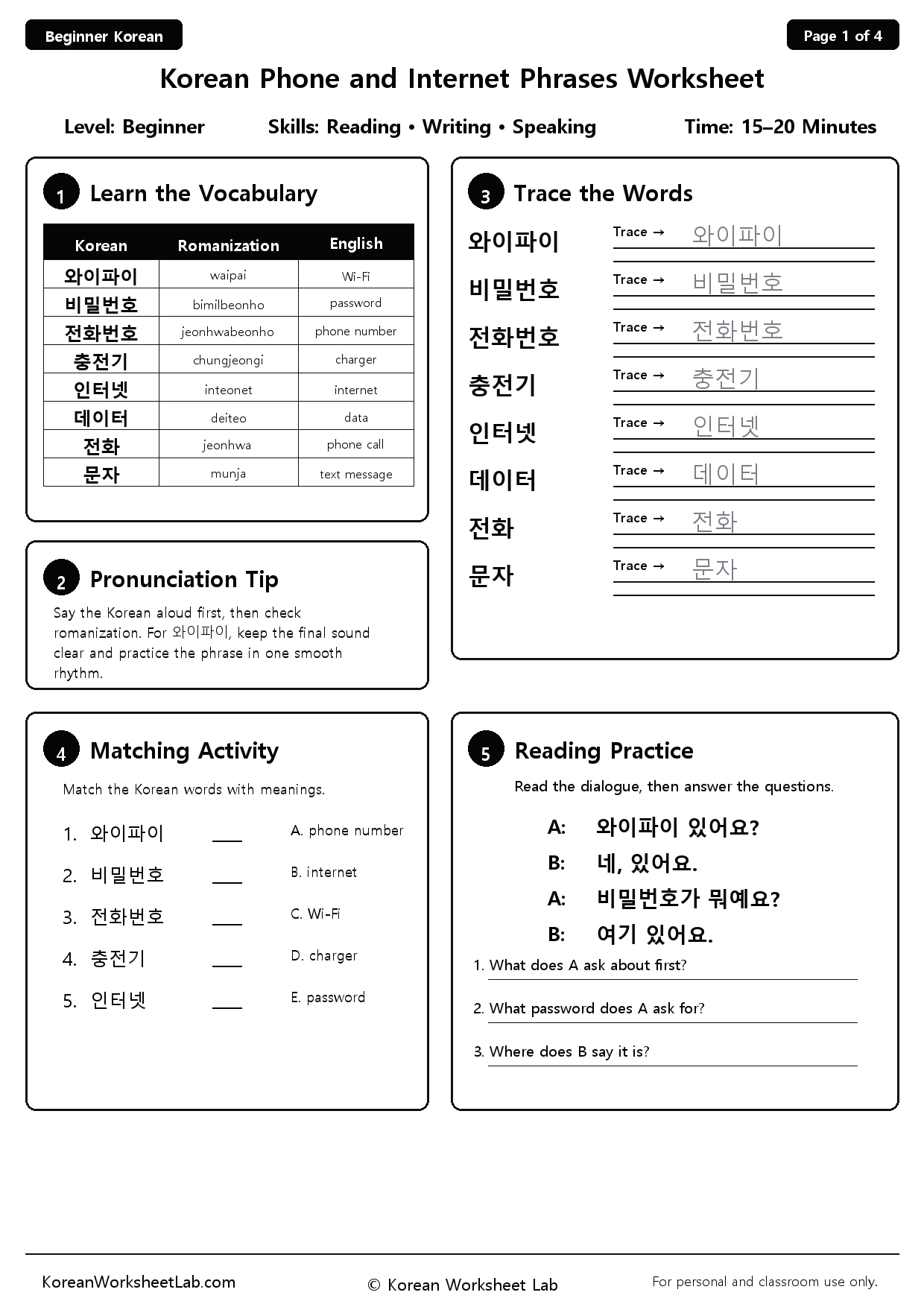
P2Practice beginner Korean phone and internet phrases for Wi-Fi, passwords, phone numbers, chargers, signal, data, calls, and messages.
 P1
P1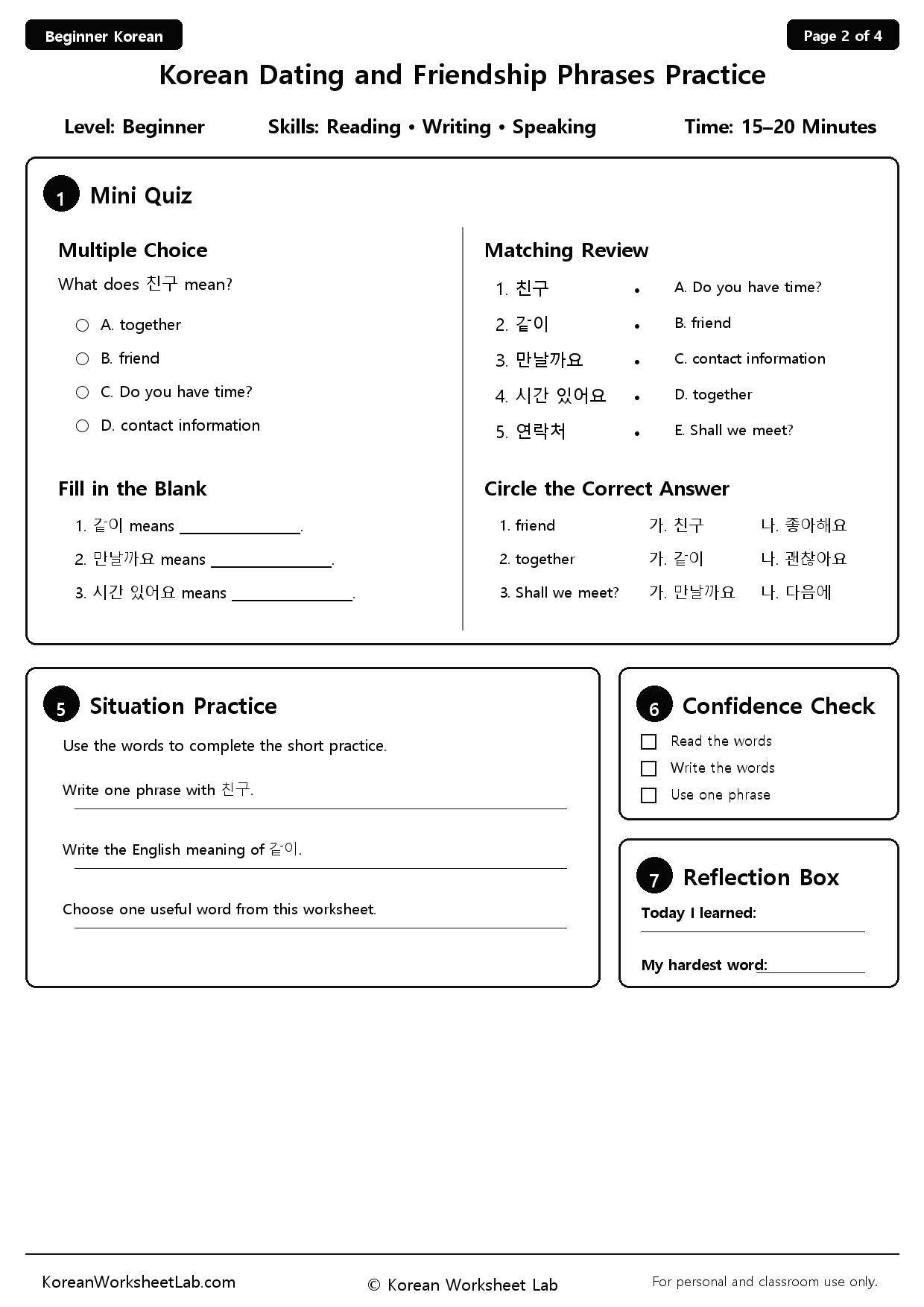 P2
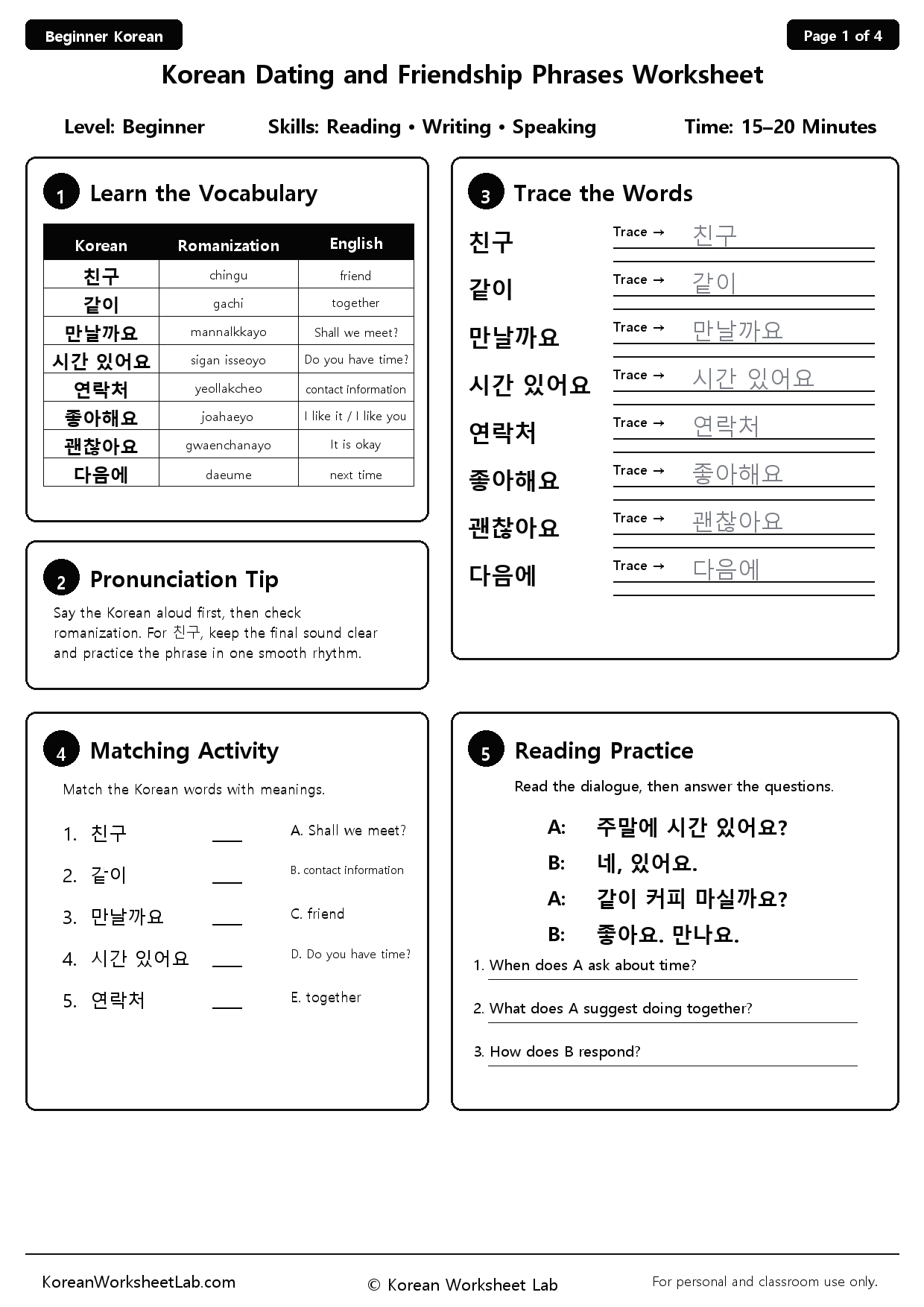
P2Practice polite beginner Korean friendship and dating phrases for asking to meet, exchanging contact information, and responding kindly.
 P1
P1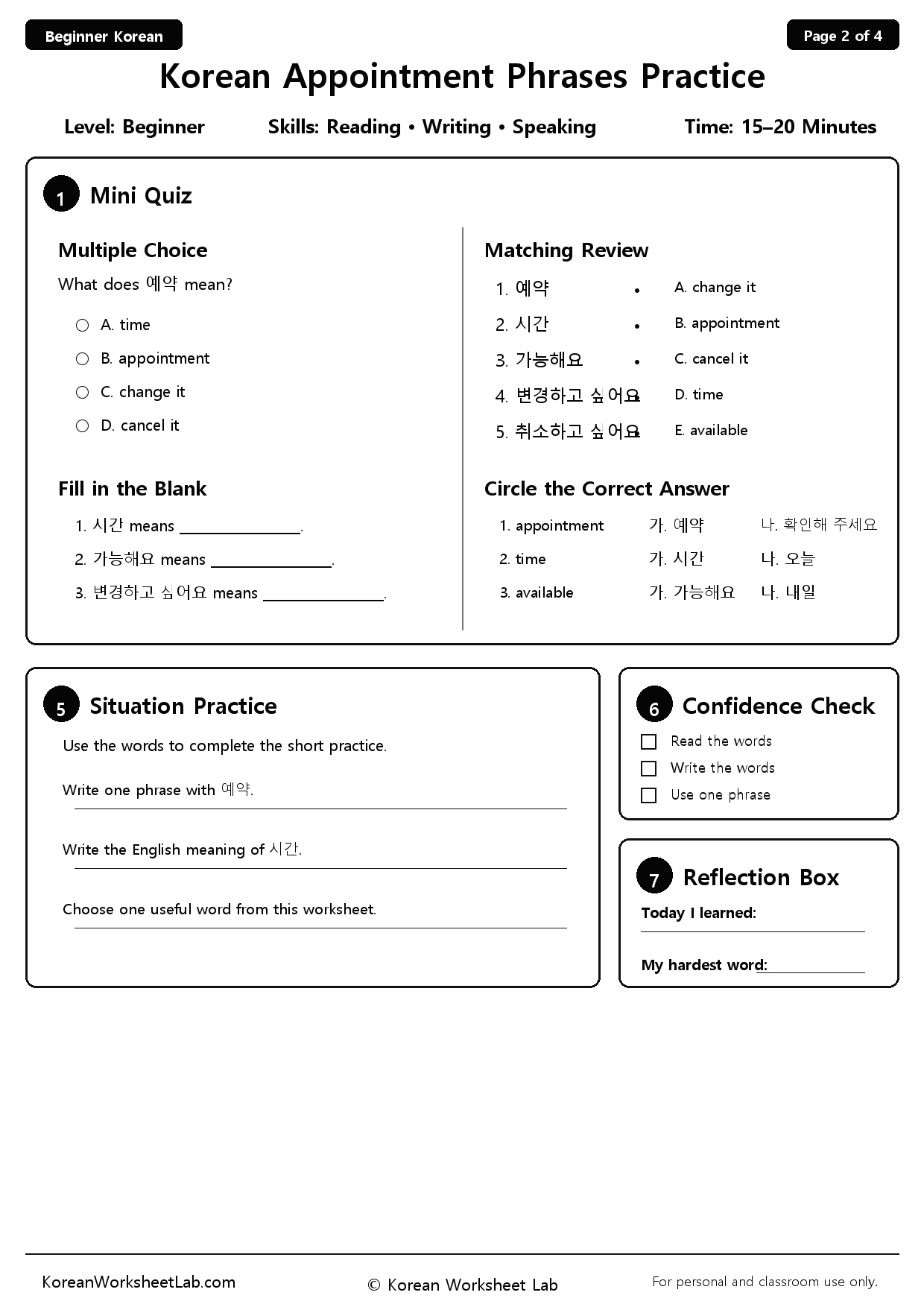 P2
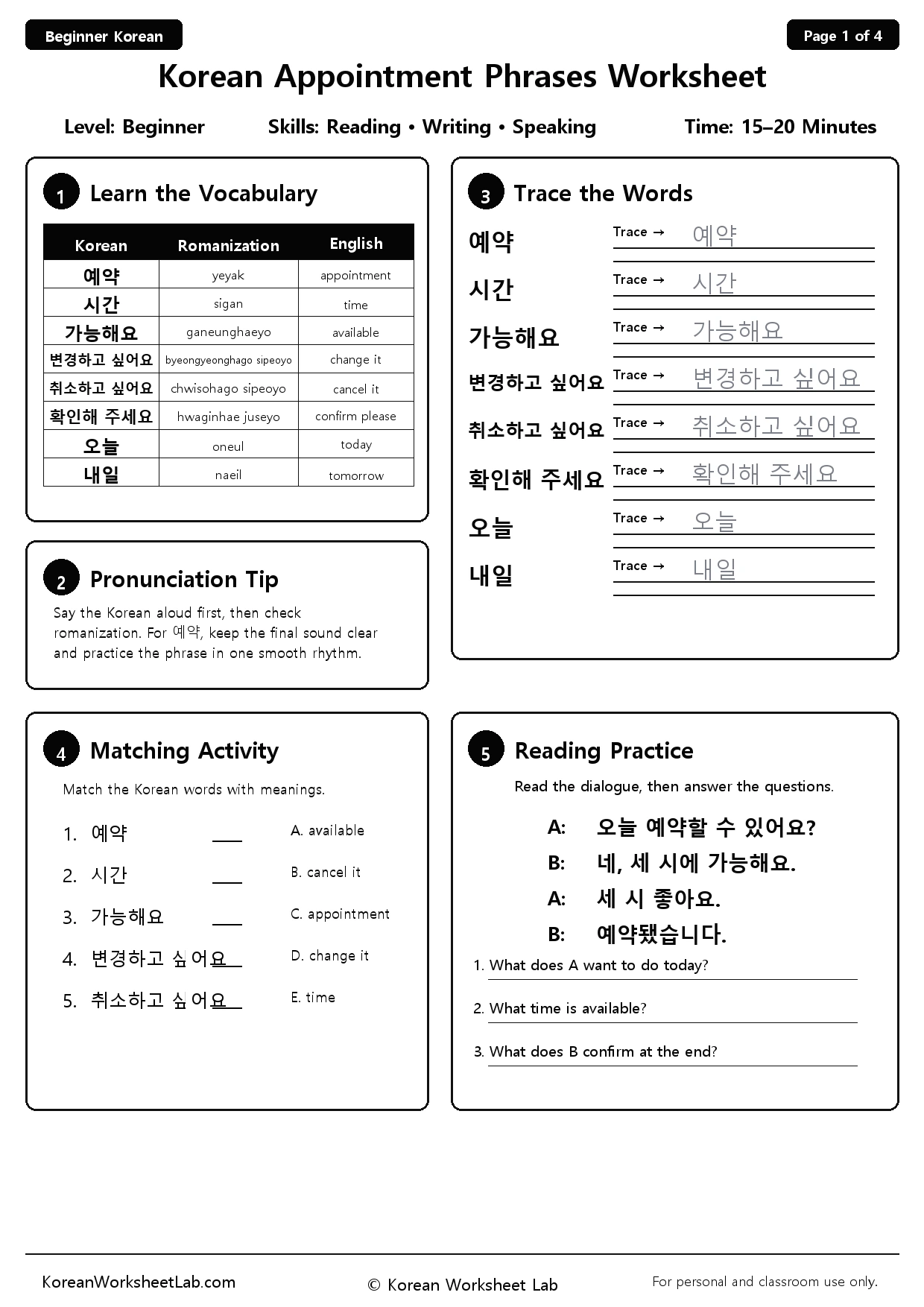
P2Practice beginner Korean appointment phrases for making, changing, and confirming reservations or appointments politely.
 P1
P1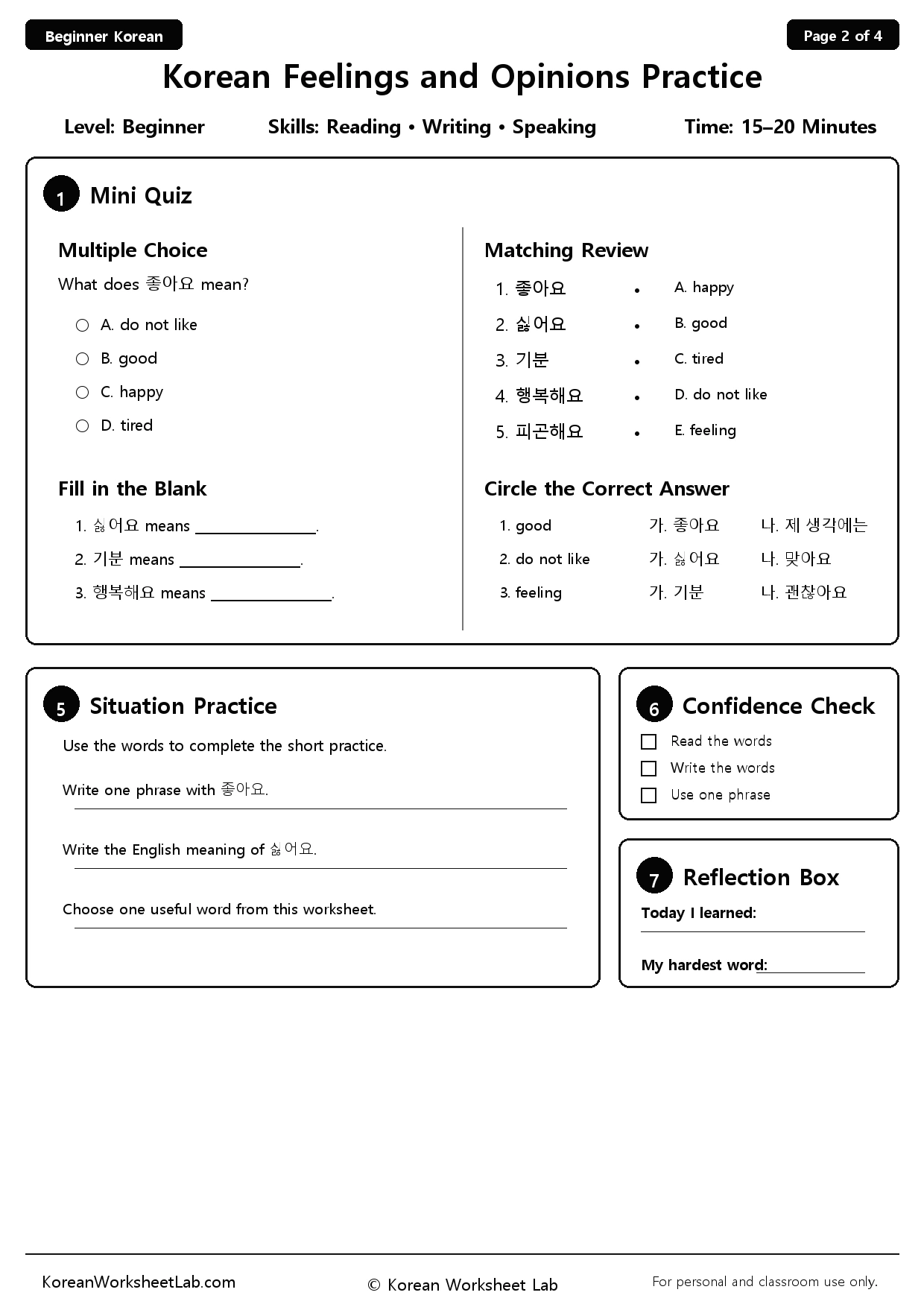 P2
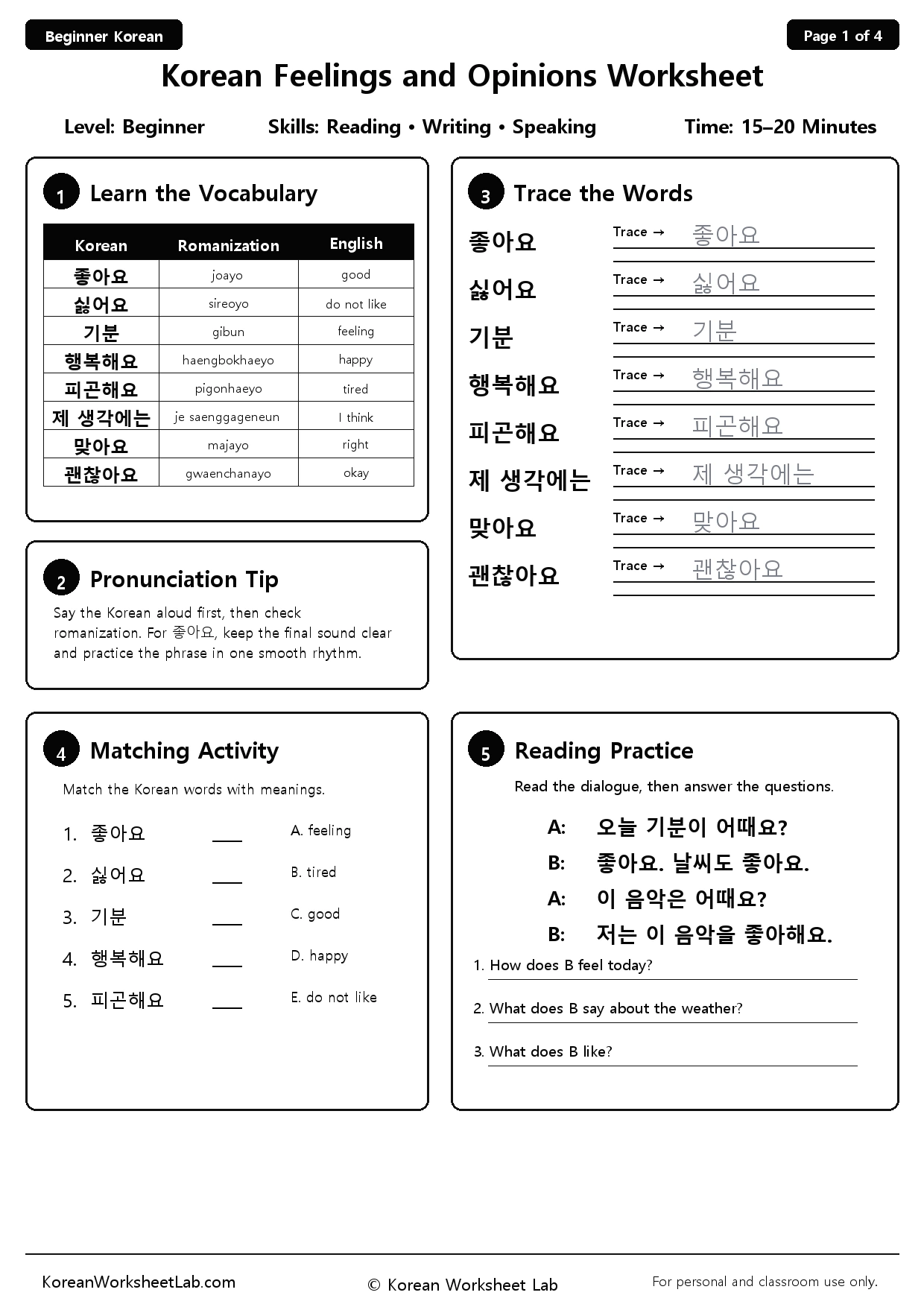
P2Practice beginner Korean feelings and opinion phrases for saying how you feel, what you like, and what you think politely.