Korean for Kids 10 minutes
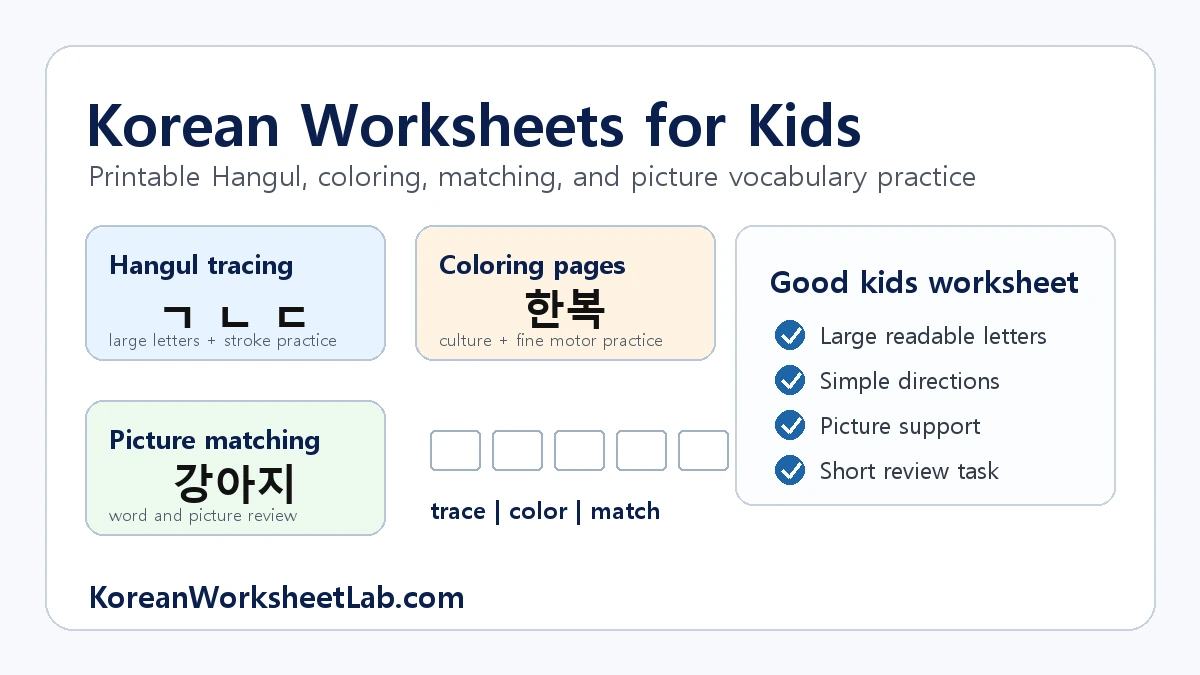
Korean Worksheets for Kids
Find Korean worksheets for kids with Hangul tracing, coloring pages, matching activities, picture vocabulary, printable PDFs, and teaching tips.
Read guideKorean Education Resource Hub
Practical Korean learning articles with beginner study tips, culture context, and resource roundups.
Beginner knowledge base
Start with carefully reviewed guides that answer a specific learner question. Each article teaches the concept first, then connects you to practice, reading, and printable resources.
Find Korean worksheets for kids with Hangul tracing, coloring pages, matching activities, picture vocabulary, printable PDFs, and teaching tips.
Read guide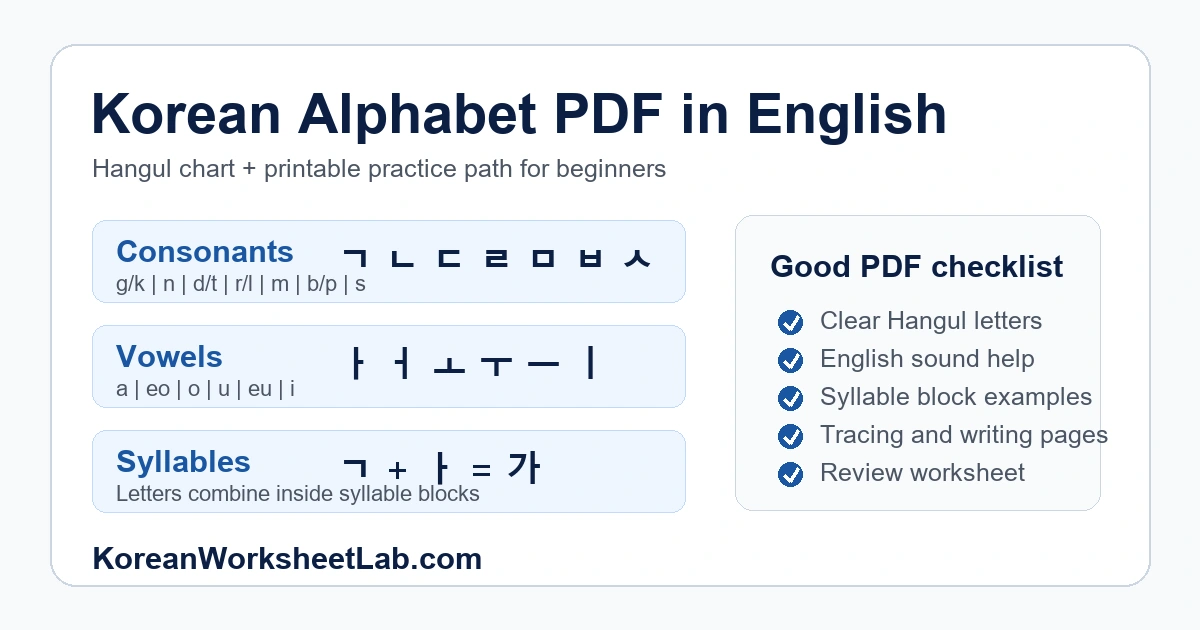
Download and use a Korean alphabet PDF in English with Hangul consonants, vowels, syllable examples, pronunciation tips, and worksheets.
Read guide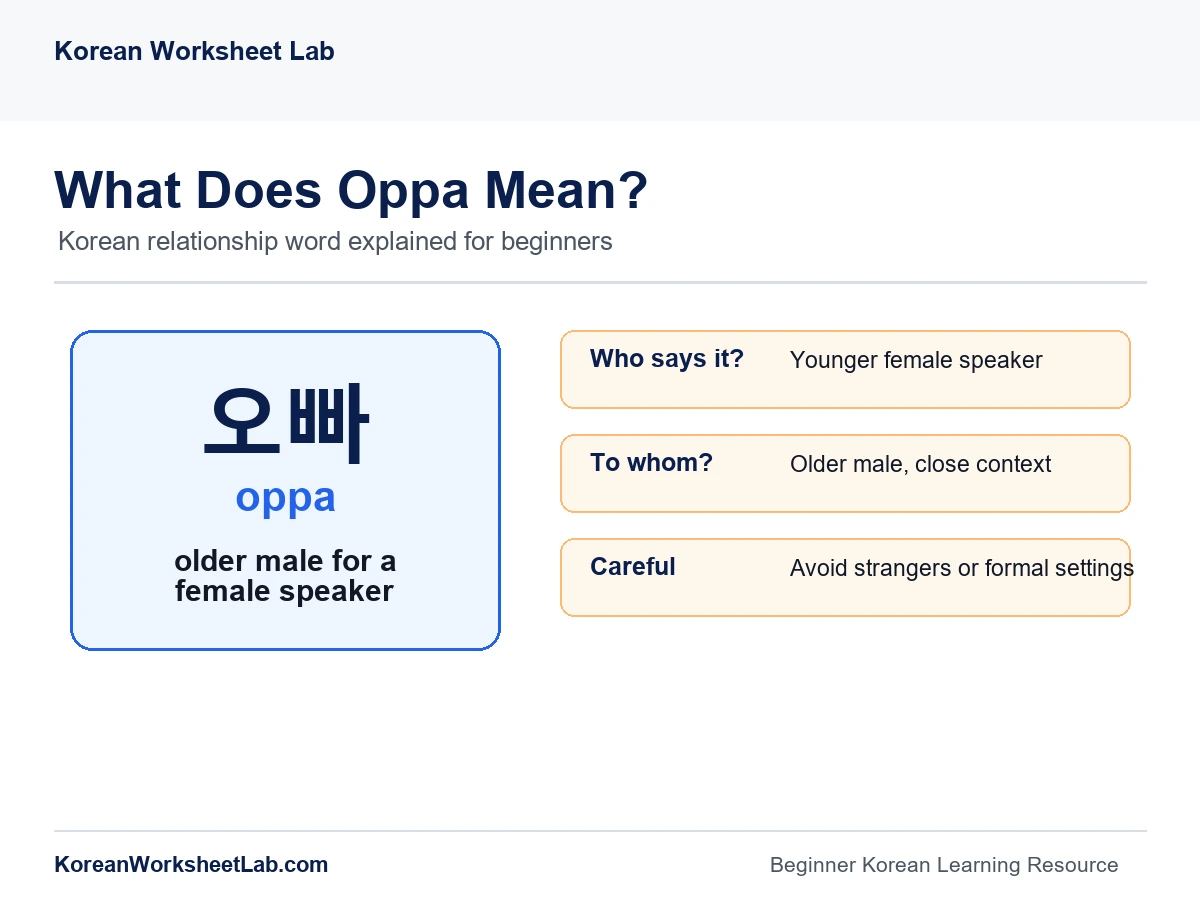
Learn what oppa means in Korean, who can say it, how it is used in real life, and why it appears so often in K-dramas and K-pop.
Read guide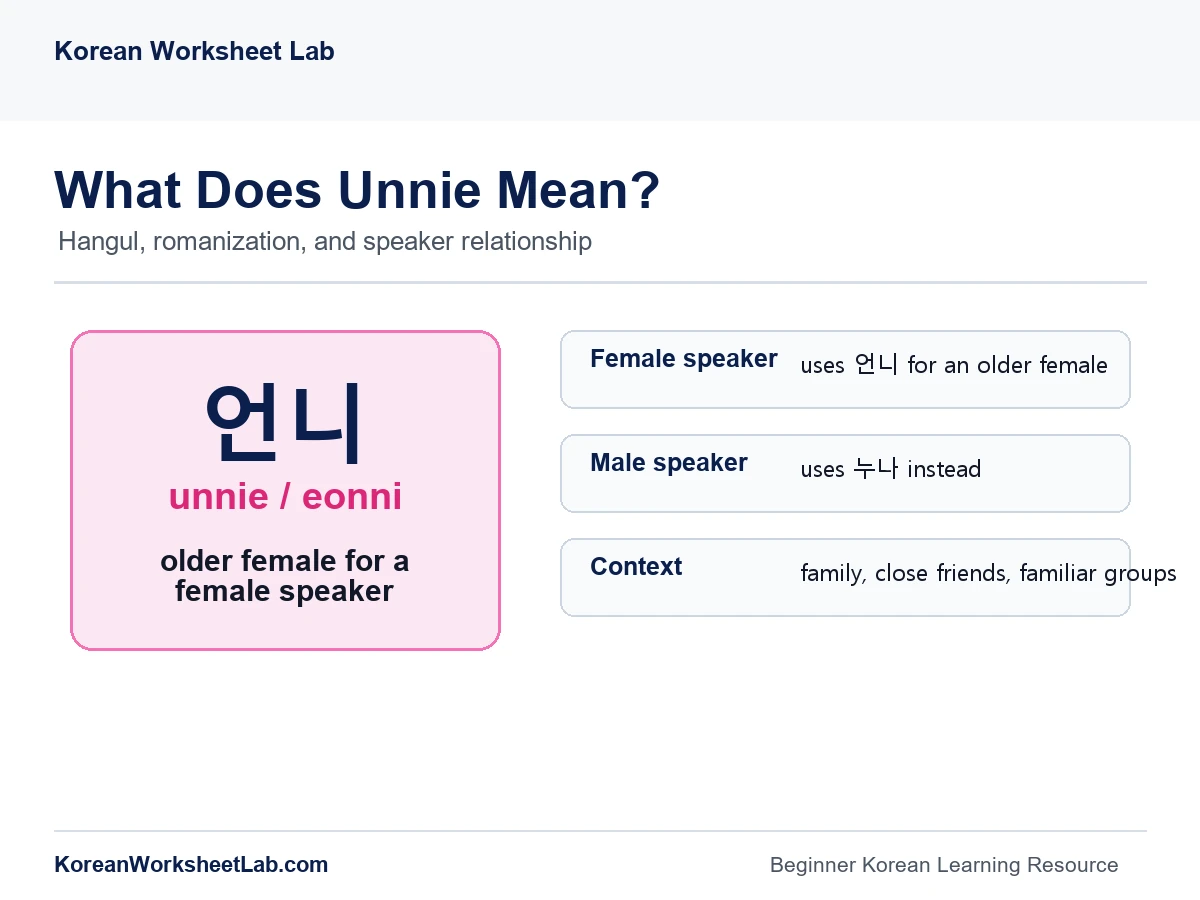
Learn what unnie means in Korean, how to write it in Hangul, who can use it, and how it differs from noona, oppa, and hyung.
Read guide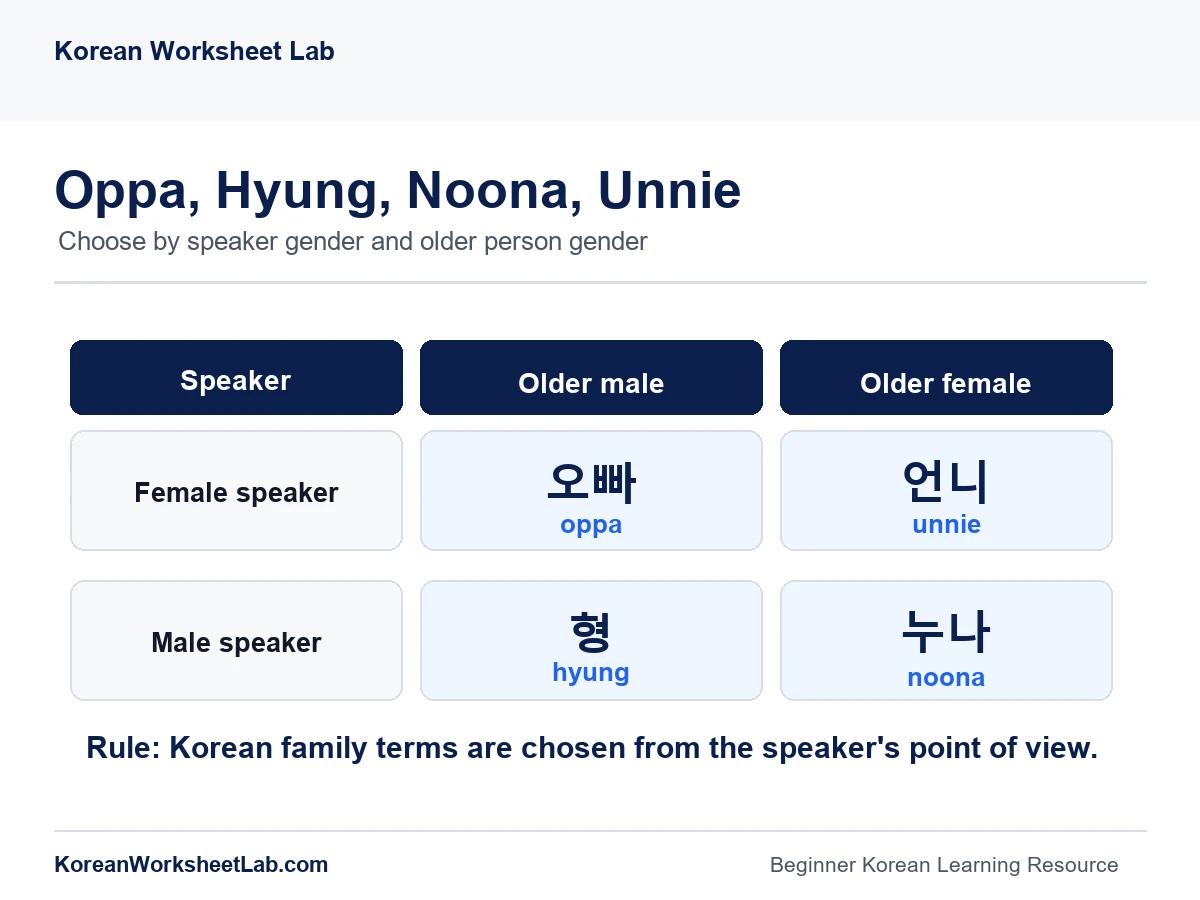
Compare oppa, hyung, noona, and unnie with a clear Korean relationship chart, examples, and common beginner mistakes.
Read guide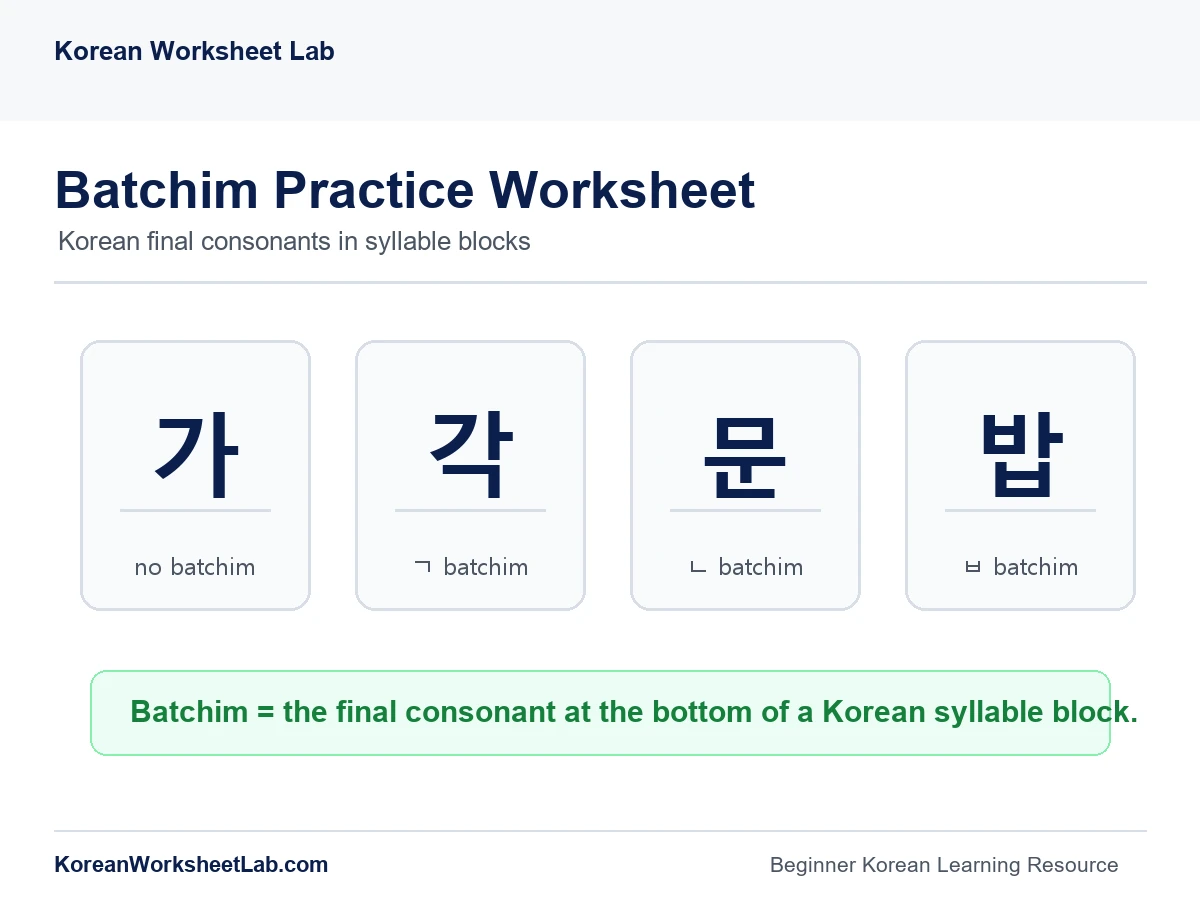
Learn what batchim is in Korean, how final consonants work, and how to practice batchim with printable worksheet examples.
Read guide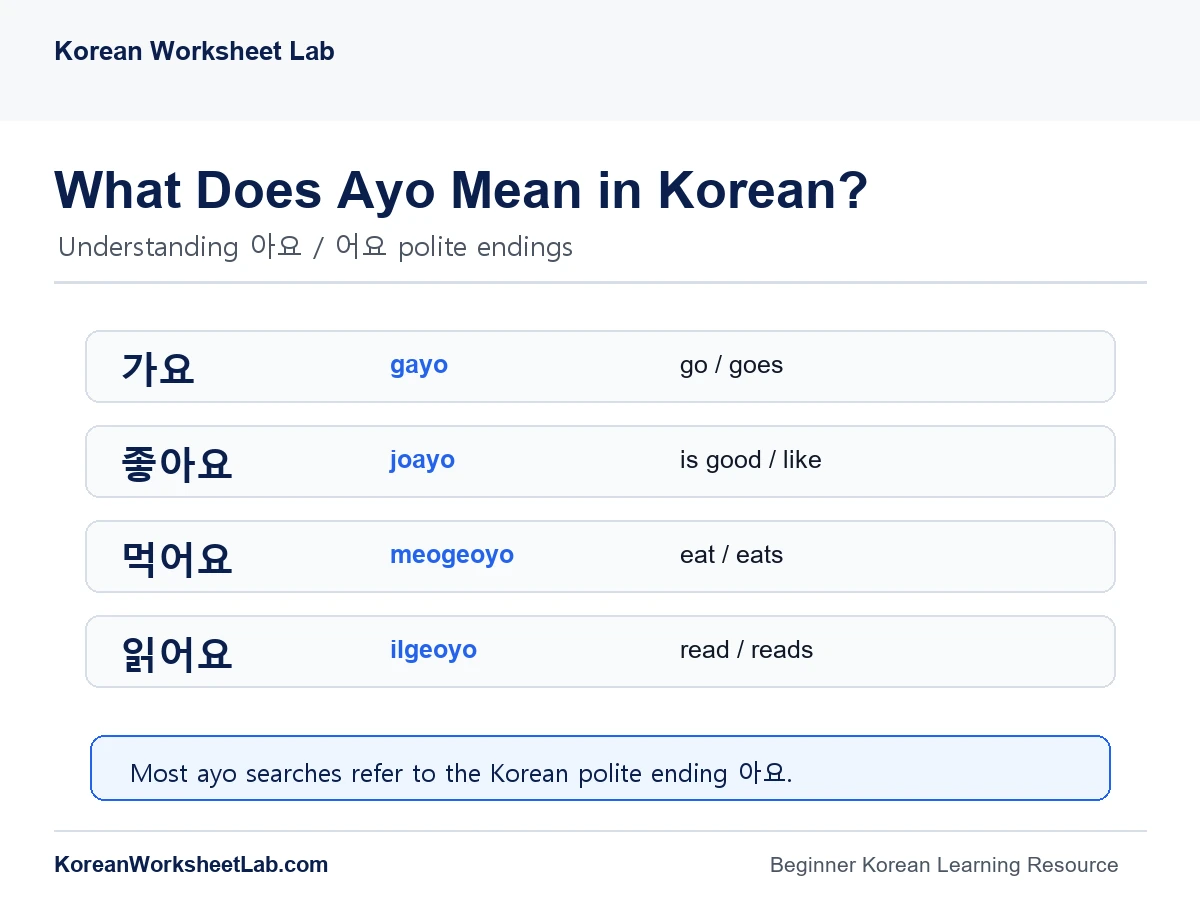
Learn why learners hear ayo in Korean, how it relates to the polite endings 아요 and 어요, and how beginners should understand it.
Read guide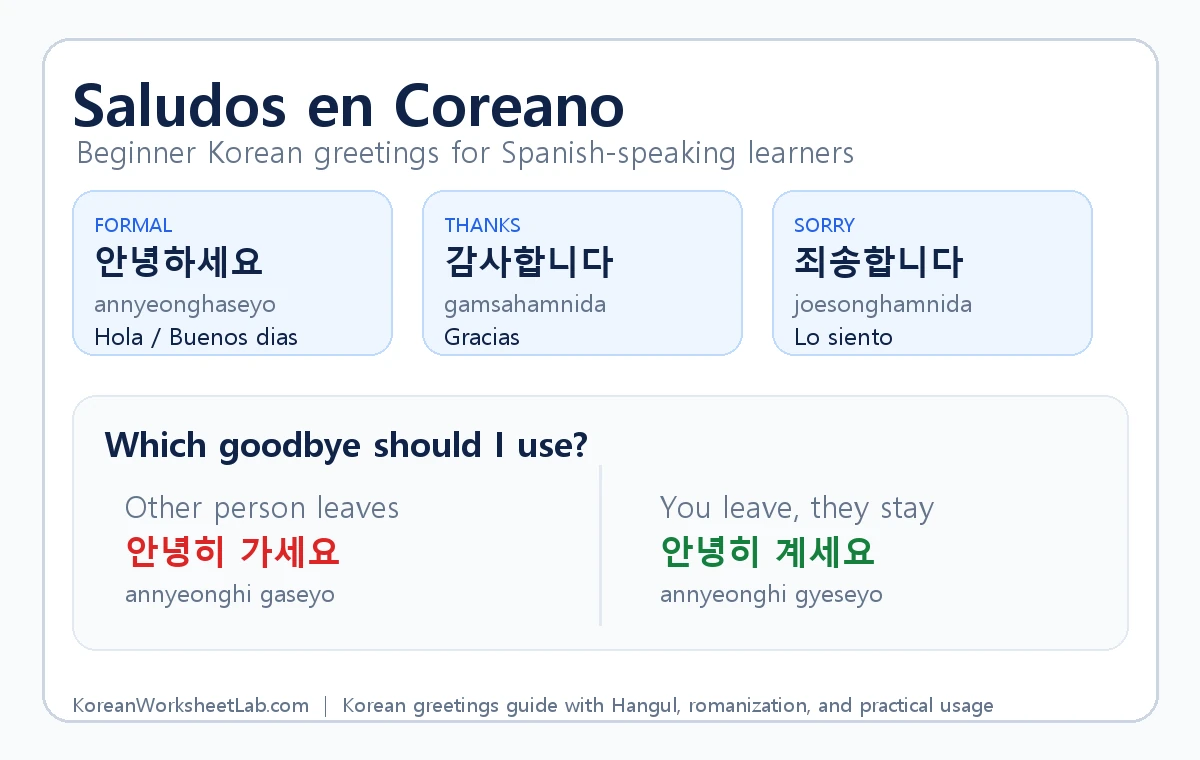
Aprende saludos en coreano con Hangul, pronunciacion, usos formales e informales, ejemplos, errores comunes y practica clara para principiantes.
Read guide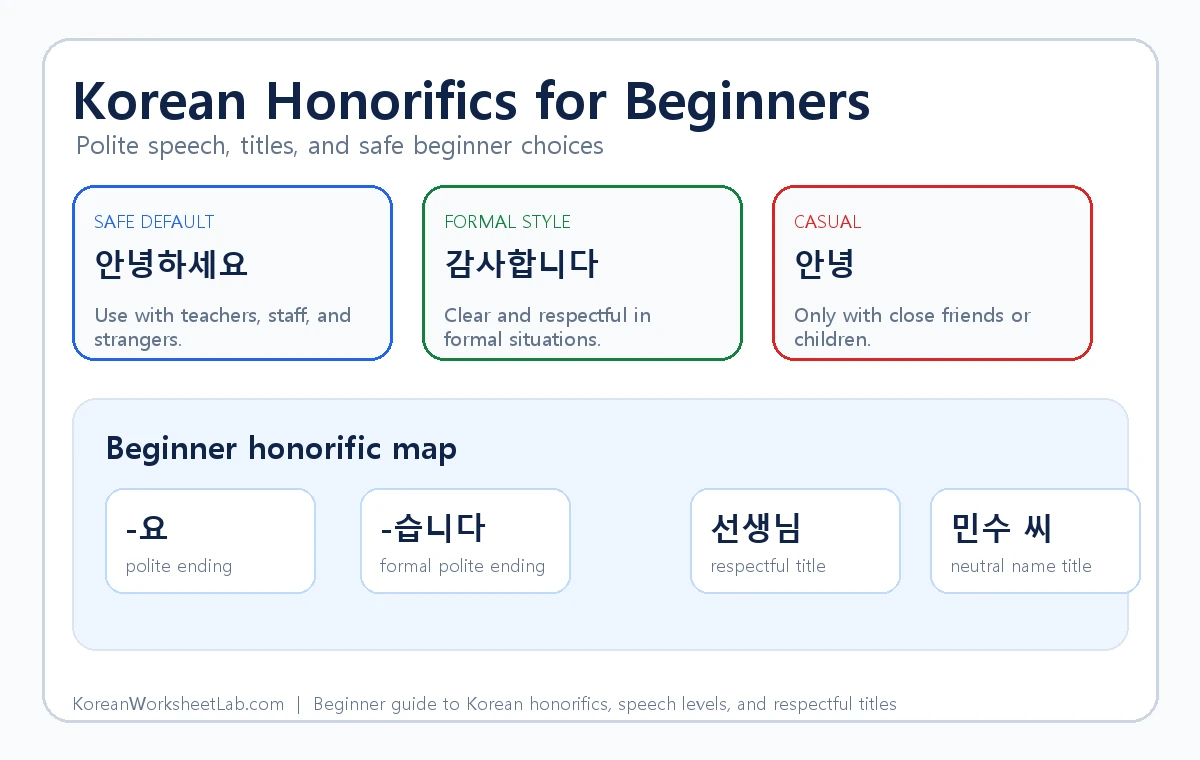
Learn Korean honorifics for beginners with simple rules for -yo, -seumnida, -nim, -ssi, titles, polite speech, examples, mistakes, and practice.
Read guide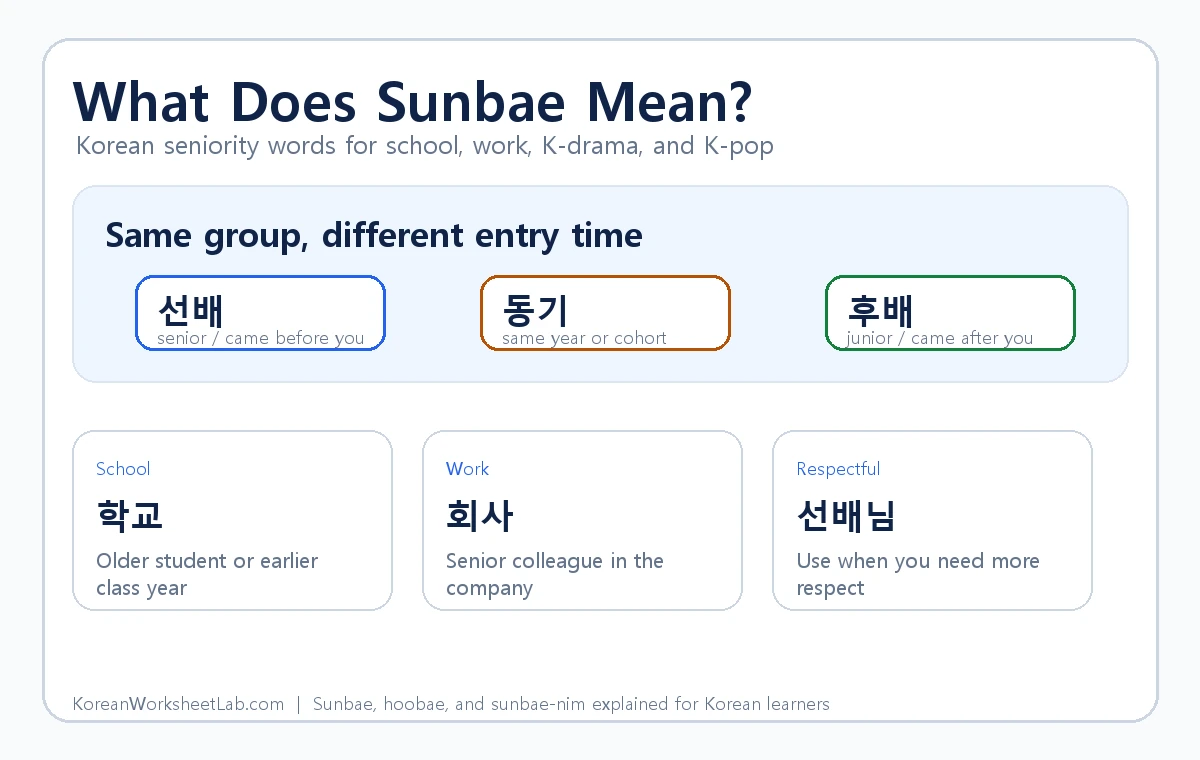
Learn what sunbae means in Korean, how it differs from hoobae, when to use sunbae-nim, and common school, work, K-drama, and K-pop mistakes.
Read guide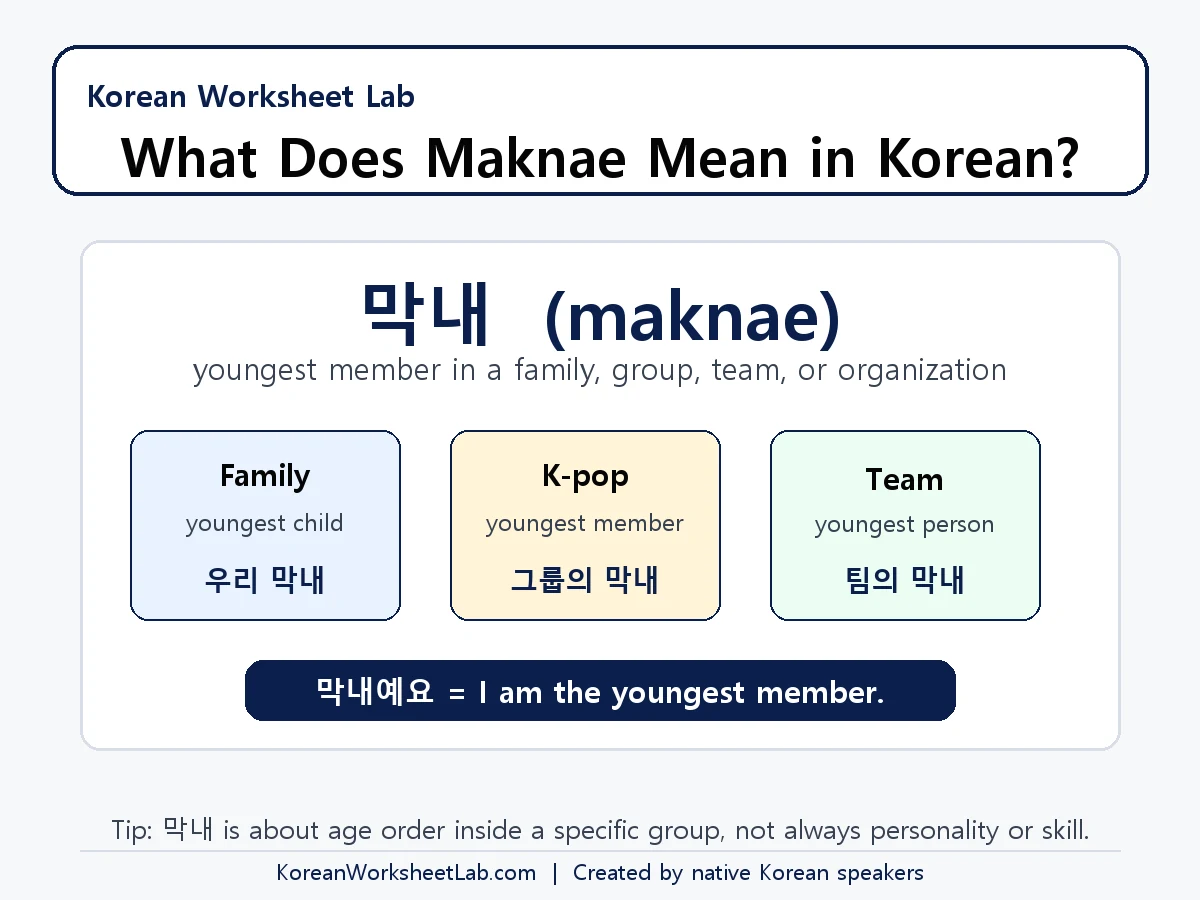
Learn what maknae means in Korean, how it is used in K-pop, families, teams, and daily speech, with examples and practice for beginners.
Read guide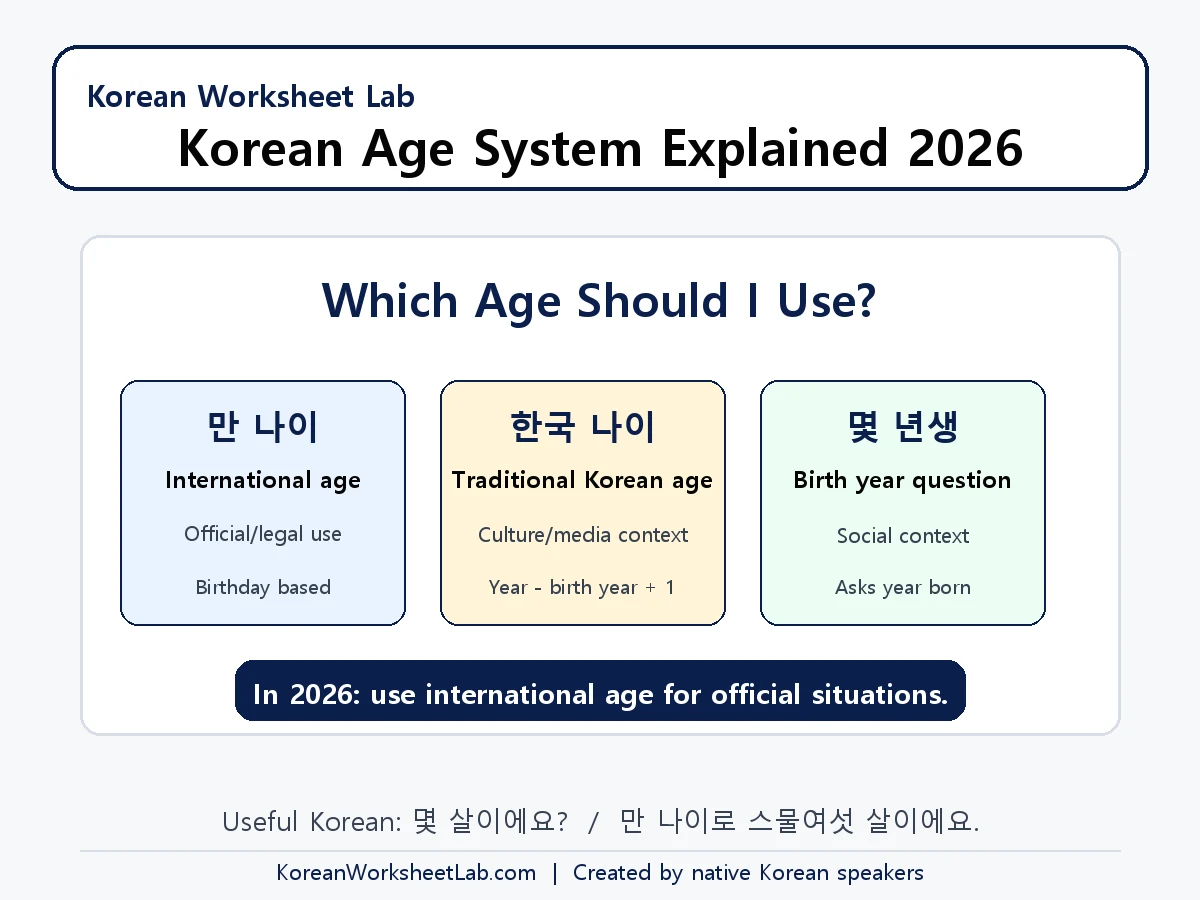
Learn how Korean age works in 2026, what changed after the 2023 law, and when Koreans still use age, birth year, and polite speech in daily life.
Read guide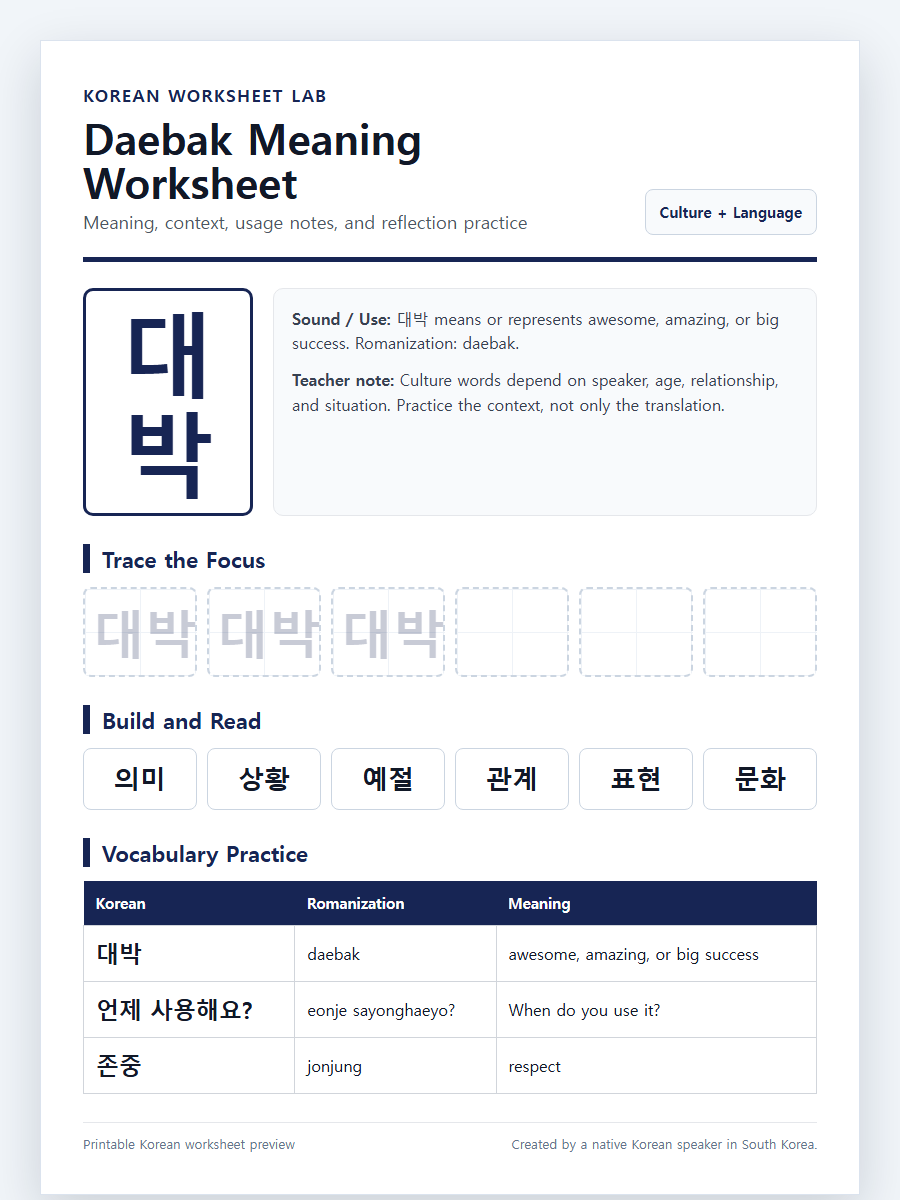
Learn what daebak means in Korean, when Koreans use 대박, when not to use it, and how to understand it in K-dramas, K-pop, and daily speech.
Read guide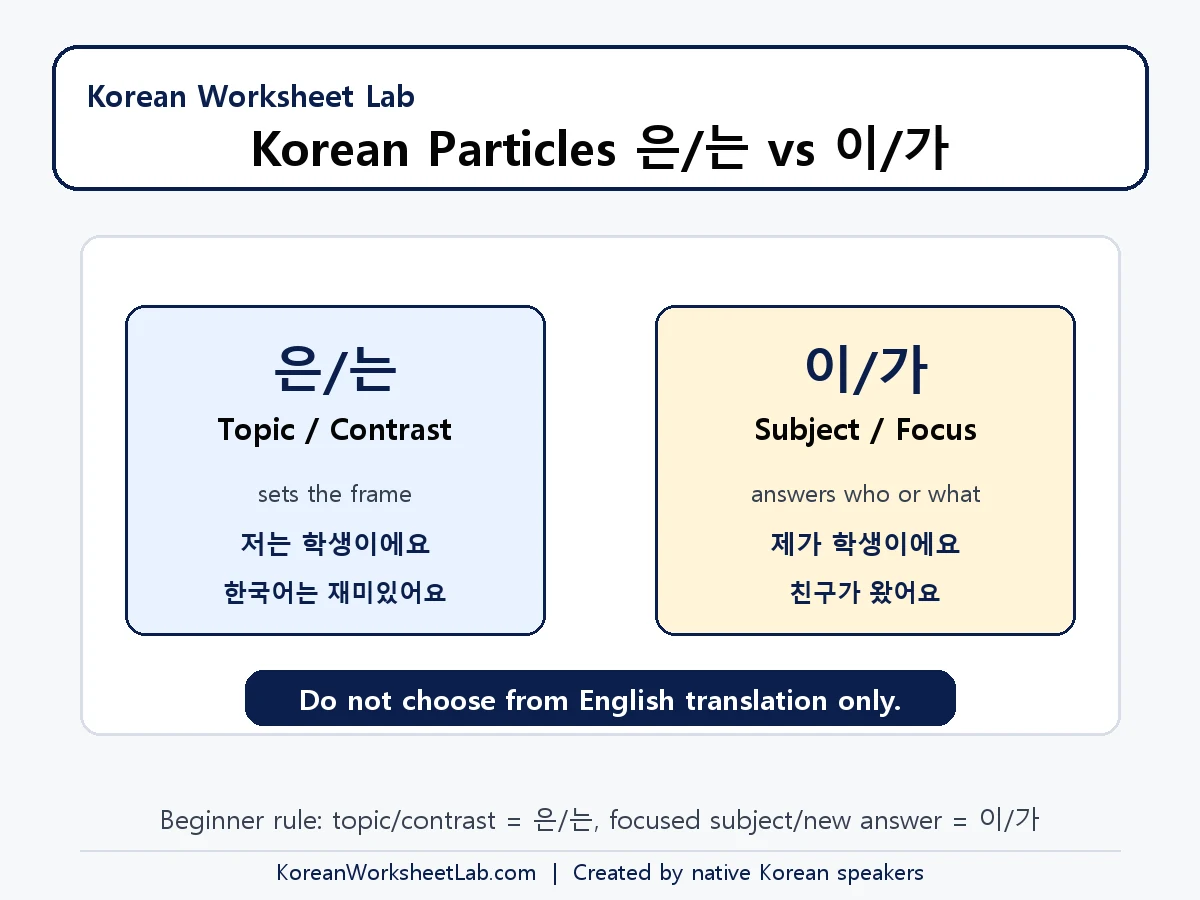
Learn the difference between Korean particles 은/는 and 이/가 with simple rules, natural examples, common mistakes, and beginner practice exercises.
Read guide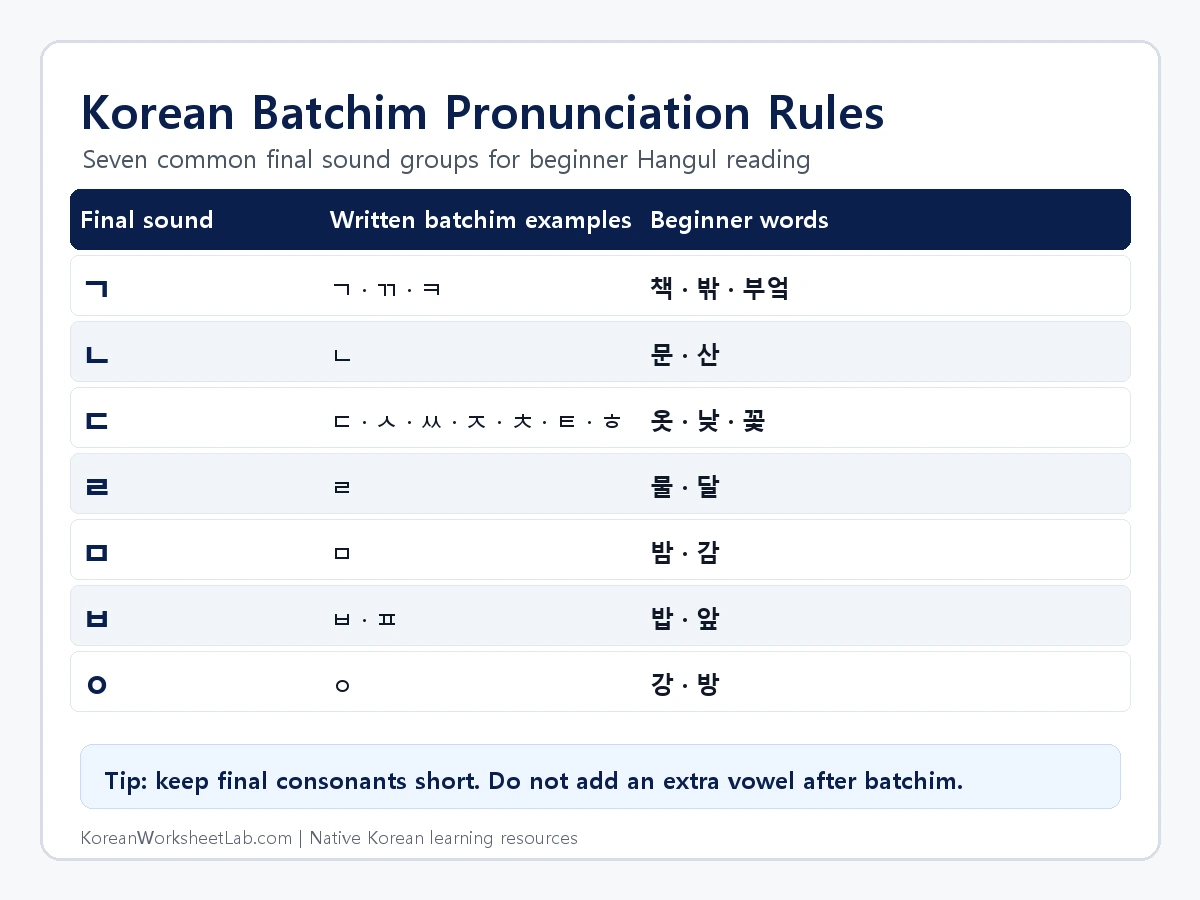
Learn Korean batchim pronunciation rules with final consonant sounds, sound groups, examples, common mistakes, and beginner reading practice tips.
Read guideLearn when to use Korean topic markers 은/는 and subject markers 이/가 with clear rules, natural examples, common mistakes, and practice.
Read guideUse this Korean final consonants chart to learn the 7 batchim sound groups, example words, pronunciation notes, common mistakes, and practice.
Read guide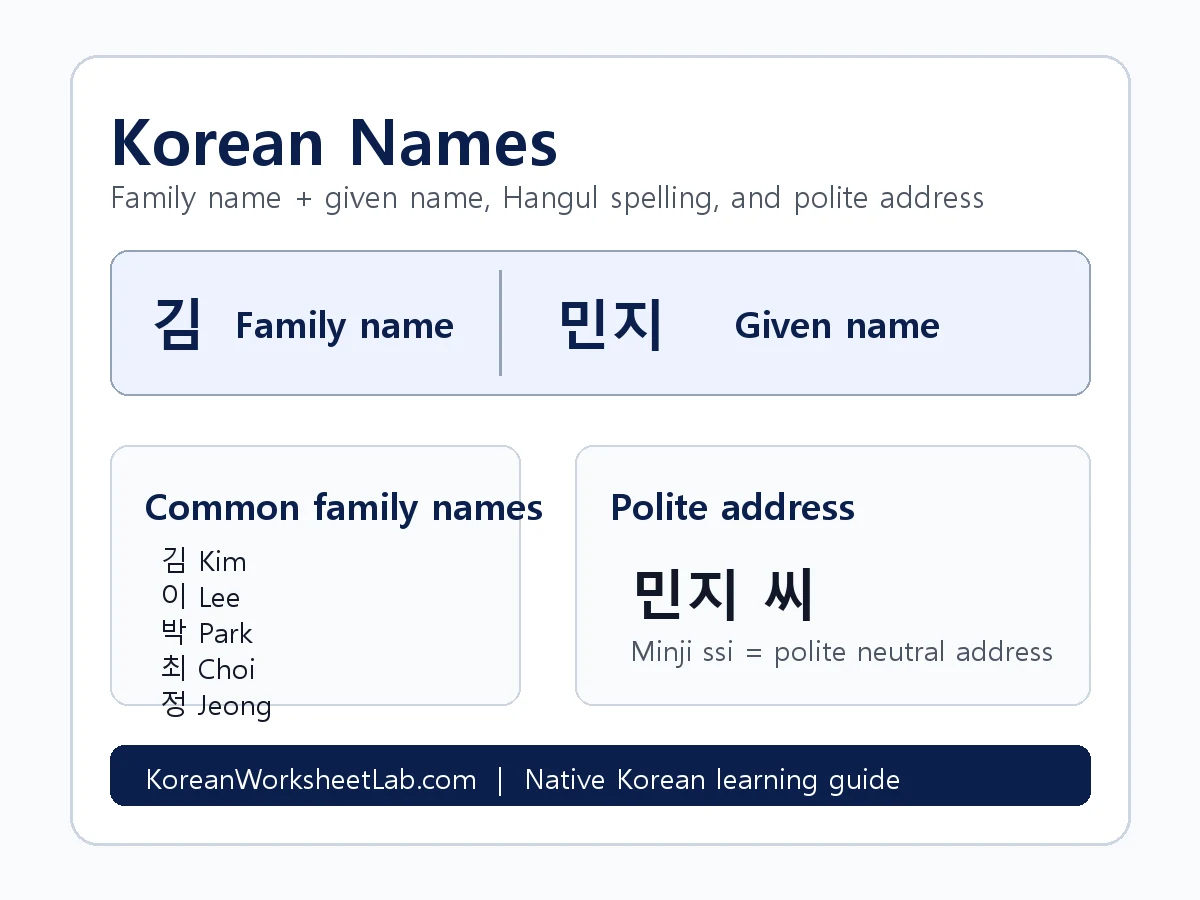
Learn how Korean names work, including family names, given names, Hangul spelling, hanja meaning, and polite ways to address people.
Read guide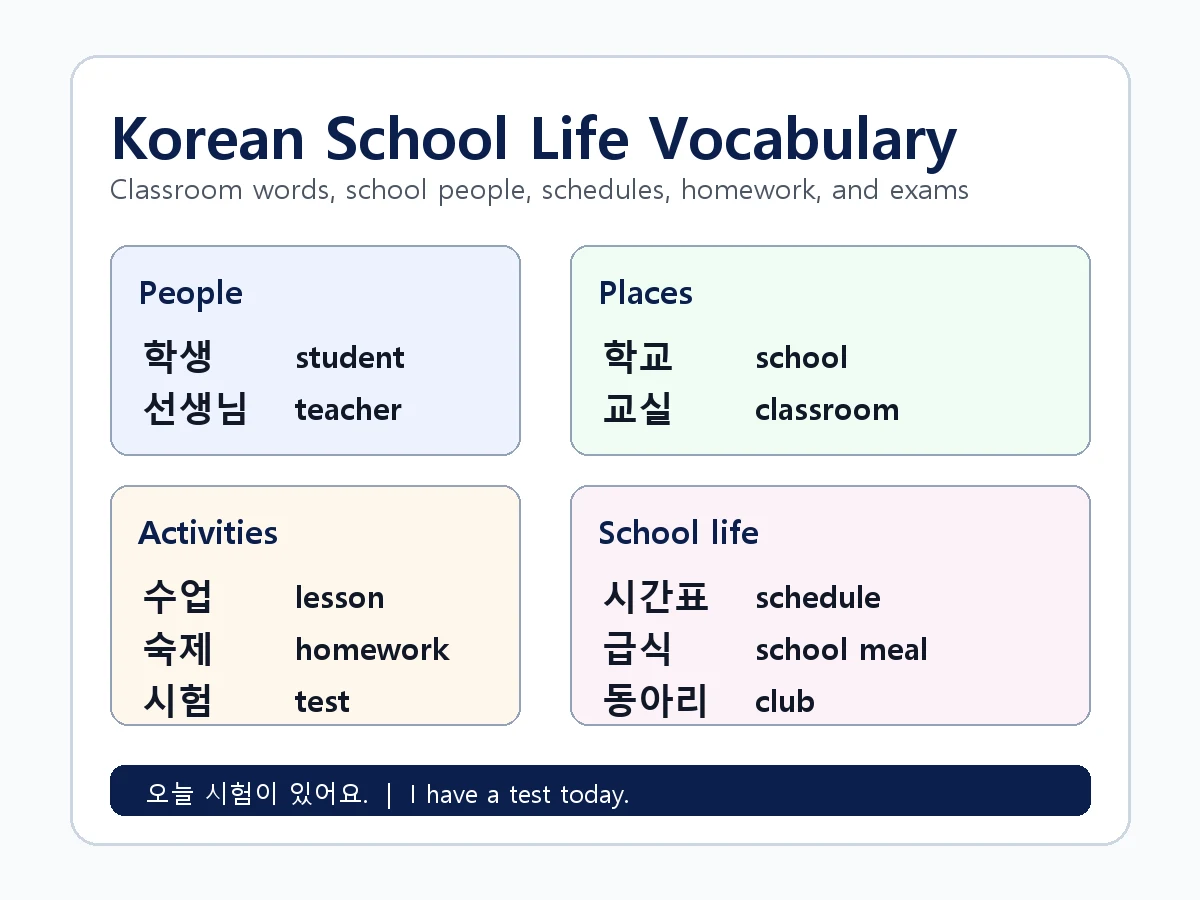
Learn Korean school life vocabulary with Hangul, romanization, English meanings, classroom examples, common mistakes, and study practice.
Read guide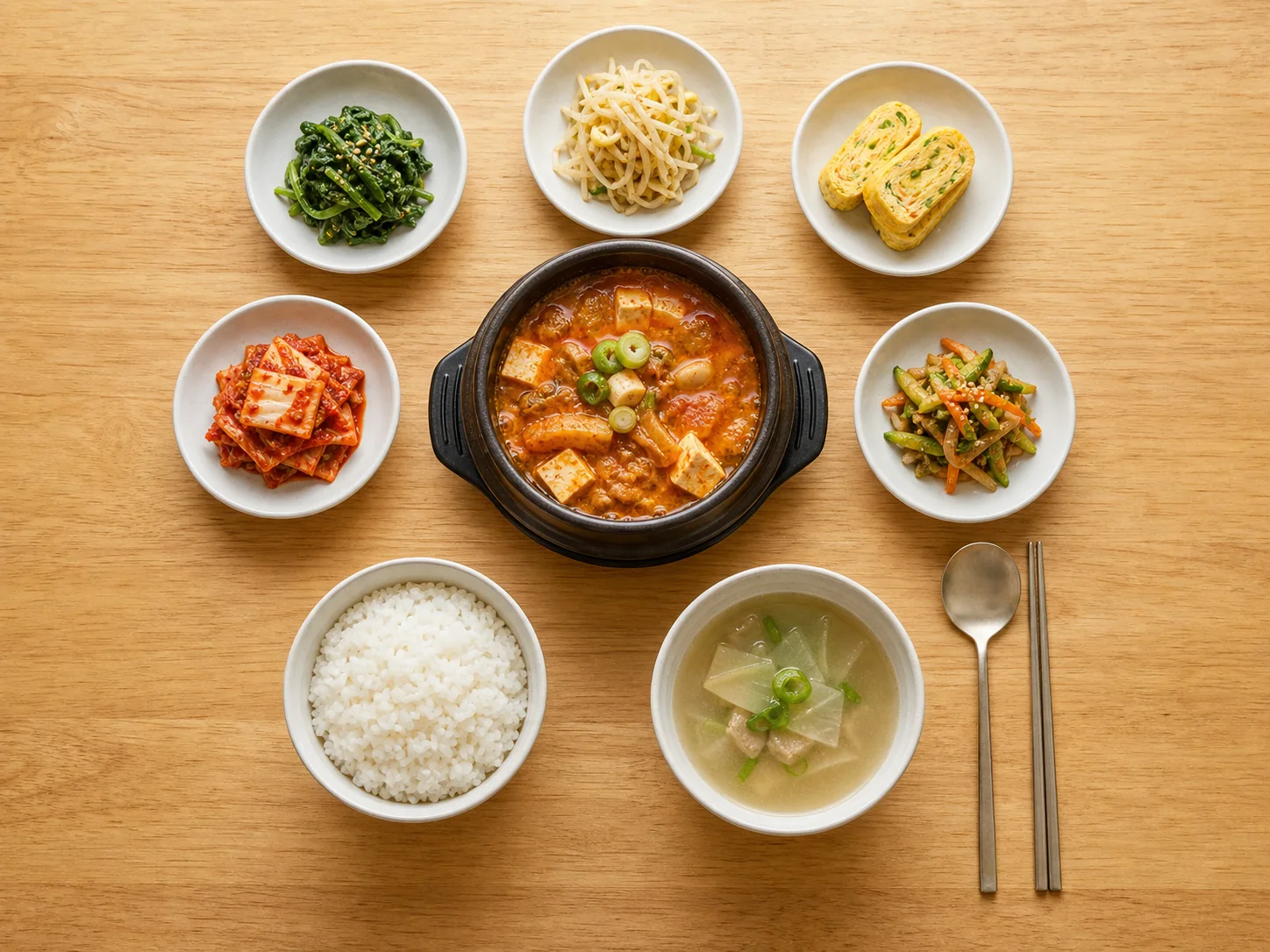
Learn Korean food culture vocabulary through a real table setting: 밥, 국, 찌개, 반찬, dining expressions, common mistakes, and guided practice.
Read guide
Learn Korean etiquette for beginners: polite speech, greetings, two-handed gestures, shoes, dining manners, public spaces, mistakes, and practice.
Read guide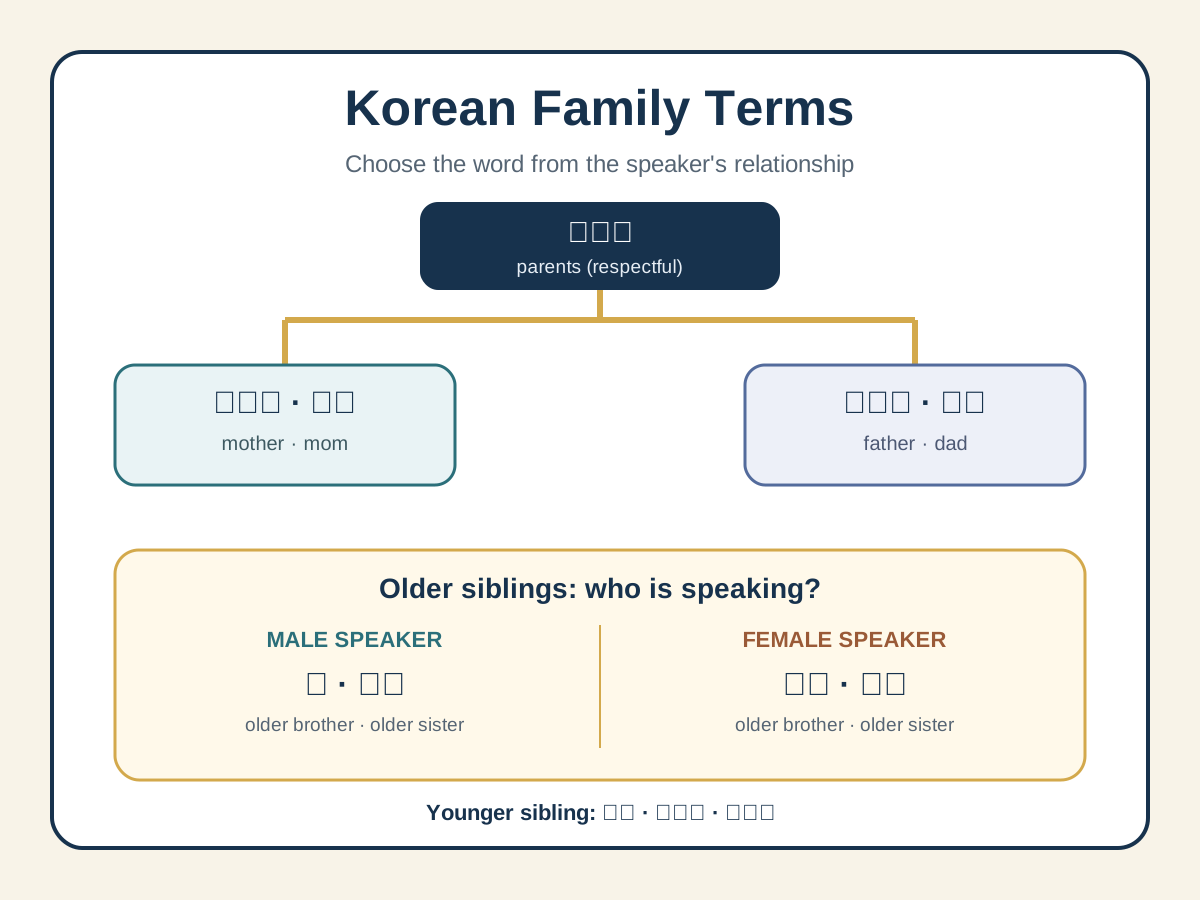
Learn Korean family terms for parents, siblings, and relatives, including how speaker gender, age, respect, and real-life address change each word.
Read guide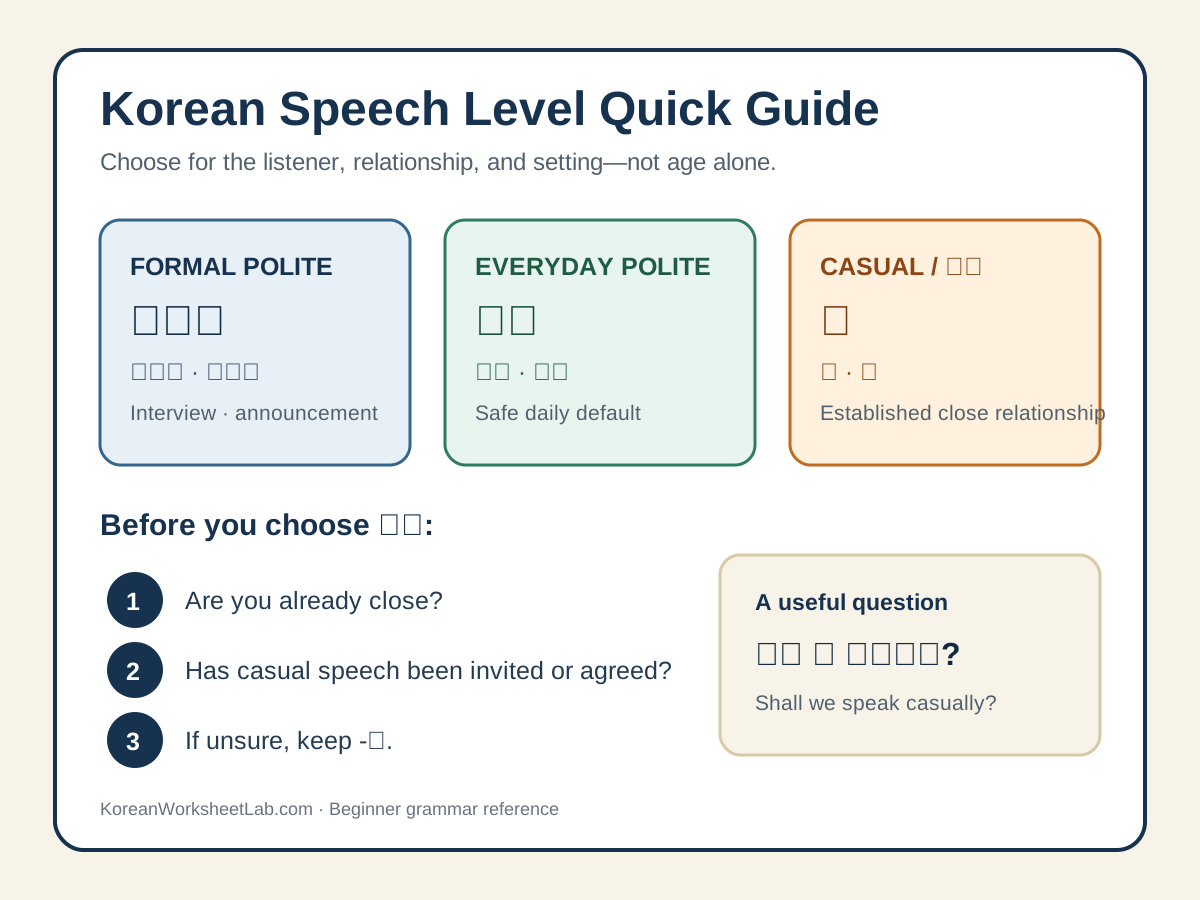
Learn when to use Korean polite speech or casual speech, how -요, -습니다, and 반말 differ, and how to switch levels naturally without sounding rude.
Read guide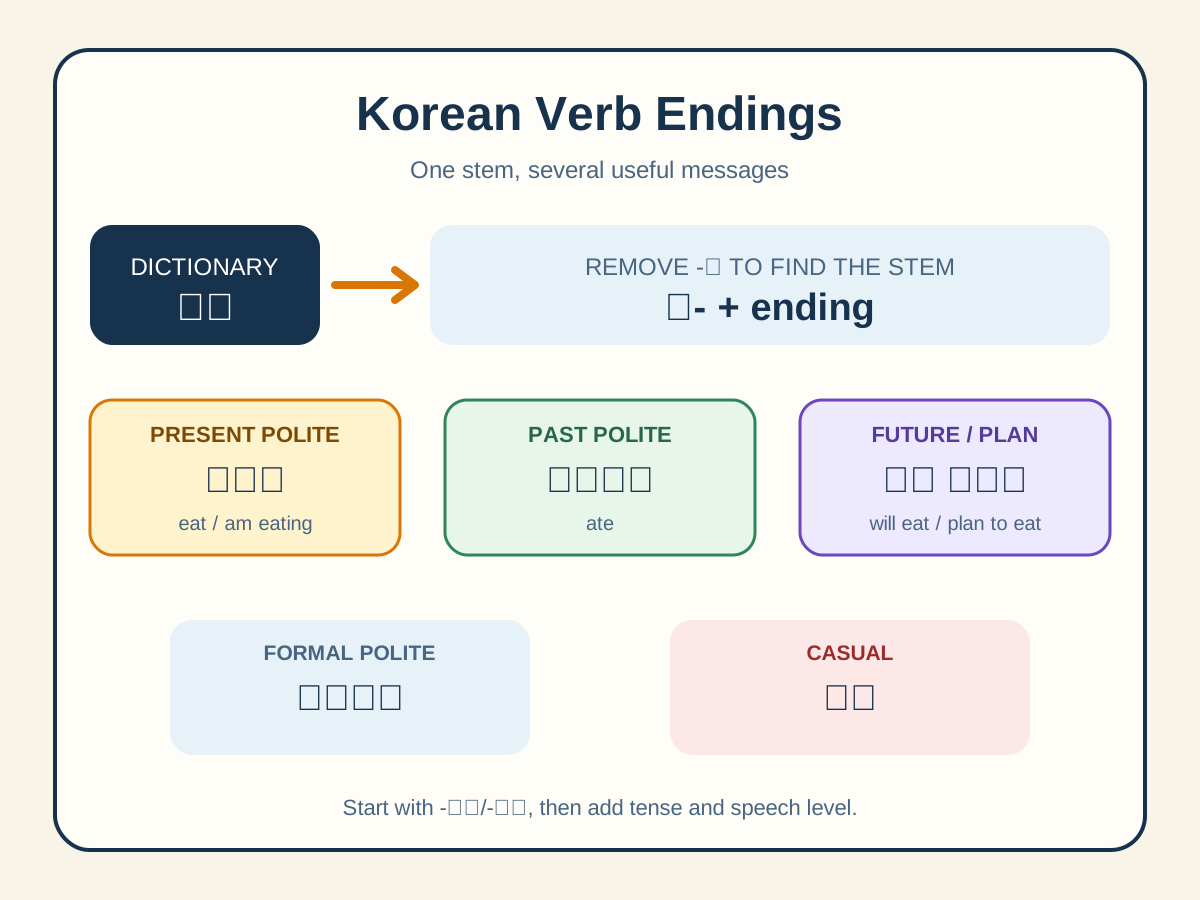
Learn essential Korean verb endings for present, past, and future tense, plus polite, formal, and casual speech with clear rules and examples.
Read guide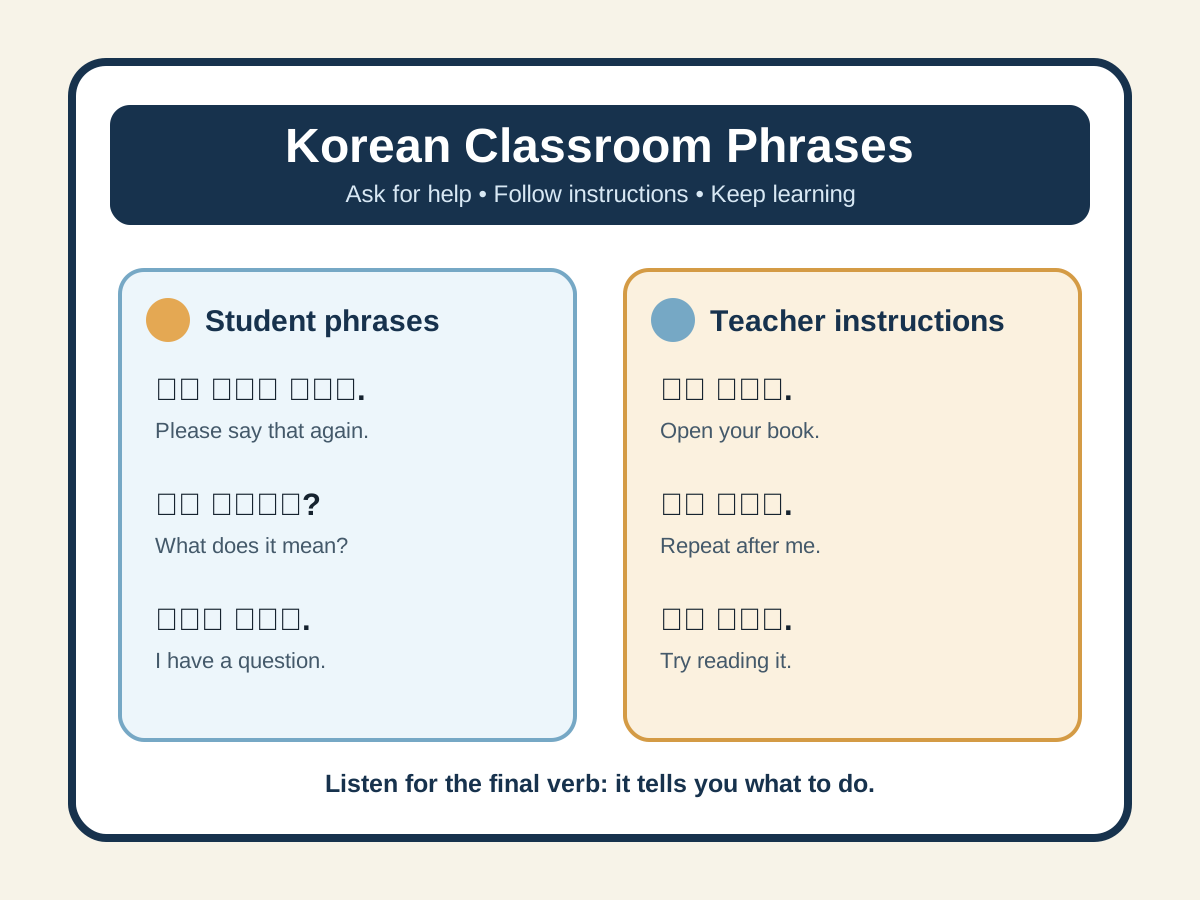
Learn useful Korean classroom phrases for asking questions, requesting repetition, following teacher instructions, and participating politely in class.
Read guide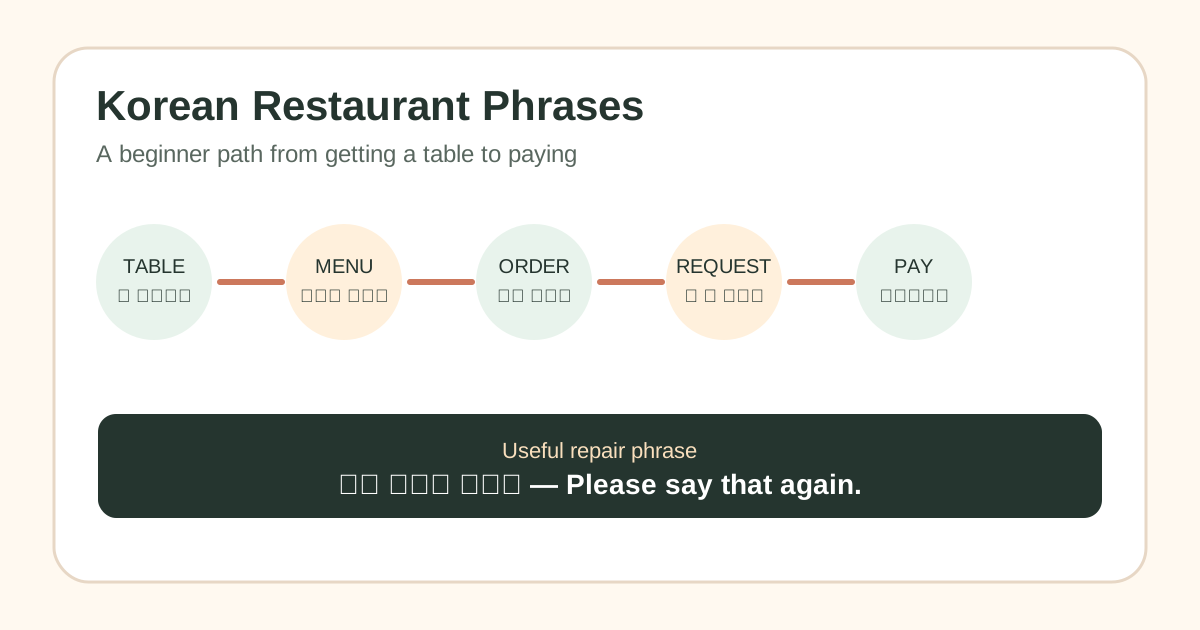
Learn Korean restaurant phrases for getting a table, reading menus, ordering food, handling allergies, asking for extras, and paying politely.
Read guide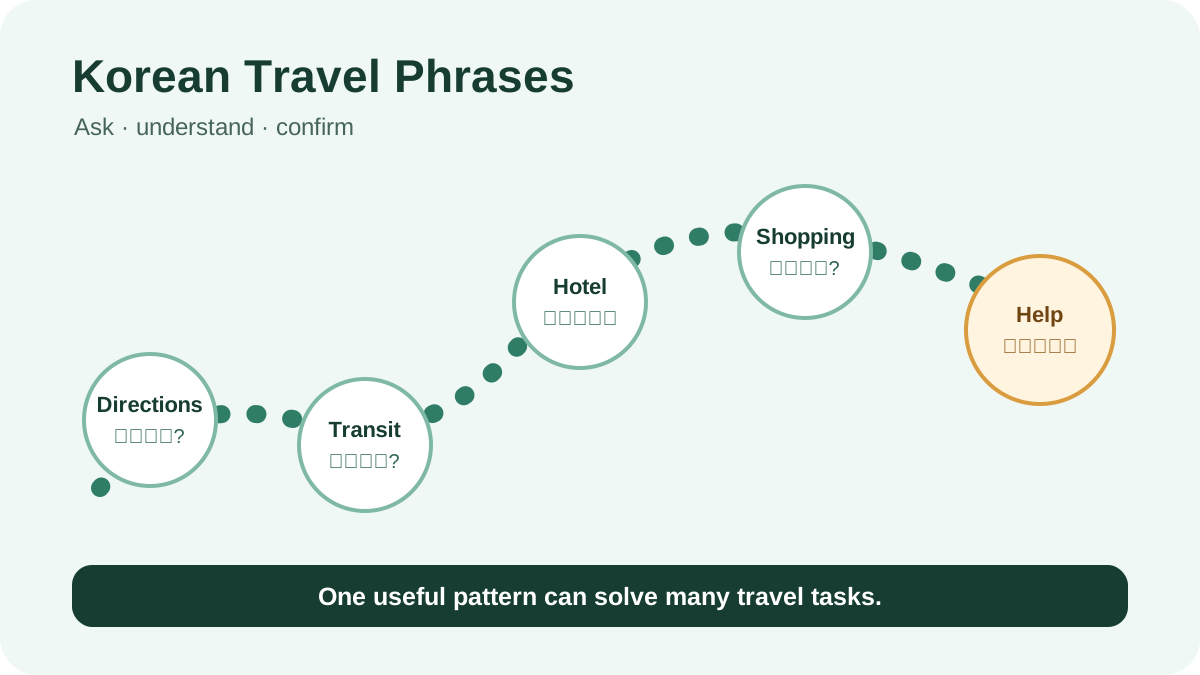
Learn practical Korean travel phrases for directions, transit, hotels, shopping, communication problems, and emergencies, with examples and practice.
Read guide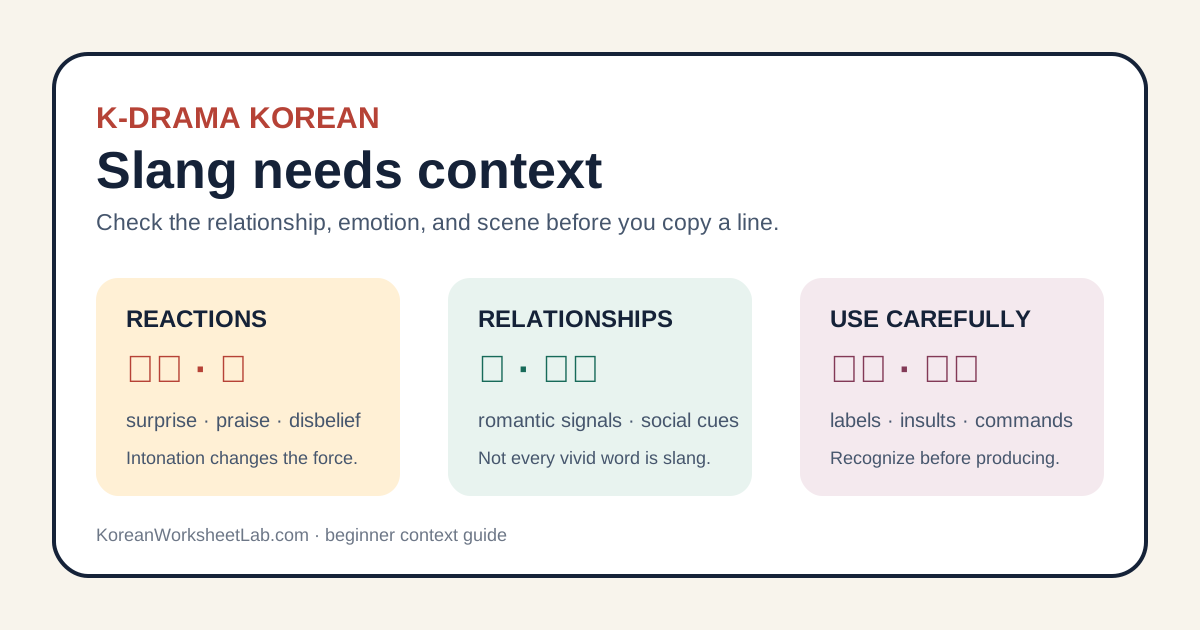
Learn Korean slang heard in K-dramas with accurate meanings, tone, current-use notes, natural examples, common mistakes, and a beginner practice quiz.
Read guideLearn common Korean pronunciation mistakes English speakers make, with Hangul examples, correction tips, and beginner practice.
Read guide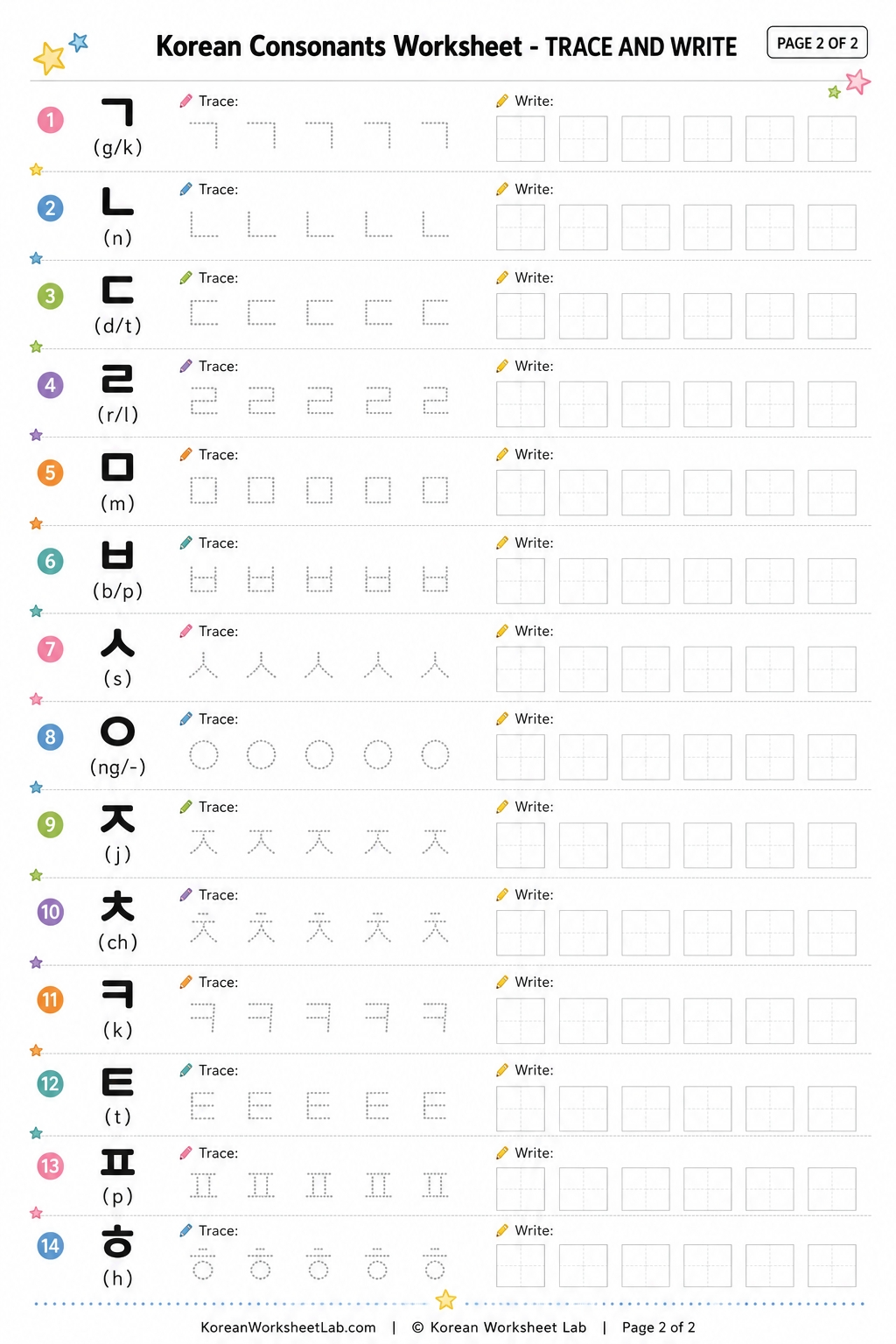
Learn Hangul in a practical order with pronunciation, syllable-building, reading, writing, and review strategies from a native Korean speaker.
Read guide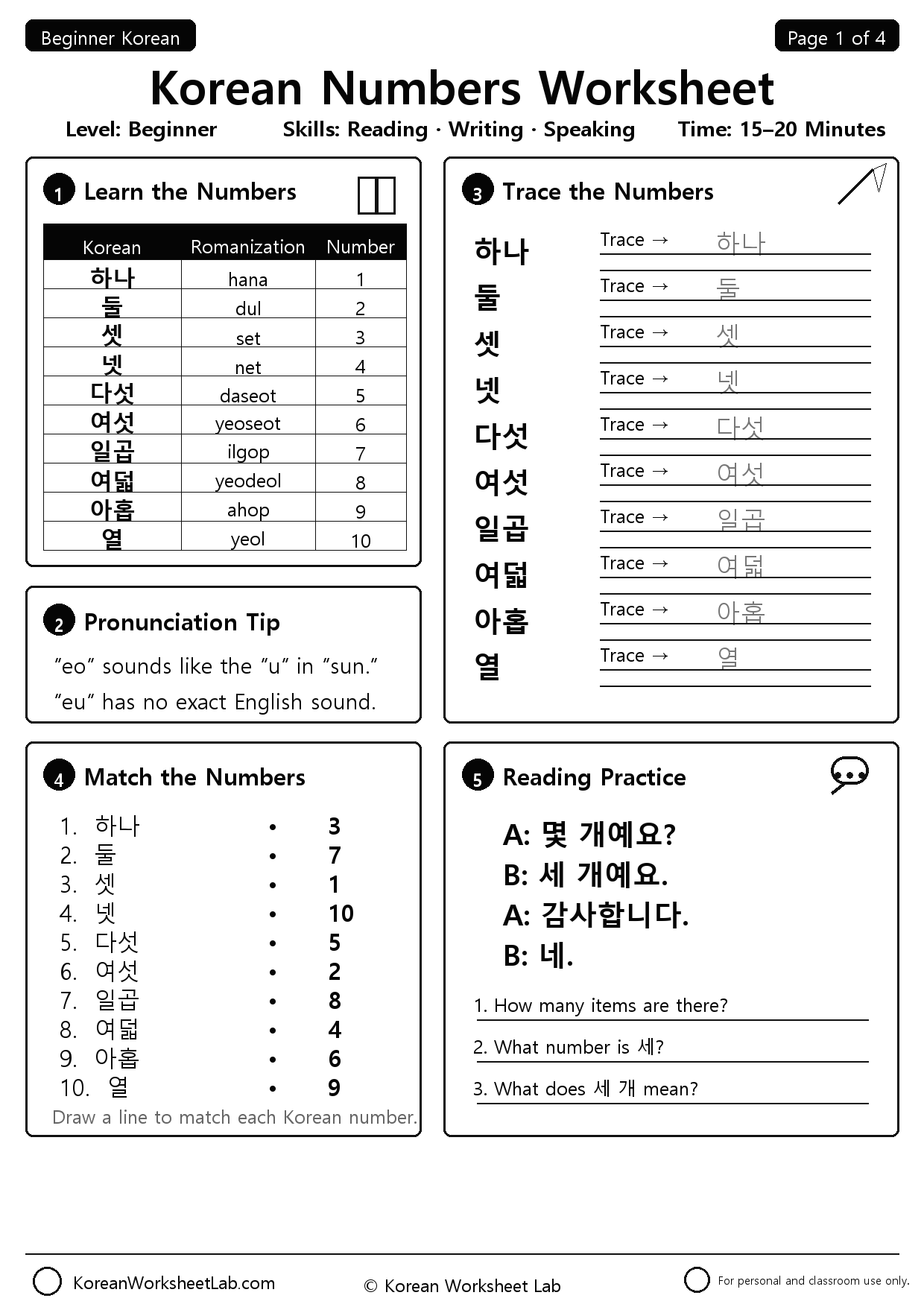
Understand when to use native and Sino-Korean numbers for age, objects, time, dates, money, phone numbers, and everyday conversation.
Read guide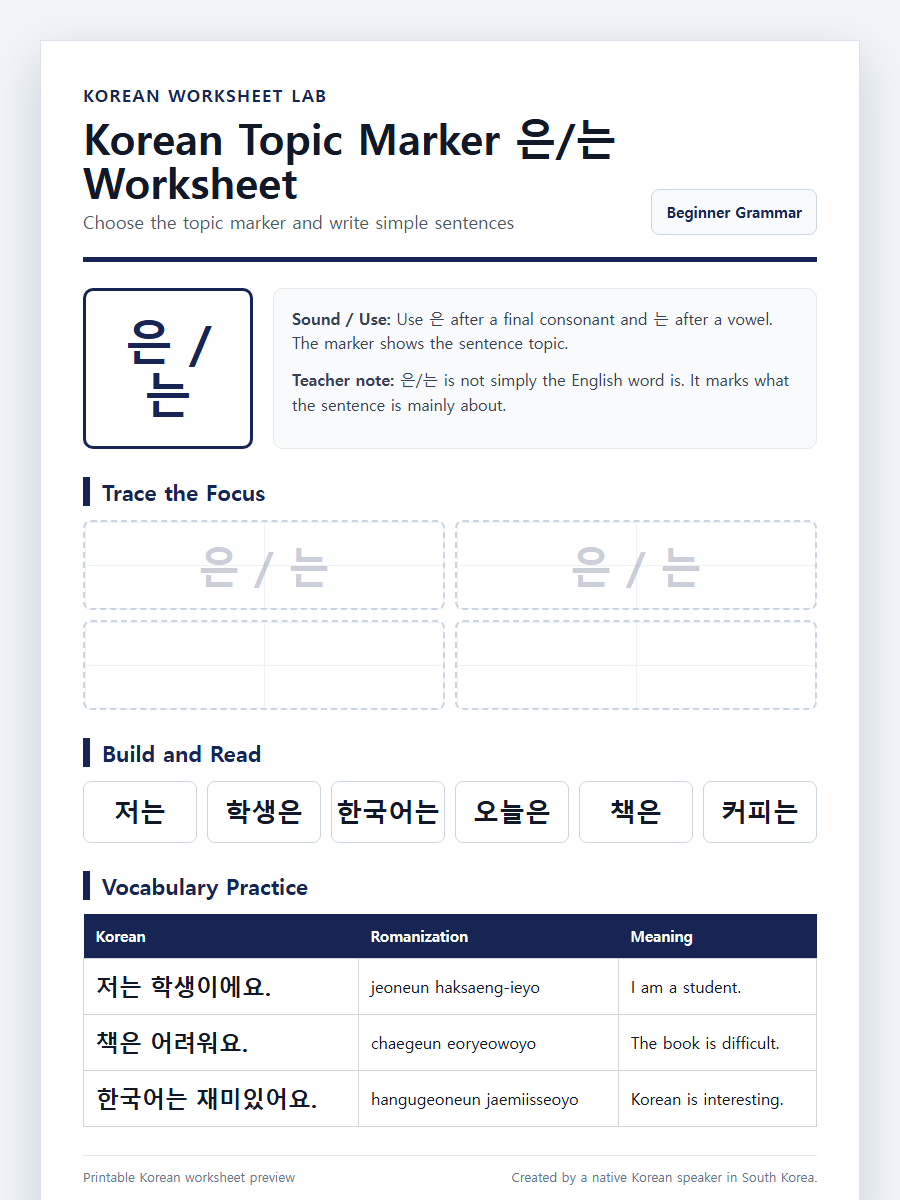
Learn basic Korean word order, particles, omitted subjects, verb endings, and natural beginner sentence patterns with clear examples.
Read guideRead a native-speaker-reviewed explanation with clear beginner examples.
Use vocabulary, grammar, pronunciation, and mistake boxes to focus your attention.
Continue to a related lesson, worksheet, reading, cheat sheet, or teacher resource.
This section organizes Korean learning materials by practical use. Instead of sending learners straight to a file, each resource points to a lesson page with an introduction, objectives, vocabulary, usage notes, a worksheet preview, and a printable PDF.
Independent learners can follow the explanations before practicing, and teachers can turn each resource into a short review task. The structure supports long-term learning and gives new learners enough context before they use a printable.
Open the explanation first, then print the worksheet after the learner understands the focus.
Return to the same topic after one or two days and repeat only the hardest section.
Turn the key vocabulary table into a quick warmup or pair activity.
Read aloud, complete the worksheet, then review the answer support section.
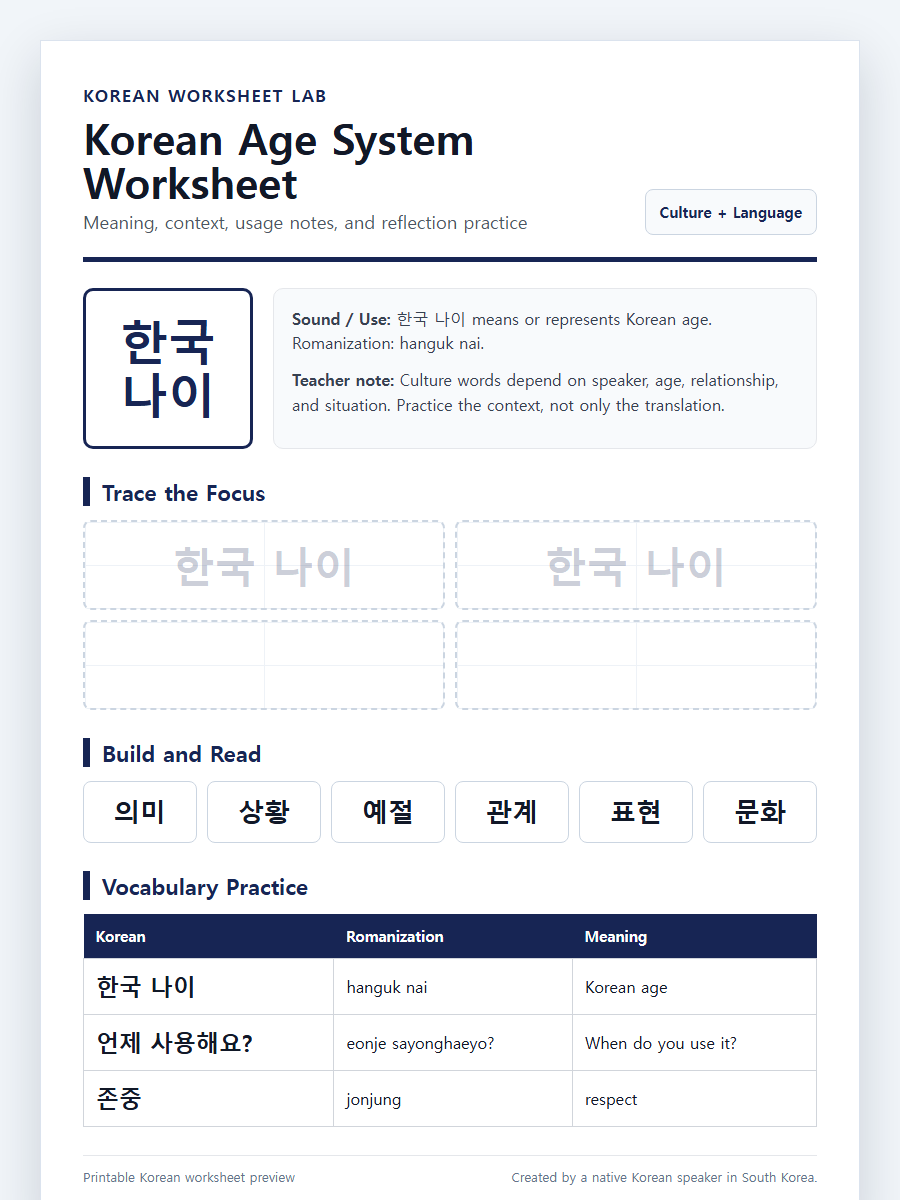
Understand how age is discussed in Korean conversations and why age can affect speech level and relationship words.
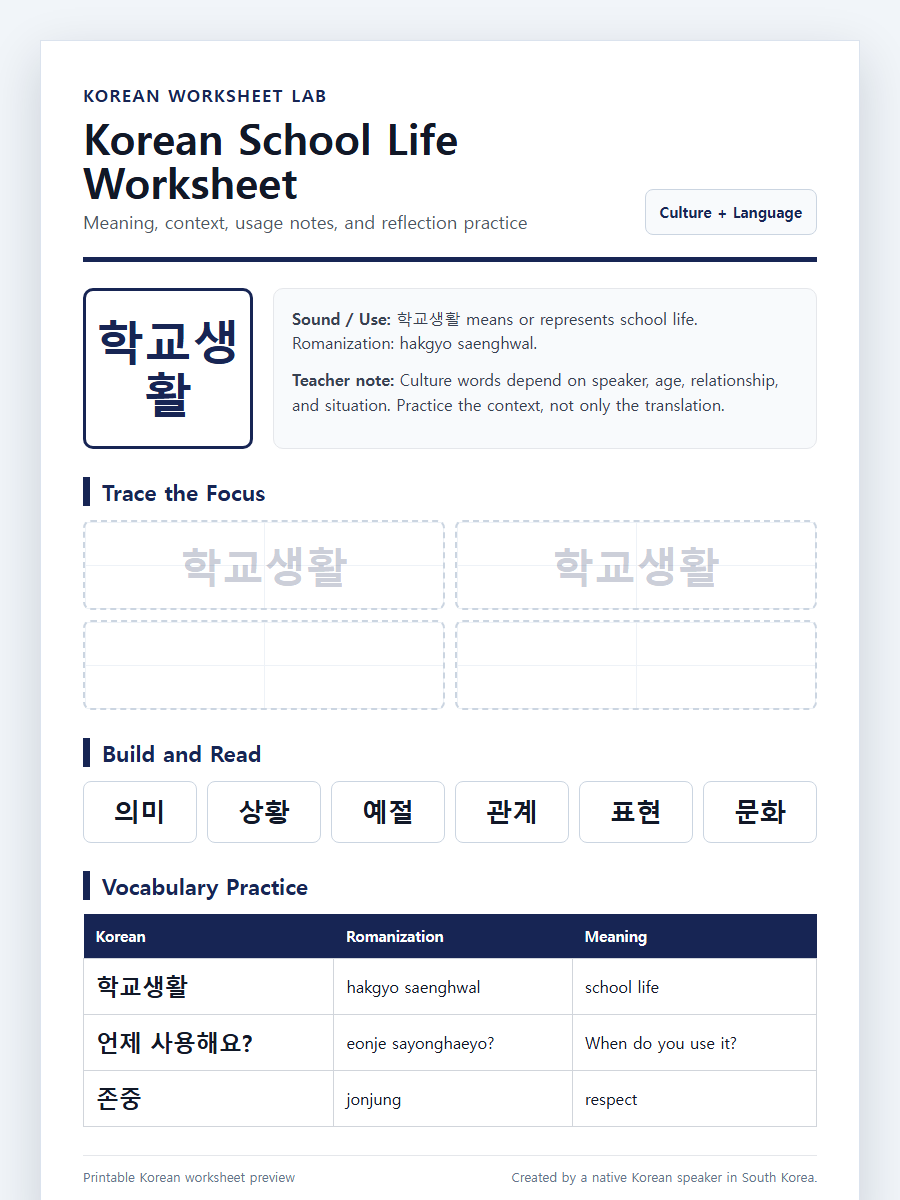
Learn what Korean school life looks like and the words learners often hear in classrooms and dramas.
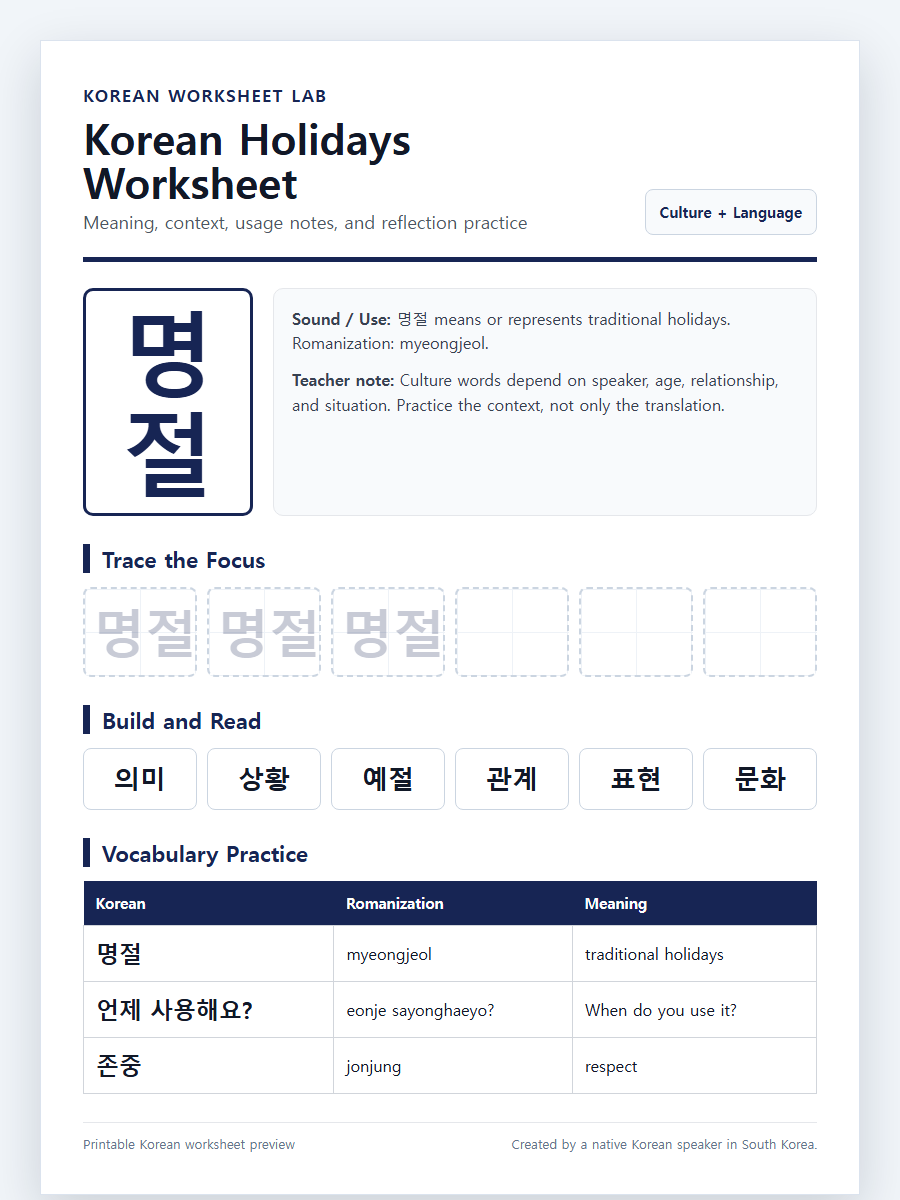
Explore major Korean holidays such as Seollal and Chuseok with vocabulary and cultural context.
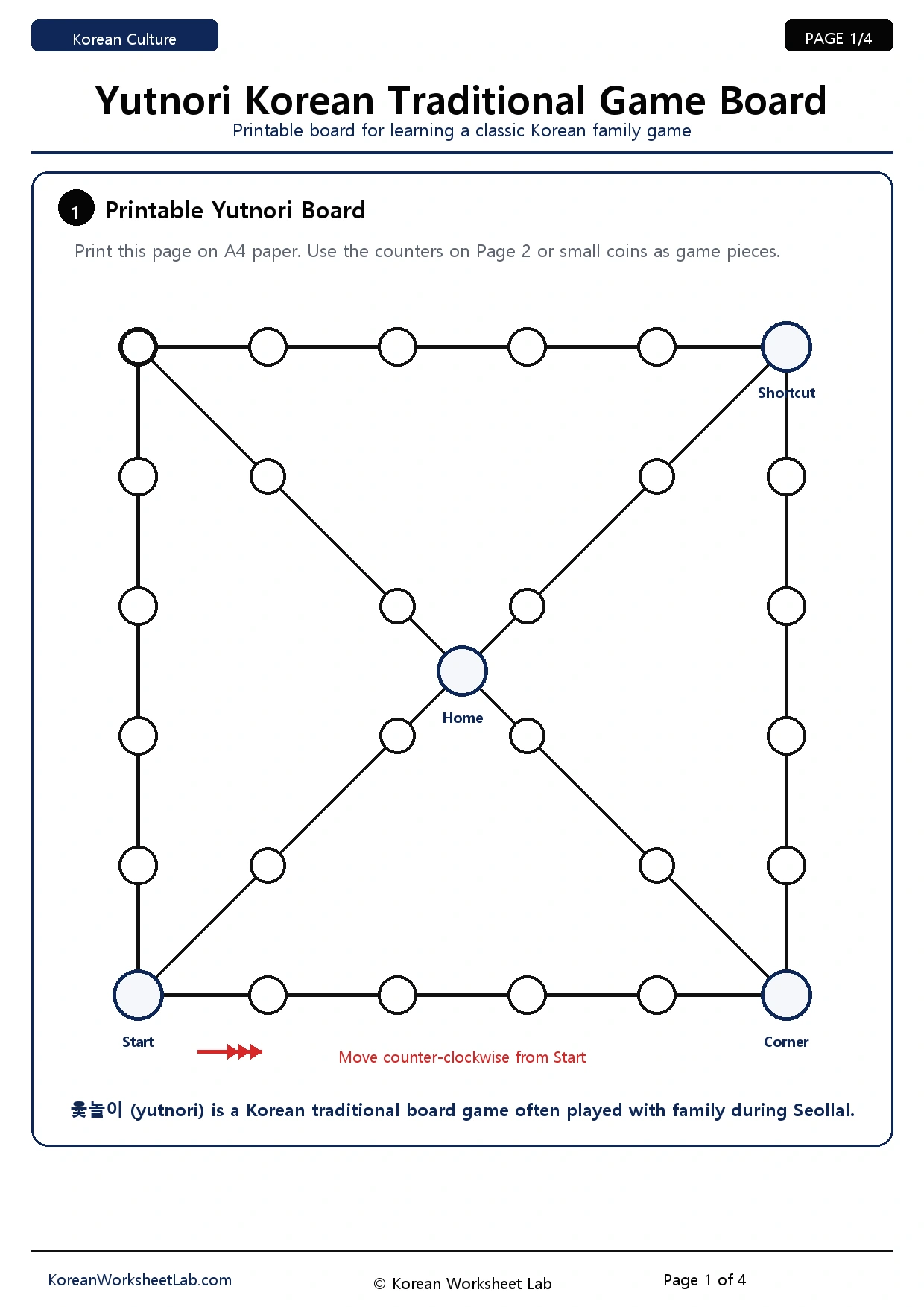 P1
P1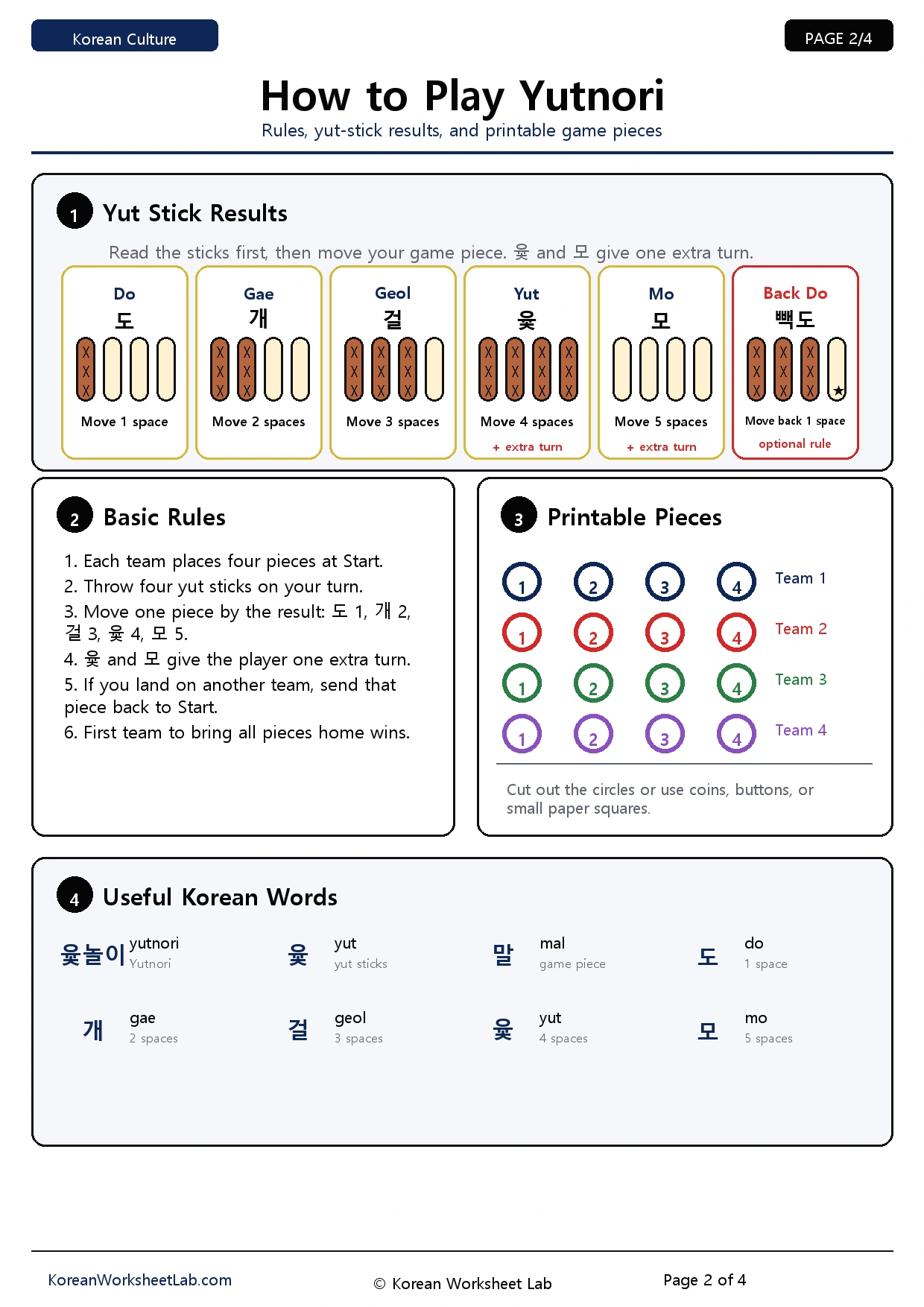 P2
P2Learn how to play yutnori, a Korean traditional board game, with a printable board, rules, game pieces, vocabulary, answer key, and teacher notes.
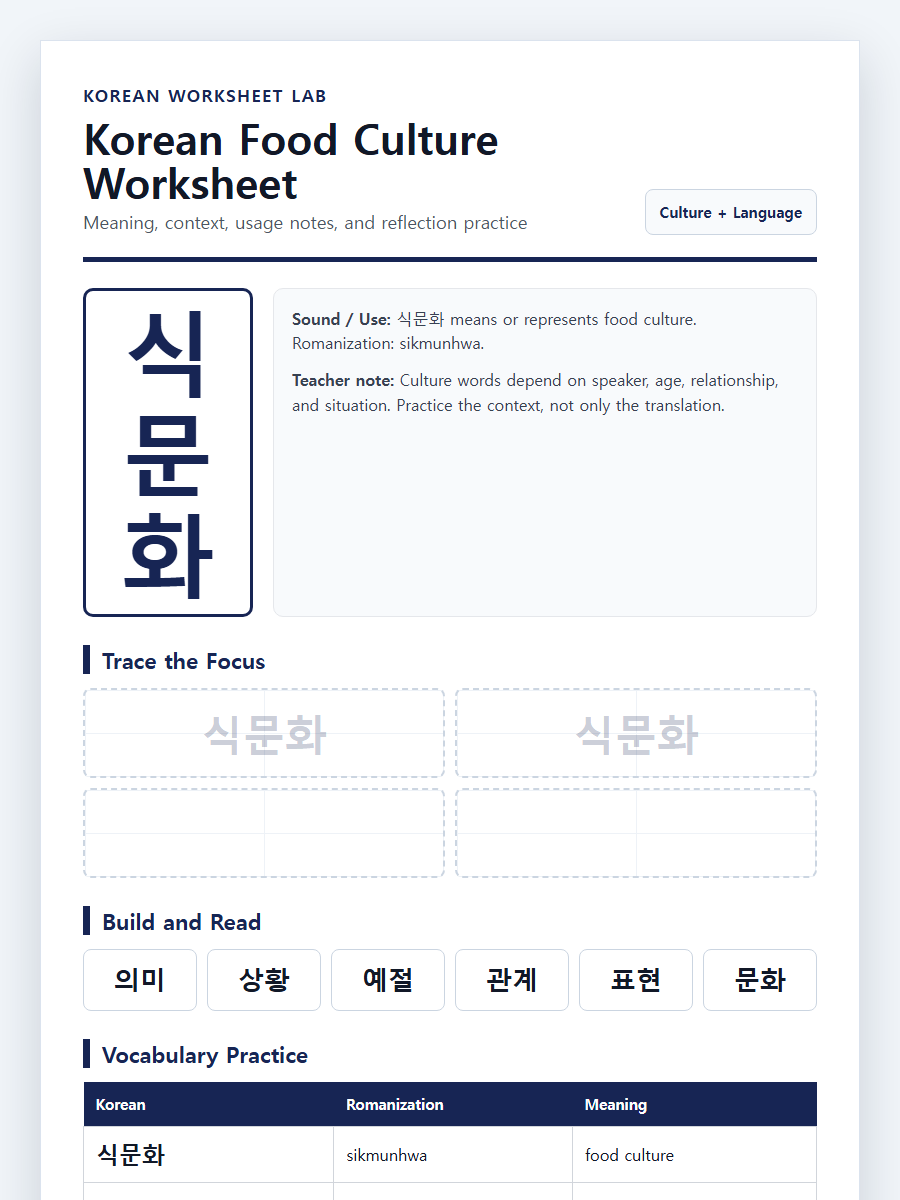
Learn Korean table habits, shared dishes, side dishes, and polite eating expressions.
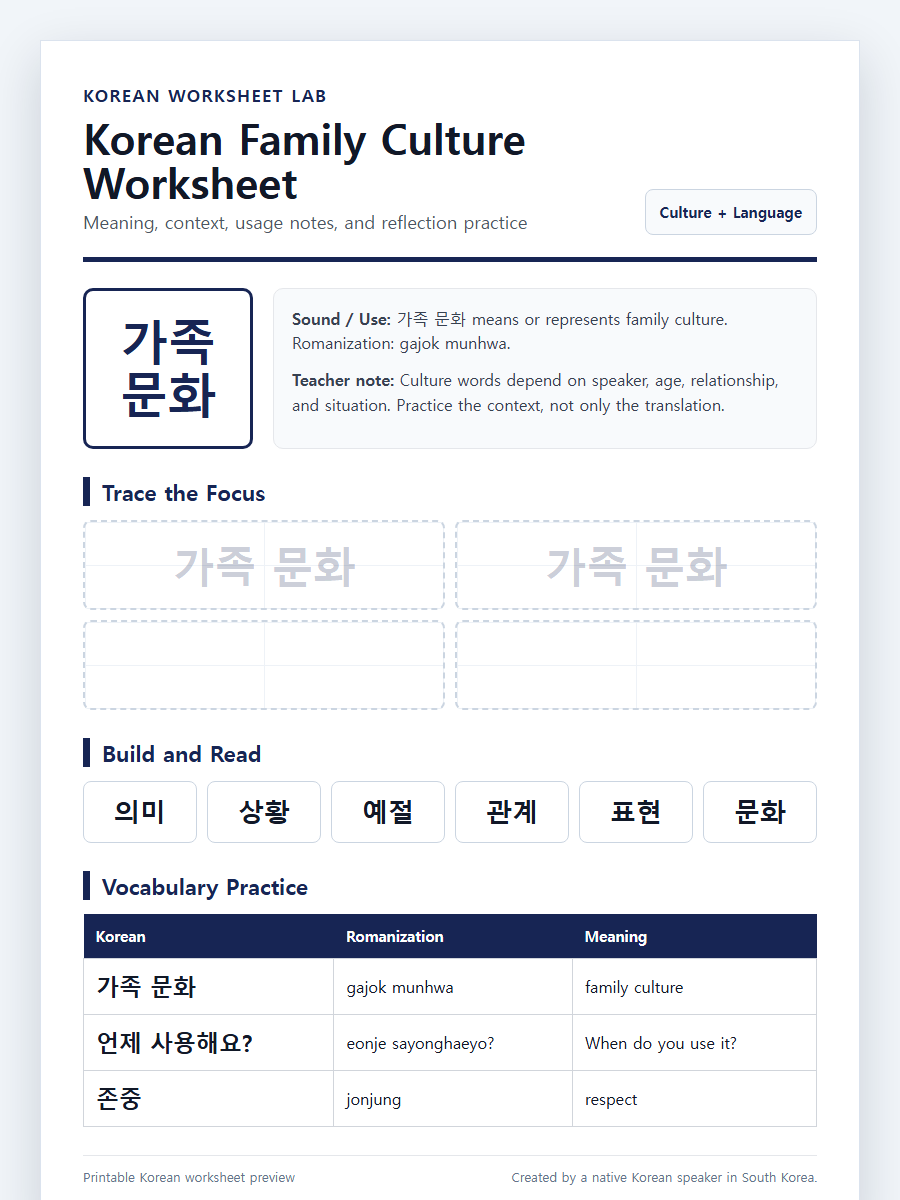
Understand Korean family language, respect, age order, and relationship terms.
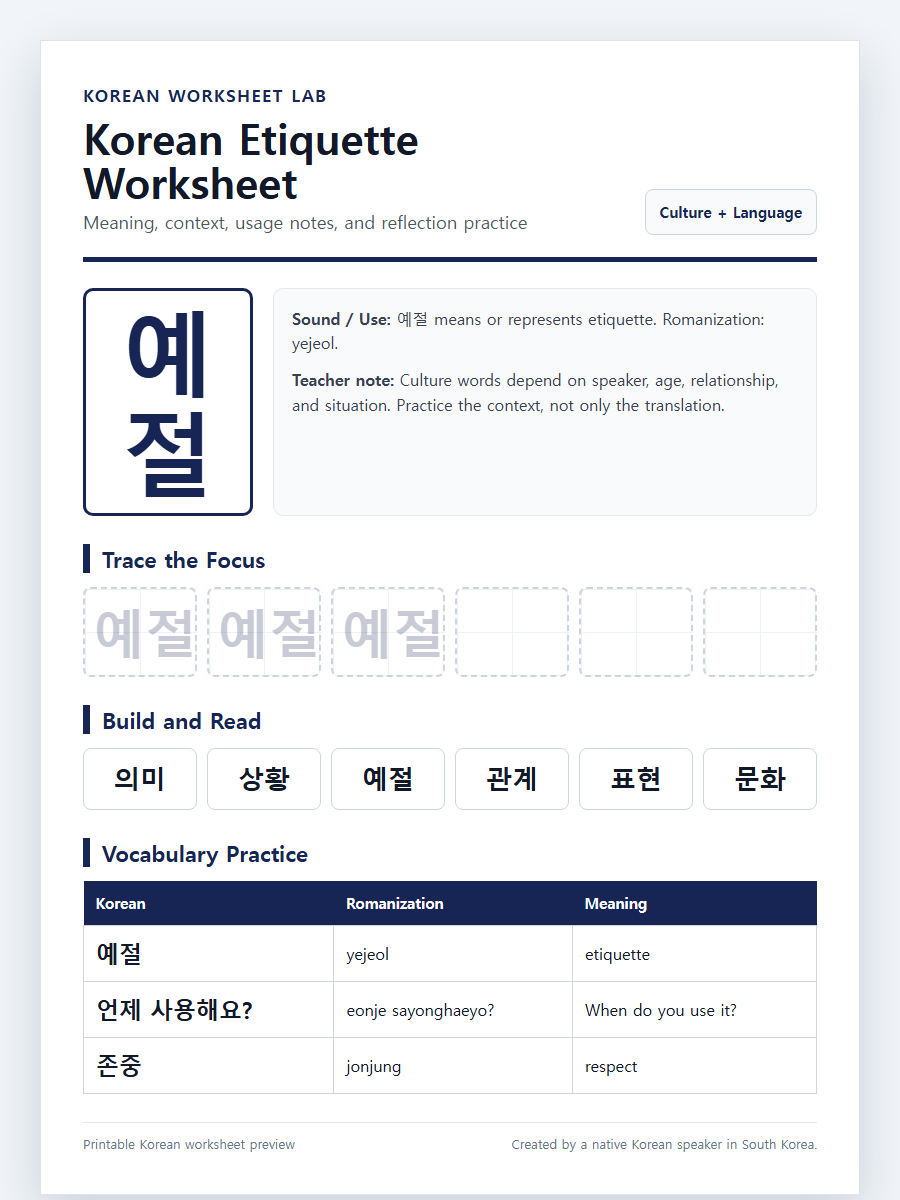
Study polite behavior for greetings, meals, gifts, public spaces, and respectful Korean communication.
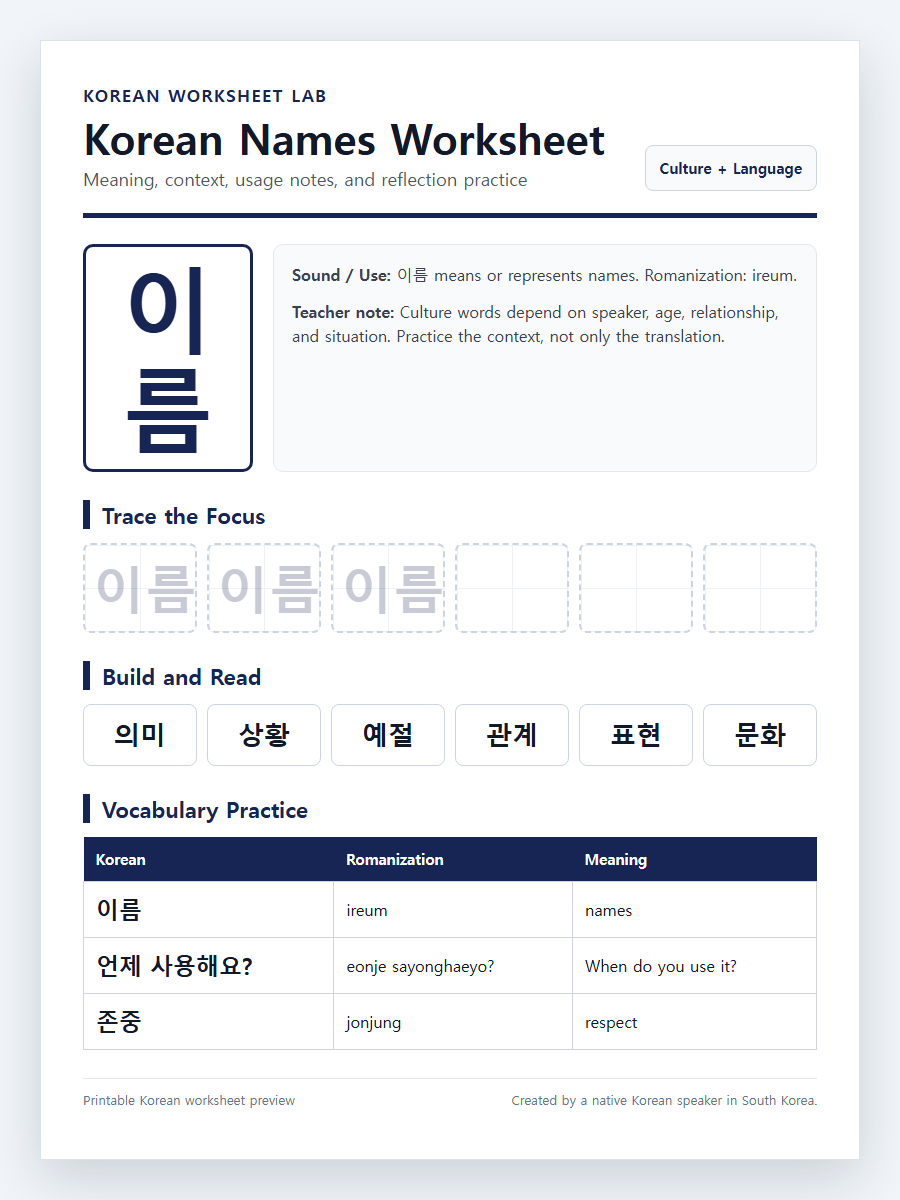
Learn how Korean family names, given names, name order, and polite address forms work.
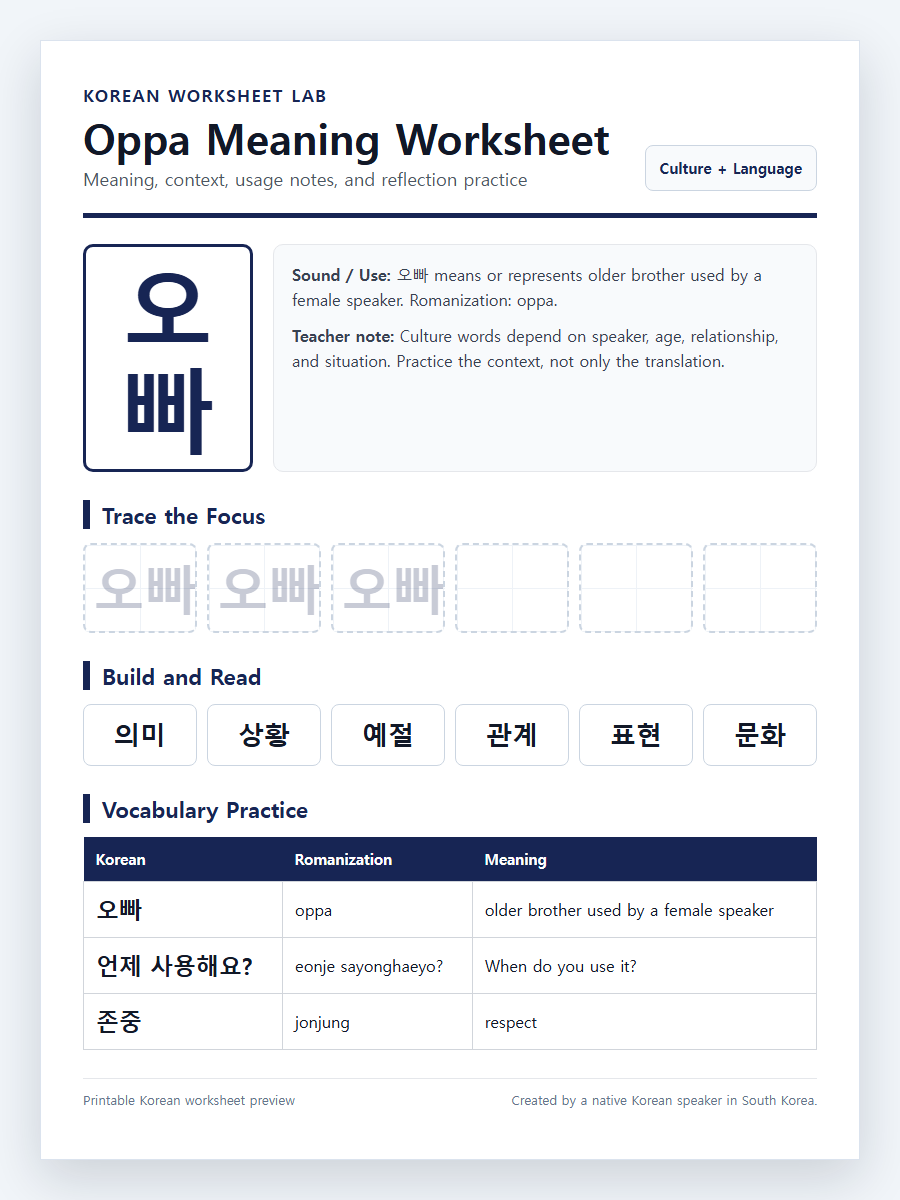
Learn when 오빠 is used, who can say it, and why relationship context matters.
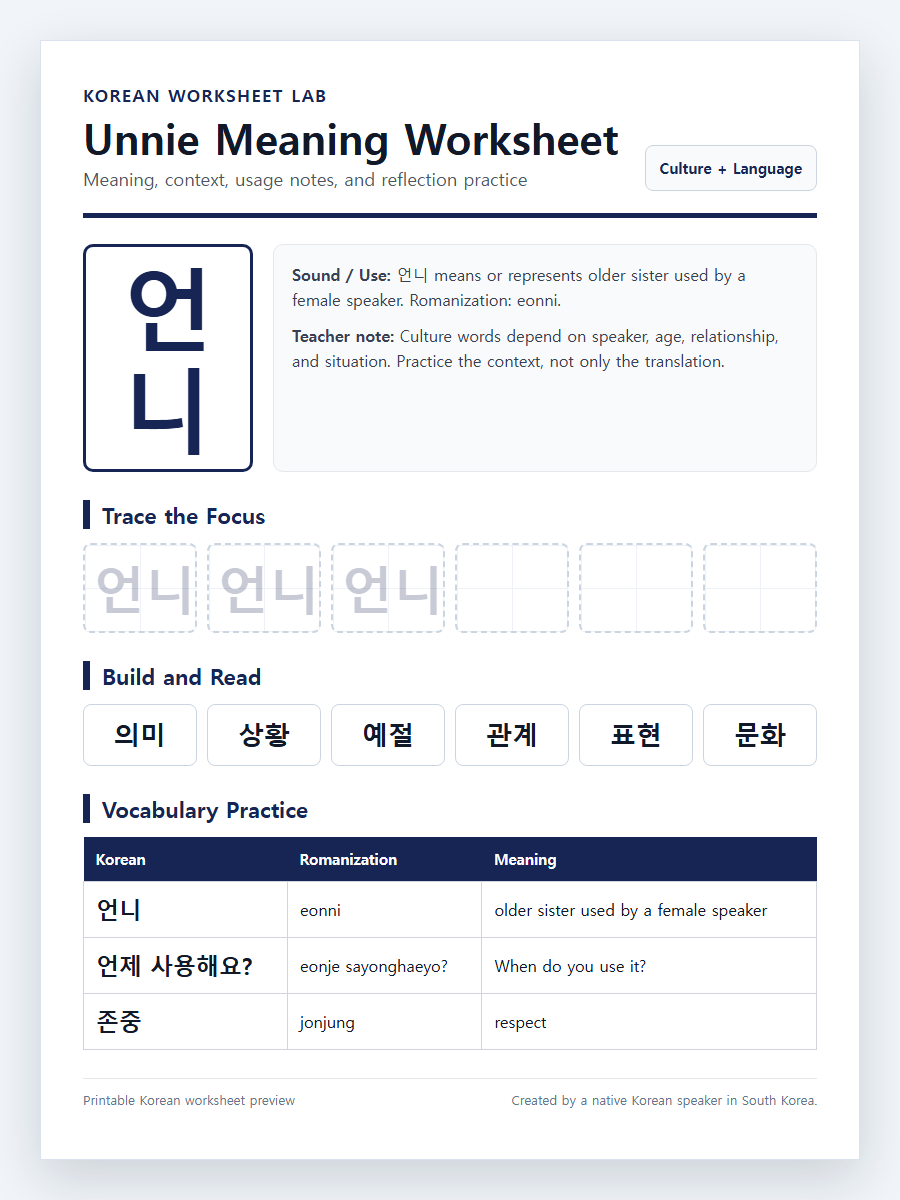
Learn how women use 언니 for older sisters and close older female friends.
Understand 대박 as a Korean reaction word for surprise, success, excitement, or something impressive.
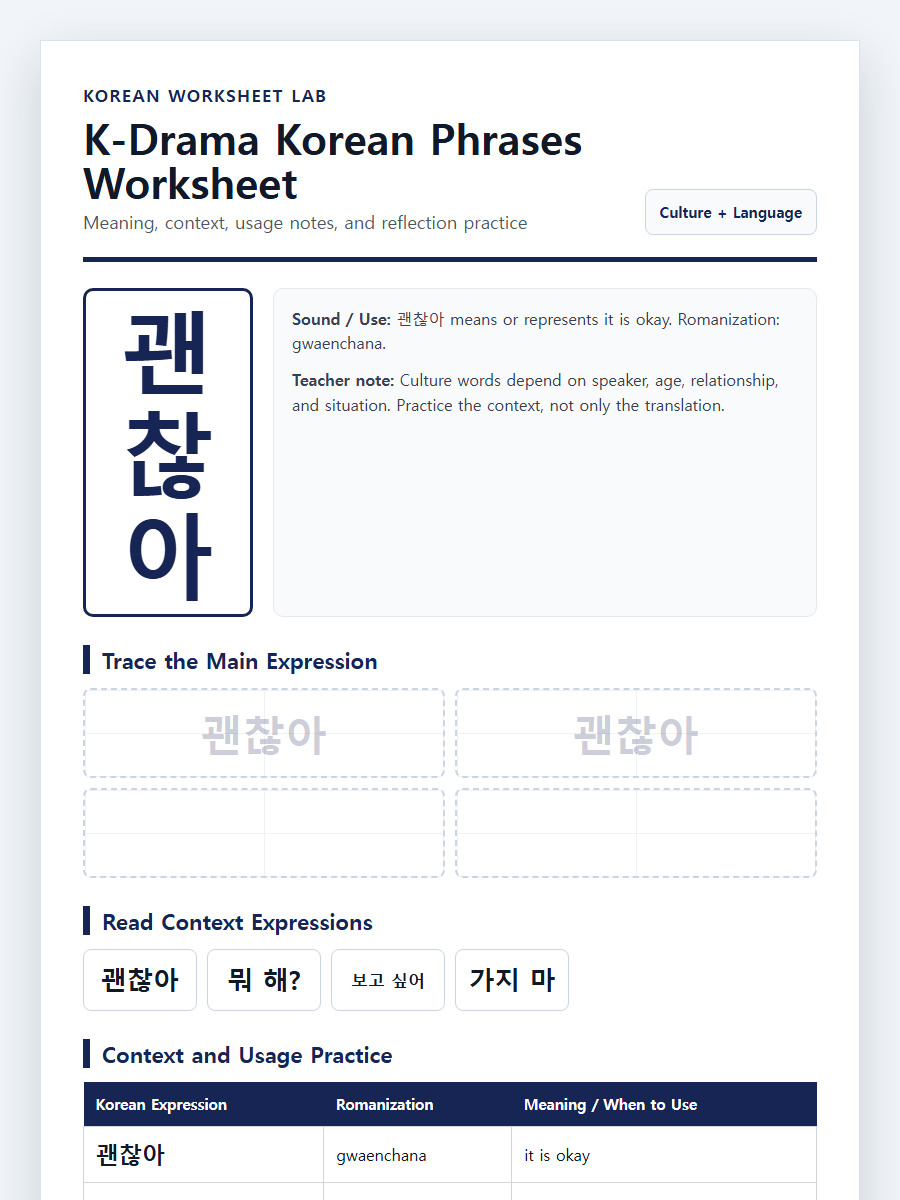
Learn common Korean phrases you often hear in K-dramas and how to understand their tone and politeness.
Yes. The current lesson pages and printable worksheets are free to access.
Yes. They are suitable for beginner warmups, homework, tutoring, stations, and review tasks.
No. Each recommended item connects to a full educational page with context and study guidance.