Introduction
Korean family terms do more than label a family member. A word can show whether someone is older or younger than you, whether the speaker is male or female, and whether you are calling the person or talking about them. That is why the English word brother can become 형, 오빠, 남동생, or simply 동생 in Korean.
Beginners do not need to memorize every traditional kinship title at once. Start with immediate family, learn the four older-sibling terms as a speaker-based system, and then add a small set of relatives you actually discuss. This guide explains both vocabulary and usage so you can describe a real family without treating a dictionary list as a script.
Learning Objectives
- Say family, parents, grandparents, and siblings in Korean.
- Choose correctly among 형, 오빠, 누나, and 언니.
- Distinguish respectful reference words from familiar forms of address.
- Describe family members with simple beginner sentences.
- Avoid overusing family titles with people who are not relatives.
The Core Korean Family Words
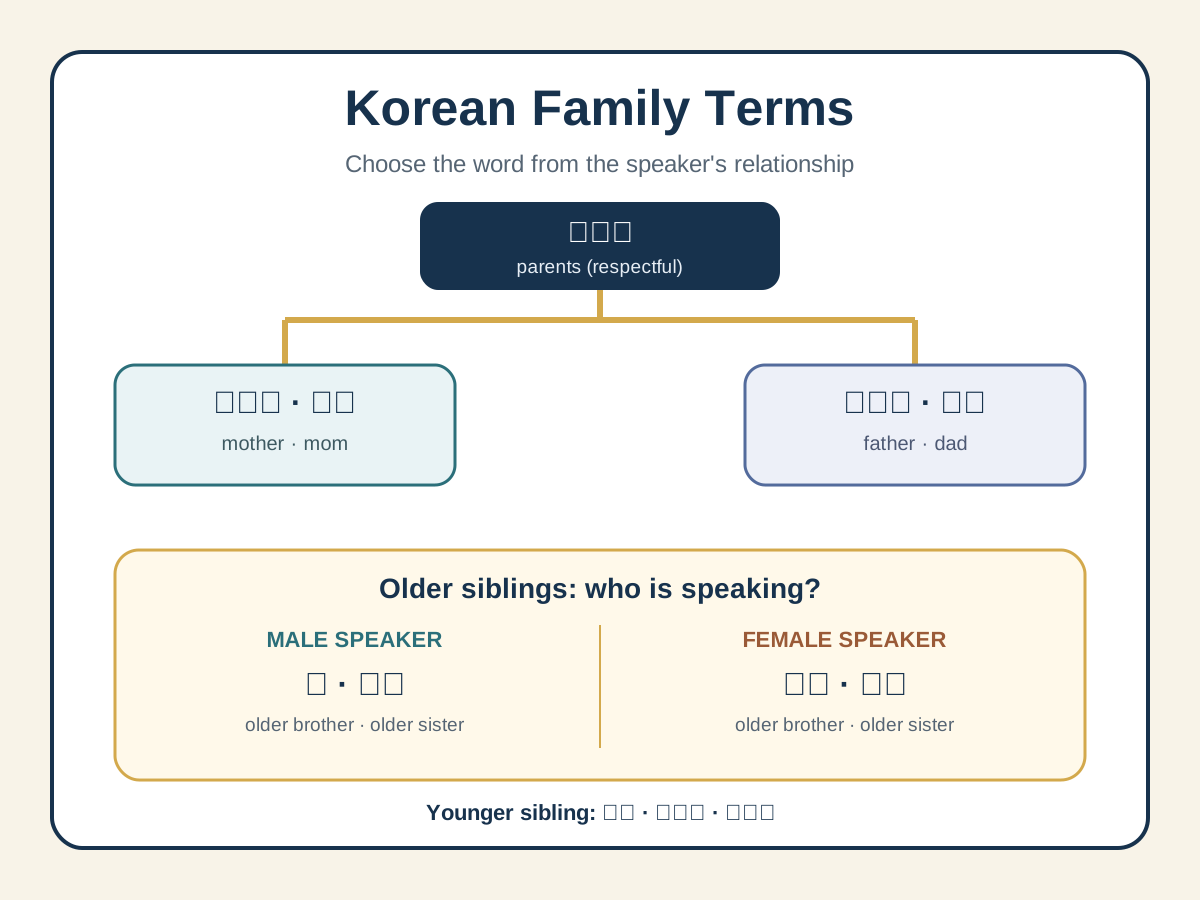
가족 (gajok) means family. 부모 means parents, but 부모님 (bumonim) is the respectful form learners will hear more often when referring to their own or another person's parents. 어머니 and 아버지 are standard words for mother and father. 엄마 and 아빠 are warm, familiar forms used inside many families; adults use them too, but they are not neutral titles for an unfamiliar adult.
For grandparents, 할머니 means grandmother and 할아버지 means grandfather. If a conversation must distinguish sides of the family, 외할머니 and 외할아버지 identify the mother's parents. 친할머니 and 친할아버지 can identify the father's parents, though families often use a preferred address form in everyday life.
- 가족 — family
- 부모님 — parents (respectful)
- 어머니 / 엄마 — mother / mom
- 아버지 / 아빠 — father / dad
- 할머니 — grandmother
- 할아버지 — grandfather
Older Brother and Older Sister: Check the Speaker
The four famous sibling terms are chosen from the speaker's point of view. A male speaker calls an older brother 형 (hyeong) and an older sister 누나 (nuna). A female speaker calls an older brother 오빠 (oppa) and an older sister 언니 (eonni). The relative must be older than the speaker; these are not four interchangeable translations of brother and sister.
Imagine Minjun is male and Jisoo is his older sister: Minjun says 누나. If Mina is female and Jisoo is her older sister, Mina says 언니. Jisoo's identity has not changed—the speaker has. Romanization varies across resources, so you may also see hyung for 형, noona for 누나, and unnie for 언니. Learn the Hangul as early as possible.
- Male speaker → older male: 형
- Male speaker → older female: 누나
- Female speaker → older male: 오빠
- Female speaker → older female: 언니
Younger Siblings and Neutral Description
동생 (dongsaeng) means a younger sibling without specifying gender. Add 남 for male or 여 for female when the distinction matters: 남동생 is a younger brother and 여동생 is a younger sister. An older sibling commonly calls a younger sibling by name rather than repeatedly saying 동생 directly to them.
형제 can mean brothers or siblings as a group, 자매 means sisters, and 남매 means a brother-and-sister combination. In a first conversation, 형제자매가 있어요? asks whether someone has siblings, but 가족 questions can be personal. Ask when the situation naturally invites it rather than using the question with every stranger.
Addressing Someone vs Talking About Them
Korean distinguishes 호칭, what you call someone, from 지칭, how you refer to that person while speaking to somebody else. Inside a family, a person may call their mother 엄마 but refer to another person's mother respectfully as 어머니 or 어머님. The best word depends on whose relative is being discussed and who is listening.
The suffix 님 adds respect in forms such as 부모님 and 할머님, but it cannot be attached mechanically to every family word. For beginners, it is safer to learn complete common forms. When you are unsure about a real family's preferred title, ask 이분을 어떻게 불러요? (How do you address this person?) rather than inventing a form.
Common Aunts, Uncles, Spouses, and Children
Korean extended-family vocabulary can be precise. 이모 is your mother's sister, while 고모 is your father's sister. 삼촌 broadly means uncle in casual beginner explanations, but specific family relationships have more exact titles. For example, 외삼촌 is a mother's brother. Because marriage, age order, and the side of the family can change a title, verify the relationship before using an extended-family term.
아들 means son, 딸 means daughter, 아이 or 자녀 can mean child or children in different contexts, and 조카 means a niece or nephew. 남편 means husband and 아내 means wife when describing one's spouse. Couples and families may use names, 여보, 자기, a child's name plus 엄마 or 아빠, or another household-specific form; no single address pattern describes every family.
- 이모 — mother's sister
- 고모 — father's sister
- 외삼촌 — mother's brother
- 조카 — niece or nephew
- 남편 — husband
- 아내 — wife
- 아들 / 딸 — son / daughter
Why Family Terms Are Used Outside the Family
Close friends sometimes use 형, 누나, 오빠, or 언니 when the age, gender, and relationship make the term comfortable. A child may also use a kinship-like title for a familiar adult. This extended use expresses social closeness; it does not make the word a universal label for any older person.
Do not call an unfamiliar man 오빠 because he is older or because the word appears in a drama. Use the person's preferred name and title, such as a professional title plus 님, until the relationship supports a family-style term. Likewise, 아줌마 and 아저씨 are real words, but directly using them for a stranger can sound blunt or unwelcome depending on the situation.
A Simple Pattern for Describing Your Family
Use 저희 가족은 … to introduce your family politely. To say that you have someone, use a family noun with 이/가 있어요: 남동생이 있어요 means I have a younger brother. With numbers, counters are natural: 언니가 한 명 있어요 means I have one older sister. 사람을 count family members in broader descriptions, as in 저희 가족은 네 명이에요, There are four people in my family.
Korean often uses 우리 or the more modest 저희 where English uses my. 우리 엄마 literally looks like our mom but commonly refers to the speaker's mother. In polite conversation, 저희 어머니 sounds respectful and modest. Avoid translating 우리 word for word before checking whether it expresses a shared group or a close in-group relationship.
Mini Practice
Choose or produce the best Korean term. 1) A male speaker talks to his older sister. 2) A female speaker talks about her older brother. 3) Say I have a younger sister. 4) Say My family has four people politely. 5) Your mother's sister is your ____. 6) Decide whether 오빠 is appropriate for a female learner addressing an unfamiliar older man she has just met, and explain why.
Answer Key
1) 누나. 2) 오빠. 3) 여동생이 있어요. (Yeodongsaengi isseoyo.) 4) 저희 가족은 네 명이에요. (Jeohui gajogeun ne myeongieyo.) 5) 이모. 6) Usually no. 오빠 requires a female speaker, an older male, and an appropriately close or accepted relationship; use the person's preferred name or title first.
Vocabulary Box
| Korean | Romanization | Meaning |
|---|---|---|
| 가족 | gajok | family |
| 부모님 | bumonim | parents (respectful) |
| 형 | hyeong | older brother or close older male, used by a male speaker |
| 누나 | nuna | older sister or close older female, used by a male speaker |
| 오빠 | oppa | older brother or close older male, used by a female speaker |
| 언니 | eonni | older sister or close older female, used by a female speaker |
| 동생 | dongsaeng | younger sibling |
| 남동생 | namdongsaeng | younger brother |
| 여동생 | yeodongsaeng | younger sister |
| 조카 | joka | niece or nephew |
Grammar Box
- Use 이/가 있어요 after a family member to say you have that relative: 오빠가 있어요 or 동생이 있어요.
- Use 한 명, 두 명, 세 명, and 네 명 to count people: 가족이 다섯 명이에요 means There are five people in my family.
- 우리 and 저희 often appear where English uses my; 저희 is the modest form in polite speech.
- The topic marker in 저희 가족은 introduces the family as the topic before describing it.
Pronunciation Tips
- 형 is romanized hyeong in Revised Romanization; the vowel ㅕ is not the same as the English vowel in young.
- 언니 is eonni and begins with ㅓ. Spellings such as unnie are common online but are not Revised Romanization.
- In 가족은, the final ㄱ connects to the following vowel, so the phrase sounds smoothly linked: gajogeun.
- In 여동생이, the final ㅇ in 동 and 생 is an ng sound; do not add a separate vowel after it.
Example Sentences
저희 가족은 네 명이에요.
Jeohui gajogeun ne myeongieyo.
There are four people in my family.
남동생이 한 명 있어요.
Namdongsaengi han myeong isseoyo.
I have one younger brother.
언니는 회사원이에요.
Eonnineun hoesawon-ieyo.
My older sister is an office worker. (female speaker)
형은 부산에 살아요.
Hyeongeun Busane sarayo.
My older brother lives in Busan. (male speaker)
부모님하고 같이 살아요.
Bumonimhago gachi sarayo.
I live with my parents.
할머니께 자주 전화해요.
Halmeonikke jaju jeonhwahaeyo.
I often call my grandmother.
형제자매가 있어요?
Hyeongje-jamaega isseoyo?
Do you have any siblings?
이분을 어떻게 불러요?
Ibuneul eotteoke bulleoyo?
How do you address this person?
Common Mistakes
Avoid
Choosing 형, 누나, 오빠, or 언니 from the relative's gender alone.
Try this
Check the speaker's gender, the other person's gender, relative age, and relationship.
Avoid
Using 오빠 for any attractive or older Korean man.
Try this
Use it only when a female speaker has an appropriately close relationship with an older male.
Avoid
Calling one's own parents 부모님 directly in every family conversation.
Try this
Learn the family's actual address forms; 엄마 and 아빠 are common familiar forms, while 부모님 is usually a reference term.
Avoid
Assuming 동생 means younger brother.
Try this
동생 is gender-neutral; use 남동생 or 여동생 when gender matters.
Avoid
Translating 우리 엄마 literally as our mother in every sentence.
Try this
Recognize that 우리 often expresses an in-group bond and can mean my in natural English.
Avoid
Memorizing a huge in-law chart before immediate family vocabulary.
Try this
Master the relatives you actually discuss, then verify precise extended-family titles as needed.
Study Tips
- Draw yourself at the center of a small family map and label each person from your point of view.
- Practice the four older-sibling words with two questions: Who is speaking? Who is older?
- Make separate cards for address and reference when a family uses different forms.
- Describe three real or fictional relatives with 있어요, 이에요/예요, and 살아요.
- Listen for family words in context, but check whether the speakers are relatives, close friends, or using a title playfully.
Summary
Korean family vocabulary encodes relationships that English often leaves unstated. Start with 부모님, grandparents, and siblings, then choose 형, 누나, 오빠, or 언니 from the speaker's point of view. Use 동생 when a younger sibling's gender is not important.
Real usage also depends on whether you are calling someone or referring to them, and each household may have preferred forms. Learn the system, observe the relationship, and ask about a title when the context is unclear.
Frequently Asked Questions
What is the Korean word for family?
가족 (gajok) means family. 저희 가족 or 우리 가족 commonly means my family in polite or in-group-centered Korean usage.
How do you say brother in Korean?
For an older brother, a male speaker uses 형 and a female speaker uses 오빠. A younger brother is 남동생. Korean does not use one word in every situation covered by English brother.
How do you say sister in Korean?
For an older sister, a male speaker uses 누나 and a female speaker uses 언니. A younger sister is 여동생.
Can 오빠 and 언니 be used for friends?
Yes, in some close relationships when age, speaker gender, and mutual comfort support the term. Do not assume that every older acquaintance wants a family-style title.
Why do Koreans say 우리 엄마 instead of 내 엄마?
우리 can express membership and emotional connection to an in-group, so 우리 엄마 often corresponds naturally to my mom in English. 내 엄마 is possible, but its emphasis and context differ.
Are Korean family titles the same in every household?
No. The basic relationships are stable, but actual forms of address can vary with region, generation, marriage, household habits, and personal preference.
Related Learning Resources
This article follows the Korean Worksheet Lab editorial standards and is reviewed for beginner clarity and natural Korean usage.