Language and Relationships
Understand age, names, family terms, and relationship words before using them.
Learn korean culture with clear explanations, learning objectives, key vocabulary, worksheet previews, and printable Korean PDFs.
Language through Korean life
Choose a track to learn the vocabulary, expressions, grammar, and relationship context behind Korean daily life. These are language lessons, not tourism summaries.
Understand age, names, family terms, and relationship words before using them.
Learn polite behavior and the Korean expressions used in schools and everyday interactions.
Connect table language and seasonal greetings to varied modern family practices.
Read the Hangul, pronunciation, and plain meaning.
Check who is speaking, where, and in what relationship.
Notice politeness, particles, and natural responses.
Separate broad patterns from family or personal variation.
Create one sentence that fits a real relationship and setting.
Explain what is common without claiming every Korean behaves the same way.
Use dramas and entertainment as examples, not universal models of speech.
School, family, work, and holiday experiences change over time.
The same word can sound respectful, intimate, playful, or inappropriate.
Legal standards and everyday conversational habits may not match.
Personal preference is more reliable than a memorized cultural shortcut.
Saved on this device.
0% complete
No. Habits differ by generation, family, region, workplace, school, and personal preference. These lessons explain broad patterns and identify where context matters.
Culture appears through language. Particles, endings, honorifics, and relationship words help learners understand what people are doing socially, not only what a sentence translates to.
Not automatically. Drama dialogue depends on character relationships and tone. Check whether an expression is polite, casual, intimate, exaggerated, or old-fashioned before using it.
International age has been the general official standard since June 28, 2023. Birth year and age order can still appear in social conversation, but habits vary.
A slight bow may accompany a polite greeting, but depth and frequency depend on the setting. A clear verbal greeting and observing others are good starting points.
Learn the Korean term, one natural expression, one short dialogue, and the relationship or setting where the language is appropriate.
Educational culture guides that explain Korean holidays, names, etiquette, school life, food culture, and social context.
Each page is built as a learning resource, not just a PDF link. Read the lesson first, preview the worksheet, and then print the PDF for active practice.
A short explanation of the topic and why it matters.
Clear goals for learners, parents, and teachers.
Korean, romanization, and English meaning in one table.
Nearby lessons to continue studying without guessing.
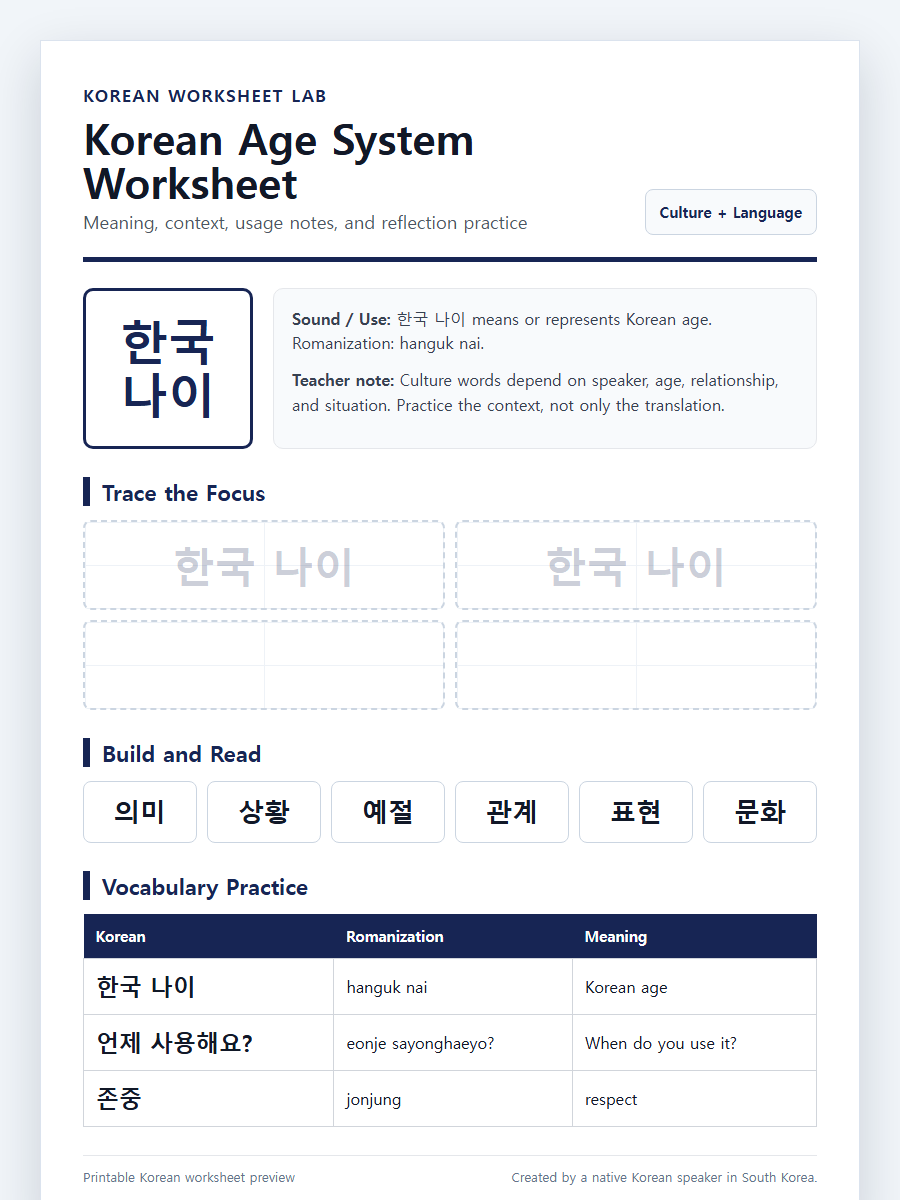
Understand how age is discussed in Korean conversations and why age can affect speech level and relationship words.
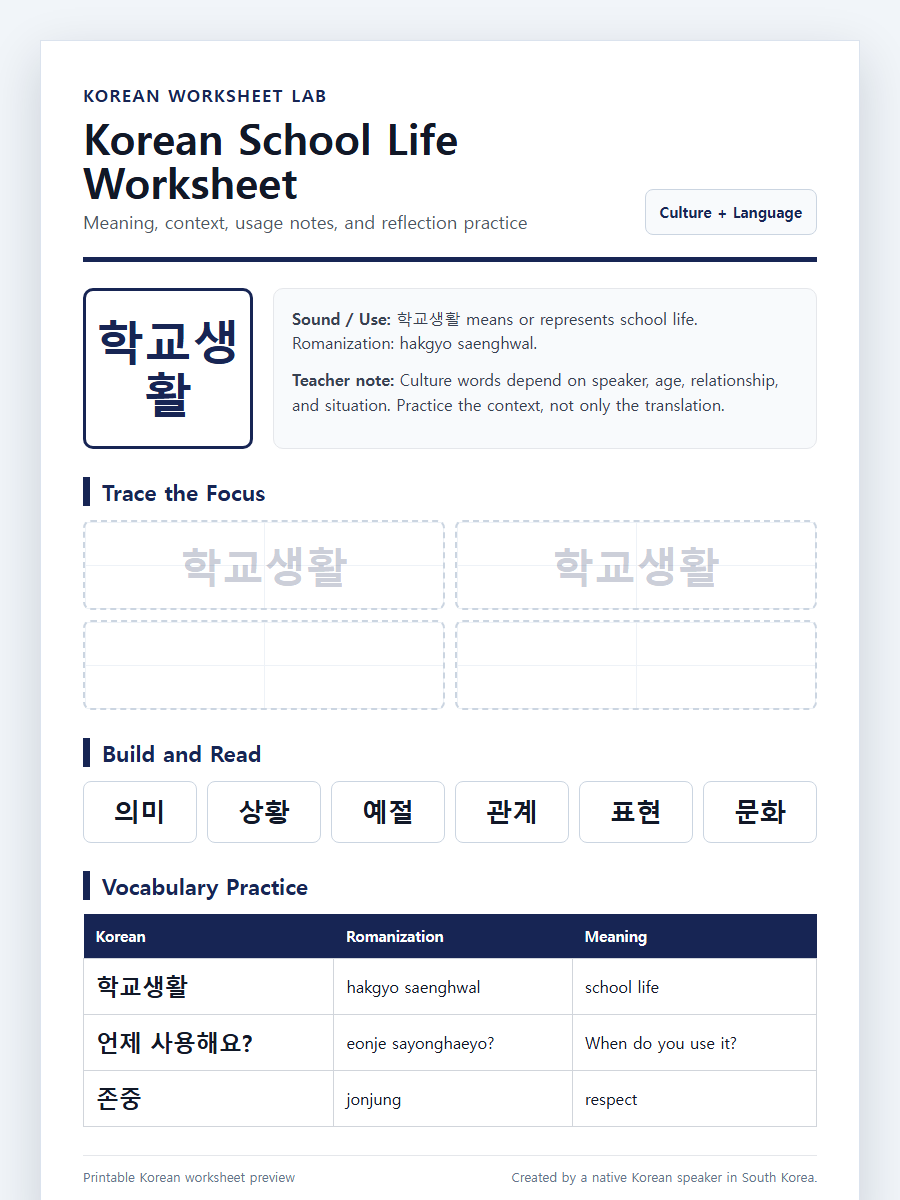
Learn what Korean school life looks like and the words learners often hear in classrooms and dramas.
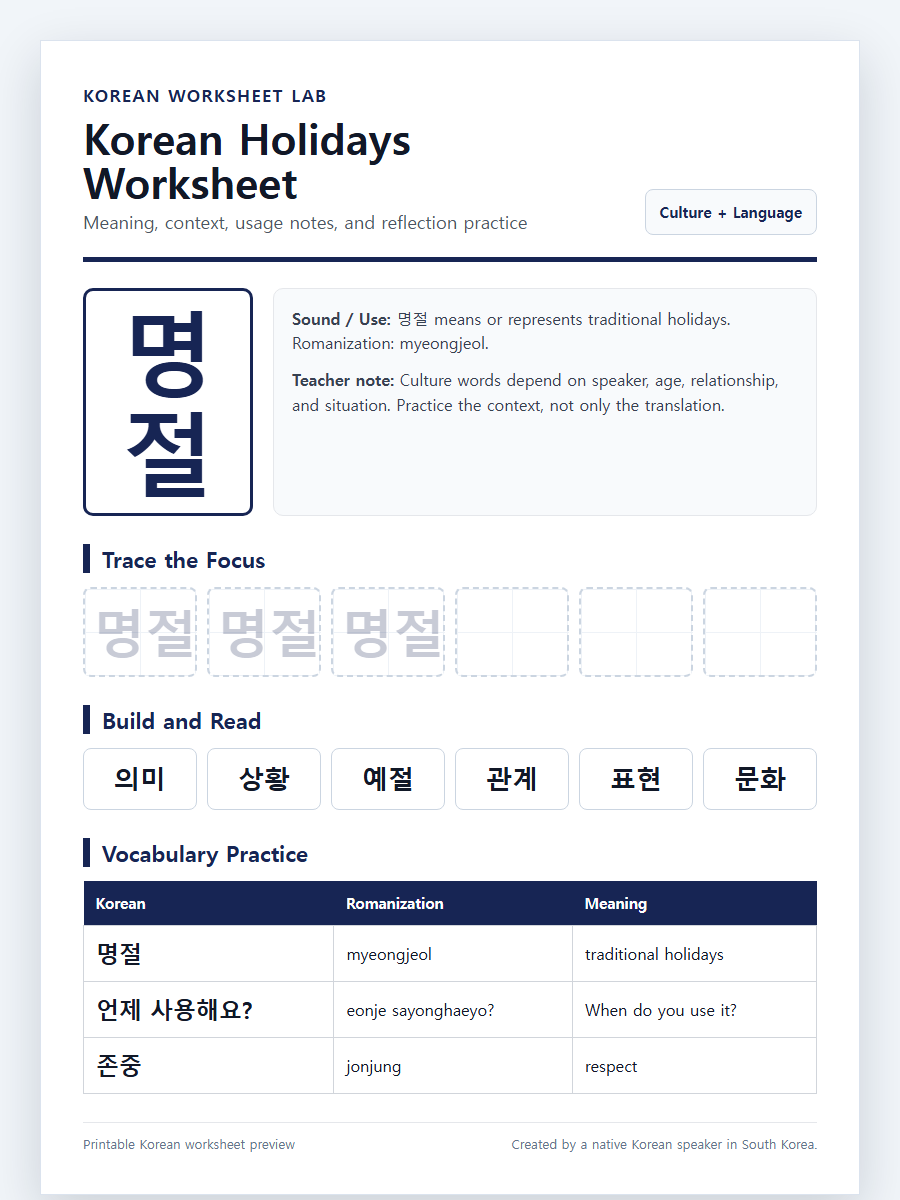
Explore major Korean holidays such as Seollal and Chuseok with vocabulary and cultural context.
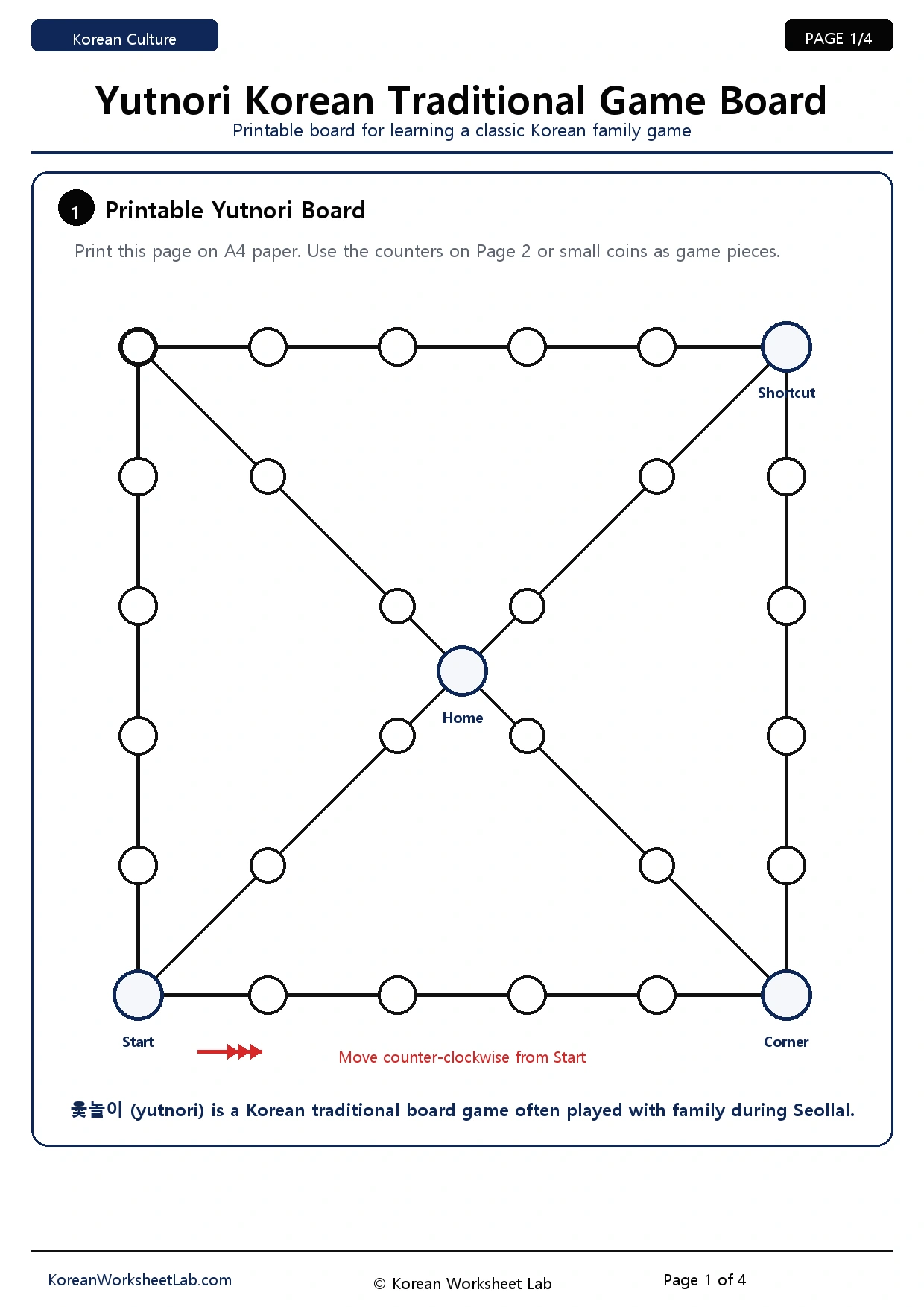 P1
P1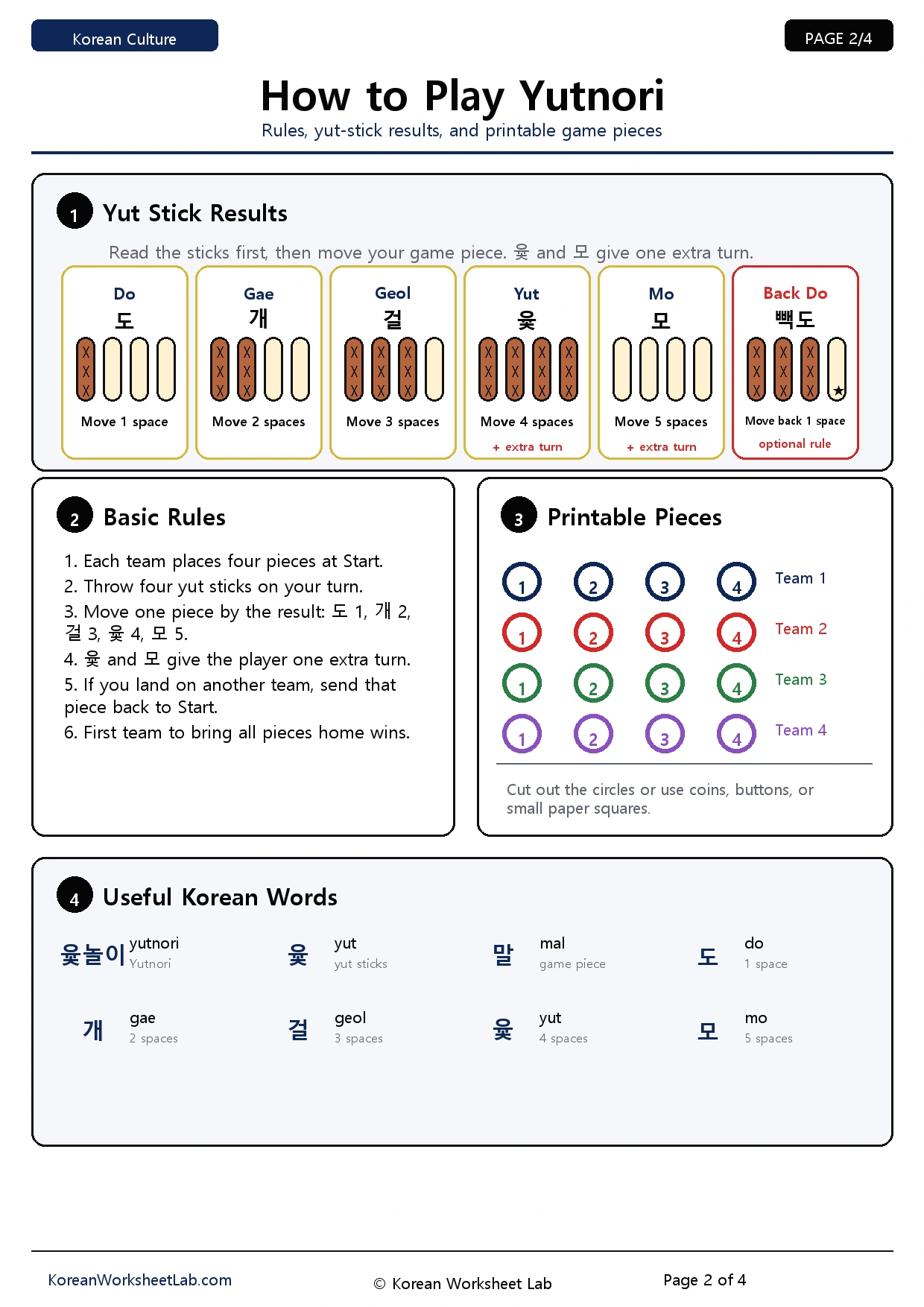 P2
P2Learn how to play yutnori, a Korean traditional board game, with a printable board, rules, game pieces, vocabulary, answer key, and teacher notes.
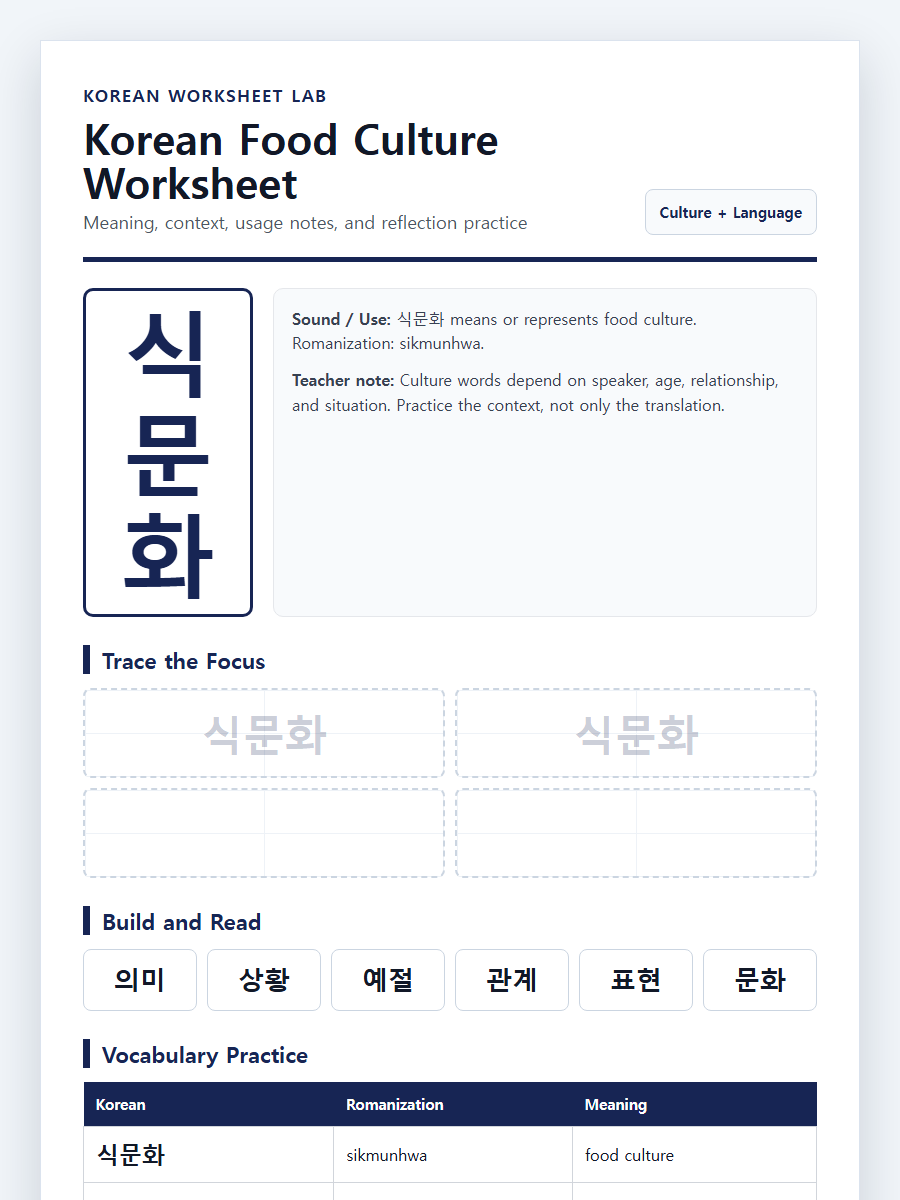
Learn Korean table habits, shared dishes, side dishes, and polite eating expressions.
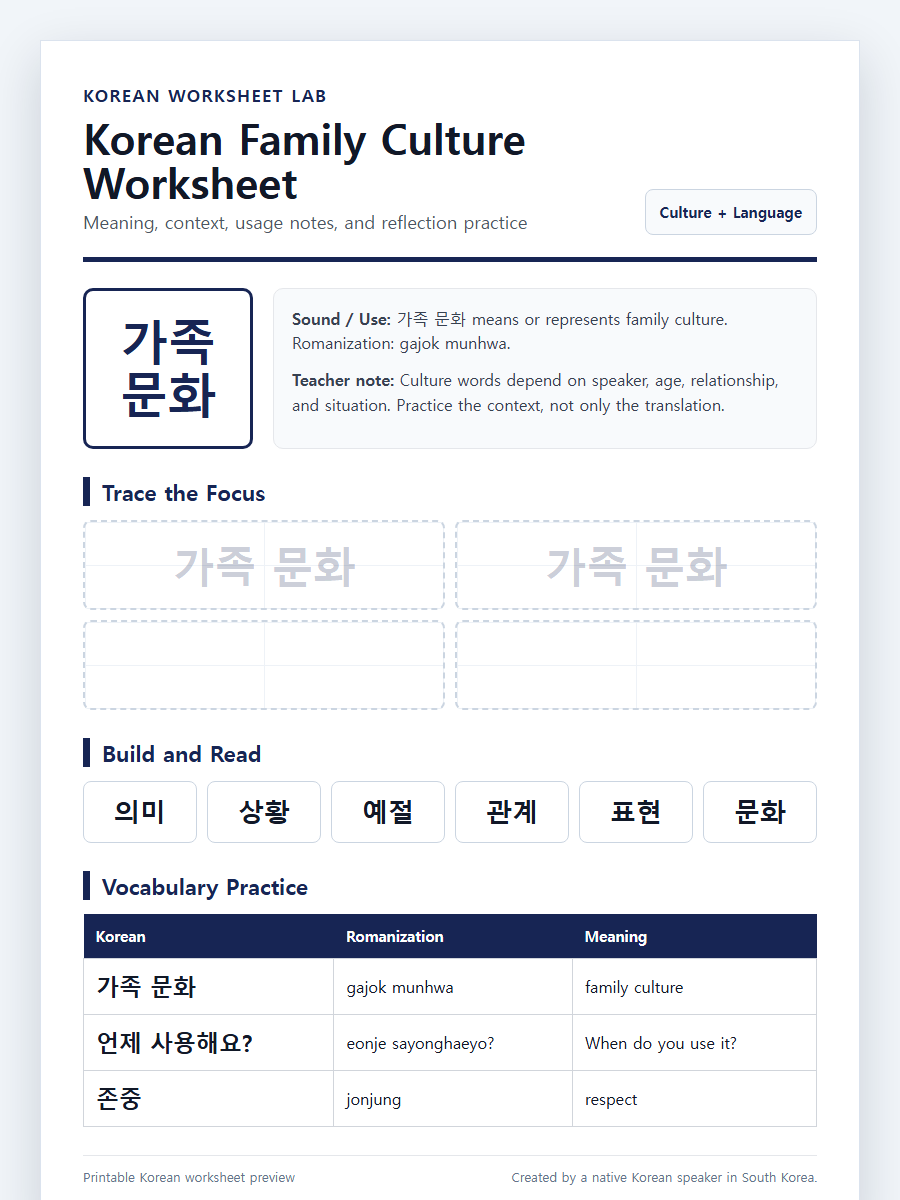
Understand Korean family language, respect, age order, and relationship terms.
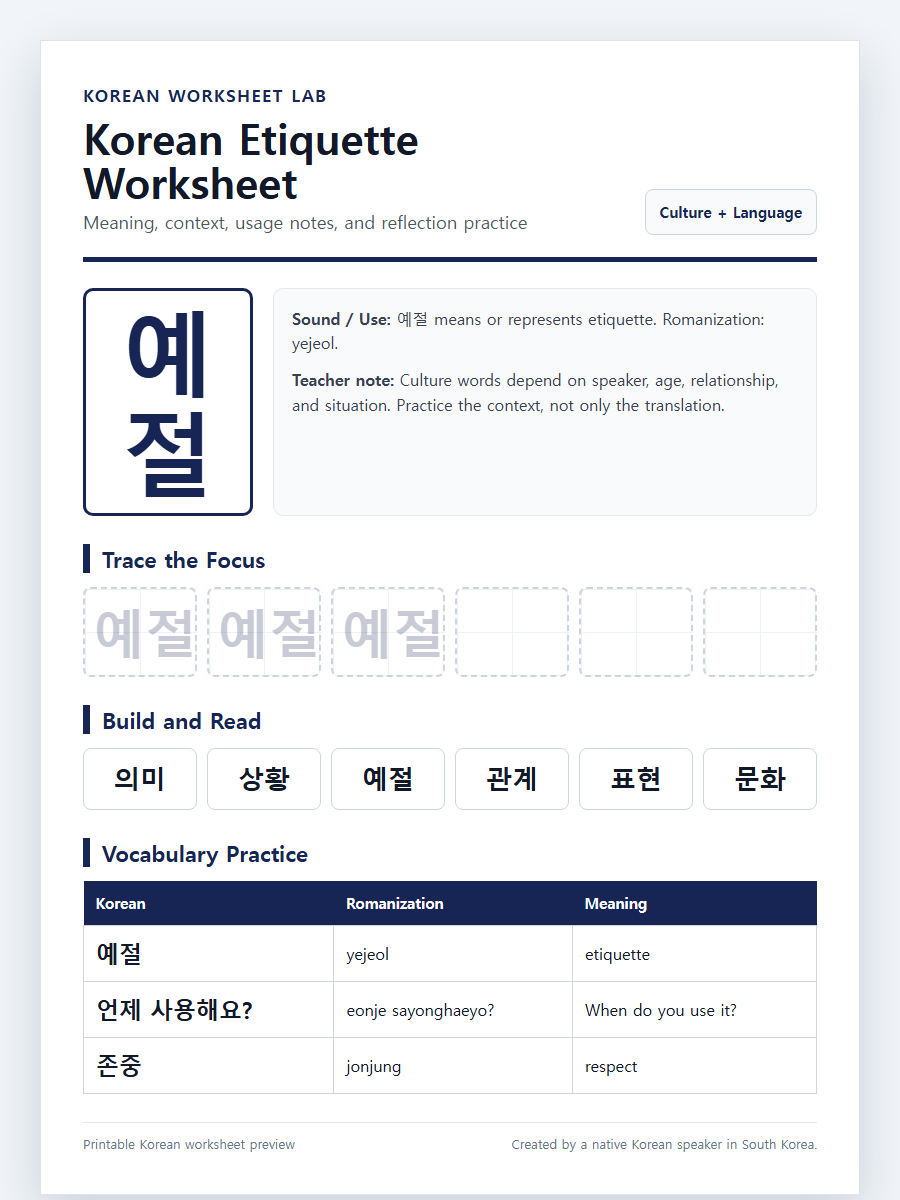
Study polite behavior for greetings, meals, gifts, public spaces, and respectful Korean communication.
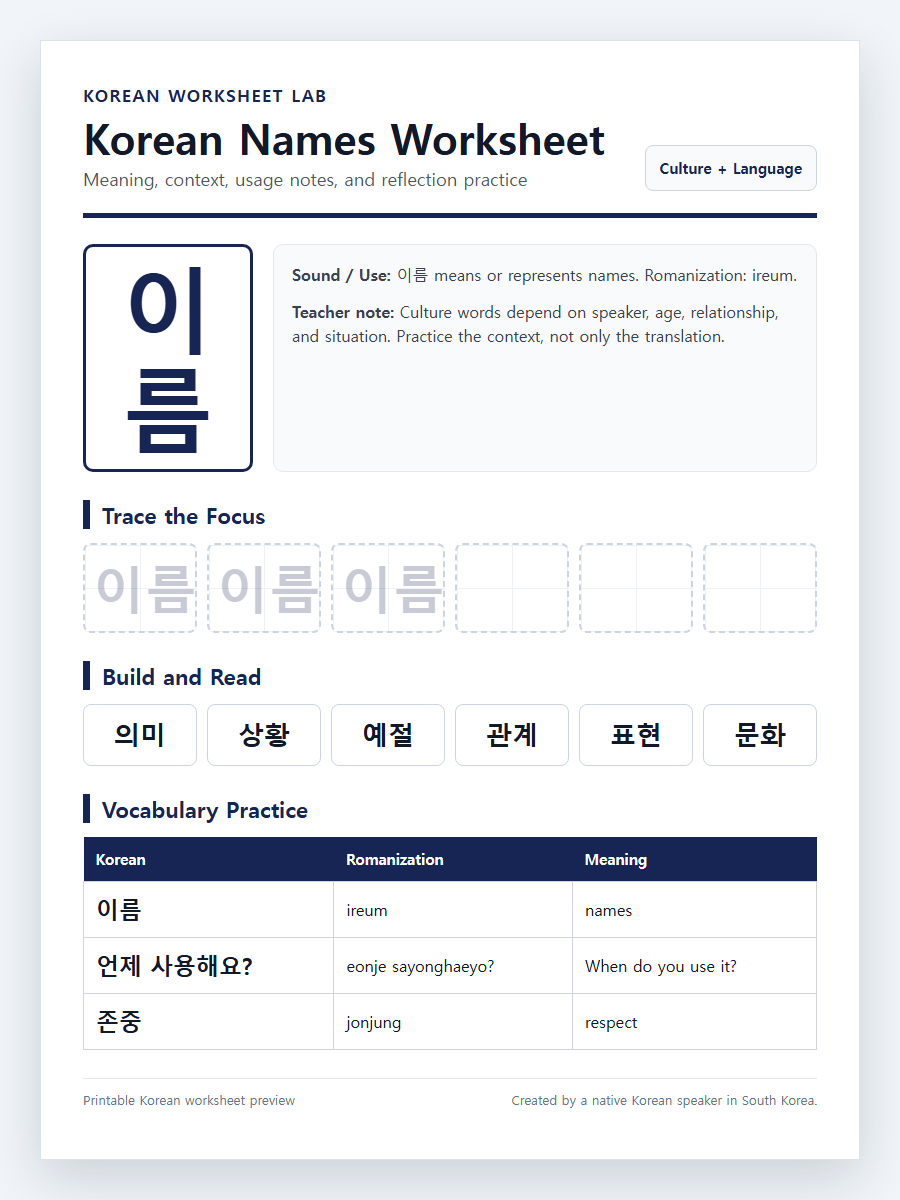
Learn how Korean family names, given names, name order, and polite address forms work.
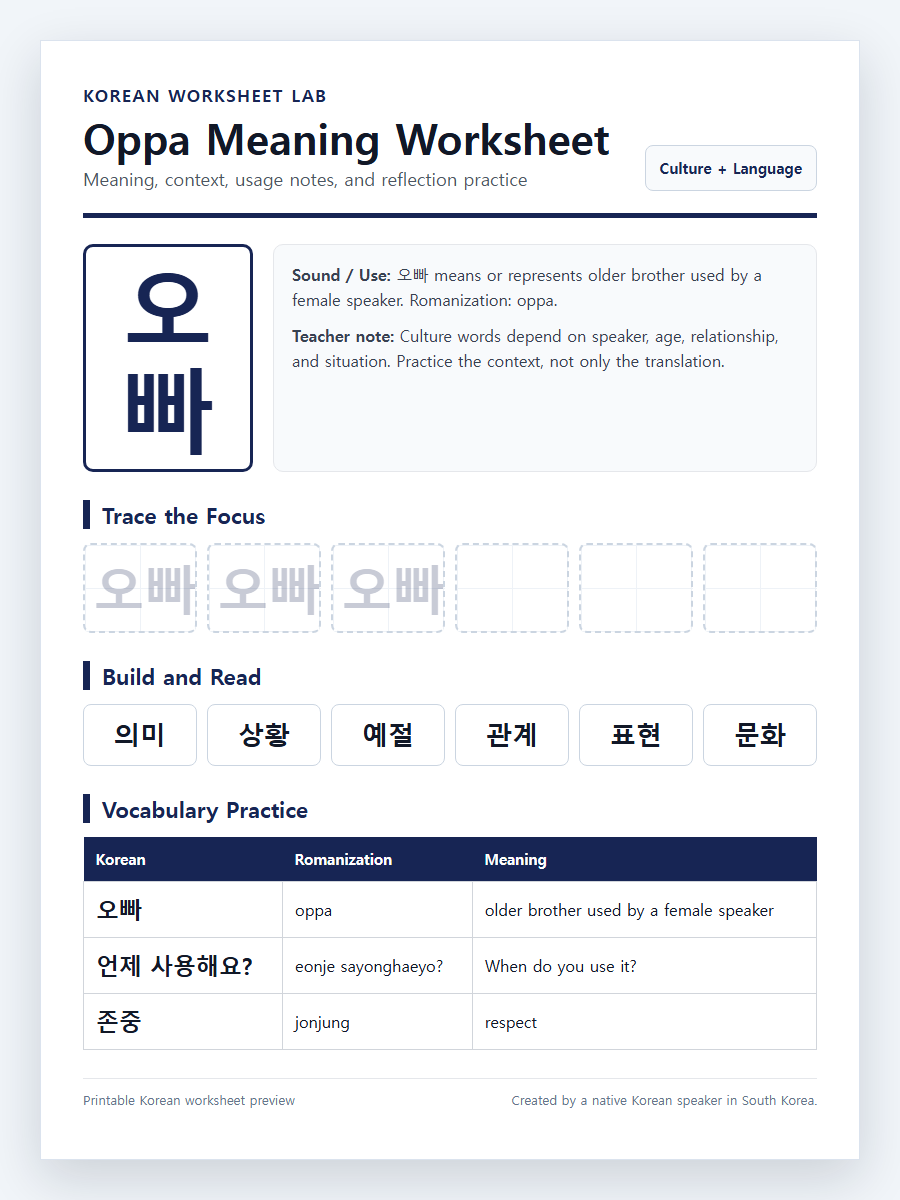
Learn when 오빠 is used, who can say it, and why relationship context matters.
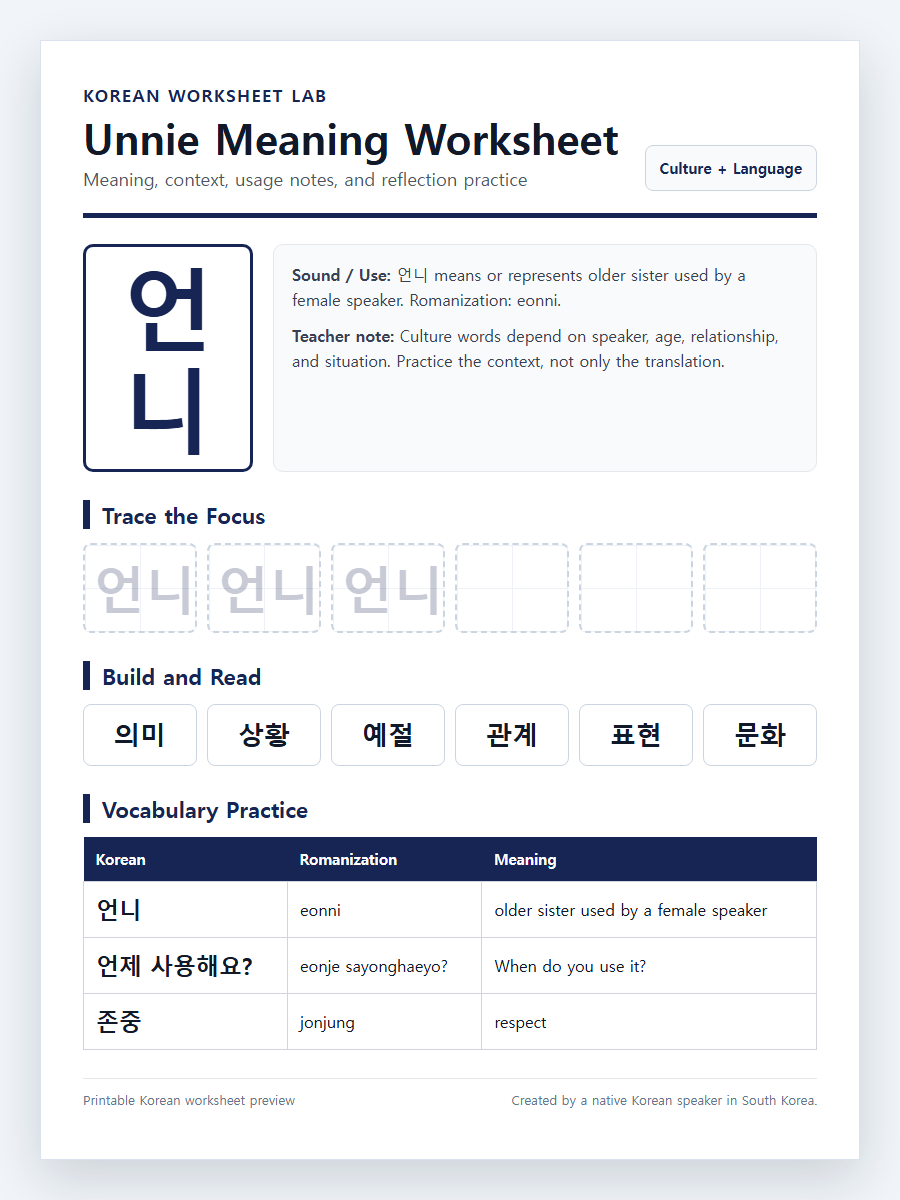
Learn how women use 언니 for older sisters and close older female friends.
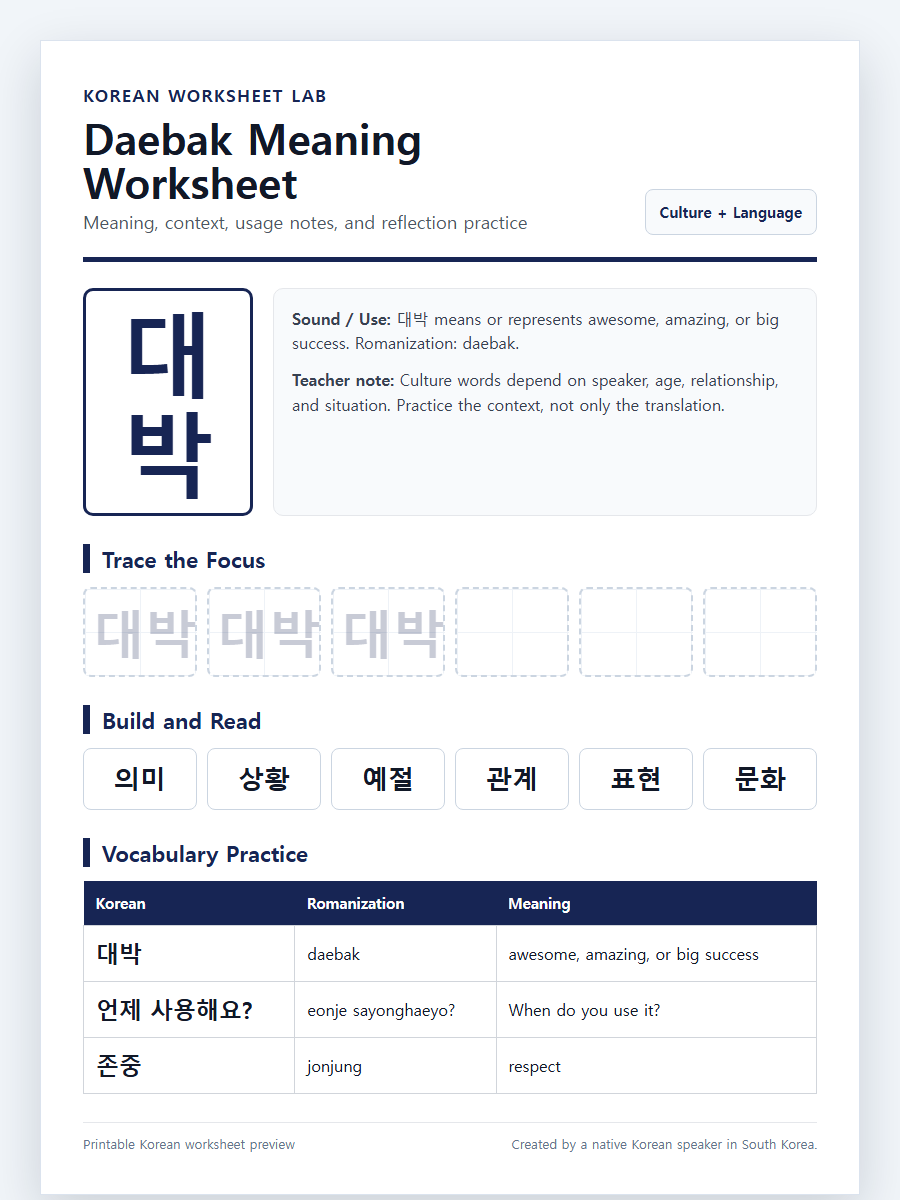
Understand 대박 as a Korean reaction word for surprise, success, excitement, or something impressive.