Introduction
Korean Pronunciation Mistakes to Avoid is a practical topic for beginner Korean learners because it connects Korean form, meaning, and real use. English speakers often carry English sound habits into Korean, especially with final consonants, tense consonants, and vowel length.
Pronunciation is not about sounding perfect. It is about being understood and recognizing what native speakers say back. This guide is written for learners who want a clear explanation before using a worksheet, flashcard set, or reading activity.
Learning Objectives
- Understand the main idea behind korean pronunciation mistakes to avoid.
- Read beginner Korean examples with Hangul first and romanization second.
- Notice common mistakes before they become habits.
- Use the mini practice and related resources for review.
What This Topic Means
English speakers often carry English sound habits into Korean, especially with final consonants, tense consonants, and vowel length. For a beginner, the most useful approach is not to memorize a long explanation. Start with a small group of examples, say them aloud, and check whether you understand the role of each Korean word or letter.
Read Hangul directly and use romanization only as a temporary support. When you study this topic, keep the Korean text visible. Romanization can help at the start, but it should not become the main thing you read.
- Start with a short explanation.
- Look at the Korean form.
- Read the example aloud.
- Check the meaning in context.
Why Beginners Should Learn It Early
Pronunciation is not about sounding perfect. It is about being understood and recognizing what native speakers say back. This is especially important for adult beginners because early habits shape later reading, listening, and speaking. A learner who understands the pattern can use new vocabulary more confidently.
This topic also supports classroom and self-study use. Teachers can introduce the idea briefly, model two or three examples, and then let students complete a short guided activity. Self-learners can follow the same order alone.
How to Practice
Use short words first, then move into polite phrases such as 감사합니다 and 괜찮아요. Do not rush through the examples. Read each Korean item, cover the English meaning, and try to remember what the form is doing before checking the answer.
A good practice session has three steps: guided reading, independent recall, and correction. If you miss an item, write it again in a short phrase rather than simply staring at the answer.
- Read aloud once.
- Cover the meaning.
- Answer from memory.
- Correct with a different color.
- Review missed items tomorrow.
Mini Practice
Try these quick checks before moving to a worksheet. Match the Korean item to its meaning, then write one simple sentence or phrase using one item from the vocabulary table.
Practice answers: 1. thank you 2. it is okay 3. I eat a meal.
Vocabulary Box
| Korean | Romanization | Meaning |
|---|---|---|
| 감사합니다 | gamsahamnida | thank you |
| 괜찮아요 | gwaenchanayo | it is okay |
| 밥 | bap | rice, meal |
| 한국어 | hangugeo | Korean language |
Grammar Box
- Read Hangul directly and use romanization only as a temporary support.
- Read the full Korean phrase before translating individual words.
- When a sentence ending or particle appears, study its job in the sentence rather than treating it as decoration.
Pronunciation Tips
- Say each Korean example slowly once, then at a natural speed.
- Use romanization as a temporary guide, but return to Hangul immediately.
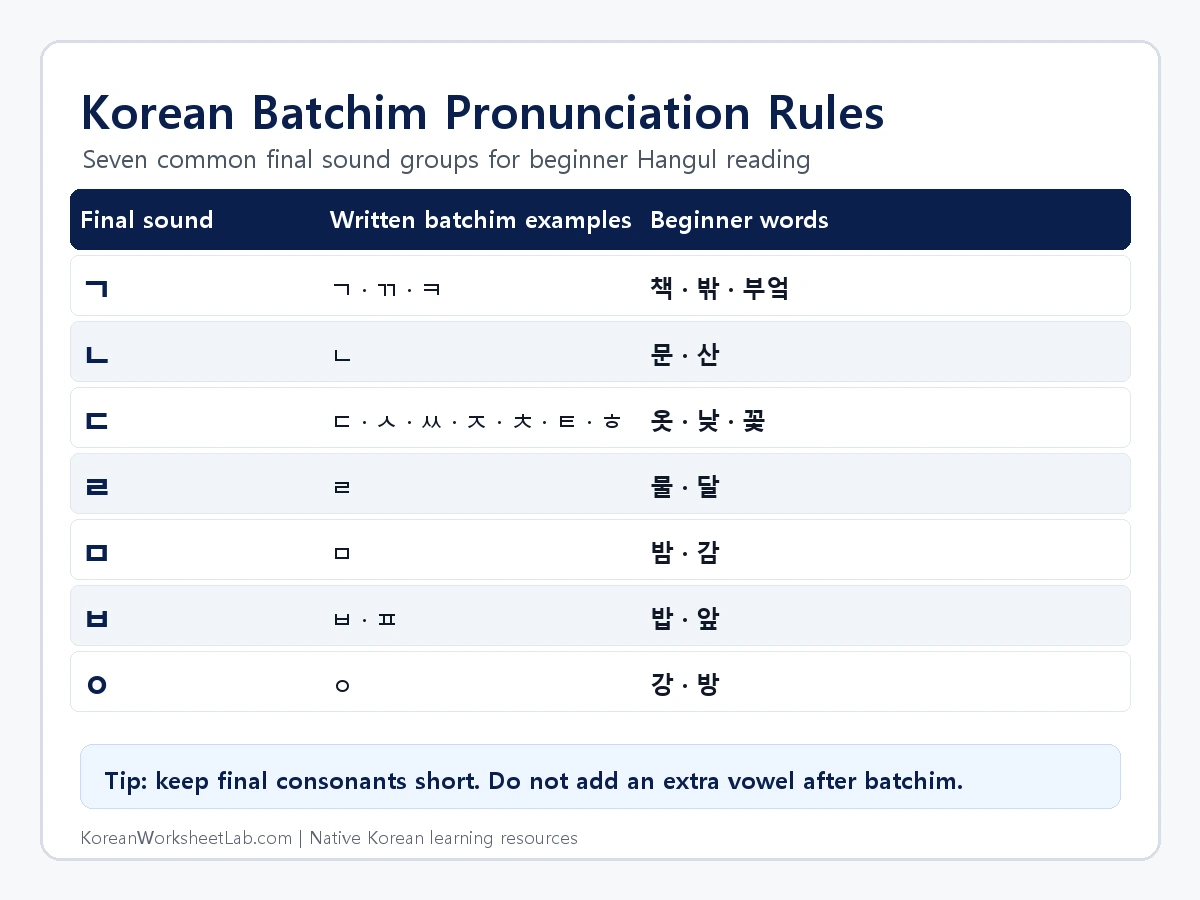
- If a final consonant appears, do not add an extra English vowel sound after it.
Example Sentences
밥 먹어요.
bap meogeoyo
I eat a meal.
괜찮아요.
gwaenchanayo
It is okay.
한국어를 배워요.
hangugeoreul baewoyo
I am learning Korean.
Common Mistakes
Avoid
Adding a strong English vowel after final consonants.
Try this
End words like 밥 cleanly without saying ba-puh.
Avoid
Treating ㄱ as exactly English g or k.
Try this
Listen to position. ㄱ can sound softer between vowels and sharper at the start.
Avoid
Depending on romanization for every word.
Try this
Cover romanization and decode the Hangul first.
Study Tips
- Study this topic with one worksheet or short reading passage, not with random disconnected lists.
- Make a three-item review card from the vocabulary table.
- Say the example sentences aloud before writing them.
- Review missed items the next day before learning a new topic.
Summary
Korean Pronunciation Mistakes to Avoid becomes easier when learners connect explanation, examples, and practice instead of memorizing isolated translations.
Use the related resources below to continue with a worksheet, grammar guide, reading practice, or printable review page.
Frequently Asked Questions
Is korean pronunciation mistakes to avoid difficult for beginners?
It can feel difficult at first, but it becomes manageable when you study a few clear examples and practice them in context.
Should I memorize romanization?
No. Romanization is useful as a temporary pronunciation clue, but Hangul should become the main reading system as soon as possible.
How should I review this topic?
Review the vocabulary table, read the examples aloud, complete the mini practice, and then use one related worksheet or reading activity.
Related Learning Resources
This article follows the Korean Worksheet Lab editorial standards and is reviewed for beginner clarity and natural Korean usage.