Introduction
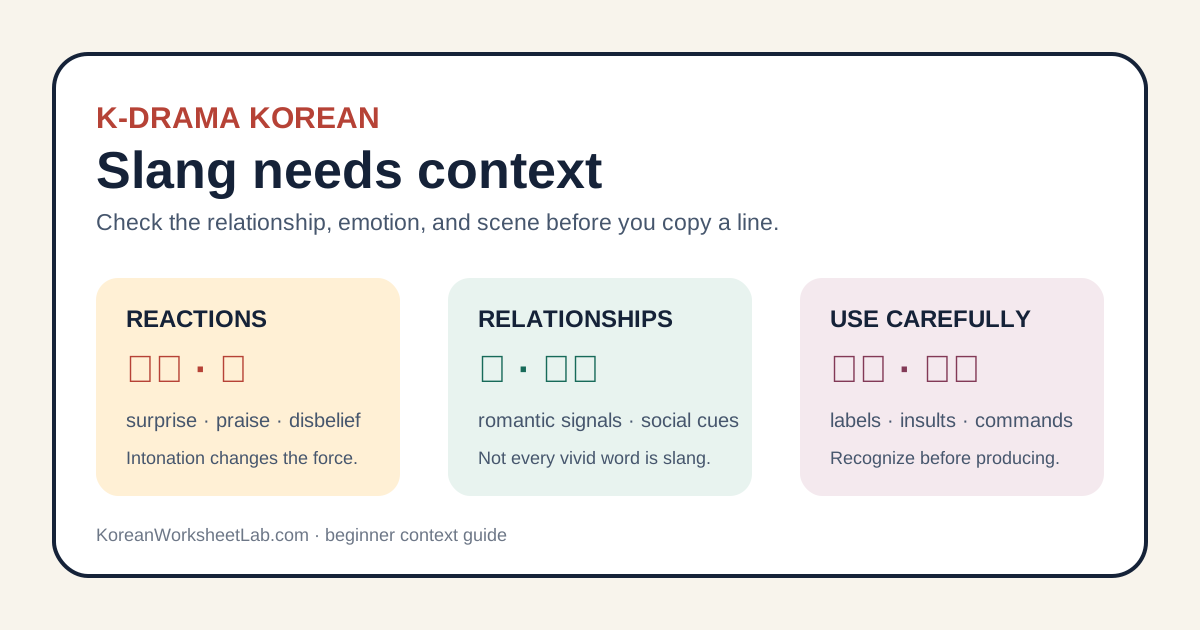
Korean slang words in K-dramas are memorable because a character's face, relationship, and situation supply meaning that subtitles cannot fully show. 대박 may express delighted surprise, 헐 can mark disbelief, and 눈치 can describe awareness of what others expect. None of those words has one English translation that works in every scene.
There is another complication: viewers often call any vivid drama expression slang. Some items below are true colloquial slang, some are ordinary informal words, and some are shortened relationship terms. This guide labels those differences, explains current usage, and shows what a beginner should recognize before deciding what to say.
Learning Objectives
- Recognize common informal expressions in contemporary K-drama dialogue.
- Use tone, relationship, and scene type to interpret a word.
- Separate current everyday language from dated or character-specific speech.
- Know which expressions are safer to understand than to copy.
First, Not Every K-Drama Expression Is Slang
Slang belongs mainly to informal use and may be tied to a group, generation, or period. Colloquial language is the broader category of relaxed everyday speech. For example, 말도 안 돼 (That makes no sense) is a normal informal sentence, while 갑분싸 is a compressed internet-era expression from 갑자기 분위기 싸해짐, roughly the mood suddenly turned cold.
This distinction matters because frequency on screen does not guarantee a phrase is current, polite, or broadly usable. A historical drama, school drama, crime series, and office romance each uses a different register. Treat subtitles as interpretations, then check who speaks, to whom, and with what emotional force.
Reaction Words You Will Hear Often
대박 (daebak) is an informal reaction meaning something like wow, amazing, or a huge success. It remains widely understood and is common in casual conversation and entertainment, but it does not belong in a formal report. 헐 (heol) marks surprise, disbelief, or dismay. Its meaning comes heavily from intonation: a bright 헐 can sound amazed, while a flat one can signal unpleasant disbelief.
미쳤다 (michyeotda) literally means went crazy, but in casual reactions it can praise something as insanely good or condemn something as outrageous. Because the literal wording can sound harsh when aimed at a person, beginners should recognize it before using it. 짱 (jjang), meaning the best or awesome, is still understood but can sound playful, youthful, or deliberately retro depending on the speaker.
- 대박! 진짜 잘했어. — Wow! You did really well.
- 헐, 벌써 끝났어? — What, is it already over?
- 이 노래 미쳤다. — This song is insanely good.
- 우리 언니가 요리 짱이야. — My older sister is the best at cooking.
Words About Relationships and Social Atmosphere
썸 (sseom) describes a not-yet-official romantic stage in which two people appear interested in each other. 썸을 타다 means to have that ambiguous romantic connection. 케미 (kemi), shortened from the English loanword chemistry, describes how well two people work or appear together; drama viewers also use it about fictional characters and actors.
눈치 (nunchi) is not trendy slang. It is an established Korean word for reading another person's feelings, intentions, or the social situation. 눈치가 빠르다 means to pick up cues quickly; 눈치가 없다 means to miss them. 꼰대 (kkondae) is a derogatory informal label for someone who imposes rigid, old-fashioned authority on others. Age alone does not make someone a 꼰대, and calling a person this can insult them.
Shortened and Online Expressions
갑분싸 (gapbunssa) compresses 갑자기 분위기 싸해짐: the atmosphere suddenly became awkward or cold. It is strongly casual and associated with online or playful speech. Telling a full story with 갑자기 분위기가 싸해졌어 sounds more neutral. 꿀잼 (kkuljaem) combines 꿀, literally honey but used as an intensifier, with 잼 from 재미, fun; it means extremely entertaining. 노잼 (nojaem) means not fun or boring.
These compressed forms travel quickly and can age quickly. They remain recognizable, but a drama's release year and the character's age matter. Use them with friends who already speak that way, not as default vocabulary with a teacher, manager, customer, or stranger. In writing practice, learn the standard source phrase beside the shortened form.
Strong Expressions to Recognize, Not Copy Quickly
K-dramas use insults and forceful banmal because conflict makes scenes dramatic. 바보 (babo) can range from teasing fool to a genuine insult. 재수 없어 (jaesu eopseo) means someone is unpleasant or obnoxious and is openly rude. 닥쳐 (dakchyeo), Shut up, is a harsh command. Even when subtitles make these lines funny, their real-world force depends on the relationship and tone.
Do not learn profanity as a shortcut to sounding fluent. Strong intensifiers and insults can target people, damage trust, and sound much harsher from a learner who cannot control nuance. Recognition is useful for comprehension; production can wait until you understand speech levels and have reliable feedback from trusted Korean speakers.
How Subtitles Hide Tone
One English subtitle may represent several Korean choices. No way could translate 말도 안 돼, 설마, or a disbelieving 헐, but they do different jobs. 말도 안 돼 rejects an idea as impossible or unreasonable. 설마 expresses I hope not or surely not while leaving uncertainty. 헐 is a short emotional reaction rather than a complete proposition.
Also watch sentence endings. 대박이에요 is polite, although the core word is casual; 대박이야 is informal. 눈치가 있으시네요 adds honorific and polite marking, while 눈치 없네 is a blunt informal observation. The vocabulary item and the speech level must be evaluated separately.
A Practical K-Drama Listening Method
Pause after a short scene and record four things: the exact Hangul, the speaker-listener relationship, the emotion, and the subtitle. Then replay it and decide whether the expression names an idea, reacts to news, or attacks a person. This prevents you from memorizing the subtitle as a fixed definition.
On a second viewing, replace the slang with a neutral paraphrase. 갑분싸 became 갑자기 분위기가 어색해졌어, The atmosphere suddenly became awkward. 꿀잼 became 정말 재미있어, It is really fun. If you can explain the neutral version, you understand more than the catchy surface form.
Mini Practice
Choose the best answer. 1) A friend reveals wonderful news. Which reaction fits: 대박 or 닥쳐? 2) Two characters like each other but are not dating officially. What do they have? 3) Rewrite 갑분싸 in a more neutral full sentence. 4) Which word means reading social cues? 5) A show is extremely entertaining. Choose 꿀잼 or 노잼. 6) Why is 꼰대 risky to say directly? 7) What is the difference between 말도 안 돼 and 헐? 8) Change 대박이야 to a polite form.
Answer Key
1) 대박. 2) 썸, or 썸을 타고 있어요 in a sentence. 3) 갑자기 분위기가 싸해졌어 or 갑자기 분위기가 어색해졌어. 4) 눈치. 5) 꿀잼. 6) It is a derogatory label suggesting rigid, overbearing authority. 7) 말도 안 돼 rejects something as impossible or unreasonable; 헐 is a brief reaction of surprise, disbelief, or dismay. 8) 대박이에요.
Vocabulary Box
| Korean | Romanization | Meaning |
|---|---|---|
| 대박 | daebak | wow; amazing; a big success (informal) |
| 헐 | heol | wow; what; an informal reaction of surprise or dismay |
| 썸 | sseom | an ambiguous pre-dating romantic connection |
| 눈치 | nunchi | awareness of feelings and social cues |
| 갑분싸 | gapbunssa | the atmosphere suddenly became awkward or cold |
| 꿀잼 | kkuljaem | extremely fun or entertaining |
| 노잼 | nojaem | not fun; boring |
| 꼰대 | kkondae | a derogatory label for an overbearing, old-fashioned authority figure |
Grammar Box
- Use 썸을 타다 as a verb phrase: 두 사람은 썸을 타고 있어요.
- With 눈치, 가 있다/없다 describes social awareness, while 가 빠르다 describes picking up cues quickly.
- A slang noun can still take a polite copular ending: 대박이에요 is grammatically polite but remains conversational.
- Many drama reactions omit subjects because the situation makes the target obvious.
Pronunciation Tips
- 썸 begins with a tense ss sound and is romanized sseom, not sum.
- 갑분싸 is pronounced close to [갑뿐싸] because the consonants become tense in connected speech.
- The vowel in 헐 does not match a single English vowel exactly; use romanization only as an initial cue.
- Listen to intonation as well as consonants because reaction words change force with pitch and length.
Example Sentences
대박! 진짜 잘했어.
Daebak! Jinjja jalhaesseo.
Wow! You did really well.
헐, 벌써 끝났어?
Heol, beolsseo kkeunnasseo?
What, is it already over?
두 사람 요즘 썸 타는 것 같아.
Du saram yojeum sseom taneun geot gata.
I think those two have something going on lately.
민지는 눈치가 빨라.
Minjineun nunchiga ppalla.
Minji picks up social cues quickly.
그 말 한마디에 갑분싸였어.
Geu mal hanmadie gapbunssayeosseo.
That one remark suddenly made things awkward.
이 드라마 진짜 꿀잼이야.
I deurama jinjja kkuljaemiya.
This drama is seriously so entertaining.
말도 안 돼. 네가 이겼다고?
Maldo an dwae. Nega igyeotdago?
No way. You won?
설마 그 사람이 범인이야?
Seolma geu sarami beominiya?
Surely that person isn't the culprit?
Common Mistakes
Avoid
Calling every informal drama line slang.
Try this
Separate ordinary colloquial sentences, established words, abbreviations, and genuinely group- or generation-bound slang.
Avoid
Copying banmal because subtitles do not show speech level.
Try this
Check the relationship first and default to polite -요 speech with unfamiliar people.
Avoid
Giving one fixed English meaning to 대박 or 헐.
Try this
Use the scene and intonation to choose among surprise, praise, disbelief, and dismay.
Avoid
Using 꼰대 or 바보 as harmless vocabulary labels.
Try this
Both can judge or insult a person; understand the relationship and emotional force before using them.
Avoid
Treating a phrase from an older drama as current youth speech.
Try this
Check the release year and current examples; recognizable slang may now sound playful or dated.
Avoid
Studying only romanization and subtitles.
Try this
Record the Hangul and a neutral Korean paraphrase so you learn sound, form, and meaning together.
Study Tips
- Collect one expression per episode instead of copying every dramatic line.
- Write the speaker, listener, relationship, and emotion beside each example.
- Learn a neutral paraphrase for every slang expression.
- Mark insults and strong commands as recognition-only vocabulary.
- Recheck fast-changing abbreviations before using them as current speech.
Summary
Useful K-drama vocabulary includes slang, ordinary colloquial language, social concepts, and strong insults. 대박, 헐, 썸, 눈치, 갑분싸, 꿀잼, and related expressions become understandable only when you track relationship, tone, and scene type.
Learn each expression with Hangul and a neutral paraphrase. Recognize more than you produce, default to polite speech with unfamiliar people, and never assume an English subtitle preserves the Korean register.
Frequently Asked Questions
What Korean slang is common in K-dramas?
Commonly heard informal expressions include 대박, 헐, 썸, 갑분싸, 꿀잼, and 노잼. Dramas also feature ordinary colloquial phrases such as 말도 안 돼, which viewers may loosely call slang.
Does daebak mean awesome?
Often, yes. 대박 can react to something amazing or describe a big success, but tone and context can also make it a simple wow of surprise.
What does heol mean in Korean?
헐 is a short informal reaction to surprise, disbelief, shock, or dismay. It is best understood from the speaker's intonation and the event.
Is nunchi Korean slang?
No. 눈치 is an established Korean word for awareness of another person's feelings, intentions, or the surrounding social situation.
Is jjang still used in Korean?
짱 remains widely understood and is still used, but it may sound youthful, playful, or intentionally retro depending on the speaker and setting.
Can I use K-drama slang with Korean strangers?
Usually do not begin with it. Use polite -요 speech and neutral vocabulary until you understand the relationship; slang can sound overly familiar, dated, or rude.
How can I learn Korean from K-dramas accurately?
Record the exact Hangul, speaker relationship, emotion, and subtitle, then write a neutral Korean paraphrase. Rewatch the scene and compare speech level as well as dictionary meaning.
Related Learning Resources
This article follows the Korean Worksheet Lab editorial standards and is reviewed for beginner clarity and natural Korean usage.