Reading Practice
Hangul Reading Practice for Beginners
Practice reading Hangul with basic syllables, simple Korean words, short sentences, and a printable reading PDF for beginners.
Created by a native Korean speaker in South Korea. · Last reviewed July 2, 2026
Lesson Introduction
After learning the letters, many beginners still read Korean slowly. That is normal. Hangul reading becomes faster when you practice small syllables, then simple words, then short sentences in a controlled order.
This page focuses on reading, not handwriting. You will read basic syllables like 가, 나, 다, then move to simple Korean words and short beginner-friendly sentences. The printable PDF gives you a clean reading page you can use for daily review.
Read aloud whenever possible. Korean rhythm and spacing become easier when you hear yourself move through the syllables.
Learning Objectives
- Read basic Hangul syllables accurately.
- Move from syllables to simple Korean words.
- Practice short beginner sentences.
- Use repeated reading to improve speed and confidence.
Key Vocabulary and Patterns
| Korean | Romanization | Meaning |
|---|---|---|
| ㄱ | g/k | basic consonant |
| ㅏ | a | basic vowel |
| 가 | ga | ㄱ + ㅏ syllable block |
| 나 | na | ㄴ + ㅏ syllable block |
| 다 | da | ㄷ + ㅏ syllable block |
Examples
- 가 나 다 마 바 사
- 가방, 나무, 다리, 모자
- 나는 가요. This short pattern helps learners notice spacing.
- Read slowly first, then repeat a little faster.
Practice Exercises
- Read one row without writing.
- Underline syllables that feel slow.
- Read the same row again after one minute.
- Record yourself and compare the second reading to the first.
Worksheet Preview
Download Free PDF
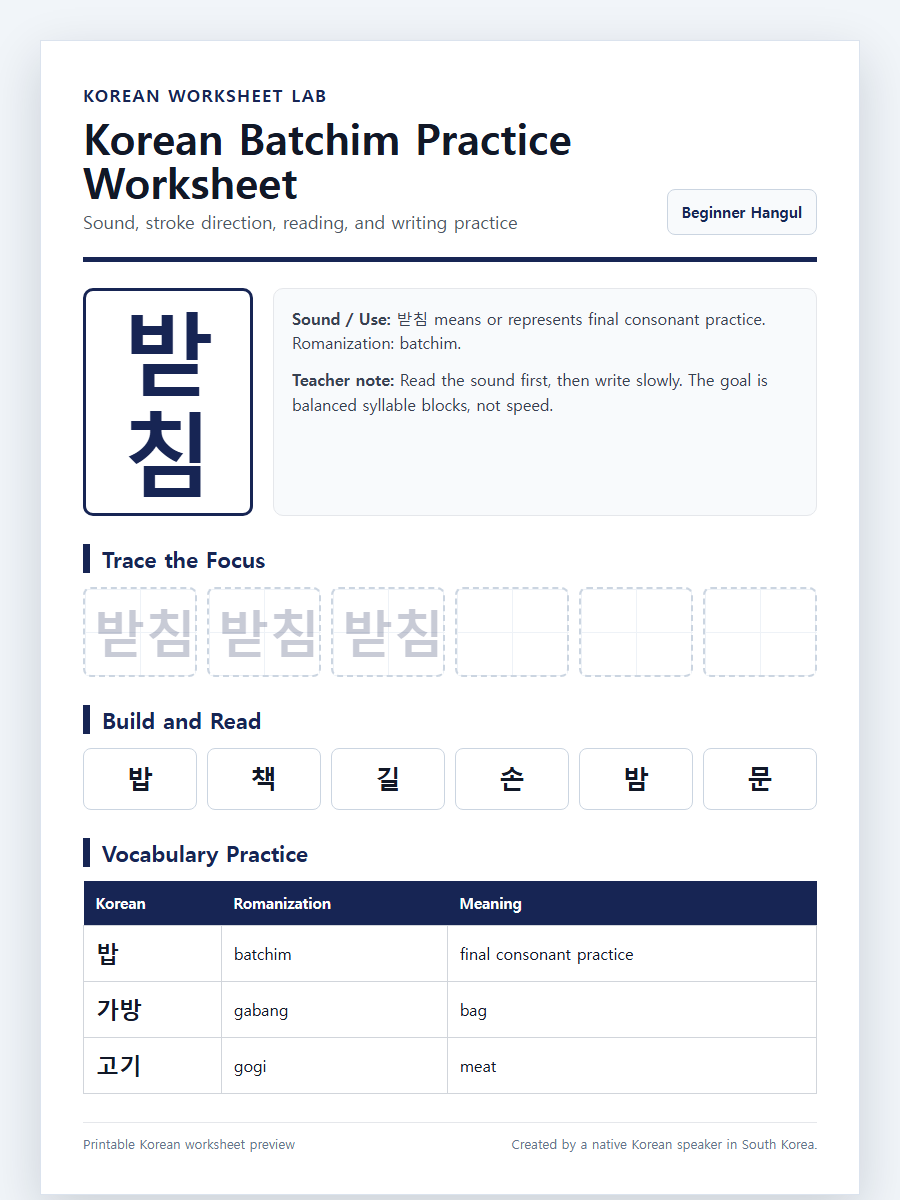
Use the printable PDF after reading the lesson introduction and examples. The page is designed as a study worksheet, not as a standalone download without context.
Download Free PDFPrint This Worksheet
Answer Key
Answer support is provided on the lesson page so learners can check the target letters, sounds, and syllable-building logic before reviewing the printable worksheet. For classroom use, keep this section hidden until learners complete the practice.
- ㄱ = g/k, basic consonant
- ㅏ = a, basic vowel
- 가 = ga, ㄱ + ㅏ syllable block
- 나 = na, ㄴ + ㅏ syllable block
Tips for Self-learners
- Do not translate every syllable; focus on decoding first.
- Use a finger or pencil to track the line.
- Repeat short rows more often than long lists.
- Mix old syllables with new words.
Tips for Teachers
- Use choral reading before individual reading.
- Keep sentence length very short for beginners.
- Mark difficult syllables on the board.
- Let students reread for fluency, not only accuracy.
FAQ
Why can I write Hangul but still read slowly?
Writing and reading are related but separate skills. Reading needs repeated recognition practice.
Should I read aloud?
Yes. Reading aloud helps connect Hangul shapes to Korean sound patterns.
What should I read after syllables?
Move to simple words such as 가방, 나무, 모자, and short beginner sentences.