Basic Conversation
Basic Korean Conversation for Beginners
Practice basic Korean conversation with greetings, self-introduction phrases, polite expressions, examples, and a printable PDF worksheet.
Created by a native Korean speaker in South Korea. · Last reviewed July 2, 2026
Lesson Introduction
Basic Korean conversation should begin with short, reusable patterns. Beginners do not need long dialogues right away. They need phrases they can understand, pronounce, and adapt: hello, I am, thank you, I study Korean, and goodbye.
This page connects greetings, identity, and polite expressions into a simple conversation path. Read the examples aloud, then use the printable worksheet as a speaking and writing practice page.
The aim is confidence. A beginner who can greet someone, introduce themselves, and say thank you has a real foundation for future conversation lessons.
Learning Objectives
- Practice a short Korean self-introduction.
- Use polite beginner phrases naturally.
- Read and repeat simple conversation lines.
- Print a worksheet for speaking and writing review.
Key Vocabulary and Patterns
| Korean | Romanization | Meaning |
|---|---|---|
| 안녕하세요 | annyeonghaseyo | hello |
| 저는 ...예요 | jeoneun ...yeyo | I am ... |
| 한국어를 공부해요 | hangugeoreul gongbuhaeyo | I study Korean |
| 감사합니다 | gamsahamnida | thank you |
Examples
- 안녕하세요. 저는 알렉스예요. Hello. I am Alex.
- 저는 한국어를 공부해요. I study Korean.
- 감사합니다. Thank you.
- 안녕히 가세요. Goodbye.
Practice Exercises
- Read the model dialogue aloud.
- Replace the name with your own name.
- Write one self-introduction line.
- Practice the dialogue with a partner or recording.
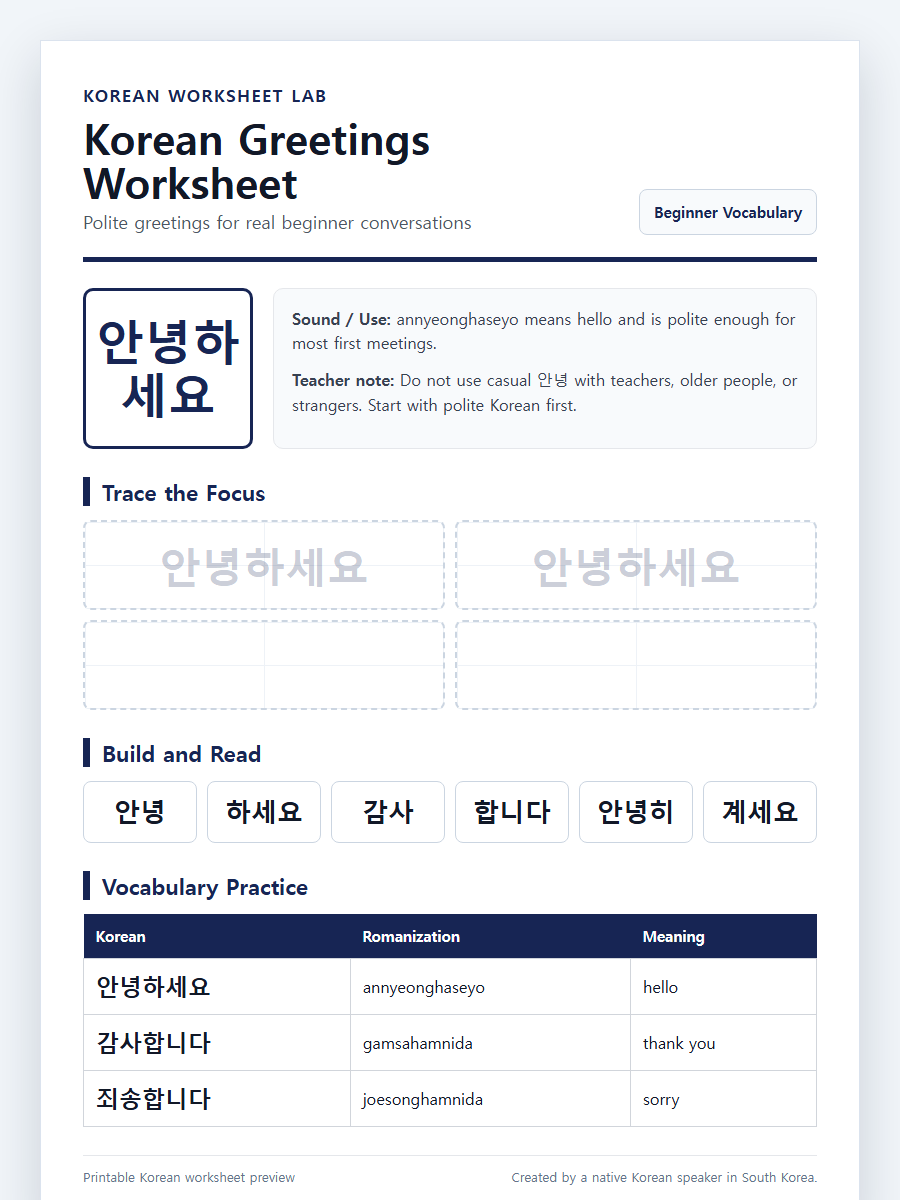
Worksheet Preview
Download Free PDF
Use the printable PDF after reading the lesson introduction and examples. The page is designed as a study worksheet, not as a standalone download without context.
Download Free PDFPrint This Worksheet
Answer Key
Answer support is provided on the lesson page so learners can check the target letters, sounds, and syllable-building logic before reviewing the printable worksheet. For classroom use, keep this section hidden until learners complete the practice.
- 안녕하세요 = annyeonghaseyo, hello
- 저는 ...예요 = jeoneun ...yeyo, I am ...
- 한국어를 공부해요 = hangugeoreul gongbuhaeyo, I study Korean
- 감사합니다 = gamsahamnida, thank you
Tips for Self-learners
- Use one short dialogue until it feels natural.
- Speak slowly and clearly.
- Record yourself once and listen for rhythm.
- Do not add too many grammar points at the beginning.
Tips for Teachers
- Use this as a first-day speaking routine.
- Give learners a name card and let them personalize the dialogue.
- Practice as whole class, then pairs.
- Keep the conversation short enough for success.
FAQ
What is the first Korean conversation beginners should learn?
A short greeting and self-introduction is the best first conversation pattern.
Do I need grammar before conversation?
You need some patterns, but you can start speaking with fixed polite phrases.
Is romanization okay for conversation practice?
Use it as temporary support, but keep your eyes on the Korean text.