Beginner Korean
Korean Numbers for Beginners: Native and Sino-Korean Numbers
Learn Korean numbers for counting, age, dates, prices, and time with beginner examples and a printable Korean numbers worksheet.
Created by a native Korean speaker in South Korea. · Last reviewed July 2, 2026
Lesson Introduction
Korean numbers can feel confusing because Korean uses two number systems: native Korean numbers and Sino-Korean numbers. Beginners do not need to master every use immediately, but they should know why 하나 and 일 can both mean one.
This lesson introduces the difference in a practical way. Native Korean numbers often appear when counting items or talking about age in everyday speech. Sino-Korean numbers are used heavily for dates, money, phone numbers, minutes, and many formal number situations.
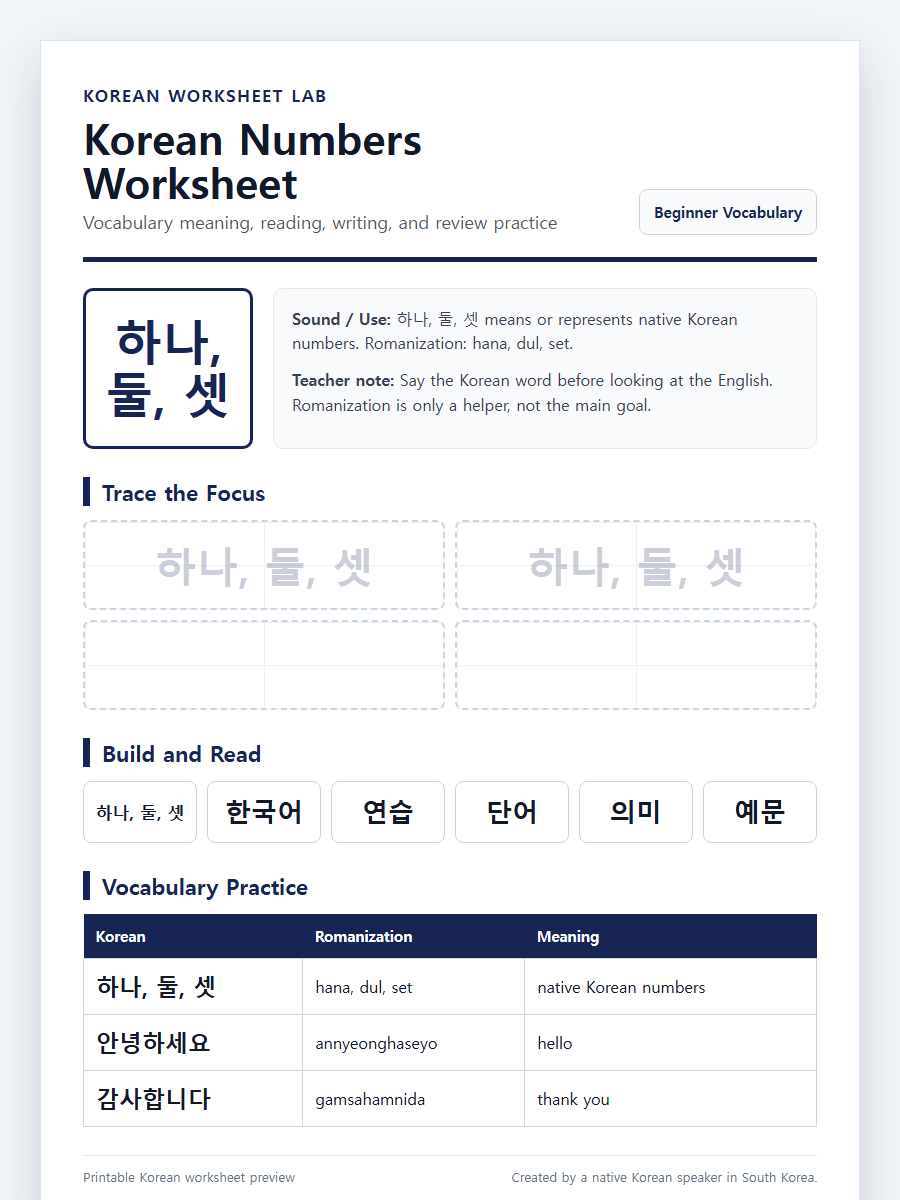
The printable worksheet helps you compare the systems side by side. Read the examples first, then use the PDF for active recall.
Learning Objectives
- Recognize native Korean numbers one to five.
- Recognize Sino-Korean numbers one to ten.
- Understand common beginner uses for each system.
- Practice matching numbers with everyday situations.
Key Vocabulary and Patterns
| Korean | Romanization | Meaning |
|---|---|---|
| 하나 | hana | one, native Korean |
| 둘 | dul | two, native Korean |
| 일 | il | one, Sino-Korean |
| 십 | sip | ten, Sino-Korean |
Examples
- 하나, 둘, 셋 are useful for counting.
- 일, 이, 삼 are common in dates and phone numbers.
- 만 원 uses Sino-Korean counting for money.
- 한 개 means one item with the native number form.
Practice Exercises
- Sort numbers into native Korean and Sino-Korean groups.
- Match a use case: age, date, price, or counting objects.
- Read one to ten aloud slowly.
- Write three example numbers you use often.
Worksheet Preview
Download Free PDF
Use the printable PDF after reading the lesson introduction and examples. The page is designed as a study worksheet, not as a standalone download without context.
Download Free PDFPrint This Worksheet
Answer Key
Answer support is provided on the lesson page so learners can check the target letters, sounds, and syllable-building logic before reviewing the printable worksheet. For classroom use, keep this section hidden until learners complete the practice.
- 하나 = hana, one, native Korean
- 둘 = dul, two, native Korean
- 일 = il, one, Sino-Korean
- 십 = sip, ten, Sino-Korean
Tips for Self-learners
- Learn common uses before memorizing long lists.
- Practice native and Sino-Korean numbers separately at first.
- Say numbers aloud because rhythm matters.
- Use real examples such as your age, date, or price.
Tips for Teachers
- Teach number systems with use cases, not abstract charts only.
- Use classroom objects for native Korean numbers.
- Use calendar and price examples for Sino-Korean numbers.
- Review numbers frequently in short warmups.
FAQ
Why does Korean have two number systems?
Korean uses native Korean numbers and Sino-Korean numbers because of historical language development and different usage patterns.
Which Korean numbers should I learn first?
Start with one to ten in both systems and learn common uses gradually.
Are Korean numbers hard?
They take practice, but they become manageable when grouped by situation.